Do these 3 things before closing this tab:
1Clear out junk files and repair common Windows errors2Scan for outdated or missing drivers - takes under a minute3Repair Windows errors before they cause bigger problemsSome links on this page are affiliate links: if you buy through them we may earn a commission, at no extra cost to you.
Mavericks is the most challenging overall when difficulty means the combination of impact, reef consequences, currents, cold water and limited recovery time. Nazaré produces the largest recognized rides of the three, while Jaws (Peʻahi) is arguably the most demanding specialist test of paddle power, timing and barrel control. That is an editorial judgment, not an official danger ranking: no authoritative source publishes directly comparable injury, fatality or risk rates for all three breaks.
The useful answer depends on what you mean by challenging. Nazaré is the scale leader, Mavericks concentrates energy onto a steep, shallow reef in bone-chilling water, and Jaws asks elite surfers to make rapid decisions in extreme current while choosing between paddle and tow-in approaches.
As an Amazon Associate I earn from qualifying purchases.
The Tool Desk
Outbyte PC Repair FREEClear out junk files and repair common Windows errorsFree Scan →Outbyte Driver Updater FREEScan for outdated or missing drivers - takes under a minuteDriver Scan →Which break is the most challenging overall?
Mavericks earns the overall verdict because several hazards arrive together in one compact impact zone. Its steep bedrock reef rapidly increases wave height, the wave can ledge over shallow rocks, currents are fierce and the water is exceptionally cold. A mistake is punished quickly, and the inside water offers little room to recover before another section or the reef becomes a factor.
Nazaré can be taller and more visually overwhelming, but its broad, open faces and frequent tow-in use at record size make the challenge more about surviving enormous speed, turbulence and a long hold-down. Jaws is a highly technical examination: the peak shifts, the current is extreme, and surfers must decide whether to paddle or be towed while managing a fast face that may form a barrel.
Popular on Amazon
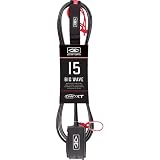
- Brand: Ocean and Earth - 100% Original
- Model: Big Wave One XT Premium - Black
- Length: 15'
- QUICK PIN RELEASE -ÊA quick release, stainless steel pin that allows the leash to be separated from your board in dangerous hold downs. Large easy grab loop for easy release.
- TRIPLE WRAP VELCRO ANKLE WRAP - The power of monster waves can rip single velcro wrap leashes from your ankle. This specially designed triple wrap strap stays secure.
Those distinctions matter because a wave-height ranking alone cannot answer a danger question. The World Surf League’s 2024 record rules analyze both height and steepness, with the relevant measurement taken around the surfer’s takeoff zone. A reported 28.57 m (93.73 ft) Nazaré measurement from 2024 remained pending official confirmation, so it cannot be treated like a ratified record.
How do Nazaré, Mavericks and Jaws compare at a glance?
| Break | Documented scale | Wave-forming setting | Main physical penalties | Typical approach at extreme size |
|---|---|---|---|---|
| Nazaré, Praia do Norte | Recognized male record: 26.21 m (86 ft), 29 October 2020. Winter waves average about 15 m (50 ft), according to NASA. | A 210 km (130 mile) submarine canyon focuses and bends Atlantic swell toward the bay, where wave energy from another direction can interfere. | Immense speed, turbulent impact and potentially long hold-downs. | Tow-in is common at record size. |
| Mavericks, Pillar Point | Up to 60 ft when conditions are right; 20–30 ft is common during high seas and 40 ft-plus occurs on rare occasions, according to NOAA and USGS. | A steep bedrock reef rapidly converges wave energy and makes the wave rise sharply relative to nearby water. | Shallow rocks, ledging impact, fierce currents and bone-chilling water. | Paddle and tow-in are used; tow-in is used for the largest conditions. |
| Jaws, Peʻahi | Surfline describes it as a deep-water winter break that breaks only in the biggest swells; no comparable single record is established in the supplied sources. | A deep-water peak that turns on during very large winter swells. | Extreme current, rapid decisions, shifting peaks and the technical demands of paddle or tow-in surfing. | Both paddle and tow-in; Surfline lists “Gun, Tow” equipment. |
Is Nazaré bigger than Mavericks or Jaws?
Nazaré has the largest recognized ride among these locations. Guinness World Records lists Sebastian Steudtner’s 26.21 m (86 ft) ride on 29 October 2020 as the recognized unlimited male record. Guinness also lists a 22.4 m (73.5 ft) unlimited female record ridden on 11 February 2020.
NASA’s Earth Observatory reports that winter waves off North Beach average about 15 m (50 ft), with exceptional days producing waves around 24 m (80 ft). The canyon is the reason those numbers are possible: it extends about 210 km (130 miles) offshore, focusing and bending incoming swell toward the bay. Energy arriving from another direction can then interfere with the focused swell, creating unusually tall, complex peaks.
That does not mean every Nazaré session is larger than every Mavericks or Jaws session. Mavericks can crest as high as 60 ft when conditions are right, while USGS describes 20–30 ft waves as common during high seas and 40 ft-plus waves as rare. Jaws is reserved for the biggest winter swells and can produce a very large, fast wall even when a height comparison is unavailable.
Why the 28.57 m Nazaré figure should be treated cautiously
A Porsche Engineering report described a 28.57 m (93.73 ft) measurement at Nazaré in 2024 but explicitly said official confirmation was still pending. Until an appropriate record authority validates the measurement, the figure is evidence of a remarkable event, not a replacement for the recognized 26.21 m record.
Measurement confidence matters in any comparison. Ratified Guinness records have a defined status; a provisional measurement may later be revised after video, geometry and takeoff-zone analysis. The same caution applies whenever a spectacular photograph or headline gives a wave a precise height without explaining how it was measured.
What makes Mavericks harder than Nazaré?
Mavericks turns a large wave into a concentrated collision with a reef. NOAA explains that the steep topography of the bedrock reef causes wave energy to converge rapidly, increasing wave height dramatically compared with adjacent areas. That concentration produces a steep, ledging takeoff rather than only a long, open face.
Also popular on Amazon

- Surfboard Alley - Row of Surfboards - Surfing Vinyl Sticker - Longboard, Fish Tail, Gun, Shortboard, Fun board.
- Overall size is 8 inches by 7 inches.
- All your favorite board styles are represented: longboard, fish tail, gun surfboard, short board, and the fun board.
- Fade resistant; long lasting.
- Instructions included.
The reef removes recovery space
At Mavericks, the shallow rocks are part of the hazard, not just scenery beneath the wave. A surfer who misses the takeoff or loses control can be driven toward exposed reef and chaotic inside water. The wave’s energy is focused into a relatively compact area, so there is less forgiving shoulder on which to regain speed or direction.
Cold water compounds every mistake
NOAA specifically identifies bone-chilling water temperatures alongside fierce currents and shallow rocks. Cold-water exposure adds a physiological penalty to any hold-down or rescue: the surfer must manage breath, orientation and equipment while losing body heat. The evidence does not establish a common injury rate, but it does explain why the environment increases the consequences of a mistake.
Impact arrives abruptly
The steep reef makes the wave rise rapidly. Instead of a gradually building wall, surfers can face a sudden ledge and a powerful landing zone. NOAA describes Mavericks as cresting as high as 60 ft when conditions are right, while USGS calls it one of the world’s most challenging surf areas and notes 20–30 ft waves as common during high seas.
Recommended Free Tools
Tow-in does not make the break simple
Tow-in access helps surfers reach the fastest part of a very large wave, but it does not remove the reef, current or cold-water hazards. USGS notes tow-in use for the largest conditions; the technique changes how a surfer enters the wave, not what happens after a missed line or a long hold-down.
Why is Nazaré the scale leader but not automatically the hardest?
Nazaré’s canyon creates an extraordinary scale advantage, yet scale and difficulty are different variables. The giant faces can run a long distance, and tow-in teams commonly position surfers on record-sized waves. That can produce a long, high-speed ride, but the principal challenge is managing enormous moving water rather than taking off directly over a shallow reef.
What the canyon changes
The canyon focuses and bends swell toward Praia do Norte. When that energy meets waves arriving from another direction, the interference can build peaks that are much larger than nearby open-water waves. This explains both the average winter size reported by NASA and the exceptional waves seen on the biggest days.
What a hold-down feels like in practical terms
A failed ride at Nazaré can involve a long submersion in turbulent water. The danger is not only the face’s height; it is the speed of the collapse, the amount of whitewater and the difficulty of knowing which way is up while another wave approaches. Garrett McNamara described Nazaré to Guinness World Records as the most challenging and dangerous wave he had surfed, pointing to the unusual fact that a giant canyon reaches all the way to the beach.
What’s actually slowing this PC down?
Pick the symptom - the matching free tool is one click away.
Also popular on Amazon

- Maryland Gunpowder Falls beach surfing design is perfect for individuals who enjoy various water sports, including snowboarding, surfboarding, surfing, bodyboarding, or those who simply embrace the surf lifestyle.
- If you love surfboarding, wakeboarding, windsurfing, kite surfing, or surfriding, then this vintage surfing design is the perfect souvenir for Mom, Dad, Grandma, and Grandpa who adore Maryland Gunpowder Falls.
- Lightweight, Classic fit, Double-needle sleeve and bottom hem
Why tow-in changes the skill profile
At record size, a jet ski can deliver the surfer to a moving peak that would be difficult or impossible to catch by paddling. That demands precise coordination between surfer and driver, a committed line and a reliable rescue plan. It is still an elite test, but it is not the same physical examination as paddling into a peak under your own power.
What makes Jaws the most technical test?
Jaws, or Peʻahi, is a deep-water winter break that activates only in the biggest swells. Surfline rates it “Expert big-wave surfers only, even they need to exercise extreme caution,” and lists extreme current as a hazard. Its challenge is less about a single published height record and more about fast, interlocking decisions.
Paddle or tow?
Surfers at Jaws use both methods. Surfline lists “Gun, Tow” under equipment, reflecting two different ways to enter the wave. Paddling demands enough speed and timing to match a rapidly moving peak; tow-in allows a surfer to be placed farther out and higher on the wave. The choice depends on the swell, the peak and the surfer’s objective.
Reading a shifting peak
A deep-water break can move and reorganize between sets. The surfer must identify which peak will stand up, where the takeoff zone will be and whether the line will open or close. That reading happens while current is moving the surfer and while other riders, skis and rescue traffic may occupy the same water.
Quick wins for a faster PC:
Repair Windows errors before they cause bigger problemsFix Now →Scan for outdated or missing drivers - takes under a minuteDriver Scan →Clear out junk files and repair common Windows errorsFree Scan →Barrel control at extreme speed
Jaws can offer a large barrel as well as a fast open wall. Staying high enough to make the section, then controlling speed inside a moving tube, requires timing that differs from simply surviving a straight drop. For a surfer who values paddle power, maneuvering and barrel control, Jaws may feel like the most demanding of the three even if Nazaré produces the largest recognized number.
Which hazards matter most at each break?
- Nazaré: extraordinary size, speed, turbulent water and potentially long hold-downs. The canyon and opposing wave energy create complex peaks, and tow-in is common at record size.
- Mavericks: concentrated energy over a steep bedrock reef, shallow rocks, ledging impact, fierce currents and very cold water. The combination leaves little room to recover after a mistake.
- Jaws: extreme current, a rapidly shifting deep-water peak, large winter swell and the need to choose accurately between paddle and tow-in approaches.
These are different failure modes. Nazaré can overwhelm with volume and distance; Mavericks can deliver abrupt impact onto a shallow reef; Jaws can expose a surfer to a moving tactical problem in which a small timing error changes the entire ride.
How should an expert surfer rank the three breaks?
A useful ranking changes with the criterion. The following order separates measurable scale from the physical and technical demands that make a session difficult.
Also popular on Amazon

- Maryland Gunpowder Falls beach surfing design is perfect for individuals who enjoy various water sports, including snowboarding, surfboarding, surfing, bodyboarding, or those who simply embrace the surf lifestyle.
- If you love surfboarding, wakeboarding, windsurfing, kite surfing, or surfriding, then this vintage surfing design is the perfect souvenir for Mom, Dad, Grandma, and Grandpa who adore Maryland Gunpowder Falls.
- Lightweight, Classic fit, Double-needle sleeve and bottom hem
| Criterion | First | Why |
|---|---|---|
| Largest recognized ride | Nazaré | 26.21 m (86 ft), ridden by Sebastian Steudtner on 29 October 2020, is the recognized unlimited male record. |
| Most concentrated reef impact | Mavericks | NOAA says the steep bedrock reef rapidly converges energy and increases wave height. |
| Strongest documented current penalty | Mavericks and Jaws | NOAA describes fierce currents at Mavericks; Surfline lists extreme current at Jaws. |
| Most demanding paddle-and-barrel specialty | Jaws | Its expert-only rating, paddle/tow choice and fast, shifting deep-water peak make timing central. |
| Most complex scale-and-turbulence challenge | Nazaré | The canyon focuses swell into exceptionally large waves and can produce long, turbulent hold-downs. |
| Overall combination of consequences | Mavericks | Reef, impact, current and cold water are concentrated in the same break. |
This is a reasoned framework, not a universal scorecard. A surfer who has exceptional tow-in support but limited cold-water experience may find Mavericks harder; a powerful paddler who excels in cold water may regard Jaws as the more exacting test. Conditions on a particular day can also reverse the practical order.
Does wave height determine which break is most dangerous?
No. Height is only one part of the hazard. The WSL’s 2024 rules explicitly consider both height and steepness and focus on the wave around the surfer’s takeoff zone. A smaller wave that stands up abruptly over rocks can demand more immediate reaction than a taller wave with a longer, more open face.
Bottom depth, current direction, water temperature, rescue access, crowding, takeoff angle and the likelihood of a second wave all affect consequences. None of the supplied authorities publishes a directly comparable danger, injury or fatality rate for Nazaré, Mavericks and Jaws, so a claim that one is objectively the most dangerous in every swell would overstate the evidence.
Independent reader supportYour contribution helps us test, update, and keep practical guides available for everyone.What equipment and support does each break require?
These locations are not settings for casual experimentation. Jaws’ Surfline guide lists a gun and tow setup, reflecting the need for specialized boards and the option of jet-ski assistance. Nazaré’s record-sized waves commonly use tow-in teams, while USGS documents tow-in use at Mavericks in the largest conditions.
Boards and entry speed
A big-wave gun is designed for controlled entry and speed on a large face, but the exact board choice depends on whether the surfer is paddling or being towed. Tow-in changes the entry speed and position; it does not replace the need to match the wave’s line once the rope is released.
Rescue and communication
At all three breaks, support crews are part of the risk calculation at extreme size. A surfer needs a clear plan for entry, release, recovery and the possibility of a second wave. The sources establish tow-in use and hazards, but they do not specify a single universal rescue protocol, equipment list or staffing standard, so those details must be set by the local professional team.
Water protection at Mavericks
NOAA’s description of bone-chilling water makes thermal protection a central concern at Mavericks. A cold-water surfing wetsuit is not a minor comfort item there; it is part of managing exposure during a long session or a delayed recovery. The appropriate thickness and accessories depend on local conditions and the individual surfer, so a single specification cannot be inferred from the available evidence.
Also popular on Amazon

- Maryland Gunpowder Falls beach surfing design is perfect for individuals who enjoy various water sports, including snowboarding, surfboarding, surfing, bodyboarding, or those who simply embrace the surf lifestyle.
- If you love surfboarding, wakeboarding, windsurfing, kite surfing, or surfriding, then this vintage surfing design is the perfect souvenir for Mom, Dad, Grandma, and Grandpa who adore Maryland Gunpowder Falls.
- 8.5 oz, Classic fit, Twill-taped neck
What should a surfer learn from the comparison?
- Separate size from consequence. Start with the recognized height record, then examine reef, current, water temperature and the shape of the takeoff.
- Match the break to the skill being tested. Nazaré emphasizes scale and turbulent hold-downs; Mavericks emphasizes concentrated impact and environmental penalties; Jaws emphasizes timing, paddle power, current management and barrel control.
- Treat provisional numbers as provisional. The 28.57 m Nazaré figure reported in 2024 was still awaiting official confirmation, unlike the recognized 26.21 m record.
- Use local conditions, not reputation alone. A break’s difficulty changes with swell direction, tide, wind, current and the chosen entry method.
- Assume elite-level preparation. Surfline’s expert-only warning for Jaws and the documented hazards at Nazaré and Mavericks leave no basis for treating any of the three as a progression venue.
Final verdict: which break should an expert surfer fear most?
If the question is which break has produced the biggest recognized ride, the answer is Nazaré. If the question is which break most severely combines a steep ledge, shallow reef, fierce current and cold water, Mavericks is the strongest answer. If the question is which break most sharply tests paddle timing, peak selection and barrel control, Jaws may be the specialist’s choice.
For an overall judgment that weighs impact concentration, bottom consequences, currents, water temperature and the margin for recovery, Mavericks is the most challenging of the three. That conclusion is an evidence-based editorial inference, not an official ranking or a claim that every swell at Mavericks is more dangerous than every session at Nazaré or Jaws.
Free tools Windows power users keep installed
One-click scans. No signup required.
Frequently Asked Questions
Are the Nazaré male and female records measured under the same kind of standard?
Both are recognized Guinness World Records for unlimited big-wave rides, but they belong to separate men’s and women’s record categories. The male mark is 26.21 m (86 ft), while the female mark is 22.4 m (73.5 ft); comparing the numbers should not erase the separate categories in which they were awarded.
What does tow-in surfing change at these breaks?
A personal watercraft gives the surfer a faster entry into a moving peak than paddling alone can provide. It changes positioning and timing demands, but it does not remove hazards such as reef impact, current, cold water or turbulent hold-downs.
Why can a lower wave feel harder than a taller one?
Steepness and the takeoff zone can create a more abrupt drop and less time to react than a taller, more open face. That is why modern judging rules analyze both height and steepness instead of treating a single vertical measurement as a complete difficulty score.
Is the 28.57 m Nazaré wave an official world record?
Not on the evidence available here. Porsche Engineering reported the 28.57 m (93.73 ft) measurement in 2024 but said official confirmation was pending, so the recognized 26.21 m Guinness record remains the reliable benchmark.

