Some links on this page are affiliate links: if you buy through them we may earn a commission, at no extra cost to you.
Choose quartz if you want the most stable everyday timekeeping, easy travel and little hands-on maintenance. Choose an automatic watch if you value a self-winding mechanical movement, a sweep-like seconds hand and traditional watchmaking, and you accept more variation in rate plus periodic servicing. Neither movement is universally better: the right choice depends on whether accuracy and convenience or mechanical experience matter more in your daily routine.
This guide explains how both movements work, what their published accuracy and running times mean, how to decide between them, and how to maintain each without damaging its seals or movement.
As an Amazon Associate I earn from qualifying purchases.
What is the difference between a quartz and an automatic watch?
Quartz watches regulate time electronically with a battery and crystal oscillator. Automatic watches regulate time mechanically: wrist motion winds a mainspring, and the stored energy drives gears and an escapement. That fundamental difference affects accuracy, convenience, thickness, care and the way each watch behaves when it is not worn.
| Consideration | Quartz | Automatic |
|---|---|---|
| Regulation | Battery-powered electronic circuit and quartz crystal | Mechanical balance, escapement, gears, mainspring and rotor |
| Typical accuracy guidance | About ±20 seconds per month for a general quartz watch, according to the Japan Clock & Watch Association (JCWA) | Mechanical watches can vary from several seconds to several tens of seconds per day; Swatch gives -10 to +40 seconds per day as an example automatic tolerance |
| When left unworn | Usually keeps running until its battery is depleted | Stops when the mainspring’s reserve is exhausted |
| Running time or battery interval | Patek Philippe says quartz batteries commonly last two to three years | Patek Philippe says many self-winding movements provide 38 to 48 hours of reserve, with exceptions |
| Primary ownership task | Battery replacement and seal checks when the case is opened | Regular wear or winding, protection from magnetism and shocks, and movement service |
| Best suited to | Accuracy-first daily wear, travel, rotation and low-maintenance ownership | People who enjoy mechanical construction and accept rate variation and service work |
These are broad categories, not guarantees for every caliber. A particular quartz module, automatic movement, complication, temperature range or wearing pattern can produce a different result.
Popular on Amazon
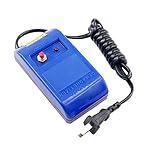
- 【 RESTORE WATCH ACCURACY INSTANTLY】Mechanical watches can easily become magnetized by phones, speakers, or computers, causing them to run fast or inaccurately. This professional degaussing tool effectively eliminates magnetic fields in seconds, restoring your cherished timepiece's precision without the need to open the case back.
- 【 SAVE TIME & MONEY ON REPAIRS】Stop paying expensive fees at jewelry stores just for simple demagnetization. With the QEES watch demagnetizer, you can perform professional-grade maintenance at home. It pays for itself after just one use—this Watch tools a smart investment for any watch collector or enthusiast.
- 【 USER-FRIENDLY & FAST OPERATION】Designed for simplicity. Just plug into a standard 110V outlet, place your watch or tool slightly above the flux area, hold the red button, and slowly move the object away for 5-10 seconds. No complex training required to achieve professional results. (Note: Please read instructions carefully before use).
- 【VERSATILE 2-IN-1 TOOL】Beyond watches, this Watch magnetizer is essential for demagnetizing watchmaker tools like tweezers and screwdrivers, ensuring they don't attract small s crews during intricate repairs. It can also serve as a magnetizer for screwdriver tips when magnetic grip is needed.
- 【 COMPACT & DURABLE GIFT CHOICE】Built with sturdy, impact-resistant ABS plastic for long service life. demagnetizer tool is lightweight, portable design (4.5" x 2.2" x 2.4") makes it easy to store. An ideal, practical gift for Father’s Day, birthdays, or anniversaries for the man who loves mechanical watches.
How accurate are quartz and automatic watches?
Quartz is normally far more stable over a month, while an automatic watch’s rate changes with position, temperature, shock, magnetism and how fully its mainspring is wound. JCWA describes about ±20 seconds per month as general quartz accuracy. The same association says mechanical watches commonly vary from several seconds to several tens of seconds per day. Swatch’s technical information illustrates the spread with an example automatic tolerance of -10 to +40 seconds per day; that is an example range, not a universal rating for every automatic watch.
A monthly quartz figure and a daily mechanical figure are reported on different timescales, so do not read them as equivalent specifications. If your priority is setting a watch rarely and having it remain close to a reference time, quartz has the stronger case. If you can tolerate resetting the time occasionally in exchange for a mechanical movement, an automatic can still be entirely satisfactory.
Rate also depends on conditions. An automatic may gain time in one position and lose it in another, change rate as its mainspring winds down, or react to a shock or magnetic field. A sudden change from its usual behavior is more informative than a small, steady offset: it can indicate that the watch needs inspection rather than simply a different setting.
How does a quartz movement work?
A battery supplies electrical energy to a quartz crystal and an electronic circuit. JCWA identifies 32,768 Hz as the crystal frequency used for quartz timekeeping. The circuit divides that high-frequency oscillation into regular pulses, and a motor advances the hands or a display. Stable battery voltage helps the circuit maintain its reference rate, which is why quartz watches generally deliver consistent timekeeping until the battery is near exhaustion.
What does the quartz design mean for daily use?
- Grab-and-go operation: There is no rotor to keep moving and no mainspring to wind. A running quartz watch can be put on after days in a drawer without setting it, provided the battery still has charge.
- Compact construction: Electronic regulation often allows a thinner and lighter case, although case size still depends on the battery, display, complications and water-resistance design.
- Predictable maintenance: The recurring task is battery replacement, with a gasket and water-resistance check whenever the case must be opened.
- Battery handling matters: A depleted cell should be replaced through an authorized or qualified retailer, especially on a watch whose case opening could affect its seals.
How does an automatic movement work?
Wrist motion turns a rotor inside the case. The rotor winds a mainspring, and the spring releases energy through a gear train and escapement. A balance regulates the release, producing the mechanical watch’s rate. Timex describes mechanical seconds hands as moving in a sweep-like sequence rather than advancing in the distinct one-second steps commonly associated with quartz displays.
What happens when an automatic watch is not worn?
The rotor can wind only while the watch is moving, and the mainspring stores a finite amount of energy. Patek Philippe states that many self-winding watches have a 38-to-48-hour power reserve, except for some specific models. After that reserve is exhausted, the watch stops; it is not automatically evidence of a fault.
To restart a stopped self-winding watch, Patek Philippe advises a few gentle turns of the crown before putting it on, following the model’s instructions. Turn only as far as the movement is designed to wind and never force the crown. Once worn, normal wrist movement can replenish the reserve, but a stationary watch will not continue indefinitely.
Which type should you buy for your lifestyle?
Start with the occasions and habits that matter more than the movement’s image. The following decision points translate the technical differences into everyday choices.
Choose quartz when accuracy and convenience come first
- You need a dependable reference for appointments, travel, work shifts or other time-sensitive routines.
- You rotate watches and do not want to reset one each time you take it from storage.
- You prefer a lighter, often thinner watch and do not want to plan regular movement service.
- You are comfortable replacing a battery every two to three years as a typical interval cited by Patek Philippe, understanding that actual life varies by model and battery load.
Choose automatic when mechanical interaction is part of the appeal
- You enjoy seeing and feeling a mechanical movement wind as you wear the watch.
- A sweep-like seconds hand and traditional watchmaking matter more to you than near-quartz accuracy.
- You are willing to set the watch after its reserve runs out and to account for rate changes caused by position, temperature, shocks or magnetism.
- You accept periodic servicing, with Seiko giving about three years as a general recommendation while noting that climate, care and model affect the exact interval.
Use a tie-breaker when both descriptions fit
Consider your tolerance for interruption. Quartz minimizes interruptions until its battery needs attention. Automatic ownership creates more interaction: winding or wearing, correcting the time and arranging service. That interaction is a benefit for enthusiasts and a chore for anyone who simply wants a watch to be ready.
How should you care for a quartz watch?
Quartz care is straightforward, but opening the case is a significant maintenance event because it can affect gaskets and water resistance.
The Tool Desk
Outbyte PC Repair FREEClear out junk files and repair common Windows errorsFree Scan →Outbyte Driver Updater FREEScan for outdated or missing drivers - takes under a minuteDriver Scan →- Track the battery interval and symptoms. A typical quartz battery lasts two to three years according to Patek Philippe, but a particular watch may differ. If the watch stops or its behavior changes, arrange replacement rather than leaving an exhausted cell in place.
- Use a qualified replacement service. Have an authorized or qualified retailer fit the correct cell. This is especially important for a water-resistant case, where the case must be closed correctly after the work.
- Request seal and water-resistance attention when the case is opened. Seiko warns that gasket aging and shocks can compromise resistance. A battery change is an appropriate time to ask what inspection the model requires.
- Clean gently. Remove dust and perspiration with a soft, clean cloth suitable for watch finishes. Avoid abrasive compounds and household chemicals that can mark surfaces or attack seals.
- Keep the crown and case closed during exposure. Ensure the crown is in its normal closed position before contact with water, and follow the depth or activity limits stated for that model.
How should you care for an automatic watch?
An automatic movement needs both mechanical protection and periodic professional attention. Regular wear keeps the mainspring supplied, but it does not eliminate service requirements.
- Wear or wind according to the movement’s instructions. If the watch has stopped, use a few gentle crown turns to start it, as Patek Philippe recommends for many self-winding models. Do not force the crown past its intended winding point.
- Keep track of the reserve in your routine. If you remove the watch for longer than its available reserve, expect to reset it before wearing it again. That behavior is normal for a mechanical watch.
- Protect it from hard shocks. A strong impact can alter the rate or damage components. Remove the watch for activities that expose it to abrupt impacts unless the manufacturer specifically rates it for them.
- Limit magnetic exposure. Keep the watch away from strong magnetic fields. If it begins gaining or losing noticeably after contact with a magnet, arrange qualified demagnetization or service rather than repeatedly correcting the hands.
- Service on a sensible schedule. Seiko’s general guidance is about every three years. The appropriate interval depends on the model, climate, use and care; aged oils, worn parts and deteriorating gaskets can lead to stopping, timing loss or moisture damage.
- Clean without attacking finishes. Use a soft cloth for the case and bracelet. Do not assume polishing compounds or household solvents are safe for plated surfaces, crystals, coatings or seals.
Can magnetism make an automatic watch run fast?
Yes. Magnetic exposure can disturb components in a mechanical movement and produce a sudden rate change, often noticed as the watch gaining time. JCWA and Patek Philippe both identify demagnetization as the appropriate response after magnetic exposure.
Do not diagnose magnetism solely from one day’s reading: position, temperature, shock and mainspring state can also change an automatic watch’s rate. If the change follows contact with a strong magnet or an electronic device that contains one, keep the watch away from the source and use a qualified service provider for demagnetization or further diagnosis. A home demagnetizer should be used only by someone who understands the procedure and the risk of applying it incorrectly; professional service is the safer fallback.
Also popular on Amazon
- PORTABLE DESIGN: The demagnetizer features a lightweight ABS housing with compact structure, easily carried by technicians and stored neatly in workstations
- FUNCTIONALITY: Designed to solve timing inaccuracies in mechanical watches, this watch repair kit efficiently removes magnetism from movements to restore normal function
- SAFE USE: When using these watch tools, maintain proper distance between movement and tool to prevent direct interaction during the automatic demagnetizing process
- PROFESSIONAL APPLICATION: The tool demagnetizer works with most mechanical watch movements, requiring no special skills for either repair shops or personal use
- VOLTAGE COMPATIBILITY: Supporting 110-220V input, always check local voltage standards before using this degausser to avoid equipment damage
Is a watch’s water resistance permanent?
No. Seiko states that a watch’s water resistance is not permanently guaranteed. Seals age, a case can be opened during battery or movement work, and shocks can compromise the fit even when the watch looks undamaged.
Quick wins for a faster PC:
Scan for outdated or missing drivers - takes under a minuteDriver Scan →Repair Windows errors before they cause bigger problemsFix Now →Treat water resistance as a maintained condition. Follow the model’s stated rating and activity limits, keep the crown closed, and have seals and resistance checked when the case is opened or after a significant impact. If moisture appears under the crystal or inside the case, stop exposing the watch to water and arrange qualified service promptly; continued operation can turn moisture into movement damage.
What should you do when a watch stops or loses time?
| Symptom | Likely ownership question | Practical next step |
|---|---|---|
| Quartz watch has stopped | Is the battery depleted or is there another fault? | Arrange a battery replacement through a qualified retailer. Ask for seal and water-resistance attention if the case is opened. |
| Automatic watch stops after being off the wrist | Has the power reserve run out? | Give the crown a few gentle turns as directed for the model, set the time and wear it normally. If it repeatedly stops while worn, seek service. |
| Automatic suddenly gains or loses much more than usual | Could magnetism or shock have changed the rate? | Keep it away from magnetic sources and impacts, then arrange qualified demagnetization or inspection. |
| Watch develops condensation or moisture | Has a seal, gasket or case joint been compromised? | Stop water exposure and obtain professional service. Do not rely on the printed water-resistance rating after a suspected seal failure. |
| Automatic has persistent timing loss or stopping | Are oils, parts or gaskets aging? | Arrange a movement and seal assessment. Seiko identifies aged oils, worn parts and deteriorating gaskets as reasons a watch may stop, lose time or suffer moisture damage. |
What should you check before buying either movement?
Ask the seller or manufacturer for the exact movement specifications rather than relying on the word quartz or automatic alone.
- For quartz: confirm the battery reference, expected battery interval, replacement process and whether opening the case requires a water-resistance check.
- For automatic: confirm the stated tolerance, power reserve, winding instructions and recommended service guidance.
- For either type: verify the case’s water-resistance rating, crown design, gasket service policy and what happens to coverage after third-party work.
- For your own routine: decide whether you will tolerate resetting a watch after storage, schedule service, and protect it from magnets and shocks.
Published figures are useful for setting expectations, but they do not replace the specifications for the exact reference you are considering. A general quartz accuracy statement, an example automatic tolerance and a typical reserve are comparison points, not promises for every individual watch.
Which is the better choice overall?
Quartz is the better practical choice when stable timekeeping, immediate readiness and low maintenance are your priorities. Automatic is the better experiential choice when you want a self-winding mechanical object and accept that it may gain or lose more time, stop after its reserve, and require periodic service.
Whichever movement you choose, protect the case, respect its water-resistance limits, and treat unusual behavior as a reason for qualified inspection. The movement can deliver its intended benefits only when its battery, seals or mechanical components receive the care they require.
For primary technical explanations, see the Japan Clock & Watch Association’s explanation of watch accuracy, Swatch technical information, Seiko’s service guidance, Patek Philippe’s watch-care recommendations and Timex’s mechanical-versus-quartz overview.
Frequently Asked Questions
Does an automatic watch need to be worn every day?
No. It only needs enough motion or manual winding to keep its mainspring supplied. If it sits longer than its available reserve, it will stop and require a restart and time setting before use.
Is a sweeping seconds hand proof that an automatic watch is more accurate?
No. The sweep-like motion describes how the mechanical train advances the hand, not how closely the watch tracks reference time. Accuracy depends on regulation and conditions such as position, temperature, shocks, magnetism and winding state.
What should I do if my watch is exposed to a strong magnet?
Move it away from the magnetic source and observe whether its rate changes. A sudden gain or loss should be checked by a qualified watch professional, who can demagnetize the movement and inspect for any other cause.
Can a battery replacement affect a quartz watch’s water resistance?
Yes. Replacing the battery requires opening the case, and the seal may not preserve its original condition afterward. Use an authorized or qualified retailer and ask what gasket and water-resistance checks are appropriate for that model.
How can I tell whether an automatic watch needs service before the scheduled interval?
Persistent stopping, a pronounced new timing change, or signs of moisture justify an assessment regardless of the calendar. Those symptoms can indicate aged oils, worn parts, a compromised gasket, magnetism or shock damage.