The Tool Desk
Outbyte PC Repair FREEClear out junk files and repair common Windows errorsFree Scan →Outbyte Driver Updater FREEFix the driver behind crashes, sound loss and screen glitchesFind Drivers →Samsung and Google have announced intelligent eyewear built around a camera, Gemini, Android XR, and Samsung’s Galaxy ecosystem. Samsung says the first collections are planned for fall 2026 in select markets, but the reviewed official announcements do not give an exact on-sale date, price, complete market list, or full compatibility details.
The key distinction is that Google describes both audio glasses and display glasses, with audio glasses coming first later this fall. Samsung’s reveal does not confirm that its first collection has an in-lens display, so buyers should not assume it projects directions, subtitles, or other graphics into the wearer’s view.
Samsung smart glasses: release status at a glance
Samsung’s product has been officially introduced, but the reviewed announcements do not establish that it is commercially available. Samsung said the first collections were scheduled for fall 2026 in select markets; Google said audio glasses were coming later that fall. Neither source gives an exact on-sale day, final price, complete launch-market list, or official retail model name.
| Question | What is confirmed |
|---|---|
| Is Samsung making smart glasses? | Yes. Samsung and Google have publicly introduced intelligent eyewear. |
| What is the official name? | Samsung uses “intelligent eyewear.” “Samsung smart glasses” is useful shorthand; “Galaxy Glasses” is not confirmed as a retail name. |
| When will they launch? | Samsung said the first collections were planned for fall 2026 in select markets. Google said audio glasses were coming later that fall. An exact on-sale date and full market list are not stated in the reviewed announcements. |
| How much will they cost? | No price is stated in the reviewed official material. |
| Will they have an AR display? | Samsung’s reveal does not confirm an in-lens display for its first collection. |
| What is confirmed about the hardware? | Samsung identifies Android XR, Gemini, a built-in camera, Snapdragon AR1 Gen 1, touch interaction, and connectivity in the eyewear frame. |
Google’s May 19, 2026 first look introduced designs developed with Gentle Monster and Warby Parker and described a phone-companion experience. Samsung’s July 22 Galaxy Unpacked announcement added product and use-case details. These announcements describe an announced product, not a complete retail specification sheet or independent performance test.
Quick wins for a faster PC:
Scan for outdated or missing drivers - takes under a minuteDriver Scan →Clear out junk files and repair common Windows errorsFree Scan →Fix the driver behind crashes, sound loss and screen glitchesFind Drivers →#1 Best Overall

- 【Biggest. Boldest. Smartest. — A Viewing Experience Like Never Before】This isn't just another pair of XR glasses — it's The Beast. The BIGGEST screen in XR (174″, 58° FOV). The BOLDEST display ever (1250 nits, Powerd by Latest Sony Micro-OLED). And the SMARTEST glasses on the planet — Your Screen, You Rules. Built-in 3DoF, screen customizations, Auto Transparency, and Smart Re-Centering that just work. No software needed. One glance and you'll never go back.
- 【SMARTEST: YOUR SCREEN, YOU RULES — No Software Needed】 Your Screen. You Rules! Built-in VisionPair 3DoF lets you pin, resize, and lock a 174″ screen in mid-air — no software, no dongles, no drift. Full screen customizations built right into the glasses: Anchor, Smooth Follow, 32:9 UltraWide, Side Mode. Auto Transparency switches between immersion and the real world with one tap. Smart Re-Centering snaps your view back instantly.
- 【BIGGEST: THE ULTIMATE IMMERSIVE GIANT — 174″ Screen, 58° FOV, 1200p】The largest virtual display in consumer XR. Period. A 174″ screen powered by Sony's latest-generation Micro-OLED panel pushes 1200p per eye at a class-leading 58° field of view with a 120 Hz refresh rate. Every frame is edge-to-edge sharp, silky-smooth, and jaw-droppingly vivid. It's like strapping an IMAX to your face.
- 【SMARTEST: 9-LEVEL DIMMING + AUTO TRANSPARENCY — No Software Needed】 Another reason The Beast is the smartest XR glasses ever made. One tap shifts between crystal-clear AR and full cinematic blackout across 9+ electrochromic levels — no app, no software, just hardware intelligence. Auto Transparency adapts between immersion and awareness on its own. Bright office, dim plane, pitch-dark bedroom — The Beast reads the moment for you. No glare. No reflections. Just pure immersion.
- 【BOLDEST: NEXT-LEVEL CLARITY & AUDIO — 1250 Nits + HARMAN AudioEFX】1250 nits of peak brightness — over 2× brighter than the competition — means you can actually see your screen outdoors, in sunlight, no squinting required. Pair that with HARMAN AudioEFX: deeper bass, wider soundstage, and crystal-clear highs tuned by the world's leading audio engineers. Other XR glasses make you choose between picture and sound. The Beast gives you both — cranked to eleven.
What Samsung has actually shown
Samsung describes the eyewear as a phone companion and an extension of the Galaxy ecosystem, with voice interaction and touch controls. The company has discussed frame designs developed with Gentle Monster and Warby Parker.
The partnerships establish the eyewear collaborators, but the reviewed announcements do not confirm prescription-lens support, lens pricing, optical specifications, or whether every frame will be offered in every market.
Confirmed hardware and battery claims
Samsung identifies a built-in camera and Qualcomm’s Snapdragon AR1 Gen 1 platform. Samsung claims up to nine hours of active use on a single charge, while the charging case is claimed to provide up to seven additional full charges. Samsung qualifies battery life as variable; these are manufacturer claims, not independent test results.
Samsung says battery performance can vary with network conditions, features, applications, settings, and other factors. The case figure describes stated charging capacity, not a promise of seven extra days of use.
What the Samsung glasses are meant to do
Samsung presents the eyewear as an extension of Galaxy phones and other Galaxy wearables, rather than a phone replacement. Announced experiences include voice-led navigation, contextual questions about surroundings, summarized messages, calendar actions, translation, photo and video capture, note-taking, live visual sharing, and task assistance. Availability may depend on compatible devices, apps, services, networks, languages, and markets.
Messages and information
Samsung has described summarizing messages and helping with information hands-free. The reviewed announcements do not provide a complete list of supported messaging apps or specify which functions work without a paired phone or internet connection.
Translation
Translation is among the announced experiences. The demonstrations establish intended functionality, not translation accuracy, response speed, language coverage, or offline operation on Samsung’s first collection.
Whiteboards, meetings, and notes
Samsung has described capturing information such as a whiteboard and organizing important information in notes. The reviewed sources do not define supported meeting formats, storage behavior, or how processing is divided among the glasses, phone, and cloud services.
Do these 3 things before closing this tab:
1Fix the driver behind crashes, sound loss and screen glitches2Clear out junk files and repair common Windows errors3Scan for outdated or missing drivers - takes under a minuteRank #2

- Giant Virtual Screen – Immersive Theater Anywhere: Step into a breathtaking virtual screen up to 500 inches, transforming movies, games, and apps into larger‑than‑life experiences. Whether you’re commuting, flying, or unwinding at home, your personal cinema travels with you—bringing immersive entertainment wherever life goes.
- Premium Display Quality – Smooth, Sharp, and True-to-Life: XREAL 1S delivers ultra‑smooth viewing with a 120Hz refresh rate in 3DoF mode and a 90Hz global refresh that eliminates flicker and blur. Every unit is individually color‑tuned for precise, natural hues. The redesigned optical engine boosts clarity by 9%, delivering crisp detail from center to edge. Advanced optical alignment ensures each image point locks perfectly to your eye, keeping visuals sharp, vivid, and lifelike.
- Spatial Viewing Modes – Work, Watch, and Play on Your Terms: Shape your environment with XREAL 1S. Effortlessly switch between 0DoF follow mode, 3DoF anchor mode, Ultrawide Mode (32:9 or 21:9), Real 3D Mode, and Side-View Mode — ideal for both deep focus and entertainment. Pair with XREAL Eye to unlock 6DoF spatial anchoring, allowing for total freedom of movement while your screen stays pinned.
- Native 3DoF Spatial Screen – Plug & Play Freedom: XREAL 1S brings your AR experience to life with native 3DoF spatial viewing powered by the X1 chip. No apps, no setup — simply connect to any USB‑C DP‑enabled device and step straight into expansive spatial content. With rock‑solid stability and smooth head tracking, every session feels natural and comfortable, free from motion sickness and distractions, keeping you fully immersed.
- REAL 3D – Instant Spatial Depth for Everything You Watch: XREAL 1S debuts the world’s first on‑glasses REAL 3D spatial technology, instantly transforming all your content—from games and movies to apps and photos—into true 3D with a single switch. Experience richer depth and lifelike visuals across everything you watch or play, supported at up to 30fps with just 90–100ms latency for smooth, natural viewing.
Directions and nearby surroundings
Samsung lists voice-led navigation and contextual assistance about surroundings. Google’s broader demonstrations include asking Gemini for directions and nearby places. These descriptions do not establish that Samsung’s first glasses show a map overlay in the lenses.
Contextual assistance
The announced experience includes asking questions about what the wearer sees and getting assistance with tasks. The usefulness of those interactions will depend on software integration, connectivity, permissions, and the AI’s interpretation of camera context.
Calls, live visual sharing, and first-person recording
Samsung has described photo and video capture and live visual sharing. Samsung says an outward and an inner LED indicate recording, recording is disabled when the glasses are removed, and thwart detection disables recording if the outer LED is blocked. Samsung also says audio, video, and screen-sharing data are not used to train AI models. These are Samsung’s stated safeguards; the research desk has not independently audited them.
Feature availability may vary by application, service, market, law, and consent requirements. Check Samsung’s final product information and applicable local rules before recording or sharing images of other people.
Are these really AR glasses?
Not necessarily in the display-based sense. Google distinguishes two types of intelligent eyewear:
- Audio glasses: eyewear that provides spoken assistance and audio interaction.
- Display glasses: eyewear that shows information visually to the wearer.
Google says audio glasses are coming first later in fall 2026. Its broader Android XR platform vision includes both audio and display eyewear, but that does not establish which hardware Samsung’s first collection will include.
Samsung’s July announcement does not confirm an in-lens display or provide display specifications such as optical design, field of view, resolution, or refresh rate. The supported conclusion is that Samsung has announced camera-equipped intelligent eyewear with AI assistance; a visual heads-up display for the first collection remains unconfirmed.
What the Snapdragon AR1 platform can support
Qualcomm platform capabilities should not be mistaken for Samsung product specifications. The reviewed Samsung announcement identifies Snapdragon AR1 Gen 1 but does not establish that the finished eyewear implements every capability Qualcomm’s platform may support. Wait for Samsung’s retail specifications before drawing conclusions about camera modes or displays.
Recommended Free Tools
Rank #3

- [The Ultimate Batman Collector’s Piece] Step into Gotham with the first collector-grade superhero AR glasses. Featuring a premium vault and identity, this limited edition is designed for fans who demand peak performance.
- [Justice Edition – Strategic Focus] Engineered with a sleek, matte Bat Shade design that embodies precision and control. Subtle yet powerful, this edition reflects the disciplined spirit of justice—built for those who demand focus, clarity, and command in every moment.
- [See with Detective Vision] Master the shadows with HDR10 and AI-powered 1200 nits of brightness. The Vision 4000 chip with AI SDR-to-HDR conversion ensures every detail is visible in the dark, providing piercing highlights and deep blacks for a truly cinematic experience.
- [Immersive 3D Narrative Depth] Breathe life into classic comics and films. Transform any 2D content into immersive 3D with advanced AI processing, creating a multi-layered depth that turns your favorite media into a living story.
- [Audio by Bang & Olufsen] Hear the grit of the city with a quad-speaker system co-tuned by Bang & Olufsen experts. Experience a 360-degree soundstage that captures everything from a Batmobile chase to the Joker’s chilling laughter.
How the eyewear fits Samsung’s XR strategy
Samsung’s glasses are part of a broader Samsung-Google-Qualcomm Android XR roadmap. Samsung’s Galaxy XR headset, introduced on October 21, 2025, is a separate, immersive headset product. Samsung announced a U.S. launch price of $1,799.99 for Galaxy XR; that is not a price for the upcoming eyewear.
Samsung describes its XR roadmap as spanning different form factors, while Google describes Android XR as supporting headsets and eyewear. The platform context helps explain why a phone-companion product and a more immersive headset can sit within the same broader XR effort without sharing the same size, display hardware, or use case.
Phone, account, and internet requirements
Samsung positions the glasses as an extension of Galaxy phones and other Galaxy wearables, not as a phone replacement. The reviewed sources do not provide a complete phone, app, or operating-system compatibility matrix, nor do they establish feature parity across phones. Google says its general Android XR audio glasses pair with Android and iOS, but that does not prove that Samsung’s features work identically on both platforms.
Before buying, wait for Samsung to publish the exact compatibility and connectivity requirements. The reviewed material does not establish which functions work without a paired phone or internet connection.
Privacy: the questions buyers and bystanders should ask
A camera in an everyday-looking frame makes recording indicators and consent especially important. Samsung says outward and inner LEDs indicate recording, removal disables recording, and thwart detection disables recording if the outer LED is blocked. Samsung also says audio, video, and screen-sharing data are not used to train AI models. These are company claims, not independently audited findings.
Before using the glasses in public, at work, in a classroom, or in a private setting, consider:
- Recording indicators: learn how the inward and outward LEDs behave during still capture, video, and live sharing.
- Consent: ask permission before recording identifiable people, private conversations, meetings, or sensitive spaces.
- Local law: rules differ by jurisdiction, particularly for audio recording and private conversations.
- Live sharing: a live camera feed can create different risks from taking a single photograph.
- Storage and deletion: check Samsung’s final information about where media is stored and how to manage or delete it.
- Feature restrictions: Samsung says availability can vary by application, service, market, law, and consent requirements.
Samsung intelligent eyewear compared with the alternatives
| Product or category | Best understood as | Current status or limitation |
|---|---|---|
| Samsung intelligent eyewear | Camera-equipped, AI-assisted eyewear positioned as an extension of Galaxy phones and wearables | Announced; first collections planned for fall 2026 in select markets. Price, exact date, full market list, and display hardware are not established in the reviewed announcements. |
| Samsung Galaxy XR | Immersive Android XR headset | A separate, larger product; Samsung announced a U.S. launch price of $1,799.99. |
| Audio glasses | Eyewear providing spoken help | Google says audio glasses are coming later in fall 2026; this category does not by itself imply an in-lens display. |
| Display glasses | Eyewear that shows information visually | A distinct category in Google’s Android XR description. Samsung has not confirmed a display in its first collection. |
Samsung’s announcement is not yet a complete basis for a head-to-head buying scorecard. Compare confirmed product details when Samsung publishes availability, compatibility, price, and final specifications rather than assuming products share features because they are all called smart or AI glasses.
What Samsung still needs to clarify
A buying decision will require details not provided in the reviewed official material, including:
Rank #4
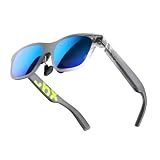
- YOUR PRIVATE 147” BIG SCREEN, ANYWHERE — Plug the a01+ into your phone, tablet, handheld, or laptop and a giant 147” screen appears in front of you—for movies, gaming, or getting work done on the couch, on a flight, or in bed. A true portable display you wear, in a soda-can-sized 210g case that drops in your pocket.
- ALWAYS RIGHT IN FRONT OF YOU — The screen follows your view with smooth, stabilized tracking and stays centered as you look around—nothing to anchor or set up, and no drift to reset. Press play and your big screen is simply there.
- 62G — LIGHT ENOUGH TO FORGET — At just 62g, with three nose-pad sizes and flexible temples, the a01+ stays comfortable through a long movie or flight, even lying down.
- LOOKS LIKE SUNGLASSES, NOT A GADGET — A slim, sunglasses-style frame with a signature semi-transparent chassis and neon logo—light and low-profile enough to actually wear out.
- WORKS WITH YOUR USB-C GEAR — No Battery to Charge — Connects and powers over a single USB-C DisplayPort cable: iPhone 15/16/17, iPad, DP-capable Android phones, Steam Deck, ROG Ally, Mac and PC. Nintendo Switch/Switch 2 and older (Lightning) iPhones need an adapter. For long phone sessions, add the XREAL Hub to charge and watch at once.
- the final consumer model name;
- the exact on-sale date, launch markets, and price;
- whether the first collection includes an in-lens display;
- the complete phone, app, and operating-system compatibility matrix;
- prescription-lens support and fitting options;
- actual camera and video specifications, storage, and recording limits;
- which features work without a paired phone or internet connection;
- charging, warranty, repair, and water-resistance details; and
- how privacy controls, storage, and deletion work in the retail product.
Until Samsung publishes those details, treat rumored names, prices, display hardware, and camera specifications as unconfirmed.
Independent reader supportYour contribution helps us test, update, and keep practical guides available for everyone.Should you wait for Samsung’s glasses?
Wait if you want Samsung and Gemini integration
Waiting makes sense if you want the announced Galaxy-connected, Gemini-assisted experience. The demonstrations establish the intended direction, but do not establish final comfort, camera performance, translation quality, compatibility, or real-world battery results.
Consider available alternatives if you need smart glasses now
If you need camera, audio, or hands-free functions immediately, compare products that are actually available in your market. Check each model’s phone compatibility, recording indicators, privacy controls, lens options, return policy, and stated battery conditions.
Choose Galaxy XR if you want an immersive headset
Galaxy XR is a separate product for people seeking an immersive XR headset experience. It is not a substitute for lightweight everyday eyewear and has its own hardware and price.
Free tools Windows power users keep installed
One-click scans. No signup required.
Do not buy based on the “AR” label alone
If visual overlays are essential, wait for Samsung to confirm display hardware and optical specifications in writing. Audio assistance and camera-based understanding are not the same as information displayed in the wearer’s field of view.
A practical checklist before launch
- Check compatibility: wait for Samsung’s list of supported phones, apps, and operating systems.
- Decide whether you need a display: spoken directions are not the same as lens-projected navigation.
- Budget for the complete setup: compare the eventual eyewear price and any lens or service costs once published.
- Check lens support: partner names do not by themselves confirm prescription compatibility.
- Review privacy behavior: understand the recording indicators, live-sharing behavior, storage, and deletion controls.
- Check regional restrictions: features may vary by market, application, service, law, and consent requirements.
- Wait for independent testing: manufacturer battery estimates and demonstrations cannot establish real-world comfort or performance.
Important distinction: Samsung’s up-to-nine-hour battery figure and up-to-seven additional case charges are manufacturer claims, qualified as variable by Samsung. They are not independent test results.
FAQ
What did Samsung actually reveal about its smart glasses?
Samsung described intelligent eyewear with Android XR, Gemini, a built-in camera, Snapdragon AR1 Gen 1, touch interaction, and connectivity in the frame. Announced experiences include navigation, contextual assistance, translation, capture, note-taking, and live visual sharing.
When will Samsung smart glasses come out?
Samsung said the first collections were planned for fall 2026 in select markets, and Google said audio glasses were coming later that fall. The reviewed official material does not state an exact on-sale date or complete market list.
Outdated Drivers Are Slowing You Down
One free scan finds every outdated or missing driver and matches the right update for your exact hardware.Free scan · exact hardware matchPC Slower Than It Used to Be?
A free scan shows the junk files, broken settings and background clutter dragging Windows down - then fixes them in one click.Free scan · Windows 10 & 11Best Value
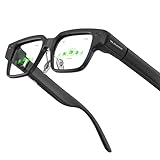
- Dual-Lens Waveguide Display Technology: Engineered with an advanced binocular waveguide optical system, these AR smart glasses deliver a truly immersive viewing experience. The ultra-bright 1200-nit MicroLED display produces crisp, vivid visuals, allowing you to view notifications clearly, real-time data, and digital content. Includes translation of more than 40 languages.
- All-Day Comfort, Virtually Weightless: Designed to feel natural from the moment you put them on, these ultralight 37g AR smart glasses combine an ergonomic frame with two soft nose pads for lasting comfort. From focused work sessions to active evenings, they stay comfortable, secure, and effortlessly wearable throughout your day.
- Your Personal AI Assistant, Always On: Designed for seamless everyday use, these AI AR agent glasses put a powerful AI assistant at your fingertips. Easy access to leading AI models delivers instant answers, intelligent recommendations, and hands-free support, helping professionals, students, and innovators stay informed and productive wherever they go.
- Live Basketball Updates Anywhere: Stay connected with real-time, text-based basketball scores and game updates displayed directly in your field of view. Designed for sports fans on the go, these smart glasses let you follow live games hands-free while commuting, working, traveling, or staying active. It's the ultimate basketball fan-themed gift for sports lovers!
- Real-Time Communication, Translation, Messaging, Music, Teleprompter, Navigation: These smart AR glasses act as a companion, offering real-time multilingual translation. Integrated messaging alerts keep you informed instantly, while the built-in teleprompter supports meetings, presentations, or content creation. Enjoy immersive access to music, notifications, and information suitable for global travelers, business professionals, and presenters who need efficiency and convenience on the go. (Auxiliary route guidance, prioritizing safe observation of the real-world environment.)
Will Samsung’s glasses work with my phone?
Samsung positions the eyewear as an extension of Galaxy phones and wearables, but the reviewed sources do not provide a complete compatibility matrix. Google’s general Android XR statement about pairing audio glasses with Android and iOS does not establish feature parity for Samsung’s product.
Do Samsung’s glasses have a display?
The reviewed Samsung announcement does not confirm an in-lens display for the first collection. Google distinguishes audio glasses from display glasses, and says audio glasses are coming first later this fall.
How long does the battery last?
Samsung claims up to nine hours of active use on one charge and up to seven additional full charges from the case. Samsung says battery performance varies with network conditions, features, apps, settings, and other factors; the figures are not independent test results.
How do the glasses show when they are recording?
Samsung says outward and inner LEDs indicate recording. It also says recording is disabled when the glasses are removed and thwart detection disables recording if the outer LED is blocked. These are Samsung’s stated safeguards.
What’s actually slowing this PC down?
Pick the symptom - the matching free tool is one click away.
How much will Samsung smart glasses cost?
No price is stated in the reviewed official material. Samsung’s announced $1,799.99 U.S. price is for the separate Galaxy XR headset.
Are Samsung smart glasses the same as Galaxy XR?
No. Galaxy XR is a separate immersive headset. Samsung’s intelligent eyewear is a different form factor positioned as an extension of phones and wearables.
The Bottom Line
Samsung has announced camera-equipped intelligent eyewear with Gemini and Galaxy ecosystem integration, but key retail details remain unconfirmed. Samsung planned first collections for fall 2026 in select markets, while Google said audio glasses would arrive later that fall. Samsung has not confirmed an in-lens display for its first collection, so buyers should wait for the final availability, compatibility, price, and hardware details before treating it as display-based AR eyewear.
Quick Recap
Product prices and availability are accurate as of the date/time indicated and are subject to change. Any price and availability information displayed on Amazon at the time of purchase will apply.
The Tool Desk
Outbyte Driver Updater FREEFix the driver behind crashes, sound loss and screen glitchesFind Drivers →Outbyte PC Repair FREERepair Windows errors before they cause bigger problemsFix Now →