Free tools Windows power users keep installed
One-click scans. No signup required.
Some links on this page are affiliate links: if you buy through them we may earn a commission, at no extra cost to you.
For genuinely smaller wrists, the Garmin Forerunner 265S is the safer choice. Its 41.7 mm case, 39 g weight and stated 115–178 mm wrist range are substantially more compact than the Suunto Race 3S at 46 mm, 56 g with strap and 125–175 mm. The Race 3S is the more capable outdoor watch on paper: it offers a much brighter 2,000-nit display, sapphire crystal, 64 GB of storage and up to 38 hours of dual-band GPS. Garmin counters with a lower US list price, longer claimed smartwatch battery life, a lighter case and a clearer running-focused training ecosystem. A 150 mm wrist falls inside both manufacturers’ ranges, but the Garmin should feel less bulky; choose Suunto only if that wrist can comfortably carry a 46 mm watch and its trail-navigation and endurance advantages matter more than compactness.
How do the Suunto Race 3S and Garmin Forerunner 265S compare at a glance?
The watches target different priorities. Garmin builds the Forerunner 265S around a small, lightweight running platform with extensive training and smartwatch functions. Suunto gives the Race 3S a larger case, brighter screen, tougher crystal, more storage and longer high-accuracy GPS claims for trail and endurance use.
As an Amazon Associate I earn from qualifying purchases.
| Specification | Suunto Race 3S | Garmin Forerunner 265S | What it means for a smaller wrist |
|---|---|---|---|
| Case dimensions | 46 × 46 × 11.4 mm | 41.7 × 41.7 × 12.9 mm | Garmin has 4.3 mm less diameter; Suunto is 1.5 mm thinner. |
| Weight | 56 g with strap | 39 g | Garmin is 17 g lighter. |
| Stated wrist range | 125–175 mm | 115–178 mm | Garmin’s published minimum is 10 mm smaller. |
| Display | 1.32-inch, 466 × 466, up to 2,000 nits | 1.1-inch, 360 × 360 AMOLED | Suunto offers the larger, brighter view; Garmin keeps the case compact. |
| Cover material | Sapphire crystal | Corning Gorilla Glass 3 | Sapphire is the stronger scratch-resistance claim, although neither material is immune to damage. |
| Maximum published multi-band GPS time | Up to 38 hours in all-systems GNSS plus multi-band | Up to 15 hours in all-systems GNSS plus multi-band | Suunto lists the longer high-accuracy figure, but the manufacturers’ modes are not a controlled head-to-head test. |
| Smartwatch-mode battery | Up to 12 days | Up to 15 days | Garmin has the longer official everyday-use claim. |
| Storage | 64 GB | 8 GB | Suunto has far more room for maps and music files. |
| Water rating | 5 ATM / 50 m | 5 ATM | Both are rated for ordinary swimming-level exposure. |
| US list price cited in 2026 | $599 for Race 3S Titanium | $449.99 | Garmin is $149.01 cheaper before tax, discounts or retailer changes. |
Dimensions, weights, ratings, storage, battery figures and prices in this table come from the manufacturers’ 2026 product information. Battery numbers are maximum claims for differently defined modes, not results from a single comparative test.
Which watch fits a small wrist better?
The Forerunner 265S has the clear numerical advantage for a small wrist. Garmin lists a 41.7 mm diameter and a 115–178 mm wrist range, while Suunto lists 46 mm and 125–175 mm. The 4.3 mm difference in diameter is visible on the arm, and the 17 g difference is noticeable during all-day wear and running. That conclusion is an inference from the manufacturers’ specifications rather than a laboratory comfort measurement.
Popular on Amazon

- Brilliant AMOLED touchscreen display with traditional button controls; lightweight design in 42 mm for smaller wrists
- Up to 15 days of battery life in smartwatch mode and up to 24 hours in GPS mode
- As soon as you wake up, get your morning report with an overview of your sleep, recovery and training outlook alongside HRV status, training readiness and weather (data presented is intended to be a close estimation of metrics tracked)
- Plan race strategy with personalized daily suggested workouts based on the race and course that you input into the Garmin Connect app and then view the race widget on your watch; daily suggested workouts adapt after every run to match performance and recovery
- Training readiness score is based on sleep quality, recovery, training load and HRV status to determine if you’re primed to go hard and get the most out of your workout (data presented is intended to be a close estimation of metrics tracked)
What does a 150 mm wrist mean?
A 150 mm circumference sits inside both official ranges. It is near the middle of Suunto’s stated range, so the Race 3S may fit securely with the supplied strap, but its 46 mm case will still look and feel larger than the Garmin. If the wrist is close to 125 mm, Suunto’s published lower limit, treat the purchase as a try-on decision: the range indicates strap adjustment, not guaranteed comfort, balance or clearance from the wrist bone.
Does the thinner Suunto case offset its larger diameter?
Only partly. Suunto lists the Race 3S at 11.4 mm thick versus 12.9 mm for Garmin, so it may sit slightly lower under a sleeve. The larger diameter and heavier body usually have more influence on perceived bulk than a 1.5 mm thickness advantage, especially when the watch is worn overnight or during arm movement.
Recommended Free Tools
What does independent comfort evidence say?
Tom’s Guide reviewer Nick Harris-Fry reported that the 46 mm Race 3S was comfortable to wear 24/7 in his testing, while also noting that it is not as small as some competing watches. That is useful evidence from one wearer with one strap and wrist, not a substitute for measuring your own wrist or trying the watch on.
Which watch is lighter during running and sleep?
The Forerunner 265S weighs 39 g, compared with 56 g for the Race 3S with strap. Garmin therefore removes 17 g from the wrist, a meaningful difference for runners who dislike swing weight or sleep in their watch. Suunto’s lower listed thickness may help under clothing, but it does not erase the larger diameter or higher total weight.
Weight is also a balance issue. A larger watch can feel more noticeable when its mass sits farther from the wrist’s center, while a compact case distributes less movement around the arm. Strap tension, the position of the wrist bones and personal tolerance matter, so specifications can identify the safer small-wrist choice but cannot predict every wearer’s comfort.
Which has better battery life for long runs and everyday wear?
Suunto has the stronger published endurance figure in demanding GPS modes; Garmin claims longer smartwatch-only life. Because each company names modes differently, the figures should be used as planning limits rather than a direct ranking of measured runtime.
Quick wins for a faster PC:
Fix the driver behind crashes, sound loss and screen glitchesFind Drivers →Repair Windows errors before they cause bigger problemsFix Now →Scan for outdated or missing drivers - takes under a minuteDriver Scan →| Use case | Suunto Race 3S claim | Garmin Forerunner 265S claim | Practical reading |
|---|---|---|---|
| Highest-accuracy GPS | Up to 38 hours, all-systems GNSS plus multi-band | Up to 15 hours, all-systems GNSS plus multi-band | Suunto’s published figure is much longer, but mode definitions and settings differ. |
| Other GPS modes | Up to 45 hours single-band; up to 120 hours in power-saving GNSS modes | Up to 24 hours GPS-only; up to 18 hours SatIQ | Each brand offers lower-power options that trade some tracking behavior for runtime. |
| Smartwatch mode | Up to 12 days | Up to 15 days | Garmin lists three additional days of maximum everyday use. |
Suunto’s 38-hour number is the decisive advantage for ultramarathons, multi-day hikes and long activities where charging opportunities are limited. Garmin’s 15-hour multi-band claim covers many daily training sessions, while its 15-day smartwatch claim can mean fewer charging interruptions between runs.
How should you interpret the manufacturer maximums?
“Up to” figures depend on satellite settings, screen behavior, sensors, notifications, music and temperature. They are not guarantees for a particular route. Garmin’s modes include GPS-only, SatIQ and all-systems GNSS plus Multi-Band; Suunto lists all-systems GNSS plus multi-band, single-band and power-saving GNSS. Those labels are not identical test conditions.
Also popular on Amazon

- Brilliant AMOLED touchscreen display with traditional button controls; lightweight design in 42 mm for smaller wrists
- Up to 15 days of battery life in smartwatch mode and up to 24 hours in GPS mode
- As soon as you wake up, get your morning report with an overview of your sleep, recovery and training outlook alongside HRV status, training readiness and weather (data presented is intended to be a close estimation of metrics tracked)
- Plan race strategy with personalized daily suggested workouts based on the race and course that you input into the Garmin Connect app and then view the race widget on your watch; daily suggested workouts adapt after every run to match performance and recovery
- Training readiness score is based on sleep quality, recovery, training load and HRV status to determine if you’re primed to go hard and get the most out of your workout (data presented is intended to be a close estimation of metrics tracked)
What did a reviewer observe in ordinary use?
Harris-Fry reported five to six days from the Race 3S with high brightness, always-on display and daily GPS runs. That result came from a reviewer’s specified settings, not from Suunto’s maximum smartwatch claim and not from a comparison test against the Garmin.
Which watch has the better display and screen protection?
Race 3S wins the hardware comparison for outdoor visibility. It uses a 1.32-inch 466 × 466 LTPO or hybrid AMOLED panel rated up to 2,000 nits, covered by sapphire crystal and surrounded by a titanium bezel. The 265S uses a smaller 1.1-inch 360 × 360 AMOLED display with Corning Gorilla Glass 3 and a fiber-reinforced polymer bezel.
Free tools Windows power users keep installed
One-click scans. No signup required.
When does the larger Suunto screen help?
The extra area and resolution make map lines, elevation information and data fields easier to separate while moving. The 2,000-nit rating is especially relevant in direct sunlight. Sapphire is generally selected for stronger scratch resistance than conventional cover glass, but it can still chip or break after a hard impact; the rating does not make the watch indestructible.
Why might a runner prefer Garmin’s smaller panel?
The 1.1-inch display allows Garmin to keep the entire case at 41.7 mm. That compact footprint is the reason the 265S is more suitable for narrow wrists, even though it sacrifices map area and some outdoor readability headroom. A small-wrist runner who mainly views pace, heart rate and alerts may value the reduced bulk more than the larger Suunto canvas.
Are Suunto’s maps better than Garmin’s on the Forerunner 265S?
Suunto offers the more explicit mapping package in this comparison. Suunto says Race 3S and Race S include free worldwide offline maps, and the Race 3S adds 64 GB for map and music storage. Tom’s Guide described the maps as bright and clear, with quick loading and route-elevation guidance.
There is an important limitation: Harris-Fry described the Race 3S maps as non-routable. They can show your position and a prepared route, but they do not create a new turn-by-turn route on the watch in the way a fully routable mapping system does. The reviewer noted that some Garmin watches can provide routable maps; that observation should not be read as a claim that every Forerunner 265S feature matches Garmin’s higher-end mapping models.
The Tool Desk
Outbyte PC Repair FREEClear out junk files and repair common Windows errorsFree Scan →Outbyte Driver Updater FREEFix the driver behind crashes, sound loss and screen glitchesFind Drivers →Who benefits most from the mapping difference?
- Trail runners following planned courses: Race 3S combines offline maps, elevation guidance, bright viewing and large storage.
- Road runners using structured workouts: The 265S’s smaller screen is usually sufficient for pace, interval and heart-rate fields.
- Explorers wanting on-watch route creation: Verify the exact mapping functions of the model and software version before buying; “offline maps” and “routable maps” are not interchangeable terms.
Which watch offers better training analysis and health features?
The Garmin is the stronger choice when training interpretation and running-oriented guidance are the priority. Garmin lists training readiness, improved training status, sleep score and related insights, alongside multi-band GPS, music storage and Garmin Pay. These features make the 265S a broader daily training and smartwatch companion.
Suunto positions Race 3S around more than 120 sport modes, SuuntoPlus tools, offline maps, trail guidance and Suunto AI Coach. The AI Coach is intended to turn personal data and questions into actionable guidance. Suunto vice president Daniel Das Bhowmik said the company built the Race 3S to combine long battery life with a compact, light case and introduced AI Coach to simplify that information.
Also popular on Amazon

- Brilliant AMOLED touchscreen display with traditional button controls; lightweight design in 42 mm for smaller wrists
- Up to 15 days of battery life in smartwatch mode and up to 24 hours in GPS mode
- As soon as you wake up, get your morning report with an overview of your sleep, recovery and training outlook alongside HRV status, training readiness and weather (data presented is intended to be a close estimation of metrics tracked)
- Plan race strategy with personalized daily suggested workouts based on the race and course that you input into the Garmin Connect app and then view the race widget on your watch; daily suggested workouts adapt after every run to match performance and recovery
- Training readiness score is based on sleep quality, recovery, training load and HRV status to determine if you’re primed to go hard and get the most out of your workout (data presented is intended to be a close estimation of metrics tracked)
Is Garmin’s analysis easier to understand?
Harris-Fry wrote that Garmin and Coros made training analysis easier to understand in his view, while the Race 3S presentation was heavier on acronyms. That is a usability opinion from one reviewer, not a universal measure of coaching quality. Runners who already understand Suunto’s metrics may prefer its depth, while newcomers may find Garmin’s readiness and status labels more immediately legible.
What smart features does Suunto leave out?
The reviewer reported that Race 3S lacks NFC payments and streaming-service integration. It can store transferred music files and connect to Bluetooth headphones, but it is not presented as a full phone-replacement platform. Garmin lists Garmin Pay and music storage for the 265S, giving it the more complete smart-feature set for runners who want payments and offline listening from the watch.
Which watch has the better storage and strap ecosystem?
Race 3S provides 64 GB of storage, eight times Garmin’s listed 8 GB. That capacity is useful when offline maps and music files share the same device. The 265S still has enough space for its supported music and activity needs, but it offers less headroom for large map or media libraries.
Suunto specifies a 22 mm strap. Garmin uses an 18 mm industry-standard quick-release band. The widths are different, so a replacement strap made for one watch should not be assumed to fit the other. Check the lug width and release mechanism before ordering accessories.
Can you swim with either watch?
Both watches carry a 5 ATM rating; Suunto additionally states 50 m. That rating supports ordinary swimming-level water exposure under the manufacturers’ conditions. It is not a promise that either watch is suitable for scuba diving, high-pressure water sports or every type of prolonged submersion, so follow each brand’s care guidance for those activities.
How much do the watches cost, and does the premium make sense?
At the cited US prices, Suunto Race 3S Titanium is $599 and Garmin Forerunner 265S is $449.99. The Garmin is therefore $149.01 less before taxes, sales or retailer discounts. Suunto’s price is justified only if you will use its larger screen, sapphire crystal, 64 GB storage, offline trail maps or longer high-accuracy GPS endurance.
What’s actually slowing this PC down?
Pick the symptom - the matching free tool is one click away.
Suunto’s US page showed a preorder window from October 15 through October 29, 2026, with estimated shipping beginning October 29. Tom’s Guide also reported a US launch on October 15, 2026 at $599 and considered the price increase a major value concern versus less expensive alternatives. Stock, promotions and shipping estimates can change, so confirm the current regional listing before paying.
Independent reader supportYour contribution helps us test, update, and keep practical guides available for everyone.Which watch should each type of runner buy?
Choose Garmin Forerunner 265S if your wrist is very small
The 41.7 mm case, 39 g weight and 115 mm stated minimum make Garmin the conservative fit choice. It is also the better value at the cited US prices and offers training readiness, sleep insights, payments and music. A runner who mostly needs reliable GPS, structured workouts and everyday notifications is unlikely to benefit from carrying the Race 3S’s larger trail hardware.
Also popular on Amazon
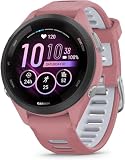
- Brilliant AMOLED Touchscreen Display: Features a colorful touchscreen display with traditional button controls in a lightweight 42 mm design for smaller wrists 115–178 mm (4.5"–7.0")
- Extended Battery Life: Provides up to 15 days of battery life in smartwatch mode and up to 24 hours in GPS mode for continuous tracking
- Morning Report Overview: Receive a comprehensive morning report with an overview of your sleep, recovery and training outlook alongside HRV status, training readiness and weather data presented as a close estimation of metrics tracked
- Personalized Race Strategy Planning: Plan race strategy with personalized daily suggested workouts based on the race and course that you input into the Garmin Connect app, with daily suggested workouts that adapt after every run to match performance and recovery
- Training Readiness Score: Score is based on sleep quality, recovery, training load and HRV status to determine if you're primed for your workout, with data presented as a close estimation of metrics tracked
Choose Suunto Race 3S for trail running and ultradistance use
Race 3S is the better tool when 46 mm feels acceptable and the activity demands long GPS endurance, bright map viewing, sapphire protection or substantial storage. Its published 38-hour dual-band figure is particularly compelling for long events. Measure carefully first, because the official 125 mm minimum leaves less fit margin than Garmin’s.
Choose Garmin for coaching and smartwatch integration
Garmin’s listed training-readiness and sleep features, Garmin Pay and music support create the more complete connected-running experience. The reviewer’s observation that Garmin’s analysis was easier to understand may matter if you want straightforward explanations instead of a metric-heavy interface.
Do these 3 things before closing this tab:
1Fix the driver behind crashes, sound loss and screen glitches2Clear out junk files and repair common Windows errors3Scan for outdated or missing drivers - takes under a minuteChoose Suunto when outdoor hardware outranks price
The Race 3S combines the brighter display, sapphire crystal, titanium bezel, offline maps and much larger storage. Those are tangible advantages for exposed trails and long adventures, but they come with a heavier, wider watch and a $149.01 higher cited list price.
How should you decide using your own wrist measurement?
Use the manufacturer ranges as a first filter, then account for case diameter and your preferred wearing position.
- Wrap a flexible tape or a strip of paper around the wrist where the watch will sit, keeping it snug without compressing the skin.
- Measure the circumference in millimetres and compare it with Garmin’s 115–178 mm and Suunto’s 125–175 mm published ranges.
- If the measurement is below 125 mm, treat Race 3S as a try-on purchase because it falls outside Suunto’s stated range.
- If both ranges include your wrist, compare the 41.7 mm and 46 mm case diameters. Place a circle of each diameter on paper or use a retailer’s try-on tool to visualize coverage.
- Consider whether you sleep in the watch, wear tight sleeves or dislike movement. Those factors make the 17 g weight difference and larger Suunto footprint more consequential.
- Only after fit is acceptable should you choose between Suunto’s trail hardware and Garmin’s lighter training-and-smartwatch package.
What are the main strengths and compromises?
| Model | Main strengths | Main compromises |
|---|---|---|
| Suunto Race 3S | Up to 38 hours dual-band GPS; 2,000-nit 1.32-inch display; sapphire crystal; titanium bezel; 64 GB storage; free worldwide offline maps; more than 120 sport modes. | 46 mm and 56 g; stated minimum wrist size of 125 mm; maps described as non-routable by Tom’s Guide; no NFC payments or streaming-service integration reported; higher cited price. |
| Garmin Forerunner 265S | 41.7 mm case; 39 g weight; 115 mm stated minimum wrist size; up to 15 days smartwatch mode; training readiness and sleep insights; Garmin Pay; music storage; lower cited price. | Smaller 1.1-inch display; Gorilla Glass 3 rather than sapphire; 8 GB storage; lower published multi-band GPS maximum; less trail-oriented hardware. |
Final recommendation: which is better for smaller wrists?
The Garmin Forerunner 265S is the better answer for most smaller-wrist runners because it is narrower, lighter and officially fits a smaller wrist. It also costs less at the cited US prices and supplies the clearer package of running analysis and smart features.
The Suunto Race 3S is the better specialist choice, not the better universal fit. Buy it when a 46 mm case is comfortable and you specifically need its longer published dual-band GPS endurance, brighter display, sapphire crystal, offline trail maps or 64 GB storage. For everyone else—especially a runner near the lower end of the fit range—the Garmin’s compactness is the deciding advantage.
Frequently Asked Questions
Can I use the same replacement strap on both watches?
No. Suunto specifies a 22 mm strap, while Garmin uses an 18 mm industry-standard quick-release band. Match the strap width and attachment system to the watch before ordering.
Does sapphire crystal make the Race 3S impossible to scratch or break?
No. Sapphire is the more scratch-resistant material claim in this comparison, but a sharp impact can still chip or fracture it. The bezel, case and the way the watch is worn also affect real-world durability.
Are the Race 3S and Forerunner 265S safe for swimming?
Both carry a 5 ATM water rating, and Suunto states 50 m. That supports ordinary swimming-level exposure under the makers’ conditions, but it should not be treated as a blanket endorsement for scuba diving or high-pressure water activities.
Does the Race 3S require a subscription for its offline maps?
Suunto says Race 3S includes free worldwide offline maps. You still need to download and manage map data before heading out, and the reviewer’s description indicates that the maps are for viewing and following routes rather than creating fully routable courses on the watch.




