What’s actually slowing this PC down?
Pick the symptom - the matching free tool is one click away.
A minute repeater tells the time when its wearer activates it: low strikes count the hours, paired notes mark quarter-hours, and higher strikes count the remaining minutes. Its history runs from late-seventeenth-century English repeating watches through early German minute mechanisms, Breguet’s gong spring, and the first wristwatch examples. No single inventor can claim an uncontested beginning.
What is a minute repeater?
A repeater is a watch mechanism that sounds the time on demand, usually when the wearer operates a slide or pusher. That distinguishes it from a passing strike, which sounds automatically as time passes. A minute repeater is the most precise common form: it indicates hours, quarter-hours, and the minutes since the last quarter.
Other repeaters give less precise readings. A quarter repeater sounds hours and quarters; a five-minute repeater adds elapsed five-minute intervals. A grande sonnerie is different again: it strikes hours and quarters automatically as time passes and can also repeat the time on demand.
How does a minute repeater work?
Operating the slide or pusher primes the striking mechanism. Racks and feelers read cams, often called snails, shaped to represent the current hour, quarter, and minute. That sets how many times the hammers will strike. Once released, a regulating mechanism controls the pace while the hammers hit gongs inside the watch.
#1 Best Overall

- Premium Stainless Steel Construction: 316L stainless steel case with screw crown and steel closed caseback for durability and longevity
- Seagull ST1721 Jump Hour Mechanical Movement: Features reliable automatic mechanical movement with unique jumping hour complication
- Comfortable Genuine Leather Strap: Equipped with genuine leather strap and pin buckle for secure and comfortable wear
- Sapphire Crystal Protection: AR coated sapphire crystal provides scratch resistance and clarity with diameter of 39mm, case thickness of 10.4mm, and lug to lug measurement of 46.8mm
- Standard Band Width: 20mm to 18mm band width allows for easy strap replacement and customization options
The usual sequence uses a low tone for each hour, a paired high-low tone for each quarter, and a higher tone for each remaining minute. For example, the Fondation Haute Horlogerie’s explanation of 11:38 gives eleven low strikes, two paired quarter strikes, and eight high minute strikes. The listener decodes the grouped sounds; the watch is not automatically chiming each passing minute.
The resulting sound is shaped by many design choices: hammer form and direction, gong material and geometry, gong length and attachment, case material and construction, and features or openings that affect resonance. These variables help explain why repeaters can sound different, but they do not provide a universal ranking of watches by acoustic quality.
Rank #2

- COSC Certified Chronometer
- Case Size: 39.00 mm, Band Width: 20 mm, Case Thickness: 10.98 mm
- Automatic movement, 316L solid stainless steel bracelet, Roman dial type, Date
- Water-resistant up to a pressure of 10 bar (100 m / 330 ft): suitable for short periods of recreational swimming and showering, but no diving or snorkeling.
Who invented the repeater?
The repeater emerged through shared work in late-seventeenth-century England, and historical accounts differ in how they date and assign its beginnings. The Metropolitan Museum of Art says Edward Barlow invented a repeating clock device in 1676, and that Thomas Tompion made a repeating watch for Barlow in 1685. It also recounts how Daniel Quare opposed Barlow’s patent application and won a contest before the English king in 1687. The Fondation Haute Horlogerie instead describes the quarter-repeater principle as the work of Barlow, also known as Booth, Tompion, and Quare in 1685, with Quare granted the patent in 1687. These accounts support a collaborative, contested origin rather than a simple one-person invention story.
Early quarter repeaters struck the preceding hour and quarter on demand. The Metropolitan Museum’s George Graham quarter-repeating watch, for instance, uses its pendant stem as a plunger and strikes on a bell inside the case. As the mechanisms developed, some repeaters added half-quarters, five-minute intervals, or individual minutes.
Rank #3

- Swiss Made Watch
- Movement: Automatic Mido Caliber 80 - Power reserve 80 hours
- Case Type: Angular stainless steel case with octagonal bezel - See-through case back|screw-down crown
- Case Size: 40mm - Band Width: Stainless steel bracelet tapers from 24mm to 20mm - Case Thickness: 9.9mm
- The Octagonal bezel is emphasised by a horizontal relief stamped dial while white Super-LumiNova enhances the visibility of the indexes.Covered by a Sapphire crystal with double sided anti-reflection treatment for clear visibility.
When did repeaters begin striking individual minutes?
The Fondation Haute Horlogerie identifies minute-repeater watches made in Friedberg, southern Germany, around 1710, though their maker is unknown. Its glossary places the first mechanisms to indicate elapsed minutes precisely in the period from 1700 to 1710, mostly in southern Germany. Thomas Mudge is traditionally credited with the minute repeater around 1750; the institution cites a watch he made for Ferdinand VI of Spain, and the Patek Philippe Museum catalog also attributes a minute-striking mechanism to Mudge around that year. The earlier German examples mean that Mudge should not be described as unquestionably the first maker.
Why did watchmakers replace bells with gongs?
Early repeaters struck bells mounted inside the case. In the late eighteenth century, Abraham-Louis Breguet introduced a gong spring in place of the bell, allowing the striking element to run around the movement rather than occupy the same space as a conventional bell. Breguet’s own timeline dates his first repeater with a gong spring to 1783; the Fondation Haute Horlogerie gives 1787, while the Patek Philippe Museum places the change in the late eighteenth century.
Rank #4

- 【Precise Timekeeping & Self-Winding】The automatic watch is equipped with a high-quality movement, every component of this watch is meticulously manufactured and calibrated to minimize friction and enhance operational stability. The Self-winding movement delivers a consistent supply of power by the natural movement during daily wear, ensuring precise and reliable timekeeping.
- 【Solid & Durable Build】The analog watch is crafted from premium solid stainless steel, featuring scratch resistance, corrosion resistance and wear resistance,can withstand daily wear and tear. The mechanical watch lens is made of hardened mineral glass, featuring high clarity and scratch resistance, ensuring long-lasting durability.
- 【Multi-Functional Calendar Display】The men's wrist watch features a complete calendar display that clearly shows the year, month, date and day of the week. No need to check additional calendars — a quick glance at your wrist keeps you informed for easier daily scheduling, work planning and life organization.
- 【Practical & Reliable Performance】The men's watch features reliable 30m (90ft) water-resistant performance, effectively protecting against daily splashes, hand washing, rain and sweat, making it perfect for daily wear and casual use.
- 【Classic Size & Perfect Gift】The automatic mechanical watch specially designed with a case diameter of 42mm suits most male wrist sizes. The minimalist and timeless business-casual style perfectly matches formal suits, daily casual wear, and outdoor outfits, making it an ideal gift for birthdays, anniversaries, Father's Day, Christmas, and business gifting.
Breguet’s timeline says the spring was initially straight and was later coiled around the movement. It credits the change with reducing case thickness and producing a more harmonious, discreet tone. Breguet also made mechanisms that struck quarters, half-quarters, and minutes.
Independent reader supportYour contribution helps us test, update, and keep practical guides available for everyone.How did lighting and manufacturing change repeater production?
Repeaters, especially minute repeaters, were costly and difficult to make. The Fondation Haute Horlogerie links the modern matchstick’s introduction in 1845 to a downturn in repeater production: lighting candles or oil lamps became easier and safer, reducing the practical value of a watch that could tell the time in darkness. It also says Antoine LeCoultre’s mechanically machined repeater movements in 1870 lowered prices and helped production recover. These are historical explanations for a change in demand and cost, not quantified estimates of their effects.
Free tools Windows power users keep installed
One-click scans. No signup required.
Best Value
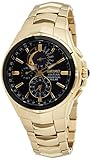
- Powered by light energy, with no battery change required, this model has a 6-month power reserve once fully charged
- Case Diameter: 44.0mm
- The sunray finish black dial features chronograph and alarm subdials and perpetual calendar functions such as leap year, month, day, and date indicators
- The angular gold finish stainless steel case is paired with an integrated bracelet and includes a sapphire crystal and cabochon crown
- Water-resistant to 10 bar, 100 meters (330 feet)
When did the minute repeater reach the wrist?
The Fondation Haute Horlogerie identifies an Audemars Piguet watch completed in 1892 as the first minute repeater wristwatch. It says the watch followed an order from Louis Brand & Frères, the firm that would later become Omega. The milestone marks the move of a traditionally delicate, space-intensive complication from the pocket to the wrist.
What does the minute repeater represent today?
The minute repeater remains a prestigious and demanding complication made by a small number of manufactures, according to the Fondation Haute Horlogerie. Its history also includes variants: Kari Voutilainen’s one-of-a-kind Decimal Minute Repeater GMT, made to order in 2013, chimes hours, ten-minute increments, and minutes. That example illustrates the mechanism’s capacity for different time divisions; it does not establish a current model lineup or availability.
Quick Recap
Product prices and availability are accurate as of the date/time indicated and are subject to change. Any price and availability information displayed on Amazon at the time of purchase will apply.