Some links on this page are affiliate links: if you buy through them we may earn a commission, at no extra cost to you.
A watch complication is any mechanical function beyond the basic display of hours, minutes and seconds. A chronograph times an event, a GMT tracks another time zone, a power-reserve indicator shows how much energy remains, and calendar, moon-phase, repeater and tourbillon mechanisms add further information or mechanical work. The most useful complication depends on the problem you want to solve: travelers usually benefit from a GMT or world timer, while a hand-wound watch owner may value a power reserve more than an elaborate astronomical display.
Complications also add setting procedures, energy demands, parts and servicing considerations. Understanding what each one does—and what it does not do—helps you choose a watch for practical utility, legibility or appreciation of watchmaking.
As an Amazon Associate I earn from qualifying purchases.
Recommended Free Tools
What is a watch complication?
In watchmaking, a complication is a mechanical function that does more than display hours, minutes and seconds. The term describes added capability, not a defect. A simple date window qualifies, as do a chronograph, annual calendar or minute repeater.
Each extra function requires additional components and coordination inside the movement. The mechanism must fit in the case, draw energy without disturbing timekeeping and remain adjustable over years of use. More indications do not automatically mean a better watch: they can improve usefulness, increase visual complexity or exist primarily to demonstrate technical skill.
Popular on Amazon

- Automatic Mechanical Movement: Seagull st1780 automatic movement powers central hours and minutes, a power reserve indicator, pointer date display, and small seconds subdial
- Sapphire Crystal And Steel Case: Sapphire crystal helps resist everyday scratches, while the 316L stainless steel case provides a refined brushed finish for daily wear
- Balanced 40 mm Fit: 40 mm case diameter, 12 mm thickness, 48 mm lug-to-lug length, and 20 mm lug width create a versatile and balanced wrist profile
- Screw-Down Crown And Date Setting: Unscrew the crown counter-clockwise before winding or setting the time; press the recessed side corrector to advance the pointer date
- Low-Light Readability And 50 m Water Resistance: Japanese luminous material supports visibility after light exposure; suitable for daily splashes when the crown is fully secured
Complication versus chronometer
A chronograph is a stopwatch function. A chronometer is a watch that has passed a precision-testing standard. The words sound similar but describe different things; a chronograph can be a chronometer, but neither term is a synonym for the other.
What does a chronograph do?
A chronograph measures elapsed time while the watch continues to show the current time. Pressing the start pusher engages a dedicated seconds counter; pressing stop freezes the elapsed reading, and reset returns the hands or registers to zero. Depending on the design, separate registers record minutes and hours.
The Tool Desk
Outbyte Driver Updater FREEFix the driver behind crashes, sound loss and screen glitchesFind Drivers →Outbyte PC Repair FREEClear out junk files and repair common Windows errorsFree Scan →Chronographs grew from astronomical observation and became practical tools in aviation, military operations and motor racing. Today they may be used for timing an interval, but many owners also enjoy watching the additional hands and registers operate.
Common chronograph types
- Standard chronograph: Start, stop and reset are separate actions, usually controlled by two pushers.
- Flyback chronograph: A single press resets the running counter and immediately starts a new timing interval, useful when successive events must be timed quickly.
- Split-seconds (rattrapante) chronograph: Two superimposed seconds hands start together. A separate control stops one hand to record an intermediate result while the other continues, allowing two events to finish separately.
Chronograph layouts vary. A central seconds hand is easy to follow for short intervals, while subdials can keep the ordinary time display visually separate. A crowded dial may be harder to read at a glance, especially when several scales overlap.
What is the difference between GMT, dual time and world time?
These complications all show more than one time zone, but they present and set that information differently.
| Type | Typical display | Best suited to | Main trade-off |
|---|---|---|---|
| GMT | Local time on central hands; home time on an additional hand read against a 24-hour scale | Travelers who need a second reference zone | Reading a 24-hour hand takes a little practice; some movements make local-time adjustment easier than others |
| Dual time | Local time plus a separate 12-hour subdial, often with an AM/PM indication | People who want a compact home-time display | A 12-hour subdial needs a day/night cue to avoid ambiguity |
| World timer | A 24-hour ring paired with a city disc representing 24 time zones | Readers coordinating across many regions at once | City rings and multiple scales can reduce legibility and add dial clutter |
How a GMT is normally read
Set the central hour and minute hands to local time. The extra hand points to home time on the 24-hour scale, making the difference between morning and evening explicit. Some modern GMT movements let the local-hour hand jump independently, so the date and home-time hand remain undisturbed when you cross time zones; the exact setting sequence depends on the caliber and its crown positions.
When a world timer makes more sense
A world timer is useful when you regularly compare several locations rather than one home zone. Turning the city disc or operating its control aligns a reference city with the current time, after which the 24-hour ring gives the corresponding time elsewhere. The information is comprehensive, but the dial demands more attention than a simple GMT.
What does a power-reserve hand mean?
A power-reserve indication shows the energy remaining in a mechanical watch’s mainspring. On a hand-wound movement, it tells you when to wind again; on an automatic or highly complicated movement, it warns that the watch may stop if it is not worn or wound soon.
The display can be a hand on a graduated scale, a disc or a linear indicator. It is especially helpful when a movement has several energy-hungry functions or when consistent torque matters for operation. NOMOS classifies power reserve among smaller complications and gives its Metro date power reserve, references 1101 and 1101.SB, as an example of a mechanical watch combining a date with this indication.
Also popular on Amazon

- Classic, simple, versatile design with Date and Power Reserve display
- High quality mechanical watch,Self-winding movement . Powered by everyday movement of your arm,Travel time accurate
- Protective Mineral Dome Lens Window,Alloy Case,Black Genuine Leather Strap
- 100% Brand New & Shipped with Tracking No.Own Factory and All the Watches are Original
- Come with Original Gift Box and Watch Manual.Two Years for Warranty
How to use the indication
- Check whether the scale is marked from empty to full, or with hours remaining.
- Wind the watch according to its instructions until the indicator reaches the full position; do not force the crown after winding resistance becomes firm.
- As the mainspring unwinds, use the hand or disc to decide whether the watch needs winding or wearing.
The indicator reports stored energy, not an accuracy score. A nearly full spring does not guarantee chronometer-level precision, and a low reading does not mean the movement is damaged.
How do date, annual-calendar and perpetual-calendar watches differ?
All three show calendar information, but their mechanical programming handles month lengths differently.
| Calendar type | What it handles automatically | Owner correction |
|---|---|---|
| Date display | Advances the date by one each day | Usually requires correction after months shorter than 31 days |
| Annual calendar | Distinguishes 30-day and 31-day months | One correction at the end of February each year |
| Perpetual calendar | Programs month lengths and leap years | Generally no correction until 2100 under the Gregorian calendar |
Why February matters
An annual calendar knows that April has 30 days and May has 31, but it does not account for February’s variable length. It therefore needs a manual correction at the end of February every year.
A perpetual calendar adds a longer mechanical memory for month lengths and leap years. The Gregorian calendar omits the leap day in century years that are not divisible by 400, so 2100 is the next exceptional year. The mechanism normally runs correctly until then, assuming it remains powered and properly set.
What a perpetual calendar may display
Layouts can include the date, day, month, a four-digit year and a moon phase. The Kurt Klaus perpetual calendar introduced in the Da Vinci in 1985 is one example. Its maker describes a construction of about 80 parts and a programmed cycle lasting 577.5 years; those are manufacturer figures, not an independent industry standard.
What does a moon-phase complication do?
A moon-phase display tracks the lunar cycle, usually with a rotating disc that shows the visible portion of the moon through an aperture. It is often paired with a calendar because both are astronomical indications.
Its practical value is limited for most daily schedules, but its visual appeal and connection to traditional astronomy are central reasons people choose it. The display introduces another setting consideration: if the watch stops for an extended period, the moon phase may need to be advanced along with the date and time.
How does a minute repeater work?
A minute repeater chimes the current time on demand. A slide or similar control releases hammers that strike gongs: low tones indicate hours, a high-and-low pair indicates quarter-hours, and high tones indicate remaining minutes. For example, 2:37 would sound two low notes, two paired quarter-hour strikes and seven high notes.
The mechanism allows the time to be heard in darkness or without looking at the dial, but it is among the most demanding complications to build, regulate and service. Case construction, gong material and the acoustics of the movement all affect the result, so this is usually chosen for horological craft and enjoyment as much as for utility.
Also popular on Amazon

- MANUAL WINDING: Designed for precision, this hand-wound watch is powered by the exclusive H-23 movement, offering an extended power reserve for reliable performance.
- WATER RESISTANT TO 100M: Withstands 10 bar (100 meters), ideal for swimming and outdoor pursuits. Perfect for those who demand resilient accessories that accompany them confidently on their explorative journeys.
- BUILT FOR ADVENTURE: Featuring a 40mm stainless steel case, a black dial and stainless steel bracelet, this watch combines durability and functionality. With Super-LumiNova and sapphire crystal, it’s ready to tackle your outdoor challenges.
- PREMIUM MATERIALS: Stainless steel bracelet with butterfly clasp offers day-long comfort. The clean lines and sophisticated design make it the perfect accessory for both casual wear and formal attire, merging functionality with fashion.
- RICH HERITAGE: Over a century of Hamilton's legacy in field watches, admired for precision. Originally designed for WWI soldiers, these timepieces combine rugged durability with history, showcasing Hamilton's commitment to quality and innovation.
Minute repeater versus alarm
An alarm is a related striking complication that sounds at a preset time. A repeater reports the current time when activated; an alarm waits for the time you selected. Both require a separate energy path and controls, and both can be sensitive to incorrect setting procedures.
Is a tourbillon really a complication?
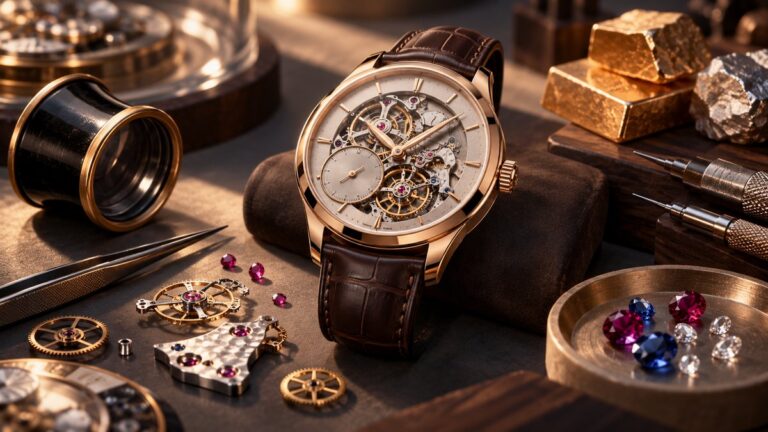
A tourbillon places the balance, hairspring and escapement in a rotating cage, traditionally making one rotation per minute. Rotating the regulating assembly averages the effect of gravity in different vertical positions, an approach originally intended to improve precision in portable watches.
Strictly speaking, a tourbillon does not add a user-facing display. Watchmaking convention nevertheless treats it as a complication because it adds a complex mechanical system beyond a basic movement. Its modern appeal is often visual and technical rather than a guaranteed accuracy advantage in everyday wear.
What is a carrousel?
A carrousel pursues a similar positional-averaging idea but uses two gear trains: one supplies energy and the other rotates the cage. The architecture differs from a tourbillon even when the visible effect appears similar.
Quick wins for a faster PC:
Scan for outdated or missing drivers - takes under a minuteDriver Scan →Clear out junk files and repair common Windows errorsFree Scan →Fix the driver behind crashes, sound loss and screen glitchesFind Drivers →What is a grand complication?
Traditionally, a grand complication combines at least a chronograph, a minute repeater and a perpetual calendar. A tourbillon may be added as a prestige element. There is no universally regulated function count, however, so manufacturers and collectors may use the term differently.
Rather than treating the label as a certification, inspect the actual functions, their setting methods and the movement’s service requirements. A watch with fewer indications can be more useful and easier to live with than one carrying a grand-complication name.
Independent reader supportYour contribution helps us test, update, and keep practical guides available for everyone.How should you compare watch complications?
Use the following questions when two watches offer different mechanical features.
What problem does it solve?
- Choose a chronograph for elapsed timing.
- Choose a GMT or dual time for one additional reference zone.
- Choose a world timer when many zones must be visible together.
- Choose a power reserve for winding awareness.
- Choose an annual or perpetual calendar to reduce date corrections.
- Choose a repeater, moon phase or tourbillon primarily for acoustic, astronomical or mechanical enjoyment.
Can you read it quickly?
Central hands are generally fastest to read. Subdials, 24-hour scales and city rings add information but require more interpretation. Multi-complication dials can be attractive while becoming difficult to scan in low light or during motion.
Outdated Drivers Are Slowing You Down
One free scan finds every outdated or missing driver and matches the right update for your exact hardware.Free scan · exact hardware matchWindows Errors? Fix Them Before They Spread
Repair common Windows errors and clear accumulated junk for a smoother, more stable PC - no reinstall needed.Free scan · no reinstallHow much setting work is acceptable?
Every added function has a maintenance routine. A basic date may need several corrections each year; an annual calendar needs one at February’s end; a perpetual calendar normally runs without correction until the 2100 exception. A GMT may require a local-hour adjustment when traveling, while a stopped moon-phase watch can require several coordinated corrections.
Also popular on Amazon

- SILVER DIAL: this beautiful men’s watch features a deeply-patterned, glossed silver watch dial with blue dial indicator hands and a date calendar to keep you organized
- AUTOMATIC: these self-winding automatic watches for men are powered by your natural movements, with 41 hours of reserve power
- STAINLESS STEEL: Features a durable 40.5mm stainless steel watch case with see-through caseback and a beautiful silver bracelet.
- WATER-RESISTANT: these men’s wrist watches are water-resistant to 50 meters
- 4R35 CALIBER: equipped with the reliable 4R35 caliber, this precise men’s watch ensures the most accurate automatic timekeeping
Where does the energy go?
A mechanical movement has a finite energy supply. Multiple mechanisms must share that supply without interfering with the escapement or one another. Complications that are activated frequently, such as a chronograph or repeater, can place additional demands on the movement, making winding habits and service condition important.
What will service involve?
More parts mean more potential adjustment points and a more specialized service job. Do not infer quality from the number of visible indications. Ask for the movement’s recommended service interval, authorized service options and instructions for operating calendar correctors or striking controls safely.
Which complication is most useful for travel?
For most frequent travelers, a GMT is the clearest starting point: it keeps local time on the central hands while showing home time on a 24-hour hand. A dual-time watch can be easier to read if you prefer a dedicated subdial, while a world timer is better when you coordinate with several regions at once.
Free tools Windows power users keep installed
One-click scans. No signup required.
Choose based on how many zones you actually need, whether you prefer a 12-hour or 24-hour home-time display, how easily the local time can be adjusted, and whether the additional scale remains legible. The most elaborate travel display is not automatically the most convenient one.
Frequently Asked Questions
Can a quartz watch have a complication?
Yes. Complication describes an added function, not the power source. Quartz watches can include chronographs, alarms, calendars and multiple time zones, although traditional watchmaking discussions often reserve the term for mechanical calibers.
How often does an annual calendar need to be corrected?
It normally needs one manual correction at the end of February, because it cannot know whether February has 28 or 29 days. It handles the other 30- and 31-day months automatically.
What happens if a perpetual-calendar watch stops?
Its programmed calendar no longer advances while the movement is stopped, so the date, day, month, leap-year indication and moon phase may all need to be reset. The exact correction sequence is movement-specific; using the wrong quick-set period can damage some mechanisms.
Do these 3 things before closing this tab:
1Clear out junk files and repair common Windows errors2Fix the driver behind crashes, sound loss and screen glitches3Repair Windows errors before they cause bigger problemsDoes a tourbillon make a watch more accurate?
It was invented to average positional effects of gravity, but a tourbillon is not a guarantee of superior real-world accuracy. Regulation, construction, magnetism, shocks and the owner’s wearing pattern also affect performance.
Why are minute repeaters so expensive to service?
They combine a time-reading mechanism with hammers, gongs, slides and carefully tuned acoustics. Correctly adjusting the strike sequence and sound requires specialized knowledge in addition to ordinary movement servicing.