The Tool Desk
Outbyte PC Repair FREERepair Windows errors before they cause bigger problemsFix Now →Outbyte Driver Updater FREEScan for outdated or missing drivers - takes under a minuteDriver Scan →When you shop for watches, you’ll frequently see cases and bands made out of stainless steel. Of course, many watch straps are leather, cloth, or any number of other materials, but for the case, stainless steel is usually your best bet. This is because stainless steel doesn’t rust and is remarkably strong, especially for the purposes of wristwear.
In recent years, stainless steel’s dominance in the arena of wristwatches has started to be challenged by an even stronger metal: titanium.
Used in aeronautical and astronautical designs, titanium is one of the toughest and most abundant minerals on earth. Equally important in terms of design, though, is its lightness.
For the discerning watch buyer, choosing between a stainless steel or titanium watch can come down to a number of factors. We’re here to break those factors down for you.
As an Amazon Associate I earn from qualifying purchases.
Titanium vs Stainless Steel: Price
Let’s get this one out of the way first, because for most people price will be the ultimate deciding factor. The primary disadvantage of titanium watches is price.
No matter the relative qualities and advantages of the material, for many people, titanium’s higher price tag will be the only thing they see.
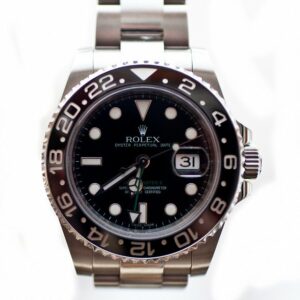
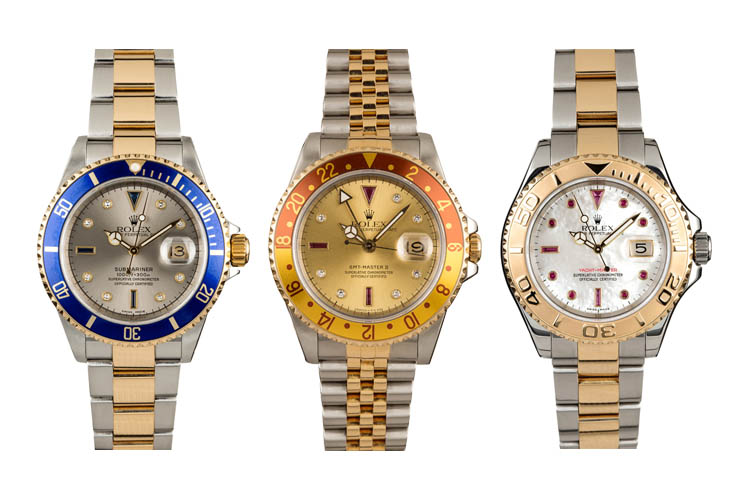
Stainless steel is a cheaper material than titanium, which means, all other things being equal, a watch made of stainless steel will generally cost less. Of course, stainless steel is a fairly broad term, so some steel-made watches (like the Oystersteel Submariner by Rolex) are priced high.
In general, titanium is more expensive than stainless steel, and their respective watches reflect that difference. If you have other concerns besides your bank account, though, the next four factors should help you make your decision. However, there are more affordable titanium watches.
See our list of the best titanium watches here or our picks for best stainless steel watches here.
Titanium vs Stainless Steel: Strength
Stainless steel is strong.
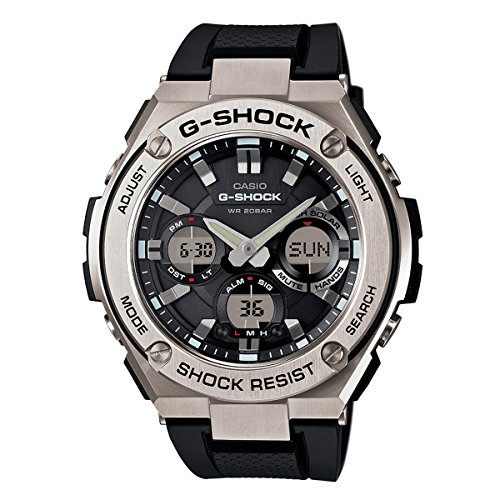
The G-Shock line of watches by Casio, known for their industry-leading durability, has a whole line of G-shock watches made of stainless steel (click to see on Amazon).
Stainless-steel watches will usually take a beating and still perform like new. They are relatively scratch-resistant, as well (although, by no means impervious).
And yet, when comparing the two materials, it’s not even close. Titanium has three times the strength of steel.
There’s a reason that titanium is used in the construction of aircraft that have to withstand some of the most brutal forces nature can throw at it, whether within or outside the earth’s atmosphere. Superman should have been called the “Man of Titanium” if they really wanted to show how strong he was.
For the majority of watch owners, the kind of toughness that titanium provides may never be required. Stainless steel will get the job done. If strength is the deciding factor for you, then there really is no contest. Titanium wins, hands down.
#1 Best Overall
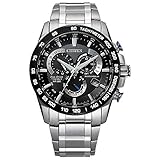
- With bold design and superior accuracy, Citizen Atomic Timekeeping watches synchronize to an atomic clock with a margin of error of just one second in 100,000 years.
- An Eco-Friendly Evolution: Citizen launches first Titanium Watch in 1970. More than 50-year-old evolution of innovative timepieces crafted from proprietary space-age material.
- Benefits of Super Titanium: Lightweight for Better Comfort, Scratch Resistant, Gentle on Skin, and Rust Resistant. Five times harder and 40% lighter than stainless steel.
- 1/5 Second Chronograph Measures up to 60 Minutes, 12/24 Hour Time, Date, Anti-Reflective Sapphire Crystal
- Sustainably powered by any light, with our Eco-Drive technology this watch never needs a battery. 200 Meter Water Resistant and 5 Year Limited Warranty
Titanium vs Stainless Steel: Weight
Considering its increased strength, it might surprise some readers to learn that titanium is also considerably lighter than stainless steel.
This is another factor that has led to the widespread use of titanium in aerospace designs. A super strong material that doesn’t weigh you down is invaluable in the design of air- or space-bound vehicles. It’s also pretty nice on a watch, too.
Click here to see the watches that astronauts have worn into space.
The weight of titanium on a watch will be most notable in watches that have a bulkier design. Take, for instance, this Citizen Eco-Drive Perpetual Chrono.
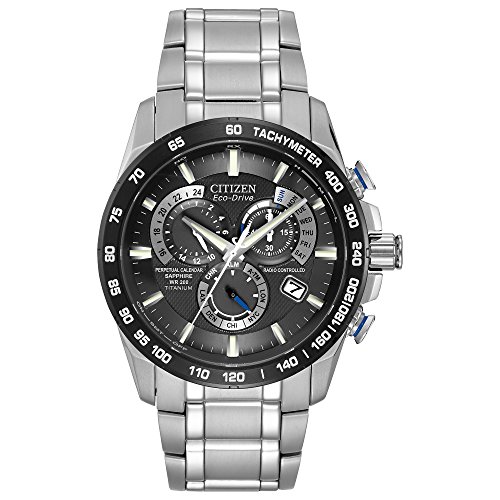
The shipping weight is 11.2 ounces, yet the stainless-steel version of a very similar watch comes in at 15.2 ounces. A difference of four ounces might not seem like much, but on your wrist, that weight will be very noticeable when it comes to comfort.
Titanium vs Stainless Steel: Allergy
For many people, stainless steel watches can be an issue because of the nickel often found in the metal.
As I’ve written about before, many people are allergic to nickel, which leads to rashes and discomfort when wearing a watch.
There are hypoallergic stainless-steel watches out there, but when anyone with an allergy to nickel shops for a watch they have to be careful.
See some our list of nickel-free watches here.
By contrast, titanium is naturally hypoallergic because of the naturally occurring oxide layer that covers the metal.
This layer is beneficial for watchmaking for two reasons. One, it prevents titanium from rusting, and two, it keeps the metal from interacting with human skin, which is what causes allergic reactions.
For this reason, people whose skin does not react well to stainless steel (myself included) can seek out titanium as an alternative.
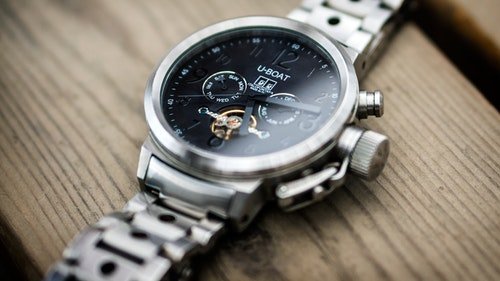
Rank #2

- Men's luxury timepieces with technical advancements and a sporty style
- 3 Hand, Day / Date
- Silver-Tone Super Titanium
- Sapphire Crystal
- 100 Meters Water Resistant and 5 Year Limited Warranty
Titanium vs Stainless Steel: Look
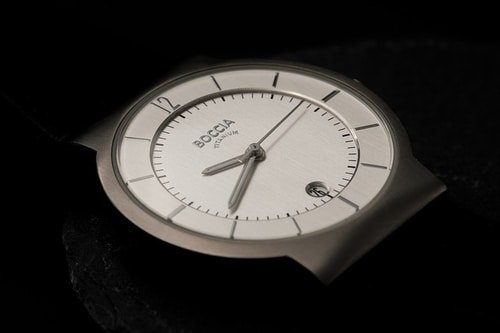
The final comparison point is the most subjective. Stainless steel has a decidedly shinier look than titanium. This is one of the reasons that stainless steel is so popular in jewelry because its natural shimmer offers a clean, glowing accompaniment to any jewels or precious stones. On a watch, it helps maintain a new and crisp look, even if the timepiece is many years old.
For some people, the more muted façade of titanium will be a draw. Stainless steel is often used as a stand-in for platinum, itself a strong, expensive chemical element. But platinum can be gaudy at times, and titanium’s dimmer appearance can make for a classier, more subdued look. There’s obviously no right or wrong here, just personal taste, but there is a definite difference, and one to keep in mind when on the hunt for a new timepiece.
Titanium vs Stainless Steel: Final Verdict
Declaring a winner in these sorts of comparisons is basically impossible. So much comes down to personal taste and financial investment. The best I can do is acknowledge the comparative merits.
By my count, titanium wins in three categories – Strength, Weight, and Allergy – while stainless steel only flat out wins in terms of Price (again, “Look” is too subjective to declare a winner). For many casual shoppers, Price is all that matters, but watch aficionados generally care about many factors.
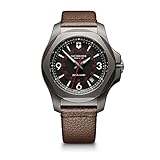
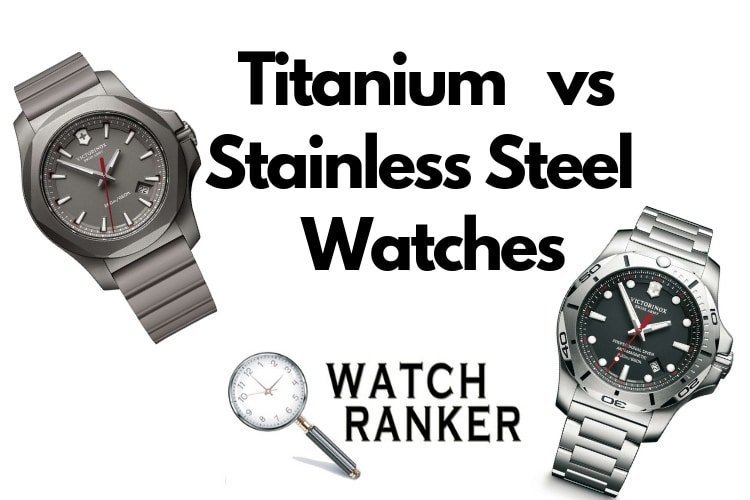
If you’re willing to pay a little more, I would recommend a titanium watch. Take, for instance, a personal favorite, the Victorinox Swiss Army I.N.O.X. Titanium. It’s an absolutely beautiful Swiss timepiece.
Everything from the titanium case to the durable leather straps has been tested to ensure this watch can resist pretty much anything you throw at it, and look good doing it. that watch isn’t exactly what you’re looking for but are looking for a titanium option, you may want to see our picks for Best Titanium Watches For Men & Women.
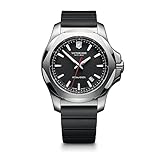
The sibling version – the Stainless Steel I.N.O.X. has plenty of charm, too, though, so whatever your preference, there’s something for everyone.
Unless you’re looking for a watch made out of wood, then your options dwindle a bit.
Quick Recap
Best Value

- 3 Hand, Date
- Silver-Tone Stainless Steel
- Sapphire Crystal
- 100 Meter Water Resistant and 5 Year Limited Warranty
Rank #4

- Take action and show your inner drive with the sporty styling of the Brycen, the latest addition to the Weekender collection.
- Featuring a silver-tone Super Titanium case with a brushed finish, the 41mm timepiece is durable in form and function with its matching bi-directional rotating bezel and triple-link bracelet.
- On the dial, a sunray orange texture serves as the eye-catching backdrop to highly legible timekeeping elements, while a 3 o'clock date window provides daily utility.
- Featuring our proprietary Eco-Drive technology – sustainably powered by light, any light.
- Never needs a battery. Caliber number J810.
Rank #3

- Titanium-Tone Design: Blue dial pairs with a 40mm titanium-color case and an adjustable green strap fitting up to an 8-inch wrist
- Adjustable Fabric Strap: An adjustable fabric band fits comfortably up to an 8-inch wrist circumference for a secure, personalized feel
- Indiglo Backlight: A push of the button illuminates the dial and luminous hands in the dark, day or night, rain or shine
- All-Weather Durability: A mineral glass crystal and water resistance to 50 meters keep this field watch ready for daily wear
- Built to Last: A Timex watch is designed for durability and everyday reliability; every piece reflects our commitment to quality without compromise
Related Video: Titanium vs. Stainless Steel: An Ultimate Guide
Product prices and availability are accurate as of the date/time indicated and are subject to change. Any price and availability information displayed on Amazon at the time of purchase will apply.


Titanium is weaker than steel, not three times stronger.
Thanks for the comment. I’ll admit we’re not mechanical engineers so we may be totally off base. The idea that titanium used in watches is stronger and lighter (strength per unit mass) has been repeated many times in different sources – but we may be misinformed. Many fashion watches use 201 or 304L while mid-range watches use 316L stainless steel and some luxury watches like Rolex use 904L. Feel free to follow up so we can help clarify the article. Thanks-
¨The idea that titanium used in watches is stronger and lighter (strength per unit mass) has been repeated many times in different sources – but we may be misinformed.” Actually you doesn’t seam to be off base for me. It is a common misconception that titanium is stronger than steel. It has been repeated everywhere, in movies, in propaganda, in personal conversation and so on. Technically speaking steel is much, much stronger than titanium, but in the specific case of watch cases and wrists, when you compare the most common commercially pure titanium grades to the austenitic stainless steels that you mentioned above, than titanium has the upper hand in their respective strength to weight ratio (meaning that titanium will be stronger when comparing two pieces of the same weight – for example a thick rod of titanium will be stronger than a much thinner rod of steel, both having the same weight).
Although with that said, that is generally the only kind of comparison where titanium is stronger then steel, when you compare both “by weight” and in their structural form, not hardened. If you compare them in their hardened condition, then both will have very similar strength to weight ratios. For example, ultra high strength steels are commonly used to replace high strength titanium alloys in aircraft structures. Those steels are nearly two times heavier and nearly two times stronger than their titanium counterparts. They add the same strength and the same weight as high strength titanium alloys to the wings of the airplane. Their advantage is that they occupy less volume inside the airplane structure, leaving more space for other equipment.
If you like to be more technical, stainless steel and titanium very widely in their respective strength. For example, beta heat treated titanium alloy (the strongest titanium I know of) can be 5 times stronger the pure titanium in its very elemental state. Its tensile strength can be a bit more than 200.000 pounds per square inch. That is certainly a very strong alloy, but not extraordinary when you compare it to the strongest ferrous metals. Some hardened high carbon martensitic stainless steels, stainless versions of maraging steels, some stain resistant tools steels and even a few spring temper austenitc stainless steels are known to regularly surpass 350.000 pounds per square inch of tensile strength.