G-SHOCK shock resistance is a system of protections, not a single shock-proof material and not a promise that the watch cannot be damaged. Casio’s explanation combines three elements: a module supported inside a hollow case, cushioning around its most sensitive internal parts, and a case and bezel shape that takes the first hit before buttons, crystal or the case back do. How these elements are built varies by model and generation, and Casio does not publish one impact limit that applies to every G-SHOCK.
Why there is no single shock rating
Readers often look for a drop height or a universal impact number. The official Casio pages reviewed for this article do not provide one. They describe design principles and named features, and those features apply to the models Casio documents them for. Treat “shock-resistant” as the accurate description of what the design does: it reduces the damage a knock can cause, but it does not define a limit a watch will survive.
The four protection layers
Casio’s shock-resistance page, linked below, explains the system in layers. Each layer does a different job, and they work together.
1. A hollow case with a supported module
The core electronic module is designed to float inside a hollow case, held at specific support points rather than fixed rigidly across its whole body. Because the module touches the case in only a few places, less of an outside blow reaches it directly, and the surrounding space absorbs part of the energy. Casio’s shock page also describes a covering that protects in all directions, not only from the front.
The Tool Desk
Outbyte PC Repair FREEClear out junk files and repair common Windows errorsFree Scan →Outbyte Driver Updater FREEScan for outdated or missing drivers - takes under a minuteDriver Scan →#1 Best Overall

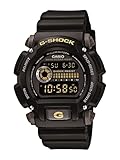
- Rugged & Sporty Design – Matte black finish with bold digital display, built for tactical, military, and extreme sports enthusiasts.
- High-Brightness LED Backlight – Features Super Illuminator LED with a light guide plate, ensuring exceptional visibility in low-light conditions.
- 200M Water Resistance – Engineered for swimming, snorkeling, and outdoor adventures, this shock-resistant watch is ready for action.
- Extended 7-Year Battery Life – Powered by a CR2025 battery, offering years of reliable performance without frequent replacements.
- Shock-Resistant Structure – Built to withstand extreme conditions, making it ideal for sports, military, and rugged outdoor use.
Casio’s official explanation puts the principle this way: “shocks are not transmitted inside a bouncing rubber ball.” The page does not name an individual author for that line, so it should be attributed to Casio’s official explanation.
2. Cushioning around critical internal parts
Casio states that “the crystal oscillator and other critical parts inside the module are guarded individually by cushioning material.” The oscillator sets the timekeeping rate, so protecting it individually matters. According to Casio, the cushioning deforms under a strong shock, which helps prevent contact failure and malfunction. This is a protection against internal damage, which is a different problem from a cracked glass or scratched case.
Rank #2

- Shock-Resistant Durability: Built to withstand the toughest conditions, this G-Shock watch features a rugged resin case and bezel, perfect for outdoor adventures and extreme sports.
- 200M Water Resistance: Designed for water enthusiasts, it’s suitable for scuba diving, swimming, and snorkeling, providing reliable protection up to 200 meters.
- Electro-Luminescent Backlight: The blue-green EL backlight with afterglow ensures clear visibility of the time, day, and date, even in complete darkness.
- Precision Stopwatch & Countdown Timer: Measure elapsed and split times with the 1/100-second stopwatch, or set up a countdown timer with up to a 24-hour range, ideal for timing workouts or daily tasks.
- Multi-Alarm with Flash Alert: Stay on schedule with a customizable alarm, hourly chime, and flash alert that combines light and sound for added convenience.
3. Exterior geometry: bezel, case and band
The bezel protrudes beyond the surfaces it guards, and the case and bezel have uneven contours. Casio says these shapes help absorb impacts and keep direct blows away from the buttons and the watch glass. The band connection is also part of the design. Casio describes it as curved and stiff, helping to prevent direct impacts to the back of the case. In practice, a watch that lands on a corner or edge is more likely to meet the bezel or band connection than a flat, exposed face.
4. Materials differ by design
For the 5000/5600 origin design, Casio describes urethane resin as flexible enough to absorb shock while also being strong and light as an exterior material. That is the documented material for that design lineage. Later G-SHOCK models use different designs and materials, so the case construction of one model cannot be assumed for another. Check the specific model’s official page before describing its construction.
Rank #3

- Super Matte Finish, Shock Resistant, 200M water resistance, LED light (Super illuminator), World time, Stopwatch, Countdown timer, 5 daily alarms, Hourly time signal, Hand shift feature
- Full auto-calendar, 12/24-hour format, Analog: 2 hands (hour, minute (hand moves every 20 seconds)), Digital: Hour, minute, second, pm, month, date, day, Approx. battery life: 5 years on CR2016
- Quartz Movement
- Case Diameter: 52.8mm
- Water resistant 200m (660ft): in general, suitable for professional marine activity and serious surface water sports, but not diving
Casio’s origin collection page is the primary reference for the 5000/5600 design: G-SHOCK 5000 & 5600 Series Origin.
How the design developed after 1983
Casio says the first G-SHOCK, the DW-5000C, debuted in 1983. Its brand history then lists a series of named structural approaches. The table below shows each one with the year Casio gives and what the pages reviewed actually describe about it.
Rank #4

- Band Size: Mens-Standard
- Shock Resistant
- Auto LED Light with Afterglow
- Magnetic Resistant
| Approach | Year (per Casio’s brand history) | Documented detail in the pages reviewed |
|---|---|---|
| Triple G Resist | 2012 | Covers dropping shocks, centrifugal force and vibration; see the section below |
| Core Guard | 2013 | Named in the brand history; construction not described in the pages reviewed |
| Clad Guard | 2014 | Named in the brand history; construction not described in the pages reviewed |
| New Layer Guard | 2017 | Named in the brand history; construction not described in the pages reviewed |
| Full-metal shock-resistant structure | 2018 | Named in the brand history; construction not described in the pages reviewed |
| Carbon core guard | 2019 | Named in the brand history; construction not described in the pages reviewed |
These are design developments, not interchangeable ratings. A newer name does not mean a higher impact limit, and a model should be credited only with the features its own official listing names. Casio’s brand history is available at Brand Philosophy.
Independent reader supportYour contribution helps us test, update, and keep practical guides available for everyone.Triple G Resist: three categories of force
Casio identifies three categories that Triple G Resist addresses: dropping shocks, centrifugal force and vibration. Its vibration performance is confirmed with reference to JIS D1601 4 type A. The same page mentions vibration acceleration up to 20 G, which it describes in connection with in-vehicle devices for two-wheeled vehicles.
Outdated Drivers Are Slowing You Down
One free scan finds every outdated or missing driver and matches the right update for your exact hardware.Free scan · exact hardware matchPC Slower Than It Used to Be?
A free scan shows the junk files, broken settings and background clutter dragging Windows down - then fixes them in one click.Free scan · Windows 10 & 11Best Value
- Sport Type: Scuba Diving
That 20 G figure belongs to the Triple G Resist vibration discussion. It is not a drop-test height, not a general impact rating, and not a specification for every G-SHOCK watch. Casio’s Triple G Resist page is here: Triple G Resist.
What the official sources do not establish
- A single drop height or impact limit that applies to all G-SHOCK models.
- A quantified warranty against shock damage.
- A common shock-resistance number that allows models to be ranked against each other.
- The internal construction of the Core Guard, Clad Guard, New Layer Guard, full-metal and carbon core guard approaches, which Casio names but the pages reviewed do not describe.
How to compare shock claims between models
- Start with the exact model’s official Casio page, not a general G-SHOCK claim.
- Look for named features in that listing, such as Triple G Resist, and note which force categories they cover.
- Record the case construction the listing documents: resin, metal, or a reinforced-resin structure.
- Compare models on those documented features, not on an assumed universal impact figure.
The G-SHOCK DW-5600 is a useful example. Casio includes it in its 5000/5600 collection material, so its design lineage traces to the origin model and its urethane resin description. A metal-framed model in the line should be judged against its own documentation rather than the resin description.
The general shock-resistance explanation, including the hollow case and cushioning, is on Casio’s technology page: Technology – Shock Resistance.
Quick Recap
Product prices and availability are accurate as of the date/time indicated and are subject to change. Any price and availability information displayed on Amazon at the time of purchase will apply.