Crashes, No Sound, or Screen Glitches?
Random freezes, missing sound and display glitches usually trace back to one bad driver. Find and replace yours safely.Free scan · under a minuteWindows Errors? Fix Them Before They Spread
Repair common Windows errors and clear accumulated junk for a smoother, more stable PC - no reinstall needed.Free scan · no reinstallMost Fitbit problems come from power, Bluetooth, app permissions, account setup, or how the device is worn—not from a permanently dead tracker or watch. Work through the least-destructive fix first, and do not factory-reset your Fitbit until you have tried to sync; a reset can erase activity stored only on the device.
The Fitbit app is now called the Google Health app (formerly the Fitbit app). Its bottom tabs are Today, Fitness, Sleep, and Health, and device controls are generally under Connections → your device. See Google’s Google Health app guide.
Try this first: the safe Fitbit troubleshooting order
- Check for an outage. Look at the Google Health Status Dashboard. Device Sync / Pairing, Mobile App, and Web API are listed separately. If the relevant service is disrupted, wait rather than resetting a working device.
- Confirm the basics. Identify the exact Fitbit model, check its battery, turn on Bluetooth, connect the phone to Wi-Fi or cellular data, and keep the device nearby. Make sure no second phone or tablet is trying to connect.
- Manually sync. Open Google Health, go to Today, press and hold the screen, then pull down until the progress bar appears. You can also use Connections → Sync.
- Restart both devices. Restart the Fitbit using its model-specific instructions, then restart the phone.
- Update everything. Install the latest phone operating-system update, the latest Google Health app from the Play Store or App Store, and any available Fitbit firmware update.
- Check permissions and background operation. Bluetooth, Location, Nearby devices, notifications, Background App Refresh, background data, Data Saver, and battery restrictions can affect different Fitbit features.
- Re-pair only if necessary. Remove the Fitbit from Google Health, forget or unpair it in the phone’s Bluetooth settings, restart the app, and set it up again through Google Health.
- Factory-reset last. A factory reset removes locally stored unsynced activity and settings. Use it only after syncing, restarting, updating, and re-pairing fail—or when Google support directs you to do it.
Model differences matter
Not every Fitbit has built-in GPS, an always-on display, SpO2, floors tracking, or the same restart procedure. Charge, Inspire, Luxe, Sense, Versa, Fitbit Air, Ace, older supported devices, and Pixel Watch integrations do not behave identically. Check the exact model before following a hardware or GPS instruction.
Before troubleshooting: check the phone, app, and account
The Google Health app requires a Google Account, Android 11 or later, or iOS 16.4 or later. Google lists some otherwise compatible phones with known compatibility issues, including the Huawei P8 Lite, Huawei P9 Lite, Xiaomi Mi 6, and Huawei P20 Lite. Confirm compatibility in Google’s device and app requirements before reinstalling the app.
Do these 3 things before closing this tab:
1Repair Windows errors before they cause bigger problems2Scan for outdated or missing drivers - takes under a minute3Clear out junk files and repair common Windows errors#1 Best Overall

- 【All-day Activity Tracker】: ENGERWALL IP68 Waterproof fitness tracker can record and track your daily steps, calories burned, exercise distance and time. It can also monitor your Body Temp, Heart Rate, Blood Oxygen and Blood Pressure. IP68 waterproof ensures that you don't need to take it off for daily hand washing and swimming, but don't soak it in water for a long time or wear it for hot baths, saunas.
- 【Slim and simple band design】The design concept of this tracker’s band is slim and unique, offering a comfortable and lightweight wearing experience. Suitable for men, women and the elderly.
- 【Heart Rate Monitor and Sleep Tracker】: Smart tracker can detect heart rate, blood pressure, blood oxygen, and body temperature in daily life. Monitor your sleep and analyze your sleep quality through Fall Sleep, Deep Sleep, Light Sleep, REM Sleep. You can view daily, weekly, and monthly data in the APP "Runmefit" to help you better understand your health status and lead a healthy lifestyle. [IMPORTANT] The blood pressure measurement feature must be downloaded and enabled within the app.
- 【Call and message notifications】: You can receive text messages and SNS notifications (including Facebook, Twitter, WhatsApp and Instagram) directly on your wrist. When your phone's Bluetooth is turned on, if you receive a message, the watch will vibrate to remind you and you can view the specific message. This function is very practical whether in work or life.
- 【Working Time】: Smart Fitness Watch is the best partner at work, you can set it on the mobile APP ‘Runmefit’: up to 5 sets of alarms, you don’t have to worry about being late for appointments or forgetting important things. You can set drinking Water Reminders and Sedentary Reminders to establish a healthy way of working.
Fitbit-account users were required to move to a Google Account to access the Google Health app after May 19, 2026. Google’s migration information said data could be downloaded or deleted before Google began processing deletions on July 15, 2026. That cutoff has passed; consult the official account-transition information for account-specific options.
The latest official public release note located during research was for Google Health app version 5.04 in July 2026, but releases can be phased and newer versions may appear. Install the latest version offered for your phone rather than trying to match an old number. See Google’s release note.
1. Fitbit will not sync or shows stale data
What you’ll notice
- The app still shows yesterday’s steps or sleep.
- A manual sync hangs or never finishes.
- The time on the Fitbit is wrong.
- Activity appears on the device but not in Google Health.
- Notifications have stopped, or the app says the device is disconnected.
Fastest safe fix
- Put the Fitbit within a few feet of the phone.
- Open Google Health.
- On Today, press and hold the screen and pull down until the progress bar appears, then wait for it to finish. Alternatively, open Connections → Sync.
- Do not reset the device merely because data is delayed. Fitbit devices normally sync automatically over Bluetooth Low Energy when nearby and when the app is opened. Google’s sync instructions explain the manual-sync gesture.
If syncing still fails
On Android:
- Uninstall or disable Google Health on other nearby phones signed in to the same account. Check whether another phone, tablet, watch, or hub is holding the Fitbit’s Bluetooth connection.
- Restart the Fitbit and try a manual sync again.
- Turn Bluetooth off, wait at least three seconds, and turn it back on.
- Confirm the phone has Wi-Fi or cellular internet, then restart the phone.
- Update Android, Google Health, and Fitbit firmware.
- Open Settings → Apps → Google Health → Permissions. Allow Location and, on Android 12 and later, Nearby devices.
- Check whether Data Saver or the phone’s battery-management system is blocking background data or restricting Google Health. Exact labels differ by phone.
- As a later step, open Settings → Apps → Google Health → Storage & cache → Clear cache. Clearing the cache is different from clearing app storage or deleting your account.
- If necessary, remove the Fitbit from Google Health, forget it in Bluetooth settings, and set it up again through the app.
On iPhone or iPad:
- Update iOS and Google Health.
- Confirm Bluetooth is enabled.
- Restart the phone and Fitbit.
- If notifications are also affected, open Settings → Bluetooth → your Fitbit and turn Share System Notifications off and back on.
- If re-pairing is needed, choose Forget This Device in iOS Bluetooth settings before setting up the Fitbit again in Google Health.
Use Google’s Android sync troubleshooting and iPhone sync troubleshooting if menu labels differ.
Important: A Fitbit that says Connected in the phone’s Bluetooth settings is not necessarily syncing correctly with Google Health. Pair and manage the device through Google Health; do not manually add it from the phone’s Bluetooth screen as a substitute for app setup.
2. Fitbit will not pair or complete setup
Setup requirements
- A compatible Android 11 or later phone, or an iPhone running iOS 16.4 or later.
- The current Google Health app installed.
- A Google Account signed in to the app.
- A charged Fitbit.
- Bluetooth enabled.
- Location enabled on Android, with Google Health allowed to use it.
- Phone Power Saving Mode turned off during setup.
Start setup inside Google Health, not in the phone’s Bluetooth menu. Google’s pairing and setup guide has the current sequence.
Reliable recovery sequence
- Turn Bluetooth off, wait 10 seconds, and turn it back on.
- Restart the Fitbit.
- Restart the phone.
- Check Google Health for old Fitbit devices and remove an unused device if the account has reached its device limit.
- In phone Bluetooth settings, tap the old Fitbit profile and choose Forget, Unpair, or Forget This Device.
- Reopen Google Health and choose the setup option. Follow the on-screen pairing flow.
- Reinstall Google Health only after verifying that the phone meets current requirements.
Google’s current setup documentation says that, except for using one Fitbit Air and one Pixel Watch together, an account can connect only one Fitbit device or Pixel Watch at a time in Google Health. This rule may change; check the device-connection guidance if switching devices.
What not to do
Do not only forget the Bluetooth profile and then stop. A clean re-pair removes the Fitbit from Google Health first, forgets or unpairs it in Bluetooth settings second, restarts the app, and then sets up the device through Google Health. Do not factory-reset first unless you have confirmed important recent activity has synced.
3. Fitbit will not charge or turn on
What you’ll notice
- The display remains completely black.
- The charger does not stay attached.
- No battery icon appears, even after connecting the cable.
- The device reports Insufficient power source.
- A red X appears on the display.
- The Fitbit seems dead after reaching zero percent.
Charging checklist
- Use the charging cable designed for that exact Fitbit model. Charging cables are not universally interchangeable.
- If the screen is completely black, use a wall outlet rather than a computer USB port.
- Leave the device connected for 60 minutes. A fully depleted battery may take several minutes before showing an icon.
- Clean the contacts on the back of the Fitbit and the pins on the charger using a suitable dry, non-metal method.
- Check that the charger pins are not stuck or recessed and that the cable is seated correctly.
- Do not charge the Fitbit while it is wet, and do not scrape its contacts with metal.
- Keep the device and charger ventilated while charging.
Follow Google’s charging troubleshooting guide if the battery icon still does not appear.
The Tool Desk
Outbyte Driver Updater FREEFix the driver behind crashes, sound loss and screen glitchesFind Drivers →Outbyte PC Repair FREERepair Windows errors before they cause bigger problemsFix Now →Try the model-specific restart while charging
Charge 5, Charge 6, and Luxe: connect the tracker to its charging cable. Press the button on the flat end of the cable three times, pausing about one second between presses. Wait approximately 10 seconds for the Fitbit logo.
Sense and Versa series: leave the watch connected to its charger. Press and hold the physical side button for 10 seconds, then release it when the Fitbit logo appears.
Rank #2
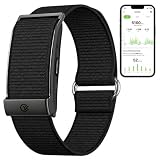
- Simple & Screen-Free Design – Easy to use and ultra-lightweight, comfortable for all-day wear without the distraction of a screen
- Powerful Health Monitoring – Accurately tracks heart rate, blood pressure, blood oxygen, HRV, sleep quality, and stress levels to help you better understand your body
- 100+ Sports Modes – Supports a wide range of fitness activities with precise tracking, making it your reliable companion for workouts and daily movement
- Ultra-Long Battery Life – Just 2 hours of charging powers up to 47 days of standby, so you can focus on your goals without constant recharging
- No Subscription Required – Enjoy all features with the free app, fast syncing, and easy Bluetooth connection—no hidden costs
Other models have different procedures. Use the restart instructions for the exact model.
If you see a red X
Google identifies a red X as a sync or software error. Open Google Health, open device settings, remove the device, then choose Forget or Unpair in phone Bluetooth settings. Return to Google Health and choose Set up a device. This may risk activity that has not synced, so try ordinary sync and restart steps first.
Quick wins for a faster PC:
Clear out junk files and repair common Windows errorsFree Scan →Fix the driver behind crashes, sound loss and screen glitchesFind Drivers →Repair Windows errors before they cause bigger problemsFix Now →Stop immediately for battery damage
Stop using and charging the Fitbit if the battery is swollen, leaking, melted, smoking, sparking, unusually hot, or otherwise visibly damaged. Do not attempt a battery repair. Contact Google Health support.
4. Fitbit battery drains too quickly
What counts as unusually fast?
Published battery figures are up-to estimates, not guarantees. Google lists up to 10 days for Inspire 2 and Inspire 3, and up to 7 days for Charge 4, Charge 5, and Charge 6 under stated conditions. Sense and Versa models generally advertise six or more days depending on model and settings. Always-on display can reduce some newer models to roughly two to three days, while continuous built-in GPS can reduce Charge-series battery life to approximately five hours.
Always-on display, built-in GPS, SpO2 tracking, frequent notifications, animated clock faces, high brightness, long screen timeout, extreme temperatures, firmware problems, and an aging battery all affect battery life. A Fitbit stuck in a synchronization or reboot loop may also drain quickly. See Google’s model and battery guidance.
Reduce battery use
- Turn off Always-on display if you do not need the screen constantly visible.
- Reduce screen brightness and shorten screen timeout.
- Disable unnecessary phone-app notifications, alarms, and reminders.
- Use phone GPS instead of built-in GPS where your model supports that option and carrying the phone is practical.
- Disable or remove SpO2 tracking if you do not need it.
- Choose a simple, non-animated clock face.
- Update Fitbit firmware and Google Health, then restart the Fitbit.
- Check for a reboot loop, red X, or a screen that never settles on the clock face.
- Charge within the recommended temperature range. Google advises avoiding charging below 32°F / 0°C or above 113°F / 45°C.
Charging can take up to two hours. If the device still falls from full to empty unusually quickly, the battery may be aged or the hardware faulty. Battery replacement is generally not user-serviceable; contact support rather than opening the device.
What’s actually slowing this PC down?
Pick the symptom - the matching free tool is one click away.
The trade-off: disabling Always-on display improves endurance but makes the watch less glanceable. Phone GPS saves Fitbit battery but means carrying the phone and maintaining the required connection. Do not expect an “up to” figure when GPS and Always-on display are active.
5. Fitbit screen is blank, frozen, flickering, or stuck rebooting
Recovery sequence
- Connect the device to its charger and leave it charging for at least one hour.
- Clean the display and charging contacts.
- Restart the Fitbit using the procedure for its model.
- Open Google Health and attempt a manual sync.
- Check for a firmware update.
- During an update, keep the Fitbit within approximately 2–3 feet of the phone and keep Google Health open or allowed to run in the background.
- If the watch shows a clock error after updating, install a clock face through Google Health.
- Inspect the screen and case for cracks, moisture, or other physical damage.
- Factory-reset only after trying the non-destructive recovery steps.
Google says a firmware update may take an hour or more. Charge the Fitbit to at least 50% before beginning; Google recommends 75% or higher to reduce power-loss risk. Do not start an update exactly at midnight if accurate daily step totals matter; Google warns that a midnight update can produce an incorrect step count for that day. See Google’s screen and update troubleshooting guide and firmware-update guidance.
Never insert a paper clip or another object into a small hole on the device. Some holes are microphones or altimeter openings, not reset buttons. Use Google’s model-specific restart guide.
Restart versus factory reset
A restart reboots the device and normally preserves activity data. A factory reset erases locally stored information, including unsynced activity, alarms, goals, and notification settings, and requires setup again. This distinction matters when the screen is frozen but the device may still contain recent exercise or sleep data.
Recommended Free Tools
Rank #3

- What You Get - A 12-month membership, WHOOP 5.0 device, a SuperKnit band, and a waterproof* Wireless PowerPack. Choose from a range of band and accessory combinations, and add a waterproof Wireless PowerPack for on-the-go charging.
- HSA/FSA Eligible - All 12-month WHOOP memberships and battery packs qualify for HSA/FSA reimbursement.
- Screenless, Distraction-Free - No screen, no buzzing notifications. WHOOP focuses entirely on your health and performance, with up to 14+ day battery life so you can wear it around the clock.
- Healthspan with Pace of Aging - Understand how your daily habits shape long-term health. Healthspan measures your WHOOP Age and Pace of Aging so you can take science-backed action to slow biological aging and extend your prime years.
- 24/7 Health Insights - WHOOP monitors your heart rate every second of every day, delivering personalized Sleep, Strain, Recovery, VO2 max, Menstrual Cycle, and Heart Rate insights along with a Real-time Stress Monitor that pinpoints your stressors and shows how your body responds in the moment, so you can make better decisions about training, rest, and daily performance.
6. Phone notifications are missing or delayed
Android checklist
- Update Android, Google Health, and Fitbit firmware.
- Open Google Health → Connections → your device → Notifications.
- Allow Google Health notification access and select the call, text, calendar, email, and app categories you want.
- Confirm that the phone itself receives those notifications while locked.
- Allow Google Health to run in the background. Remove battery restrictions and Data Saver restrictions where your phone provides those controls.
- Temporarily turn off phone Do Not Disturb, Focus, Quiet Hours, or Driving mode.
- Turn off Fitbit Do Not Disturb or Sleep mode temporarily.
- Keep the phone within 30 feet of the Fitbit, per Google’s current notification guidance.
- Temporarily disconnect unused Bluetooth devices if several are active.
- Force-quit and reopen Google Health.
- Turn Bluetooth off, wait 10 seconds, and turn it on again.
- If notifications remain broken, turn all Fitbit notifications off, restart the phone, turn notifications back on, and sync again.
iPhone checklist
- Open Settings → Bluetooth → your Fitbit and turn Share System Notifications off and back on.
- If that option is missing, restart the Fitbit and tap Allow when iOS asks whether the device may show notifications.
- Open Settings → Notifications, select the relevant apps, and verify that notifications, Notification Center, and previews are enabled as desired.
- Set Show Previews to Always or When Unlocked, depending on your privacy preference.
- Keep the iPhone within 30 feet and ensure the Fitbit remains paired through Google Health.
Use Google’s notification troubleshooting guide if your phone uses different labels.
Exceptions that look like a Fitbit failure
- A text alert may not appear if the conversation is already open on the phone; Fitbit generally displays new, unread texts.
- Phone Do Not Disturb or Driving mode may allow an alert to reach the Fitbit but prevent vibration.
- Fitbit Do Not Disturb or Sleep mode can suppress alerts.
- Clearing a notification on one device can clear it from the other.
- Quick replies and other notification features vary by Fitbit model and phone platform.
7. GPS will not connect or the route is wrong
First identify the GPS type
Not every Fitbit has GPS. A model may use built-in GPS, phone-connected GPS, or dynamic GPS, which can use the phone when it is nearby to preserve battery. Verify the exact model. Google’s GPS guide explains supported arrangements.
| GPS type | Advantage | What can go wrong |
|---|---|---|
| Built-in GPS | Can record a route without carrying the phone | Uses more battery and needs a clear satellite view |
| Phone-connected GPS | Can preserve Fitbit battery life | Depends on the phone, Bluetooth, location permissions, and background operation |
| Dynamic GPS | Can choose between the Fitbit and nearby phone, depending on model and conditions | Behavior varies by model and connection state |
Fastest GPS fix
- Go outdoors with a clear view of the sky.
- Turn GPS on for the exercise.
- Wait for the GPS connection before starting the workout.
- On first use in an area, wait several minutes. Tall buildings and dense trees can slow satellite acquisition.
- If the first attempt fails, wait five minutes and try again.
- For Charge 4, Charge 5, or Charge 6, end the exercise, switch GPS mode to Phone GPS, and start again if the tracker cannot acquire satellites.
- Do not start moving before the signal is acquired if route accuracy matters.
With phone-connected GPS, Android users should allow Google Health location access all the time, enable Precise Location, and allow background data. iPhone users should set location access to Always, enable Precise Location, and enable Background App Refresh. Keep the phone nearby and connected throughout the exercise.
Why the route or distance can be wrong
If GPS is lost during an exercise, the Fitbit does not necessarily switch automatically to another GPS type, and a map may not appear after the workout. Before a signal is acquired, Fitbit may estimate distance from steps, which can make the total less accurate. A missing map or short route does not automatically indicate defective GPS hardware.
Free tools Windows power users keep installed
One-click scans. No signup required.
Built-in GPS is more independent but consumes more battery. Phone GPS can preserve endurance, but depends on phone proximity, location permission, Bluetooth, background operation, and the phone’s GPS performance. Buildings, trees, and starting before acquisition can affect route quality.
Independent reader supportYour contribution helps us test, update, and keep practical guides available for everyone.8. Steps, heart rate, sleep, or other health data is missing or inaccurate
First distinguish inaccuracy from missing data. A value on the Fitbit but not in Google Health usually points first to sync or connection trouble. A value that appears but differs from a treadmill, phone, chest strap, or another watch may reflect sensor estimation, fit, or the activity itself.
Steps and distance
Fitbit uses a three-axis accelerometer to count steps. The total may not update immediately; Google says it may catch up after approximately 10–15 continuous steps. Distance is generally calculated from steps multiplied by estimated stride length, based partly on profile information. For a GPS-recorded workout, the app uses GPS distance after GPS becomes available. See Google’s guidance on daily activity calculations and accuracy and activity tracking.
- Confirm the correct wrist setting in Google Health.
- If the Fitbit overcounts from arm movement, try the dominant wrist setting.
- If it undercounts, try the non-dominant wrist setting.
- Confirm your height and other profile details so stride estimation is more reasonable.
- Wear the device securely rather than loosely.
- If using a clip, set the device to clip or body mode rather than wrist mode, where supported.
- Use the Exercise app for cycling, spinning, yoga, or weightlifting, where step count is not a useful measure of intensity.
Arm movement while cooking, working, or gesturing can add steps. Pushing a stroller or shopping cart can reduce step detection because the arm is not swinging. Bumpy driving can occasionally add steps. Floors are detected with an altimeter and are based on roughly 10 feet / 3 meters of elevation gain; Fitbit does not count descending stairs as floors and does not count floors on a StairMaster or treadmill.
Heart-rate readings are blank, frozen, or implausible
- Wear the Fitbit on top of the wrist with the sensor touching your skin.
- For ordinary wear, position it about one finger’s width above the wrist bone.
- During exercise, move it slightly higher and tighten it enough to prevent movement without making it constricting.
- Use the supplied band when possible.
- Stay still for up to 10 seconds if the reading is blank or gray.
- Restart the device if the reading does not return.
Fitbit estimates heart rate optically using green LEDs and photodiodes that detect changes in blood volume. Readings can differ from a chest strap, gym equipment, another watch, or an older Fitbit because sensor placement, technology, and algorithms differ. Cold weather, vigorous arm movement, a bent wrist, poor fit, reduced skin blood flow, caffeine, alcohol, stress, illness, and medication can also affect readings. Google’s heart-rate accuracy guide covers these limitations.
If heart rate appears on the device but not in Google Health, troubleshoot syncing before assuming the sensor has failed. Fitbit heart-rate readings are consumer-wellness estimates, not a substitute for medical equipment. Seek medical advice for persistent concerning readings or symptoms.
Rank #4

- 【24/7 Wellness Tracking & Free App — No Subscription】This screenless fitness tracker monitors heart rate, SpO2, HRV, stress, steps, distance and calories throughout the day. Sync your wellness data to the free QwatchPro app to review daily, weekly and monthly trends with no subscription or hidden membership fees. A lightweight smart band for people who want useful fitness data without another screen competing for their attention
- 【Sleep Tracking, AI Wellness Insights & Daily Energy】Track light, deep and REM sleep to better understand your nightly patterns and recovery. The QwatchPro app combines sleep, heart rate, SpO2, HRV, stress and activity trends to provide AI-powered wellness insights. Daily Energy tracking also shows how your body energy changes throughout the day, helping you decide when to train harder, stay active or prioritize rest
- 【170+ Sports Modes & Connected GPS via Smartphone】Choose from 170+ sports and activity modes including walking, running, cycling, hiking, yoga, Pilates and more. This fitness bracelet records steps, distance, workout duration and calories, while Connected GPS through your smartphone can map supported outdoor activities in the app. Review daily, weekly and monthly activity trends to stay consistent with your fitness goals
- 【20–30 Day Battery, 25g Lightweight & IP68】Powered by a 180mAh battery, this screenless fitness tracker is designed for extended everyday use and recharges in about 2 hours with the magnetic charger. At only 25g, the lightweight smart bracelet is designed for comfortable workouts, daily wear and overnight sleep tracking, while IP68 water resistance helps handle sweat, rain and hand washing
- 【Private Alerts, Women's Health & Everyday Smart Features】Stay connected without putting another display on your wrist. This smart bracelet for men and women provides customizable vibration alerts for calls, messages and supported app notifications, plus women's health tracking, sedentary reminders, alarms, remote camera control, do-not-disturb mode and device finding. The 22mm quick-release design also lets you replace the wrist strap when you want a different fit or style
Sleep data is missing
Wear the Fitbit snugly on your wrist overnight; do not use a clip or pendant accessory for sleep tracking. Sync each morning and wait for the progress bar to finish. The device generally records sleep after the body has been still for about an hour, and sleep stages require heart-rate tracking with a sufficiently consistent signal. Review Google’s sleep-tracking requirements.
For missing stages or a missing sleep score:
- Tighten and reposition the band approximately 2–3 finger widths above the wrist bone.
- Make sure the battery was not critically low overnight.
- Sync in the morning and wait for completion.
- Check whether heart-rate data was recorded for the same period.
- Remember that naps shorter than 20 minutes do not receive sleep-stage estimates.
- Check the Google Health status page before resetting if the app reports a sync or service problem.
Missing sleep data is not always a sensor failure. A loose fit, low battery, inconsistent heart-rate signal, short nap, or incomplete sync can explain it. See Google’s missing sleep-stage guidance.
SpO2 data is missing
SpO2 is a separate feature with device, firmware, regional, clock-face, and app requirements. Where supported, it may require at least three hours of quality sleep, a full charge, a completed sync, and approximately one hour after syncing before values appear. It is intended for general wellness and is not diagnostic. Check Google’s SpO2 requirements and limitations.
When to restart, re-pair, reset, or replace
| Action | Data risk | Use it for |
|---|---|---|
| Restart | Normally preserves activity data | Sync failures, frozen screens, missing notifications, missing steps, and reboot loops |
| Bluetooth reset | Low | Pairing, notification, or connection failures |
| Remove and re-pair | Potential risk if recent data has not synced | A corrupted Bluetooth profile, red X, or persistent connection failure |
| Factory reset | Erases local unsynced activity, alarms, goals, and notification settings | A last-resort recovery, device handoff, severe boot loop, or support-directed repair |
Before a factory reset, manually sync while the Fitbit is near the phone if the device responds at all. Record or save any settings you will need to recreate. Use the model’s official reset flow rather than a supposed universal button combination.
When the Fitbit probably needs support or replacement
Contact Google Health support instead of continuing to troubleshoot if:
- The battery is swollen, leaking, smoking, sparking, melted, or otherwise damaged.
- The screen or case is cracked, badly water-damaged, or physically deformed.
- The charging pins are damaged or the correct charger fails after the contacts are clean.
- The display remains blank after at least an hour of charging and the correct model-specific restart.
- The Fitbit repeatedly reboots or shows a red X after supported sync and re-pairing steps.
- Battery life remains abnormally short after disabling high-drain features and updating software.
- A health sensor remains absent despite a correct fit, restart, completed sync, and current firmware.
Use the Google Health support page to check warranty, repair, or replacement options. A replacement is more justified by persistent hardware symptoms—dead display, damaged charging hardware, swollen battery, or a repeatable boot loop—than by an isolated step discrepancy, a delayed sync during an outage, or a GPS route recorded under tree cover and tall buildings.
Fitbit metrics are estimates designed for general wellness. A difference from another consumer device does not by itself prove that either device is defective; discuss persistent symptoms or medically concerning readings with a clinician.
FAQ
Will a factory reset delete my Fitbit data?
It can delete activity stored locally on the Fitbit that has not synced, along with alarms, goals, and notification settings. Try a manual sync, restart, update, and clean re-pair first. A factory reset should be a last resort or a step directed by Google Health support.
Why does my Fitbit say it is connected but the app is not updating?
A Bluetooth connection does not guarantee that Google Health is completing synchronization. Bring the Fitbit close to the phone, manually sync from Today or Connections → Sync, check the Google Health Status Dashboard, restart both devices, and verify Bluetooth, Location, Nearby devices, internet, background-data, and battery permissions. If necessary, remove the device from Google Health and re-pair it through the app.
Does every Fitbit have built-in GPS?
No. Depending on the model, Fitbit may use built-in GPS, phone-connected GPS, or dynamic GPS. Check the exact model before troubleshooting. Built-in GPS works more independently but uses more battery; phone GPS requires the phone, Bluetooth, location permissions, and background operation.
How close should my phone be for Fitbit notifications?
Google’s notification guidance says to keep the phone within 30 feet of the Fitbit. Walls, other Bluetooth devices, battery restrictions, Do Not Disturb modes, and disabled notification permissions can still interrupt alerts within that range.
The Bottom Line
Start with the Google Health service status page, battery, proximity, a manual sync, and a restart. Then update the app and firmware, correct phone permissions, and re-pair through Google Health if needed. Treat factory reset as the final software step because it can erase unsynced data. If a charged Fitbit still has a dead display, damaged battery, failed charging hardware, or a persistent boot loop, stop troubleshooting and contact Google Health support.
Quick Recap
Product prices and availability are accurate as of the date/time indicated and are subject to change. Any price and availability information displayed on Amazon at the time of purchase will apply.