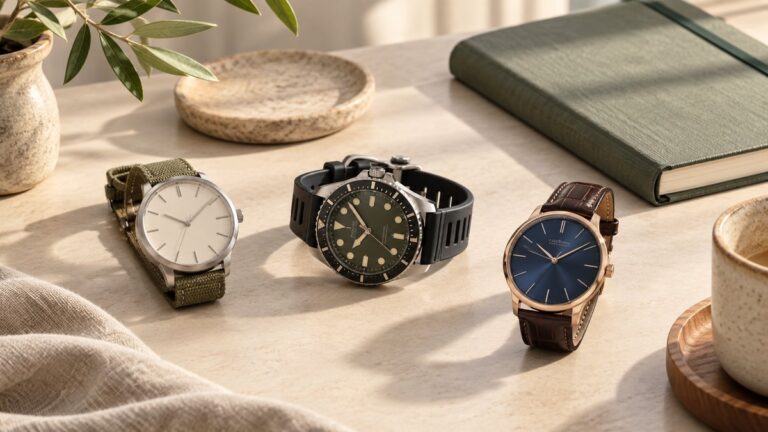
The best GPS smartwatch depends on your phone and your definition of “best.” Garmin Forerunner 970 is the strongest pick for serious training; Apple Watch Ultra 3 is the best iPhone-first option; Samsung Galaxy Watch8 is the natural Galaxy choice. COROS PACE 4, Polar Vantage M3, Suunto Race S, and Fitbit Charge 6 make more sense when low weight, recovery, outdoor maps, or a slim tracker design matters more than having the broadest smartwatch ecosystem.
The comparisons below use manufacturer specifications and positioning rather than independent accuracy or battery testing. GPS and battery claims are therefore identified by mode and qualified where model, region, or feature availability can vary.
Quick verdict
There is no single best GPS smartwatch for everyone. The right choice depends first on your phone, then on whether you prioritize structured training, maps and outdoor endurance, smartwatch features, or a small tracker-sized design.
- Best for serious running and triathlon training: Garmin Forerunner 970
- Best for iPhone owners: Apple Watch Ultra 3
- Best for Android and Galaxy users: Samsung Galaxy Watch8
- Best lightweight training watch: COROS PACE 4
- Best for recovery-focused multisport training: Polar Vantage M3
- Best for outdoor mapping value: Suunto Race S
- Best slim fitness tracker with GPS: Fitbit Charge 6
If you want a training instrument more than a mini phone on your wrist, start with Garmin, COROS, Polar, or Suunto. If calls, apps, payments, safety tools, and phone integration matter just as much as exercise data, Apple or Samsung is the better starting point. If a conventional watch feels too large, the Fitbit Charge 6 is the tracker-format alternative, but it is not a direct replacement for the training and navigation features of the watches above.
The Tool Desk
Outbyte Driver Updater FREEFix the driver behind crashes, sound loss and screen glitchesFind Drivers →Outbyte PC Repair FREEClear out junk files and repair common Windows errorsFree Scan →Best GPS smartwatches and fitness trackers compared
The battery figures below are manufacturer-rated maximums, not independent test results. Always read them with the recording mode attached: GPS-only, multi-band GNSS, display settings, music, LTE, health sensors, and navigation can all change runtime.
#1 Best Overall

- Easy-to-use running watch monitors heart rate (this is not a medical device) at the wrist and uses GPS to track how far, how fast and where you’ve run.Special Feature:Bluetooth.
- Battery life: up to 2 weeks in smartwatch mode; up to 20 hours in GPS mode
- Plan your race day strategy with the PacePro feature (not compatible with on-device courses), which offers GPS-based pace guidance for a selected course or distance
- Run your best with helpful training tools, including race time predictions and finish time estimates
- Track all the ways you move with built-in activity profiles for running, cycling, track run, virtual run, pool swim, Pilates, HIIT, breathwork and more
| Pick | Best fit | GPS and navigation | Rated battery claim | Main compromise |
|---|---|---|---|---|
| Garmin Forerunner 970 | Serious runners and triathletes | Multi-band GPS and built-in maps | Up to 15 days smartwatch; 21 hours all-systems multi-band GNSS | More training-focused and less app-centric than Apple or Samsung |
| Apple Watch Ultra 3 | iPhone-first smartwatch users | Dual-frequency L1/L5 GPS; cellular and satellite antennas | Confirm current Apple rating for your configuration; frequent charging is a key trade-off | Designed around the iPhone ecosystem |
| Samsung Galaxy Watch8 | Android and Galaxy users | L1+L5 dual-frequency GPS on higher configurations; other configurations may be L1-only | Up to 30 hours with always-on display | Exact GPS hardware and features vary by size or configuration |
| COROS PACE 4 | Runners who want very low weight | Training-focused GPS watch; verify the current navigation feature set | Up to 41 GPS hours; 19 days daily use | Not intended to match the broad smartwatch ecosystem of Apple or Samsung |
| Polar Vantage M3 | Multisport athletes focused on recovery | Dual-frequency GPS, topographic maps, and route guidance | Up to 7 days smartwatch; 30 hours performance training; 70 hours eco training | Battery varies substantially with training mode |
| Suunto Race S | Hikers, trail runners, and cyclists | Offline maps, route navigation, and L1+L5 GNSS | Up to 30 hours multi-band; 40 hours single-band; 120 hours Tour mode | Longest figures use lower-power modes with reduced features |
| Fitbit Charge 6 | People who want a slim tracker | Built-in GPS, according to Fitbit’s user documentation | Verify the current retail specification | Smaller display and simpler training/navigation experience |
1. Garmin Forerunner 970: best overall for serious training
The Garmin Forerunner 970 is the strongest all-round choice for a runner or triathlete who treats training data, route planning, and battery endurance as priorities. Garmin positions it as a premium running and triathlon smartwatch, and its feature set is notably more training-oriented than that of a lifestyle-first smartwatch.
Why it stands out
- AMOLED display with a sapphire lens and titanium bezel.
- Built-in maps for on-watch route context and navigation.
- Multi-band GPS for more demanding reception environments.
- Training readiness and training status tools for planning and monitoring workload.
- Music storage, Garmin Pay, and a built-in LED flashlight.
- 5 ATM water rating.
Garmin rates the Forerunner 970 for up to 15 days in smartwatch mode, 26 hours in GPS-only mode, 23 hours in SatIQ mode, and 21 hours with all-systems multi-band GNSS. Those are different use cases, not four interchangeable battery promises. A long run using multi-band positioning, an always-on display, music, and additional sensors will not resemble the 15-day smartwatch figure.
Who should buy it
Choose it if you want one watch for daily wear, running, cycling, swimming, structured workouts, triathlon training, and route-based activities, with more endurance than most lifestyle smartwatches. It is especially compelling when maps and training analytics matter more than having the largest third-party app and communications ecosystem.
Outdated Drivers Are Slowing You Down
One free scan finds every outdated or missing driver and matches the right update for your exact hardware.Free scan · exact hardware matchPC Slower Than It Used to Be?
A free scan shows the junk files, broken settings and background clutter dragging Windows down - then fixes them in one click.Free scan · Windows 10 & 11What to consider first
The Forerunner 970 is still a sports watch at heart. It may not be the best fit for someone whose first priorities are calls, messaging, broad app selection, or the deepest integration with an iPhone or Galaxy phone. Garmin’s supplied product information does not establish a single phone-compatibility rule here, so confirm the current Garmin app and handset requirements for your phone before ordering.
2. Apple Watch Ultra 3: best GPS smartwatch for iPhone owners
The Apple Watch Ultra 3 is the best choice in this group for an iPhone owner who wants a premium fitness and safety device that also behaves like a full smartwatch. It offers the widest lifestyle feature argument here: calls and communications, apps, bright-display hardware, emergency features, and Apple ecosystem integration alongside workout and GPS tracking.
Hardware and outdoor capabilities
Apple identifies Ultra 3 as a 2025 model with a 49 mm titanium case, 64 GB of storage, dual-frequency L1/L5 GPS, and cellular and satellite antennas. It also includes depth and water-temperature sensors, IP6X dust resistance, 100-meter water resistance, and recreational diving support to 40 meters. Water resistance, however, is not a universal invitation to use every watch for every aquatic activity; follow Apple’s activity and care guidance for the specific use.
The dual-frequency GPS hardware is useful on paper for difficult reception conditions such as dense urban areas, but it does not guarantee perfect tracks. Buildings, tree cover, terrain, weather, satellite geometry, wrist position, and the chosen recording behavior still matter.
What’s actually slowing this PC down?
Pick the symptom - the matching free tool is one click away.
The trade-off
Apple Watch Ultra 3 is designed around the iPhone ecosystem. That makes it a natural fit for iPhone owners, but a poor starting point for someone using an Android phone. It is also a more charging-dependent proposition than the dedicated training watches in this guide. The supplied Apple specification establishes the hardware and features above but does not provide a battery figure here, so do not compare an unverified battery number with Garmin, COROS, Polar, or Suunto’s mode-specific ratings.
Cellular, emergency, and satellite-related functions can depend on the model, country, carrier, settings, and service availability. Treat those features as valuable capabilities to verify for your region, not as universally identical benefits on every unit.
3. Samsung Galaxy Watch8: best for Android and Galaxy users
The Samsung Galaxy Watch8 is the most logical pick for a Galaxy owner who wants a general-purpose smartwatch with serious health and fitness features. It is positioned toward Android and Galaxy users rather than as a phone-agnostic sports watch.
Key features
- Up to 30 hours with the always-on display, according to Samsung’s U.S. product information.
- 5 ATM and IP68 protection plus MIL-STD-810H durability claims.
- 2 GB of RAM and up to 32 GB of storage on the principal models listed by Samsung.
- Sleep apnea detection, Energy Score, Running Coach, personalized heart-rate zones, ECG, and irregular-heart-rhythm notifications.
GPS hardware needs particular attention when choosing a Galaxy Watch8. Samsung lists L1+L5 dual-frequency GPS on higher configurations, while the L1-only configuration should not be assumed to offer identical reception hardware. Check the exact size and model number rather than treating every Galaxy Watch8 variant as technically interchangeable.
Rank #2

- 【Superb Visual Experience & Effortless Operation】Diving into the latest 1.58'' ultra high resolution display technology, every interaction on the fitness watch is a visual delight with vibrant colors and crisp clarity. Its always on display clock makes the time conveniently visible. Experience convenience like never before with the intuitive full touch controls and the side button, switch between apps, and customize settings with seamless precision.
- 【Comprehensive 24/7 Health Monitoring】The fitness watches for women and men packs 24/7 heart rate, 24/7 blood pressure and blood oxygen monitors. You could check those real-time health metrics anytime, anywhere on your wrist and view the data record in the App. The heart rate monitor watch also tracks different sleep stages for light and deep sleep,and the time when you wake up, helps you to get a better understanding of your sleep quality.
- 【120+ exercise modes & All-Day Activity Tracking】There are more than 120 exercise modes available in the activity trackers and smartwatches, covering almost all daily sports activities you can imagine, gives you new ways to train and advanced metrics for more information about your workout performance. The all-day activity tracking feature monitors your steps, distance, and calories burned all the day, so you can see how much progress you've made towards your fitness goals.
- 【Messages & Incoming Calls Notification】With this smart watch fitness trackers for iPhone and android phones, you can receive notifications for incoming calls and read messages directly from your wrist without taking out your phone. Never miss a beat, stay in touch with loved ones, and stay informed of important updates wherever you are.
- 【Essential Assistant for Daily Life】The fitness watches for women and men provide you with more features including drinking water and sedentary reminder, women's menstrual period reminder, breath training, real-time weather display, remote camera shooting, music control,timer, stopwatch, finding phone, alarm clock, making it a considerate life assistant. With the GPS connectivity, you could get a map of your workout route in the app for outdoor activity by connecting to your phone GPS.
Compatibility and health-feature caveats
Samsung states that Galaxy Watch8 works with Galaxy smartphones running Android 12 or higher. A Galaxy phone is therefore the safest pairing for the complete intended experience. Do not assume that every feature, notification, health function, or setup path will work identically with another Android phone; verify the specific phone and country requirements.
ECG, sleep-apnea detection, and irregular-rhythm notifications are tracking or notification features, not a medical diagnosis. Availability and regulatory status can vary by country, phone, software version, and account setup. If you are buying primarily for a health feature, confirm that it is enabled where you live before treating it as a deciding benefit.
Who should choose it over a dedicated running watch?
Choose Galaxy Watch8 when apps, notifications, payments, phone integration, and everyday smartwatch behavior are as important as exercise tracking. Choose Garmin, COROS, Polar, or Suunto instead when long GPS sessions, route navigation, training load, or recovery planning are the central reason for buying.
4. COROS PACE 4: best lightweight training watch
The COROS PACE 4 is aimed at runners who notice every gram and want long endurance without moving to a bulky outdoor watch. COROS lists a weight of just 32 grams with the nylon band, an AMOLED display, up to 41 hours of GPS use, and up to 19 days of daily use.
Free tools Windows power users keep installed
One-click scans. No signup required.
That combination makes PACE 4 attractive for regular training, long runs, and athletes who dislike a heavy watch during sleep or exercise. COROS also highlights improved heart-rate accuracy and built-in voice features in its launch information.
What it does best
PACE 4’s value is focus: low weight, endurance, and the core sports-watch experience. It is a better fit for a runner who wants training data without paying the weight penalty of a more rugged mapping watch. The 41-hour GPS rating is particularly compelling on paper, although display behavior, sensors, music or other active features can reduce real runtime.
Where it is not the obvious choice
This is a training-first watch, not a direct alternative to the broad app, calling, messaging, and ecosystem features of Apple Watch Ultra 3 or Galaxy Watch8. If your purchase decision begins with third-party apps or wrist communications rather than running, look at the smartwatch options first. If you need detailed offline maps, compare the current navigation specifications carefully instead of assuming that every GPS sports watch has the same mapping capability.
5. Polar Vantage M3: best recovery-focused multisport watch
The Polar Vantage M3 is the best fit for athletes who want training load, sleep, recovery, and coaching information to sit alongside GPS workouts. Polar describes it as a multisport GPS watch with more than 150 sport profiles and a compact AMOLED design.
Quick wins for a faster PC:
Clear out junk files and repair common Windows errorsFree Scan →Scan for outdated or missing drivers - takes under a minuteDriver Scan →Features that matter to athletes
- Dual-frequency GPS.
- Full-color topographic maps and route guidance.
- Sleep and recovery tracking.
- ECG, SpO2, and skin-temperature sensing.
- Up to seven days of smartwatch battery life.
- Up to 30 hours in performance training mode or 70 hours in eco training mode.
The large difference between the 30-hour performance figure and the 70-hour eco figure is the important qualification. Eco mode is not simply a free battery upgrade; lower-power modes generally involve reduced features or recording behavior. Select the mode that matches the workout rather than choosing a watch based only on its longest number.
Best use case
Vantage M3 makes sense for a multisport athlete who wants to understand how recent training, sleep, and recovery relate to the next workout. It is also a good middle ground for someone who wants maps and advanced sports features without choosing a full lifestyle smartwatch.
Its main limitation in this comparison is not a missing headline feature but positioning: it is less compelling than Apple or Samsung if calls, apps, and communications dominate your day, and its endurance claims must be interpreted by mode. Confirm the current Polar Flow app and phone requirements before purchase.
Rank #3

- Designed with a bright, colorful AMOLED display, get a more complete picture of your health, thanks to battery life of up to 11 days in smartwatch mode
- Body Battery energy monitoring helps you understand when you’re charged up or need to rest, with even more personalized insights based on sleep, naps, stress levels, workouts and more (data presented is intended to be a close estimation of metrics tracked)
- Get a sleep score and personalized sleep coaching for how much sleep you need — and get tips on how to improve plus key metrics such as HRV status to better understand your health (data presented is intended to be a close estimation of metrics tracked)
- Find new ways to keep your body moving with more than 30 built-in indoor and GPS sports apps, including walking, running, cycling, HIIT, swimming, golf and more
- Wheelchair mode tracks pushes — rather than steps — and includes push and handcycle activities with preloaded workouts for strength, cardio, HIIT, Pilates and yoga, challenges specific to wheelchair users and more (data presented is intended to be a close estimation of metrics tracked)
6. Suunto Race S: best outdoor mapping value
The Suunto Race S is the strongest choice here for hikers, trail runners, and cyclists who want offline maps and long outdoor endurance without automatically stepping up to the most expensive premium options.
Why outdoor users should consider it
- Offline maps for use away from a dependable phone connection.
- Route navigation and more than 115 sport modes.
- AMOLED display.
- L1+L5 GNSS support.
- Up to 30 hours in all-systems multi-band training.
- Up to 40 hours in single-band training.
- Up to nine days of daily use with heart-rate tracking.
- Up to 120 hours in lower-power Tour mode.
Suunto’s figures show why battery claims need context. The 120-hour Tour figure is not equivalent to the 30-hour multi-band training mode: it is a lower-power mode with reduced features. For a long hike, it may be the right compromise; for demanding navigation and frequent high-quality GPS recording, use the more appropriate training mode and plan with margin.
Maps versus a recorded route
Offline maps are materially different from merely recording a line of where you have been. Before buying, check whether the watch provides the map detail, route guidance, and controls you need for your terrain. A watch can have GPS tracking without offering on-watch maps, and a watch with maps may still not provide every form of turn guidance or destination search that a phone does.
7. Fitbit Charge 6: best slim fitness tracker with GPS
The Fitbit Charge 6 is the choice for people who want a narrow, tracker-style device rather than a full-size watch. Fitbit’s available Charge 6 user documentation states that the device uses built-in GPS when the phone is not nearby or moving.
That makes Charge 6 a legitimate option for route tracking in a slimmer form factor. It is better understood as a simpler fitness tracker than as a budget version of a Garmin, COROS, Polar, or Suunto training watch. Expect a smaller display and a less extensive navigation and workout environment than the full watches in this guide.
The important buying caution
The official search result available for this comparison was user documentation rather than a current U.S. retail product page. Verify the current battery rating, display behavior, app features, price, stock, and included accessories before purchase. Do not assume that specifications from an older listing remain unchanged across regions or bundles.
Independent reader supportYour contribution helps us test, update, and keep practical guides available for everyone.How to choose the right GPS watch
1. Start with your phone
Compatibility is not a minor setup detail. It determines which watch can be paired, which notifications work, and whether health, emergency, cellular, or account features are available.
- iPhone: Apple Watch Ultra 3 is the ecosystem-first choice. A dedicated Garmin, COROS, Polar, or Suunto watch may be preferable if training endurance matters more, but confirm compatibility for your particular iPhone and required app.
- Galaxy phone: Galaxy Watch8 is the most natural smartwatch match, especially if you want Samsung’s health and phone integration.
- Other Android phones: Check the exact manufacturer requirements. “Works with Android” does not mean every health or setup feature works on every handset.
- Phone-free workouts: Built-in GPS can record location without carrying the phone, but GPS independence is not the same as cellular service, calls, messages, maps, or emergency connectivity.
2. Choose GPS hardware realistically
Dual-frequency or multi-band GNSS is the specification to look for when you regularly run between tall buildings, under tree cover, or through difficult terrain. It can improve the receiver’s ability to resolve reflected or obstructed signals, but it does not guarantee a perfect route or better results in every environment.
Among this shortlist, Garmin Forerunner 970 lists multi-band GPS, Apple Watch Ultra 3 lists dual-frequency L1/L5 GPS, Polar Vantage M3 lists dual-frequency GPS, and Suunto Race S lists L1+L5 GNSS. Samsung Galaxy Watch8 varies by configuration: higher models list L1+L5, while an L1-only version should be treated differently. PACE 4 and Charge 6 should be evaluated from their current detailed specifications rather than inferred from the presence of the word “GPS.”
Recommended Free Tools
3. Decide whether you need maps
GPS recording, breadcrumb routes, route guidance, back-to-start functions, and offline topographic maps are different levels of navigation. If you mainly want distance and pace, a watch that records a route may be enough. If you hike or trail-run away from cellular coverage, prioritize a model that explicitly lists on-watch maps and offline use.
- Strongest map-oriented choices in this list: Garmin Forerunner 970, Polar Vantage M3, and Suunto Race S.
- Best outdoor emphasis: Suunto Race S, especially if offline maps and long lower-power recording matter.
- Best training-plus-maps balance: Garmin Forerunner 970.
Download or prepare routes before leaving coverage when the watch’s mapping system requires that workflow. Do not assume a phone’s map app automatically makes the watch itself capable of offline navigation.
Rank #4

- Designed with a bright, colorful AMOLED display, get a more complete picture of your health, thanks to battery life of up to 11 days in smartwatch mode (5 days display always-on)
- Body Battery energy monitoring helps you understand when you’re charged up or need to rest, with even more personalized insights based on sleep, naps, stress levels, workouts and more (data presented is intended to be a close estimation of metrics tracked)
- Get a sleep score and personalized sleep coaching for how much sleep you need — and get tips on how to improve plus key metrics such as HRV status to better understand your health (data presented is intended to be a close estimation of metrics tracked)
- Find new ways to keep your body moving with more than 30 built-in indoor and GPS sports apps, including walking, running, cycling, HIIT, swimming, golf and more
- Wheelchair mode tracks pushes — rather than steps — and includes push and handcycle activities with preloaded workouts for strength, cardio, HIIT, Pilates and yoga, challenges specific to wheelchair users and more (data presented is intended to be a close estimation of metrics tracked)
4. Read battery ratings by mode
Use the mode-specific figure that resembles your real activity. For example, Garmin’s 21-hour all-systems multi-band rating is more relevant to a demanding GPS event than its 15-day smartwatch rating. Suunto’s 30-hour multi-band figure is more relevant than its 120-hour Tour figure when you need higher-power features. Polar’s 30-hour performance mode is more relevant than its 70-hour eco mode for a full-featured workout.
Also account for the features you actually use: AMOLED brightness and always-on display, music playback, frequent map interaction, multi-band reception, LTE, and continuous health sensors. Leave a safety margin for long races and multi-day trips rather than planning to finish exactly at the published maximum.
Do these 3 things before closing this tab:
1Fix the driver behind crashes, sound loss and screen glitches2Clear out junk files and repair common Windows errors3Scan for outdated or missing drivers - takes under a minute5. Match training depth to your goals
| Your priority | Best starting point | Why |
|---|---|---|
| Training readiness, status, running and triathlon tools | Garmin Forerunner 970 | Deep training features, maps, multi-band GPS, and strong endurance |
| Low weight and long running endurance | COROS PACE 4 | 32-gram nylon-band weight and long manufacturer-rated GPS life |
| Recovery, sleep, and multisport coaching | Polar Vantage M3 | Recovery-oriented features, 150-plus sport profiles, and training modes |
| Outdoor routes and offline maps | Suunto Race S | Offline maps, route navigation, and multiple endurance modes |
| Calls, apps, safety, and phone integration | Apple Watch Ultra 3 or Galaxy Watch8 | Broader lifestyle smartwatch positioning |
| Smallest, simplest wearable format | Fitbit Charge 6 | Tracker form factor with built-in GPS documentation |
6. Treat health features as measurements and alerts
Heart rate, ECG, blood oxygen, skin temperature, sleep-apnea detection, recovery scores, and irregular-rhythm notifications can be useful for observing patterns or prompting follow-up. They are not automatically medical diagnoses. Feature availability may depend on country, software, phone, account, and regulatory approval. If a health function is the reason you are buying, check its local availability and intended use in the manufacturer’s current documentation.
7. Compare physical design and water protection
A tracker is less intrusive and easier to forget on the wrist, but its smaller display limits map reading, workout controls, and notifications. A full-size watch is more capable but may be less appealing for sleep or all-day wear. Try to prioritize the form factor you will actually wear consistently.
The published protection claims also differ. Garmin lists a 5 ATM rating for Forerunner 970; Samsung lists 5 ATM, IP68, and MIL-STD-810H for Galaxy Watch8; Apple lists 100-meter water resistance and recreational diving support to 40 meters for Ultra 3. These standards describe different aspects of protection and should not be treated as identical dive certifications. The dossier does not establish comparable water ratings for every other model here, so check each manufacturer’s current care and activity guidance.
8. Check services, accessories, and regional limitations
Hardware specifications do not by themselves tell you whether a particular map source, coaching feature, cellular function, emergency service, or health tool requires a compatible phone, a carrier plan, an account, a subscription, or a specific country setting. Check those terms before checkout. The same applies to replacement bands, charging cables, screen protectors, and external heart-rate sensors: buy accessories only after confirming the exact model and connector or mounting standard.
Do these 3 things before closing this tab:
1Fix the driver behind crashes, sound loss and screen glitches2Clear out junk files and repair common Windows errors3Scan for outdated or missing drivers - takes under a minuteWhich one should you buy?
Buy the Garmin Forerunner 970 if serious running or triathlon training is the main reason for the purchase and you want maps, training analytics, and long GPS endurance. Buy the Apple Watch Ultra 3 if you use an iPhone and want the strongest combination of fitness, safety, apps, communications, and Apple integration. Buy the Galaxy Watch8 if you use a Galaxy phone and want Samsung’s smartwatch and health ecosystem, checking the exact GPS configuration first.
Choose the COROS PACE 4 when low weight is non-negotiable, the Polar Vantage M3 when recovery and multisport coaching lead your decision, and the Suunto Race S when offline maps and outdoor endurance are the priority. Choose the Fitbit Charge 6 only if the slim tracker form factor is more important than the deeper training, display, and navigation capabilities of a full watch.
Frequently Asked Questions
No. Dual-frequency or multi-band GNSS can help in difficult conditions such as dense cities, tree cover, and steep terrain, but it does not guarantee perfect accuracy. Buildings, foliage, terrain, satellite conditions, wrist position, and recording settings still affect the track.
Is a dual-frequency GPS watch always more accurate?
A watch with built-in GPS can record location without a nearby phone. That does not automatically provide calls, messages, maps, cellular data, or emergency connectivity. Check each model’s communications and navigation specifications separately.
Which GPS watch works without carrying a phone?
No. GPS route recording, breadcrumb navigation, route guidance, and offline topographic maps are different capabilities. Garmin Forerunner 970, Polar Vantage M3, and Suunto Race S explicitly list map-related features in the supplied specifications; do not infer maps from GPS alone.
Do all GPS smartwatches include offline maps?
Choose Apple Watch Ultra 3 if you use an iPhone and want apps, calls, safety features, and Apple ecosystem integration. Choose Garmin Forerunner 970 if structured running or triathlon training, maps, training analytics, and longer GPS-oriented endurance are more important than a broad lifestyle smartwatch ecosystem.
Should I buy an Apple Watch Ultra 3 or Garmin Forerunner 970?
What’s actually slowing this PC down?
Pick the symptom - the matching free tool is one click away.
It can suit someone who wants a slim tracker with built-in GPS, but it is not a direct training-feature equivalent to Garmin, COROS, Polar, or Suunto. Expect a smaller display and simpler navigation and training tools, and verify the current Charge 6 retail specifications before purchase.
Is Fitbit Charge 6 enough for running?
The Bottom Line
Bottom line: For serious training, start with the Garmin Forerunner 970. For an iPhone-first lifestyle smartwatch, choose Apple Watch Ultra 3; for Galaxy users, choose Samsung Galaxy Watch8. COROS PACE 4, Polar Vantage M3, and Suunto Race S are better targeted choices for lightweight running, recovery-led multisport, and outdoor mapping respectively. Fitbit Charge 6 is the sensible slim-tracker option, but it belongs in a simpler category rather than competing feature-for-feature with the sports watches.