Do these 3 things before closing this tab:
1Scan for outdated or missing drivers - takes under a minute2Repair Windows errors before they cause bigger problems3Fix the driver behind crashes, sound loss and screen glitchesThe Zenith x USM Chronograph’s appeal comes from a specific mix: a saturated blue dial, angular steel case, chronograph counters and a ladder bracelet, with a small design detail borrowed directly from USM Haller furniture. Zenith’s US product page lists the 37 mm DEFY Chronograph USM, reference 03.A780.400/19.M3642, as a limited edition of 60 and currently marks it out of stock. That makes it a useful design reference, but not a model readers should assume they can readily buy.
Rather than naming unverified alternatives, use the guide below to identify what “like” means for your taste—and what to check before treating another colorful watch as a genuine match.



As an Amazon Associate I earn from qualifying purchases.
What makes the Zenith x USM Chronograph distinctive?
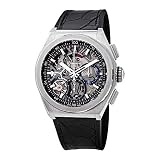
The original DEFY Chronograph USM combines a 37 mm stainless-steel case with an octagonal profile and 14-sided bezel, a USM Gentian Blue dial, chronograph counters and a steel ladder bracelet. Inside is the automatic El Primero 400 chronograph movement. Zenith’s US page lists a price of $11,800 and, as of October 12, 2026, shows the watch as out of stock; both price and availability can change. Check Zenith’s product page for current status.
The collaboration links two design histories: USM Haller’s modular furniture system, introduced in 1965, and Zenith’s El Primero chronograph, which debuted in 1969. Zenith’s September 4, 2025 announcement described an exclusive capsule collection and a custom-designed USM Haller timepiece chest. The furniture reference is not just a color cue: USM’s page identifies the small Haller ball joint at the end of the chronograph seconds hand, turning a recognizable hardware element into a watch detail. USM explains the collaboration here.
How to judge whether another watch is a visual match
“Colorful” can mean a fully saturated dial, a restrained base color with bright accents, or multiple colors distributed among the hands and subdials. “Bold” may come from the case geometry and bracelet as much as from the dial. Compare these features separately rather than assuming that a similar color means a similar watch.
- Color coverage: Is most of the dial one vivid color, or does color appear only on the hands, markers or counters? Note how much of the display reads as colorful at a glance.
- Case shape and wrist presence: The Zenith reference uses a compact 37 mm case, but its angular silhouette and broad bezel can give it a different visual character from a round, smooth-sided case. Diameter alone does not establish how a watch wears.
- Chronograph layout: Check whether the watch has a chronograph at all, then compare the number, position and visual prominence of its counters. A colorful three-hand watch may share the palette without sharing the complication.
- Bracelet or strap: The Zenith’s ladder bracelet is a conspicuous part of its design. A leather or rubber strap can change the overall impression even when the dial color is close.
- Price and availability: Confirm the exact reference, current production status and a current seller listing. An announced edition, a past listed price or a visually similar model does not prove that a watch is available to buy now.
What the multicolor TimeForArt watch is—and is not
In October 2026, Zenith announced a separate DEFY Chronograph USM unique piece for TimeForArt. Its mirror-polished dial uses USM Golden Yellow, Pure Orange, Green and Gentian Blue; it has a 37 mm steel case, an El Primero 400 movement, a 55-hour power reserve and 10 ATM water resistance. Zenith says Phillips New York will auction it on December 5, 2026, with proceeds benefiting Swiss Institute. See Zenith’s announcement.
This is a one-off auction creation, not a standard retail alternative to the 60-piece blue-dial edition. Its multicolor dial is a strong reference for readers drawn to a more playful palette, but its announced auction route should not be mistaken for ordinary store availability.
How to build a trustworthy shortlist
- Choose the design trait that matters most. Decide whether you want the blue saturation, an angular case, a chronograph display, an architectural bracelet or a combination. This prevents a vague color resemblance from standing in for the whole design.
- Check the exact model and specifications. Use the manufacturer’s page to verify case size and shape, dial colors, movement type, chronograph function, and bracelet or strap. Treat visual similarity and technical equivalence as separate questions.
- Verify the buying status and price at the point of purchase. Confirm that the exact reference is in production or listed by a seller, and check the current price and return terms. Limited-edition announcements and old prices are not proof of live inventory.
- Compare wrist presence, not just numbers. If possible, try the watch on; otherwise, compare case dimensions and bracelet design against a watch you already know fits comfortably. A 37 mm diameter does not guarantee the same perceived size across different shapes.
The available manufacturer information establishes the Zenith reference and its design, but it does not establish a sourced, ranked set of competing models or confirm third-party inventory. Any recommendation presented as a current alternative needs model-specific evidence for its design and present availability.
Quick Recap
Best Value
Rank #4
Product prices and availability are accurate as of the date/time indicated and are subject to change. Any price and availability information displayed on Amazon at the time of purchase will apply.




