The best 1970s Seiko depends on what you want to collect. The Seiko 7006-8040 is the sensible affordable entry point; the 6139-6040 Silver Ghost is the understated chronograph choice; the 6105-8110 Captain Willard is the most recognizable vintage diver; the 3883-7000 Morpho is the specialist quartz pick; and the 6159-7010 Grandfather Tuna is the professional-diver grail.
Those five watches are not an objective ranking of every Seiko made during the decade. They represent five different reasons to collect 1970s Seiko: value, mechanical innovation, cultural importance, quartz engineering, and extreme professional tool-watch design. A good purchase also depends on originality, serviceability, condition, and whether you intend to wear the watch or preserve it.
This guide updates the original 2021 selection with the reference corrections, service warnings, buying checks, alternatives, and market context a collector needs before spending money on a 50-year-old watch.
Why the 1970s were a defining decade for Seiko
Seiko entered the 1970s with several major technologies developing at once. Its automatic chronograph program produced the 6139 in 1969 and the two-register 6138 family in 1970. Seiko describes the 6139 as one of the world’s first automatic chronographs and emphasizes that it combined a column wheel with a vertical clutch—an important technical achievement for a mass-produced Japanese chronograph. Seiko’s official chronograph history explains the development.
Free tools Windows power users keep installed
One-click scans. No signup required.
#1 Best Overall
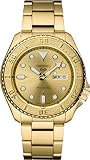
- 4R36 CALIBER: equipped with precise 4R36 caliber movement, this men’s watch is self-winding and guarantees accurate timekeeping
- GOLD-TONE DURABILITY: water-resistant up to 100 meters, these men's wrist watches feature a gold-tone stainless steel watch case and bracelet for durability and a striking, luxurious look
- DAY/DATE CALENDAR: the metallic gold-tone dial features a built-in calendar and LumiBrite dial indicator hands and markers, setting it apart from other men's watches
- ROTATING BEZEL: the golden unidirectionial rotating bezel on this luxury sports watch allows timer functionality
- COMMON SEARCH TERMS: mens watches, gifts for him, mens watch, birthday gifts for men, watch for man, watches for men, gold watch, watch for men, men watch, automatic watches for men, business casual, gold watches for men, waterproof watch, mechanical watch, analog watch, skeleton watch, luxury watches for men, mens dress watch, waterproof watches for men, watches men, mens wrist watch, mechanical watch for men, small gold watch, mens luxury watch, wrist watch for men, gold watch
Quartz was moving just as quickly. Seiko released the Quartz Astron 35SQ on December 25, 1969, and expanded from an expensive pioneering product into a broad quartz range during the 1970s, including calendar and digital watches. Its official Astron history is the safest source for Seiko’s role in the quartz revolution; it is better to say that Seiko released the first commercially marketed quartz wristwatch than to claim that it invented every form of quartz timekeeping.
Professional diving was the third parallel story. Seiko refined its mechanical divers through the 6105 and 6159 lines, introduced the 6159-7010 in 1975, and later developed quartz-powered Tuna watches, including the 7549 family in 1978. The decade therefore produced everything from inexpensive day-date automatics to high-beat professional divers and unusually sophisticated quartz watches.
That range is why a list of the best 1970s Seikos should not be limited to famous divers and chronographs. Many affordable 7006 and Seiko 5 models are historically representative, usable, and more realistic first purchases than a rare professional reference.
What best means in this guide
Instead of treating one expensive watch as the overall winner, the selections are judged against eight practical criteria:
- Historical importance: Did the watch represent a significant Seiko innovation or product direction?
- Design significance: Is its case and dial language recognizably characteristic of the 1970s?
- Collector interest: Does the reference have a durable enthusiast following?
- Buyability: Can an authentic example realistically be found?
- Serviceability: Are parts and competent watchmakers available?
- Originality risk: How vulnerable is the model to redials, replacement bezels, swapped movements, and aftermarket components?
- Wearability: Is it practical for occasional use, or primarily a display and research object?
- Value versus alternatives: Does the vintage watch still make sense beside another Seiko or a modern re-creation?
The result is a category-based buying guide, not a claim that the 7006-8040 and 6159-7010 are competing for the same buyer.
Five headline picks at a glance
| Watch | Type and movement | Approximate size and period | Why it matters | Primary buying risk |
|---|---|---|---|---|
| 7006-8040 | Automatic day-date, 7006 family | About 36 mm; 1970s examples | Affordable, restrained entry into vintage Seiko | Redial, tired movement, missing or incorrect bracelet |
| 6139-6040 Silver Ghost | Automatic chronograph, 6139 | About 40 mm; approximately 42 mm lug-to-lug | Column-wheel and vertical-clutch chronograph in a discreet case | Unserviced chronograph, faded or replaced bezel, swapped parts |
| 6105-8110 Captain Willard | Automatic diver, 6105B | 1970–approximately 1977; roughly 150 m when properly maintained | Iconic asymmetrical diver with strong cultural identity | Over-polishing, aftermarket parts, compromised crown or seals |
| 3883-7000 Morpho | High-accuracy Superior quartz | About 37 mm; catalogued in 1974 | Rare technical quartz with a color-shifting dial | Dial damage, battery leakage, specialist movement service |
| 6159-7010 Grandfather Tuna | High-beat professional automatic diver, 6159 | 1975–approximately 1979; about 51 mm across the shroud | Seiko’s first Tuna and a landmark monocoque professional diver | Rarity, case or shroud damage, difficult and expensive service |
Market note: The price ranges quoted in the original guide were May 2021 estimates, not current valuations. Vintage Seiko prices vary dramatically according to originality, service, seller type, documentation, and condition. Auction results are not interchangeable with dealer asking prices.
1. Seiko 7006-8040: the best affordable entry point
If you want a period Seiko rather than a trophy, the 7006-8040 is the most approachable choice in this group. It is a compact, dress-leaning automatic with a day-date display, applied markers, and a restrained 1970s design that does not depend on a famous nickname.
What it is
The watch is approximately 36 mm in diameter and uses Seiko’s 7006 automatic movement family. The 7006A documentation identifies a 19-jewel version, but the broader 7006 family existed in multiple jewel counts and configurations. Do not assume that every 7006-powered watch has the same specification. The 7006-8040 reference information and 7006A service documentation are useful starting points.
The Tool Desk
Outbyte Driver Updater FREEFix the driver behind crashes, sound loss and screen glitchesFind Drivers →Outbyte PC Repair FREERepair Windows errors before they cause bigger problemsFix Now →Many examples are seen on a beads-of-rice-style bracelet. The case and dial have the angular visual vocabulary associated with Seiko’s period, but it would be misleading to describe the watch as a literal Grand Seiko 44GS equivalent. Its appeal is that it delivers some of the era’s design character at a much lower entry price.
Why collect it
- Small enough for buyers who dislike oversized modern watches.
- Day and date make it more useful than a simple three-hander.
- Usually easier to find than the headline chronographs and divers.
- It demonstrates that an important vintage Seiko does not need to be rare or expensive.
- It is a good platform for learning how vintage condition and originality affect value.
What to inspect
- Check that the caseback actually identifies the 7006-8040 rather than merely showing a different 7006 model.
- Look for a refinished or replaced dial. Freshly bright printing, incorrect fonts, or unusually perfect lume deserve scrutiny.
- Inspect the acrylic crystal, crown, bracelet, clasp, and end links. A replacement strap or crystal is not automatically a problem, but it should be disclosed.
- Operate the day and date, including the quickset function where applicable. Confirm that the day language is plausible for the original market.
- Ask whether the movement has been serviced, not simply whether the watch is currently running.
The common mistake is buying any attractive 7006 and paying a reference-specific premium for a watch that is not actually the 7006-8040. Reference, movement, dial, case, and serial should tell one coherent story.
Who should buy it?
Choose the 7006-8040 if you want an affordable vintage dress watch, a compact everyday-size case, or a low-risk introduction to Seiko collecting. It is not the right choice if you specifically want a major technical milestone, an iconic dive case, or a rare Japanese Domestic Model.
The original 2021 guide placed examples at approximately €250–€500. Treat that as a historical May 2021 snapshot. The price of a current example should be adjusted for dial originality, bracelet condition, service evidence, and whether the movement needs work.
Do these 3 things before closing this tab:
1Clear out junk files and repair common Windows errors2Scan for outdated or missing drivers - takes under a minute3Repair Windows errors before they cause bigger problems2. Seiko 6139-6040 Silver Ghost: the best understated chronograph
The 6139-6040 is the pick for a collector who wants the substance of Seiko’s automatic-chronograph breakthrough without the louder appearance of a Pogue or Bullhead. Its nickname comes from the bezel, not from an official Seiko model name.
Technical and historical significance
The 6139 is a single-register automatic chronograph with a 30-minute counter, quickset day-date, column wheel, and vertical clutch. That vertical-clutch architecture helps explain why the movement is historically important: it was not simply a basic automatic movement with a stopwatch module added to it. The case of the 6139-6040 is approximately 40 mm across, but its short roughly 42 mm lug-to-lug measurement makes it wear more compactly than the diameter suggests.
The 6139 arrived in 1969 and belongs to the same period of intense chronograph development that produced the two-register 6138 family from 1970 onward. Seiko’s own historical account should be preferred when describing the movement’s place in chronograph history.
Why Silver Ghost examples are difficult
The Silver Ghost nickname generally refers to the bezel fading toward a pale or ghostly appearance. That aging can be attractive, but it can also mean that tachymeter markings have deteriorated to the point of being partly or entirely invisible. The champagne-colored dial is another vulnerable component, and many surviving watches have replaced hands or bracelets.
What’s actually slowing this PC down?
Pick the symptom - the matching free tool is one click away.
Rank #2

- CHAMPAGNE DIAL WITH SUNRAY FINISH: featuring an eye-catching champagne dial with a sunray finish, adding a touch of sophistication to this men's watch
- DAY/DATE CALENDAR: these men’s watches feature a convenient day/date calendar function
- CALIBER 6N43: equipped with the reliable Caliber 8B63 movement, this watch guarantees accurate timekeeping GOLD HANDS AND MARKERS: gold dial indicator hands and markers lend a subtle touch of luxury to this timepiece
- GOLD-TONE STAINLESS STEEL CASE AND BRACELET: durable and stylish, the gold-tone stainless steel watch case and bracelet add longevity and elegance to this luxury field watch SEIKO QUALITY: handcrafted timepieces for every occasion
- 100M WATER-RESISTANT: stylish and safe men’s wrist watches for swimming and snorkeling
A faded bezel is not automatically a defect and a replacement bracelet is not automatically a deal-breaker. The important questions are whether the bezel is an original part, whether the seller describes its condition honestly, and whether the price reflects what has been changed.
Chronograph inspection checklist
- Pull the crown through every position and establish whether the day and date change correctly.
- Start the chronograph and confirm that the central seconds hand starts cleanly.
- Stop it and verify that the elapsed-minute register advances.
- Reset it and check that the hands return to zero rather than stopping short.
- Listen for grinding, hesitation, or a weak reset. Do not repeatedly force a malfunctioning vintage chronograph.
- Request a movement photograph. A timegrapher screenshot can show rate and amplitude, but it cannot prove originality or confirm that the chronograph works.
Seiko USA currently lists the 6139 among vintage calibers that its official US service network no longer services. That does not make ownership impossible, but it makes an independent watchmaker with vintage Seiko chronograph experience part of the buying decision, not an optional afterthought. See the current Seiko USA service limitations.
Who should buy it?
The 6139-6040 suits a collector who values automatic chronograph history, a relatively compact case, and understated design. It is less suitable as a first vintage watch if you cannot tolerate future specialist service or if you need a complication that can be trusted without inspection.
The original guide gave the 6139-6040 a May 2021 estimate of approximately €500–€1,500. Current pricing should be separated into untested, serviced, dealer, and all-original categories rather than treated as one range.
What’s actually slowing this PC down?
Pick the symptom - the matching free tool is one click away.
Chronograph alternatives
The yellow-dial 6139-6002 or 6139-6005 Pogue has a stronger spaceflight association and is often more immediately recognizable. The 6138-8020 Panda offers a two-register layout, while the 6138-0040 Bullhead places its crown and pushers at 12 o’clock. The 6138-0030 Kakume and 6138-0010, 0011, and 0017 UFO or Yachtman provide additional case and dial variations.
Compared with the 6139, the 6138 adds a 12-hour register and can be manually wound. The vintage Seiko chronograph guide from Hodinkee is useful for comparing these families. A non-trophy 6138 or 6139 can be a better value than chasing a famous colorway, provided the movement and dial are correct.
3. Seiko 6105-8110 Captain Willard: the best iconic everyday diver
The 6105-8110 is the strongest choice for a collector who wants one recognizable vintage Seiko diver without going all the way to the rarity and size of the Grandfather Tuna.
Reference history and specifications
The earlier 6105-8000 and 6105-8009 use a symmetrical case. Around 1970, Seiko introduced the later 6105-8110 and 6105-8119 with the distinctive asymmetrical cushion case and integrated crown guard. The final digits commonly identify market variants: the 8110 is generally associated with the Japanese-market version, while the 8119 is commonly encountered as an export or US-market version. Dial wording changed during production, including versions marked Water Proof and later Water Resist, so the dial inscription can help with dating—but never proves a watch is correct by itself.
Do these 3 things before closing this tab:
1Repair Windows errors before they cause bigger problems2Fix the driver behind crashes, sound loss and screen glitches3Clear out junk files and repair common Windows errorsThe 6105-8110 was produced until approximately 1977. It uses the 6105B automatic movement, running at 21,600 vibrations per hour with 17 jewels, a date display, and an original depth rating of approximately 150 m when correctly maintained.
The name Captain Willard is retrospective. It comes from Martin Sheen’s use of a 6105 in the 1979 film Apocalypse Now; Seiko did not originally market the watch under that name. Christie’s provides useful historical context.
Why it remains a collector favorite
- The asymmetrical case is instantly identifiable and genuinely functional rather than decorative.
- It combines tool-watch credibility with a size that is more manageable than the 6159-7010.
- The film connection gives it cultural importance beyond movement specifications.
- It has a large ecosystem of modern interpretations, making it easy to compare vintage design with current engineering.
What to inspect
- Case profile: Over-polishing can erase the crisp asymmetrical lines and soften the integrated crown guard.
- Crown and locking mechanism: Inspect the crown threads, lock, tube, and operation closely. Damage here affects both usability and originality.
- Bezel: Replacement and aftermarket inserts are common. Compare typography, markers, shape, and aging with trusted reference photographs.
- Dial and hands: Replacement parts can look convincing. Check lume behavior, printing, handset shape, and whether the combination matches the production period.
- Crystal and strap: A scratched crystal and deteriorated original strap are normal on survivors, but their replacement should be disclosed.
- Movement: Confirm that the date changes, the watch winds and sets correctly, and the movement is free of corrosion.
Historical 150 m water resistance is not a current invitation to swim. Seiko warns that gaskets age and that water resistance can be affected by shocks, case deformation, and deterioration. Its service information also cautions that water resistance may not be guaranteeable on some older dive watches because of case condition and discontinued gaskets. Read Seiko’s maintenance and water-resistance guidance.
Who should buy it?
Buy a 6105-8110 if the case design, historical story, and vintage tool-watch character matter more to you than perfect modern performance. Treat an untested example as a collectible that needs inspection, not as a dive instrument.
The original guide estimated approximately €2,000–€3,500 in May 2021. A more recent sample of recorded 2025–2026 auction results includes sales around $881, $1,063, and $1,554, but those are auction outcomes—not a universal market value—and should not be compared directly with a serviced dealer example or an unusually complete all-original watch. Review the auction-result sample.
Modern alternatives
Seiko has produced several modern interpretations of the 1970 diver, including the high-end SLA033 and the smaller SPB151 and SPB153. The SLA049 and SLA051, introduced in 2021, add modern specifications including an 8L35 movement, sapphire crystal, 200 m water resistance, and a 44 mm case. Seiko’s announcement gives the model specifications. These watches share design lineage; they are not original 6105-8110s.
4. Seiko 3883-7000 Morpho: the best high-accuracy quartz rarity
The 3883-7000 is the choice for the collector who wants the 1970s quartz revolution represented by something more ambitious than an ordinary battery-powered Seiko. Its technical story is important, but its dial is usually the reason people remember it.
What makes the Morpho unusual
The 3883-7000 is a first-generation Seiko Superior quartz watch associated with the Morpho, or Butterfly, dial. The dial shifts between green and blue depending on the angle of the light. It has a steel case of approximately 37 mm and appeared in a 1974 catalog. The Japan Domestic Model is commonly identified as 3883-7000, while the international or export variant is commonly identified as 3883-7009. The JDM version uses Quartz Superior wording; the international version is associated with the GFA, or Grand Fine Accuracy, designation.
The original guide reported an approximate retail price of ¥220,000. That high original positioning helps explain why the watch is interesting: this was not merely an inexpensive quartz watch intended to compete on convenience.
Rank #3
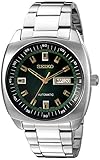
- Case diameter: 43.5mm
- Gold tone second hand
- Water Resistant To 165 Feet
- Power reserve: approximately 41 hours
- 21,600 vibrations per hour
Be careful with the accuracy figures
Surviving specialist references do not consistently state one accuracy specification. The original article gives approximately ±2 seconds per month for the GFA version, while other specialist descriptions report approximately ±1 second per month or ±12 seconds per year. These may reflect different grades, catalog descriptions, or rating conventions. The defensible conclusion is that the 3883 was specified as an exceptionally accurate quartz movement; do not use one unsupported number as a universal specification. The relevant claim is discussed in the original buying guide.
What to inspect
- Dial: This is the highest-value component for many buyers. Ask for photographs in changing light and verify that the color-shifting effect is genuine rather than a photographic artifact.
- Movement: Request a clear movement photograph and ask about battery leakage, prior repairs, and current accuracy.
- Bracelet: Original bracelet condition can materially affect collectibility and price.
- Designation: Do not treat Superior, VFA, and GFA as interchangeable labels. Confirm the caliber, dial wording, and market variant.
- Service: A dead or inaccurate movement may require a specialist familiar with vintage high-accuracy Seiko quartz. Battery damage can be much more serious than a simple battery replacement.
Who should buy it?
The Morpho is for a collector interested in quartz history, unusual finishing, and original dials. It is not the best first vintage Seiko if you want easily available parts or a watch you can repair through a broad network of generalists.
The original guide estimated approximately €2,000–€4,500 in May 2021. Current online listings, such as those collected for the 3883-7000 reference, are asking prices rather than completed-sale evidence. Compare like with like: an original, running Morpho with its correct bracelet is a different object from a damaged or incomplete watch.
Recommended Free Tools
5. Seiko 6159-7010 Grandfather Tuna: the professional-diver grail
The 6159-7010 is the most technically dramatic and specialist-oriented watch in this guide. It is a landmark professional diver, but it is not the sensible choice for a first vintage Seiko or for actual modern diving.
First, the important reference correction
The 1975 watch commonly called the Grandfather Tuna is the 6159-7010. The 6159-7001 was the earlier professional diver. Confusing these references changes the identity and value of the watch. The distinction is documented in the history of Seiko’s monocoque Tuna.
Engineering significance
Introduced in 1975 and produced into approximately 1979, the 6159-7010 is regarded as the first Seiko Tuna. It uses a large titanium monocoque inner case, a steel bezel, a ceramic-coated titanium protective shroud, a Hardlex crystal, an L-shaped gasket, and a polyurethane strap. Its original depth rating was 600 m, and it did not require a helium escape valve.
The movement is a Grand Seiko-derived, high-beat Seiko 6159 caliber operating at 36,000 vibrations per hour. The watch is approximately 51 mm across the shroud, but its lugless construction means it does not wear like a conventional 51 mm watch. The shroud is an engineering component designed to protect the case and bezel, not simply an oversized styling device.
Free tools Windows power users keep installed
One-click scans. No signup required.
What to inspect
- Examine the titanium case and shroud for corrosion, severe impact, cracks, and incorrect refinishing.
- Confirm that the protective shroud is correct to the reference. A modern or incorrect replacement can change the watch materially.
- Inspect the bezel, crystal, crown, caseback, and gasket areas for damage or signs of moisture intrusion.
- Ask whether the movement has been fully serviced by someone experienced with high-beat vintage Seiko calibers.
- Check the original polyurethane strap and keeper, but do not reject an otherwise honest watch solely because the old strap has deteriorated.
- Obtain authentication before paying a premium. A genuine 6159 movement does not prove that the complete watch left the factory in its current configuration.
The 600 m rating is historical information, not a current guarantee. No vintage 6159-7010 should be taken diving without professional inspection and pressure testing, and even a clean-looking watch may have aged seals or compromised case components.
Who should buy it?
Choose the Grandfather Tuna if you are an experienced Seiko or professional-diver collector who values engineering history and rarity. It is better understood as a historical object that can be worn carefully than as a dependable modern dive instrument.
The original guide gave a May 2021 estimate of approximately $3,500–$8,000. The spread reflects the difference between worn, restored, incomplete, serviced, and exceptionally original examples. Do not use the lower end of that old range as a target price without checking condition and authenticity.
Modern alternative
The modern SLA041 is a re-creation of the 1975 Professional Diver and offers updated materials and specifications. It is a safer practical alternative, but it is not a vintage 6159-7010. Seiko’s official re-creation announcement illustrates the difference between buying historical authenticity and buying current performance.
The important 1970s Seikos left out of the five
A five-watch list cannot represent the decade, and the original selection itself acknowledged omissions such as Lord Matic, the first-generation 6309 Turtle, the 6138-8020 Panda, and the 6138-0040 Bullhead. These are the most useful alternatives to investigate.
For affordable mechanical and dress-watch collecting
- 7006-8007 and other 7006 variants: Similar automatic day-date watches can offer the same period character. Confirm the exact case and dial instead of assuming that every 7006 is a 7006-8040.
- Seiko 5 models: Watches using 6119, 7009, and related movements are abundant and often inexpensive. They are a practical way to explore 1970s Seiko design, although individual condition and parts originality still matter.
- Lord Matic 5606 and 5216: Lord Matic occupied a premium automatic position below Grand Seiko. Faceted crystals, applied markers, and 56-series movements give the line a more refined feel than many ordinary Seiko 5 models. A useful overview is available from Second Vintage’s Seiko collector guide.
- King Seiko and Grand Seiko: Both lines continued into the 1970s and offer more ambitious finishing and movements, but they require especially careful reference research because refinished dials, replacement parts, and incorrect case-and-movement combinations can be expensive mistakes.
For chronograph collectors
- 6139-6002 or 6139-6005 Pogue: Choose it for the yellow dial and spaceflight association, but verify the specific market reference and the condition of the chronograph.
- 6138-8020 Panda: A highly recognizable two-register design with strong collector interest.
- 6138-0040 Bullhead: Its top-mounted crown and pushers create one of Seiko’s most distinctive 1970s cases.
- 6138-0030 Kakume: An angular, two-register option with a different dial personality.
- 6138-0010, 0011, and 0017 UFO or Yachtman: Large, strongly shaped cases that illustrate Seiko’s willingness to experiment.
- 7016-5000 and 7016-5001: Monaco-style automatic chronographs that deserve attention outside the better-known 6138 and 6139 families.
The 6138 is manually windable and adds a 12-hour register to the 6139’s basic chronograph arrangement. The Hodinkee chronograph reference is a useful comparison point.
For divers and tool watches
- 6306-7000 and 6306-7001 Turtle: Scarcer variants that appeal to collectors who understand the reference distinctions.
- 6309-7040 and 6309-7049 Turtle: More accessible cushion-case divers with a substantial late-1970s following.
- 7548 quartz diver: One of Seiko’s better-known late-1970s quartz dive families and an interesting alternative to a mechanical diver.
- 7549-7009 Golden Tuna: The first quartz movement used in Seiko’s professional Tuna line, and an important successor to the mechanical 6159-7010.
- 6106 Sport Diver: A broad family of vintage sports watches with many case and dial variations.
- 6159-7001: The earlier professional diver. It is historically important, but it is not the 6159-7010 Grandfather Tuna.
Seiko’s changing diver designs are summarized in this vintage Seiko dive-watch overview. With all of these models, a vintage depth rating must be treated as a historical specification until the individual watch has been inspected and tested.
For unusual quartz and nontraditional designs
- 3823 V.F.A.: A high-accuracy quartz line for collectors who want technical rarity beyond the Morpho.
- 9943 and 9940 Twin Quartz: Interesting examples of Seiko’s effort to improve quartz accuracy and stability.
- Early Seiko digital LCD watches: Important to the decade’s transition from mechanical displays to electronic timekeeping.
- Advan: Distinctive colored and textured dials, often more visually experimental than technically rare.
- Bell-Matic: Automatic alarm watches with a strong period identity.
Do not call every unusual Japanese Domestic Model rare or valuable. Some have small collector markets, incomplete documentation, fragile parts, or movements that are difficult to repair. Unusual is a description; it is not proof of scarcity or investment value.
Windows Errors? Fix Them Before They Spread
Repair common Windows errors and clear accumulated junk for a smoother, more stable PC - no reinstall needed.Free scan · no reinstallOutdated Drivers Are Slowing You Down
One free scan finds every outdated or missing driver and matches the right update for your exact hardware.Free scan · exact hardware matchHow to read a Seiko reference number
Seiko’s reference system is useful but should not be treated as a complete authenticity certificate. The first four digits generally identify the caliber family, while the digits after the hyphen identify the case or model design. Market variants may use a different final reference, as with the 6105-8110 and 6105-8119.
Serial numbers can often indicate a production month and a decade, but the decade has to be inferred from the model’s known production period. A serial that appears to decode neatly is not proof that the dial, hands, bezel, movement, and case belong together. Serial and model terminology explained by Second Vintage is a helpful reference.
Rank #4

- SEIKO WATCH – Seiko SRPL75 Presage wristwatch.
- COLLECTION – Presage Style 60's design.
- DESIGN – Mid-century-inspired color and case design.
- BRACELET – Hairline-finished bracelet links.
- WATCH DIAMETER – 39.5 mm.
Use the number as the first step, not the final answer. The caseback, movement, dial, hands, bezel, crown, bracelet, end links, and serial should form a plausible combination for the claimed market and production period. A caseback reference alone cannot authenticate a complete vintage Seiko.
Original, serviced, restored, Franken, or counterfeit?
These terms describe materially different purchases:
| Term | What it should mean | What to ask |
|---|---|---|
| Original | Major visible and mechanical components appear period-correct and appropriate to the reference. | Are the dial, hands, bezel, crown, bracelet, end links, crystal, and movement correct? |
| Serviced | The movement has been cleaned, lubricated, regulated, or repaired. | Was it fully disassembled? Which parts were replaced? Who did the work, and when? |
| Restored | One or more components have been refinished, repainted, relumed, replaced, or otherwise altered. | What was changed, and is there before-and-after or invoice documentation? |
| Frankenwatch | Genuine Seiko components from different references have been combined into a configuration Seiko may never have sold. | Does every component belong to this exact reference and production period? |
| Counterfeit | The watch or key components were not made by Seiko. | Can the seller provide clear movement, case, dial, and serial photographs and a return option? |
A replacement crystal or strap does not automatically make a watch a poor purchase. Those parts are often consumable or difficult to preserve. The key questions are whether the replacement is disclosed, period-correct or appropriately made, suitable for the reference, and reflected in the price. A replacement dial, handset, bezel, case, or movement usually has a much greater effect on originality and value.
Patina versus damage
Potentially acceptable patina includes even dial aging, mild lume discoloration, uniform bezel fading, and small case scratches. More serious warning signs include moisture spots under the dial, movement corrosion, flaking plating, cracked bezel material, severe caseback corrosion, damaged screw threads, and printing that appears chemically altered.
Patina should be judged in context. Uniform aging can be attractive; isolated dark spots, bubbling, or corrosion around the hands may indicate water intrusion. A heavily polished case may be clean but less collectible than a lightly scratched case that retains its original geometry.
The pre-purchase inspection checklist
Before buying an expensive vintage Seiko, ask for enough information to evaluate the watch without guessing.
Quick wins for a faster PC:
Repair Windows errors before they cause bigger problemsFix Now →Fix the driver behind crashes, sound loss and screen glitchesFind Drivers →- Identify the exact reference. Ask the seller to state the full caseback reference, not just the caliber or nickname.
- Request complete photographs. You need clear front, rear, side, crown, clasp, end-link, and caseback images. Reflections and low-resolution photographs conceal problems.
- Request a movement photograph. A timegrapher screenshot is useful for rate, amplitude, and beat error, but it cannot establish originality or long-term reliability.
- Compare every visible part. Check dial printing, markers, hands, lume, bezel typography, crown, crystal, case profile, bracelet, clasp, and end links against reliable reference photographs.
- Decode the serial only after checking the model. Use the production period to establish whether the inferred decade makes sense.
- Ask whether the case was polished. Polishing matters especially on the 6105 and 6159, where case and shroud geometry are central to the design.
- Ask whether the dial was refinished or relumed. A clean dial may be less original than a faded one.
- Test every complication. Confirm day/date operation, chronograph start-stop-reset and minute registration, alarm operation, or quartz calendar functions as applicable.
- Get service details. Ask for the service date, watchmaker’s identity, invoice, parts replaced, and whether the case was opened, polished, or pressure-tested.
- Price condition separately from running status. A watch that runs is not necessarily serviced, original, or reliable.
- Confirm return terms. A return period gives an independent watchmaker time to inspect the movement and compare the configuration with the advertised reference.
- Locate a watchmaker before purchase. This is especially important for 6138, 6139, high-accuracy quartz, 6159, and other movements with limited official support.
Service reality and water-resistance warning
Seiko USA’s current service page specifically lists 6138, 6139, 7548, and 7549 among old calibers that are no longer serviceable through its official US network, and warns that other vintage calibers may also be returned unrepaired. Availability differs by country, so buyers outside the United States should check their local Seiko service network. Check the current US service list.
That does not mean a vintage Seiko cannot be maintained. Independent specialists can often service movements, but parts availability, technical familiarity, and the condition of the individual watch determine what is possible. For a rare watch, ask the specialist about the movement before purchase rather than assuming that a factory service center can repair it.
For a diver, request a pressure test after service and do not rely on a timegrapher reading as evidence of water resistance. A vintage case can look excellent while its gaskets, crown tube, crystal seal, or case threads are no longer trustworthy.
Original vintage watch or modern re-creation?
| Choose the original if you value | Choose the modern alternative if you value |
|---|---|
| Correct historical reference, original patina, period construction, and collector authenticity | Warranty, readily available service, modern seals, improved crystals, and predictable daily use |
| The specific 6105-8110 or 6159-7010 case and its place in Seiko history | The design language of a Willard or Tuna without risking a rare vintage case in water |
| Research, originality, and the possibility of preserving a surviving example | Swimming, diving, travel, and low-maintenance ownership |
The modern SLA033, SPB151, and SPB153 provide routes into the 1970 diver design. The SLA049 and SLA051 offer more contemporary specifications, including sapphire crystal and 200 m water resistance. The SLA041 is the modern 1975 Professional Diver re-creation. These watches may be safer and easier to own, but they are not substitutes for an original when the objective is historical authenticity.
Which 1970s Seiko should you buy?
| Your priority | Best starting point | Why |
|---|---|---|
| Understated vintage dress watch | 7006-8040 | Compact, affordable, period-correct, and mechanically straightforward compared with a chronograph |
| First vintage chronograph | A carefully inspected common 6139 or 6138 | Historically important, with more model variety than the trophy references |
| Most iconic vintage Seiko diver | 6105-8110 | Recognizable asymmetrical case, film association, and strong collector community |
| Best chronograph value | Non-trophy 6138 or 6139 | Often more attainable than famous colorways while retaining the core mechanical story |
| Rare quartz enthusiast piece | 3883-7000 or 3883-7009 | Technical importance and an unusually distinctive color-shifting dial |
| Professional-diver specialist grail | 6159-7010 | Monocoque construction, high-beat movement, 600 m historical rating, and exceptional rarity |
| Actual modern water use | A modern Prospex re-creation | Better seals, crystal, service support, and warranty than a half-century-old watch |
| Lowest-maintenance daily wearer | A new modern Seiko | Avoids the parts, water-resistance, and originality risks of vintage ownership |
The best purchase is not necessarily the rarest one. For most newcomers, a correct and honestly described 7006-8040 or common 6139/6138 is a better first step than an incomplete Captain Willard or an unverified Grandfather Tuna. Experienced collectors can then decide whether the Morpho’s quartz engineering or the 6159-7010’s professional-diver history fills a genuine gap in the collection.
Frequently Asked Questions
Is the Seiko 6105-8110 the same watch as the 6105-8119?
They are closely related later 6105 references with the asymmetrical cushion case and integrated crown guard. The 8110 is generally associated with the Japanese-market version, while the 8119 is commonly encountered as an export or US-market version. Check the dial, caseback, movement, serial, and market configuration together rather than treating the final digit as the only difference.
Can I swim or dive with a vintage Seiko that is marked 150 m or 600 m?
Not without professional inspection and pressure testing. Seiko warns that gaskets age and that water resistance can be affected by shocks, case deformation, and case condition. A vintage rating describes the original design, not the present condition of a 50-year-old watch.
The Tool Desk
Outbyte PC Repair FREEClear out junk files and repair common Windows errorsFree Scan →Outbyte Driver Updater FREEScan for outdated or missing drivers - takes under a minuteDriver Scan →Is the Seiko 6159-7001 the Grandfather Tuna?
No. The 6159-7001 was the earlier professional diver. The 1975 watch commonly called the Grandfather Tuna is the 6159-7010.
Does serviced mean that a vintage Seiko is original?
No. Servicing describes maintenance or repair of the movement. A serviced watch may still have a refinished dial, replacement hands, aftermarket bezel, swapped movement, polished case, or non-original bracelet. Ask for the service invoice and a complete parts disclosure.
The Bottom Line
For most buyers, start with the 7006-8040 or a carefully inspected 6139/6138. Choose the 6105-8110 when the iconic diver case matters most, the 3883 Morpho when quartz history and dial originality are the attraction, and the 6159-7010 only when you are prepared for specialist authentication, service, and ownership. If you need dependable water resistance or a low-maintenance daily watch, buy a modern Seiko Prospex re-creation instead of risking an original 1970s diver.