Free tools Windows power users keep installed
One-click scans. No signup required.
Neurable’s CES 2026 headphones do not read your thoughts. The company’s collaboration with HP’s HyperX uses electroencephalography (EEG) sensors built into ear cushions to measure tiny electrical signals near the ears. Software then analyzes those noisy signals and estimates states such as focus, fatigue, or cognitive strain.
The HyperX headset shown at CES was an in-development prototype, not a retail product. HP and Neurable announced no final price, release date, product name, or complete specifications as of August 18, 2026.
As an Amazon Associate I earn from qualifying purchases.
What Neurable and HyperX announced at CES 2026
On January 5, 2026, Neurable announced a collaboration with HP’s HyperX gaming brand involving an in-development gaming headset. According to HP’s announcement, the headset is designed to interpret brain activity in real time and provide insights intended to help players improve focus and accuracy.
What’s actually slowing this PC down?
Pick the symptom - the matching free tool is one click away.
That wording describes a product direction and prototype—not a finished gaming accessory. The announcement did not specify a retail price, final specifications, supported platforms, subscription terms, or confirmed launch date.
#1 Best Overall
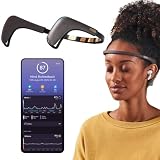
- Works great on its own — access core EEG-powered feedback and session tracking right out of the box; optional Premium subscription adds AI Coach, deeper brain insights, and access to 500+ meditations.
- Personal Meditation Coach — Meet MUSE 2, a smart headband that helps you understand your brain and live a more relaxed, present life. Begin improving your overall brain health and mental wellbeing by harnessing the calming power of meditation.
- Wearable Neurofeedback — To begin, put on the headband and position it so the sensors are in contact with your skin. Next, connect to Bluetooth through the MUSE app, select your meditation experience, take a deep breath, and begin to relax.
- Tune Into Your Body — After each session, you are provided with a calm score. Track your progress to improve your meditation practice overtime and develop an understanding of your internal cues to learn how to relax, build energy and optimize performance.
- Safe, Trusted and Certified — MUSE is backed by research from prestigious institutions and is used by neuroscience researchers around the world. Our SmartSense EEG sensors are award winning and our company is built on credibility and trust.
Reports from CES described demonstrations involving focus, performance, and “tilt,” or mental-performance crashes. Those observations should be treated as prototype demonstrations and proposed use cases, not guaranteed features of a future retail headset. The final behavior could change.
How can headphones detect brain activity?
The underlying technology is electroencephalography, or EEG. Groups of neurons produce very small electrical signals. EEG electrodes placed against the skin detect voltage changes associated with that activity.
Neurable integrates dry fabric sensors into the soft ear cushions rather than requiring a medical cap, conductive gel, or implant. The sensors contact skin around the ears. Neurable’s current MW75 Neuro headphones use 12 EEG channels, according to the product page.
The basic signal chain looks like this:
- Neural activity: groups of neurons generate electrical activity.
- Skin contact: electrodes near the ears detect tiny voltage changes.
- Signal processing: software filters noise and attempts to remove artifacts.
- Pattern analysis: an AI model compares the remaining patterns with data used to train it.
- App feedback: the system displays an estimate such as focus or fatigue, or may prompt the user to take a break.
This is sensing electrical activity at the surface of the head. It is not brain imaging, and it does not produce a transcript of a person’s thoughts.
What “AI interprets brain activity” really means
Neurable’s system is better understood as a brain-state classifier than a mind reader. It attempts to distinguish patterns associated with broad states such as sustained attention, distraction, or fatigue.
Neurable says its focus algorithms were developed with experimental data, validated across users, and personalized during early use. Those are company descriptions of its system, not proof that every user will receive accurate or clinically meaningful results.
A focus score is therefore an inference. The headset measures electrical signals; the software assigns those signals to categories. It does not directly measure intelligence, motivation, enjoyment, stress, or game skill.
Recommended Free Tools
Rank #2

- [ Speech Mode ] Read aloud to improve fluency and comprehension, and the tone of your voice becomes clearer and distinct which results in better listening, communication, reading and writing comprehension, increase in attention and short-term memory.
- [ Bluetooth Follow Mode ] Wireless connection, quick and stable. Read after the sound scource,and be more accurate pronunciation and quick understand the reading and better speech production, which increased confidence and many major improvements.
- [ Functions & Tech ] Upgrade new technology, low latency for sound feedback and signal transmission. Noise cancellation for more clear environment. Volume limited to protect hearing.
- [ Comfortable Long Time Use ] Lightweight material and comfortable fit design, tested by more than 5,000 people, and many times improvements.It can be used 18 houres with one full charge.(45mins loud reading could last one month)
- [ Scientific Studies and Recommendation ] There are multiple scientific studies published demonstrating the efficiency of Auditory Feedback. It is recommended by Occupational Therapists, Speech Therapists and Child Therapists.
What might the HyperX headset detect?
The public announcement supports only broad claims about real-time brain-activity interpretation and insights into focus and accuracy. A future gaming version could potentially be used to:
- identify a decline in sustained attention;
- flag possible fatigue or cognitive overload;
- help players review whether distraction coincided with poor performance;
- support warm-up or training routines; or
- suggest a break when the estimated state changes.
None of those possibilities means the headset can reliably determine exactly what a player is thinking. The CES announcement does not establish that it can decode speech, memories, intentions, game commands, or arbitrary thoughts.
Is it a mind-reading headset?
No—not in the ordinary meaning of “mind reading.” Consumer EEG recordings are low-amplitude and vulnerable to interference. Hair, fit, movement, jaw tension, facial muscles, head position, and electrical noise can all affect the signal. Neurable’s FAQ specifically identifies movement, poor skin contact, and electrical interference as causes of reduced signal quality.
Even when the EEG signal is genuine, interpretation remains probabilistic and task-specific. Being physiologically alert is not the same as aiming accurately. A player can be intensely focused on the wrong strategy, emotionally engaged but ineffective, or relaxed while performing well.
The useful distinction is:
- Measured signal: electrical activity detected by the electrodes.
- Estimated state: a software-generated category such as focus or fatigue.
- Actual performance: accuracy, reaction time, wins, losses, or other game metrics.
Those three things may correlate, but they are not interchangeable.
Can it control games?
The CES announcement does not say that the headset replaces a controller, keyboard, mouse, or eye tracker. It describes interpreting activity to help improve focus and accuracy.
Unless a later technical specification demonstrates direct brain-controlled input, claims that the headset lets users control games with their minds would go beyond the published evidence.
Rank #3

- [ Speech Mode ] Read aloud to improve fluency and comprehension, and the tone of your voice becomes clearer and distinct which results in better listening, communication, reading and writing comprehension, increase in attention and short-term memory.
- [ Bluetooth Follow Mode ] Wireless connection, quick and stable. Read after the sound scource,and be more accurate pronunciation and quick understand the reading and better speech production, which increased confidence and many major improvements.
- [ Functions & Tech ] Upgrade new technology, low latency for sound feedback and signal transmission. Noise cancellation for more clear environment. Volume limited to protect hearing.
- [ Comfortable Long Time Use ] Lightweight material and comfortable fit design, tested by more than 5,000 people, and many times improvements.It can be used 30houres with one full charge.(45mins loud reading could last one month)
- [ Scientific Studies and Recommendation ] There are multiple scientific studies published demonstrating the efficiency of Auditory Feedback. It is recommended by Occupational Therapists, Speech Therapists and Child Therapists.
Why gaming is a difficult environment for EEG
Many EEG demonstrations take place in relatively controlled settings. Gaming introduces additional sources of noise:
Quick wins for a faster PC:
Fix the driver behind crashes, sound loss and screen glitchesFind Drivers →Repair Windows errors before they cause bigger problemsFix Now →Scan for outdated or missing drivers - takes under a minuteDriver Scan →- head movement while tracking action on screen;
- jaw and facial-muscle activity while speaking or reacting;
- excitement, frustration, and physical tension;
- rapid shifts between attention, distraction, and visual scanning; and
- changing contact caused by glasses, hair, sweat, or headset movement.
That makes real gameplay an important validation challenge. A model that estimates attention during a quiet focus exercise may not work equally well during a loud, fast multiplayer match. The eventual question is not merely whether the sensors detect EEG, but whether the software remains reliable under actual gaming conditions.
Is the HyperX-Neurable headset available?
Not according to the public announcement reviewed for this article. As of August 18, 2026, the HyperX-Neurable headset remained in development. No official retail price or confirmed shipping date had been announced.
It is also separate from Neurable’s existing consumer headphones. The current products available from Neurable are productivity-oriented devices, not the CES gaming prototype.
What can consumers buy from Neurable?
Neurable MW75 Neuro
Neurable’s current product page listed the MW75 Neuro at $699 when checked. The headphones include 12 dry-fabric EEG channels and an app offering metrics and insights related to focus, calmness, anxiety, cognitive speed, and brain-age-style measurements.
The page listed iOS and Android support, US-and-Canada availability, and estimated shipping of six to eight weeks at the time checked. It also described a 14-day money-back guarantee after receipt. Prices, inventory, and delivery estimates can change.
Neurable MW75 Neuro LT
The lighter MW75 Neuro LT was listed at $499. Neurable describes it as having 12-channel dry EEG tracking, real-time biofeedback, focus tracking, brain-break prompts, and lifetime premium app membership.
Rank #4
- A simple and classic design feature a brain "tingling" listening to ASMR audio.
- This accessory makes a great gift for any ASMR fan (or yourself).
- PopGrip with swappable top; switch out your PopTop for another design or remove it completely for wireless charging capabilities. (Not compatible with Apple MagSafe wireless charger or MagSafe wallet.)
- Expandable stand to watch videos, take group photos, FaceTime, and Skype handsfree.
- Advanced adhesive allows you to remove and reposition on most devices and cases.
Neurable lists battery life of up to 22 hours, or up to 13 hours with focus tracking enabled. The page used 2026 shipping language rather than a firm delivery date, and listed availability in the United States and Canada.
Neither current product should be confused with the HyperX gaming headset. The commercial models are aimed at productivity and cognitive self-tracking; the HyperX device was announced as a gaming-focused prototype.
Windows Errors? Fix Them Before They Spread
Repair common Windows errors and clear accumulated junk for a smoother, more stable PC - no reinstall needed.Free scan · no reinstallOutdated Drivers Are Slowing You Down
One free scan finds every outdated or missing driver and matches the right update for your exact hardware.Free scan · exact hardware matchWhat happens when the signal is poor?
EEG headphones need consistent contact with the skin. Neurable advises moving hair away from the ear cushions to improve contact. Thick hair, certain hairstyles, glasses, a loose fit, head movement, and jaw tension may reduce or destabilize readings.
A poor signal can lead to missing data, unstable scores, or an interpretation that does not reflect the user’s actual state. That is particularly important in gaming, where movement and muscle activity are unavoidable. Users should not assume that every number displayed by an app is equally reliable.
Neurable says its algorithms continue personalizing during early use. Personalization may help account for differences between users, but it is not a guarantee of accurate readings or improved competitive performance.
Independent reader supportYour contribution helps us test, update, and keep practical guides available for everyone.What the current headphones do—and do not do
The current MW75 products center on processed metrics, focus sessions, cognitive snapshots, and prompts such as brain breaks. They are not presented as diagnostic EEG systems.
Neurable’s pages also promote claims such as an average 33% increase in focus time and an immediate focus boost for two out of three users. These are vendor-reported marketing claims. They should not be treated as universal outcomes without examining the study design, sample size, control group, definitions, and independent replication.
Best Value

- Maximum compatible headphones dimensions (case inside): 6.1 x 4.5 x 3.5 inches. Compatible with many wired / wireless headphones.
- Engineered ultra-hard shell protects against drops, impacts or crushes. Soft inner maximize headphones protective in the case.
- Internal mesh pocket conveniently stores cables, chargers, earpads, adapters and other accessories.
- Compatible withr MUSE 2, MUSE, MUSE Headband, The Brain Sensing Headband case. A good replacement or upgrade of the original headphones case.
- If the case doesn't fit or break within one year, please contact us.
Terms including “brain age,” “anxiety resilience,” “mental recovery,” and “cognitive speed” should likewise be understood as app-generated metrics, not diagnoses of ADHD, anxiety, burnout, intelligence, or other medical conditions.
Raw EEG access and research use
Neurable’s FAQ says the current MW75 Neuro does not support raw EEG streaming. The company says it plans to release a Research Kit using the Lab Streaming Layer protocol, but that should be treated as a planned capability unless the company updates its documentation.
This creates an important distinction:
- Consumer use: processed metrics and app insights.
- Research or development: direct access to raw signals and APIs may be required.
- Current status: raw EEG streaming is not supported on the current MW75 Neuro according to Neurable’s FAQ.
Researchers and developers should confirm Research Kit availability before buying hardware for experiments.
Free tools Windows power users keep installed
One-click scans. No signup required.
Privacy: “not sold” does not mean “not collected”
Neurable says it encrypts and de-identifies data and will not sell user data. Its policies nevertheless describe the possible processing of raw EEG, derived EEG measures, focus data, device information, session information, and user-provided responses.
The app privacy policy says raw EEG collection is opt-in. The broader privacy policy discusses biometric and EEG-related data associated with Neurable technology. Buyers should read the policy that applies to their exact device, app, account, and region, and check how deletion and service-provider sharing are handled.
Should you buy one?
Wait if you specifically want the HyperX gaming headset. The CES device is not a normal retail product yet, and its final specifications, price, availability, and performance remain unknown.
Consider the MW75 Neuro LT only if you want to experiment with productivity-oriented EEG insights, accept the $499 listed price and 2026 shipping language, and are comfortable relying on an app and sharing brain-related data under the applicable privacy terms.
Consider the MW75 Neuro if you want Neurable’s fuller current feature set and are willing to pay the listed $699 price. It is still an experimental consumer neurotechnology product, not a medical diagnostic device or guaranteed performance upgrade.
Choose conventional headphones instead if your priorities are audio quality, microphone performance, comfort, platform compatibility, noise cancellation, immediate availability, or value per dollar. EEG adds value only if you intend to use and trust the resulting insights.
The timeline in context
- 2024: Neurable’s MW75 Neuro appeared in the CES Innovation Awards context as a consumer EEG-enabled headphone developed with Master & Dynamic.
- January 5, 2026: Neurable and HP’s HyperX announced an in-development gaming headset.
- 2026: Neurable marketed the lighter MW75 Neuro LT alongside the existing MW75 Neuro.
This timeline helps prevent the most common confusion: the CES HyperX headset is not simply another name for the MW75 Neuro or MW75 Neuro LT.
Quick Recap
Product prices and availability are accurate as of the date/time indicated and are subject to change. Any price and availability information displayed on Amazon at the time of purchase will apply.
The Tool Desk
Outbyte PC Repair FREERepair Windows errors before they cause bigger problemsFix Now →Outbyte Driver Updater FREEScan for outdated or missing drivers - takes under a minuteDriver Scan →