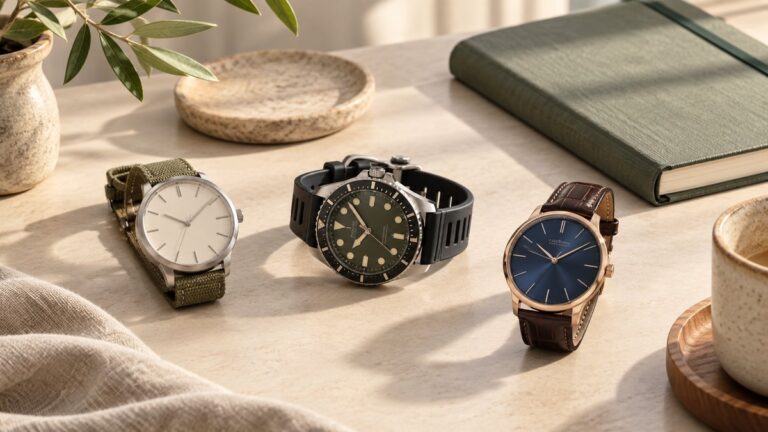
What are your thoughts on watch marketing? Fratello’s March 14, 2024, episode of Fratello Talks explores how watches gain meaning and visibility through more than conventional advertising: they appear in films, on athletes and ambassadors, at major sporting events, and in initiatives tied to environmental causes. Its examples invite a useful distinction: a campaign can be memorable without proving that its story is true or that it changes what people buy.
How watch marketing moves beyond the advertisement
The episode frames watch marketing as a set of ways to connect a product with a larger idea: precision, adventure, status, heritage, performance, or purpose. A poster or television spot makes the commercial message explicit. A watch worn by a film character or athlete can place the product inside a story or public moment instead.


That broader framing is the episode’s central point, not a measured account of which channels sell the most watches. Its page provides no marketing statistics or authoritative quotations to quantify effectiveness. The examples are best read as illustrations of how watch brands seek attention and association.
From print ads to screen placement
Posters, print, and television
The conversation reaches back to early watch promotion, including Abraham-Louis Breguet’s efforts to market watches to elite customers. That is the episode page’s historical framing; it does not document the details of those efforts. It also points to posters, print advertising, and television as familiar ways brands put their products and messages in front of audiences.
What’s actually slowing this PC down?
Pick the symptom - the matching free tool is one click away.
#1 Best Overall
Films and product placement
Entertainment can make a watch part of a character’s identity. The episode uses James Bond and the Omega Seamaster, and Captain Willard and a Seiko diver, as examples. It also discusses product placement and gifting as routes to visibility. The page does not provide contract records or a chronology for these relationships, so the pairings should be treated as examples raised in the discussion, not as a documented account of specific campaigns.
Ambassadors: the appeal and the credibility test
A famous wearer can give a watch association with a recognizable person, but the association works best as a story only when its factual foundation is sound. The episode names George Clooney with Omega, Roger Federer with Rolex, and Ryan Gosling with TAG Heuer as ambassador examples.
It also recounts that British swimmer Mercedes Gleitze reportedly wore a Rolex Oyster on a necklace while crossing the English Channel. The word “reportedly” matters: comments on the episode page dispute which swim the story refers to and whether a watch was worn. The page does not settle that question. It demonstrates how a compelling brand anecdote can attract attention while remaining open to scrutiny.
Reader comments raise related concerns about whether ambassador relationships feel authentic, whether brand histories are accurate, and whether sponsored editorial is clearly disclosed. Those comments show questions some readers ask; they are not survey results or evidence of how watch buyers generally respond.
Free tools Windows power users keep installed
One-click scans. No signup required.
Sport sponsorships: borrowing the meaning of competition
Sport gives brands a setting already associated with skill, endurance, speed, and precision. The episode lists Hublot in football; Rolex, TAG Heuer, and Tudor in Formula 1; Tissot with MotoGP and the Tour de France; Omega with the Olympics; and Seiko with the World Athletics Championships.
This is a selection of examples from the episode, not a complete sponsorship record or an independently verified list. The associations also differ: a watch may be linked to a particular sport, event, or audience, but that visibility alone does not establish how many viewers notice it or whether it affects purchasing decisions.
Environmental causes and the importance of evidence
The episode mentions Blancpain’s Ocean Commitment initiatives and Oris beach clean-ups as examples of cause-related marketing. Such efforts can connect a brand with environmental concerns, but the episode page supplies no impact measurements. Its examples therefore support a discussion of the marketing association, not claims about environmental outcomes.
Rank #4
A practical way to assess a watch campaign
The examples point to four useful questions when judging how a campaign works. These are ways to compare the episode’s cases, not performance measures reported on its page.
- What channel carries the message? Is it a conventional ad, a screen appearance, an ambassador relationship, an event sponsorship, or a cause-related initiative?
- What association is being built? Does the watch borrow meaning from entertainment, sporting performance, status, heritage, or environmental purpose?
- How visible is the watch? Is the product central to the story or event, or only indirectly connected to it?
- How well documented is the story? Can the claimed history or relationship be supported, or is it an appealing anecdote that remains disputed?
These questions help separate memorability from credibility. A recognizable pairing may make a campaign easy to recall, while an uncertain origin story or unclear sponsorship can weaken trust. Whether any example persuades an individual viewer remains a matter for readers to judge.
What the episode leaves open
Fratello’s discussion is an invitation to compare the ways brands seek relevance, from early advertising and film visibility to sports and environmental initiatives. It does not rank the channels, establish their commercial impact, or verify every historical anecdote. Its strongest prompt is the one posed on the episode page: which brands do marketing well or badly, and what makes their approach feel effective, credible, or unconvincing?
Quick Recap
Product prices and availability are accurate as of the date/time indicated and are subject to change. Any price and availability information displayed on Amazon at the time of purchase will apply.