The Tool Desk
Outbyte Driver Updater FREEFix the driver behind crashes, sound loss and screen glitchesFind Drivers →Outbyte PC Repair FREEClear out junk files and repair common Windows errorsFree Scan →Seiko’s appeal, as Fratello’s June 20, 2024 episode “Why Everyone Loves Seiko Watches” explains it, comes down to breadth and personal connection: the brand has watches across price points, functions, and styles, and owners often attach a first or long-owned Seiko to a memory. That is a qualitative explanation from a podcast discussion—not a survey proving that every watch buyer loves Seiko.
Why Seiko turns up in so many collections
Fratello’s central point is that Seiko can mean very different things to different owners. One person may know it as an accessible first mechanical watch; another may be drawn to a vintage reference, a diver, or an unusual detail such as a regional dial configuration. That range makes the brand easy to encounter at different points in a collecting life.
The other part is emotional rather than technical. A watch worn for a first job, a trip, or years of everyday use can become meaningful beyond its specifications. The episode treats these associations as personal stories, not as proof that Seiko is objectively more popular or better loved than other brands.
Three Seikos, three kinds of connection
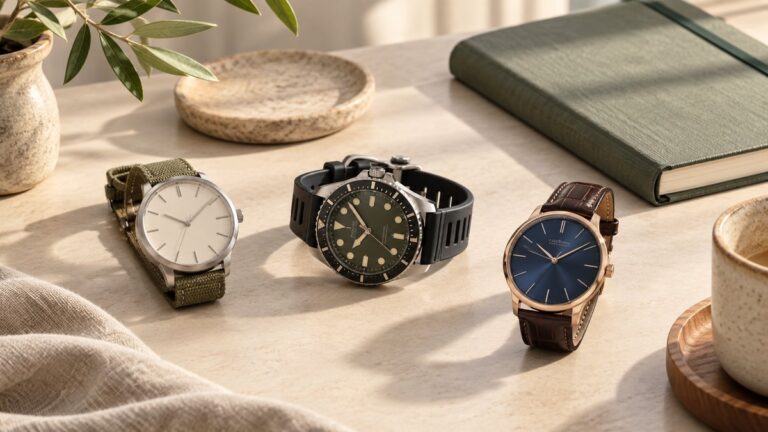
The episode’s wrist check makes the range tangible. Thomas wears a vintage Skyliner, which Fratello places in the late 1960s or early 1970s; no reference number is given. Lex wears a Seiko 5 Sports SBSA017 he bought in Japan, noted for its brown sunburst dial and Japanese day wheel. Nacho wears the Mini Turtle SRPC35, a discontinued model the article recalls at an original European price of about €350 on a steel bracelet. That figure is historical, not a current market price.
Recommended Free Tools
#1 Best Overall
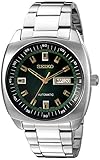
- Case diameter: 43.5mm
- Gold tone second hand
- Water Resistant To 165 Feet
- Power reserve: approximately 41 hours
- 21,600 vibrations per hour
Other references mentioned—such as the vintage 7005-8150, the SKX007, and the SRP777 Turtle—serve as examples of watches attached to owners’ experiences. They are not presented as a current buying shortlist. In particular, a reference discussed as a memory or collector’s example should not be assumed available new today.
Where Seiko’s collections fit
Fratello’s overview sketches the brand’s range through several collections: Prospex is characterized as the adventurous line, Presage as combining Japanese aesthetics with traditional craftsmanship, and Seiko 5 Sports as a collection with particular significance for enthusiasts. These are the specialist publication’s descriptions, not results from comparative performance testing.
For a new mechanical-watch owner, Seiko 5 Sports is the episode’s clearest entry-level example. A line with a long history and broad appeal can offer a first step into mechanical ownership without defining what every buyer should choose. The SBSA017 illustrates one specific version; its Japan-market details should not be presumed identical across regions or listings.
A long story behind the modern range
Fratello’s Seiko timeline connects the brand’s current breadth to a history of Japanese watchmaking and technical milestones. The dates and “first” descriptions below are reported by Fratello’s overview; they should be read as that source’s account.
Rank #2

- STUNNING BLUE DIAL: this automatic men's watch features a deep blue, pressed pattern and gloss finish surrounded by a stainless steel watch case
- AUTOMATIC: these self-winding, automatic men's watches are powered by your movement, with a power reserve of 41 hours
- STAINLESS STEEL: features a durable stainless steel watch case and bracelet with see through caseback
- WATER-RESISTANT: these men's wrist watches are water-resistant down to 50 meters
- 4R35 CALIBER: equipped with the reliable caliber 4R35 automatic movement, this accurate men's watch keeps precise time
| Year | Milestone reported by Fratello |
|---|---|
| 1881 | Kintaro Hattori opened a watch and clock shop in Tokyo. |
| 1892 | Seikosha was formed and began with wall clocks. |
| 1913 | The Laurel, identified by Fratello as Japan’s first wristwatch. |
| 1924 | The first watch produced under the Seiko brand. |
| 1964 | Seiko served as official timer for the Tokyo Olympics. |
| 1965 | The first Japanese diver’s watch, according to the timeline. |
| 1969 | The Quartz Astron was introduced; Fratello describes it as the world’s first quartz watch. |
| 1999 | Spring Drive was introduced. |
For Fratello, that history helps explain why the name spans everyday watches, sports models, and pieces of historical interest. It does not, by itself, establish a single reason every owner chooses Seiko.
Independent reader supportYour contribution helps us test, update, and keep practical guides available for everyone.What the episode can—and cannot—tell you
This is a conversation among Thomas, Lex, and Nacho, not a controlled comparison of watches or a poll of buyers. Its strongest contribution is showing how breadth and personal history can coexist: the brand offers many kinds of watches, while the meaning of a particular Seiko depends on its owner. If you are considering a specific reference, check its current production status and regional configuration rather than relying on an older anecdote or a historical price.
Fratello invites listeners to share their own Seiko stories. That invitation is fitting: the episode’s answer is less a universal verdict than a collection of reasons individual enthusiasts keep returning to the brand.
Quick Recap
Product prices and availability are accurate as of the date/time indicated and are subject to change. Any price and availability information displayed on Amazon at the time of purchase will apply.
Quick wins for a faster PC:
Fix the driver behind crashes, sound loss and screen glitchesFind Drivers →Repair Windows errors before they cause bigger problemsFix Now →