PC Slower Than It Used to Be?
A free scan shows the junk files, broken settings and background clutter dragging Windows down - then fixes them in one click.Free scan · Windows 10 & 11Outdated Drivers Are Slowing You Down
One free scan finds every outdated or missing driver and matches the right update for your exact hardware.Free scan · exact hardware matchSeiko Spring Drive is powered by a mainspring, like a mechanical watch, but regulated electronically using a quartz oscillator and electromagnetic braking. That combination—not a battery-driven quartz motor—lets its seconds hand move in a continuous glide instead of ticking from second to second.
How does Seiko Spring Drive work?
Spring Drive combines a mechanical power source and gear train with electronic timekeeping regulation. Its Tri-Synchro Regulator coordinates mechanical, electrical and electromagnetic energy: the mainspring turns the gear train, while a quartz reference and integrated circuit control the speed of a wheel in that train.
| # | Preview | Product | Price | |
|---|---|---|---|---|
| 1 |
|
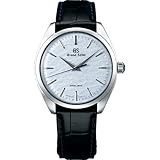
Grand Seiko Lake Suwa Omiwatari Elegance Watch SBGY007 | $8,750.00 | Buy on Amazon |
| 2 |

|
SEIKO SRPB41 Automatic Watch for Men - Presage Cocktail Time - Patterned Blue Dial with Date... | $399.00 | Buy on Amazon |
- The mainspring stores energy. The wearer can wind it by hand on models that provide hand-winding; in automatic models, wrist motion winds the spring.
- The spring turns the gear train. As it unwinds, the mainspring drives the hands and a continuously rotating glide wheel. Part of the energy also turns the glide wheel’s rotor against a stator, generating electricity.
- The electricity powers the regulator. It supplies the quartz oscillator and integrated circuit (IC), rather than a battery powering a conventional quartz step motor. Seiko Museum Ginza describes a 32,768 Hz quartz oscillation divided to an 8 Hz reference signal.
- The IC controls the wheel’s speed. It compares the glide wheel’s actual rotation with the quartz reference. If the wheel runs too fast, the IC applies electromagnetic braking; the regulated wheel and gear train control the motion of the hands.
In short, the mainspring provides the motive power, and quartz provides a stable timing reference. Spring Drive does not fit neatly into the usual “mechanical or quartz” choice: it is a mainspring-driven movement with quartz electronic regulation.
Why does the Spring Drive seconds hand glide?
The glide wheel rotates continuously in one direction. Unlike a conventional mechanical escapement, it does not repeatedly release stored energy in discrete beats. The hands therefore move continuously, producing the smooth seconds-hand glide associated with Spring Drive. Seiko describes the motion as quiet as well as smooth.
#1 Best Overall
- Three-fold clasp with push button release
- Dual-curved sapphire crystal
- Power reserve display on the back
- Power resrve Approx. 72 hours(3 days)
How Spring Drive developed
The movement took decades to progress from concept to a released watch. Seiko Museum Ginza traces the idea to Yoshikazu Akahane, an engineer at Suwa Seikosha, and documents the repeated engineering attempts that preceded the eventual launch.
| Year | Milestone |
|---|---|
| 1978 | A pioneering patent application followed the concept, according to Seiko Museum Ginza. |
| 1982–1983 | Primary development began in 1982. An early prototype ran for four hours, but the first effort was stopped in 1983 because the technology available could not sustain the desired operating duration. |
| 1993–1994 | A renewed project with Seiko Instruments produced prototypes that ran for about a day, but they consumed too much power. Development stopped again in 1994. |
| 1997–1999 | Work restarted in 1997. A low-leakage SOI-IC helped address the energy problem. Spring Drive was presented at Baselworld in 1998 and exhibited in 1999. The museum records the 7R68 model’s release on December 11, 1999. |
| 2004 | Grand Seiko introduced the automatic 9R65 Spring Drive movement. Grand Seiko describes its 9R movement as combining automatic winding with a 72-hour power reserve. |
| 2008 and 2016 | Later developments included the Spacewalk in 2008 and the 9R01 eight-day model in 2016, illustrating how the platform expanded beyond its first watch. |
Accuracy and power reserve depend on the caliber
Spring Drive does not have one universal accuracy or power-reserve figure. Seiko’s general FAQ describes “one-second-a-day accuracy,” while Seiko Museum Ginza gives a general published figure of ±15 seconds per month. These are published specifications, not independent comparative test results, and the general pages do not assign the figures to every caliber.
- Grand Seiko 9R movement: Grand Seiko says the automatic 9R movement introduced in 2004 achieved a 72-hour power reserve.
- Seiko Museum Ginza 9R01: The 2016 model is described as capable of about eight days (192 hours) of reserve and ±10 seconds per month.
- Spring Drive Chronograph: Grand Seiko specifies ±15 seconds per month (±1 second per day), including during chronograph use, and a 72-hour reserve for the chronograph described on its page.
Those figures belong to the named descriptions or calibers; they should not be treated as a blanket specification for every Spring Drive watch.
Rank #2
- STUNNING BLUE DIAL: this automatic men's watch features a deep blue, pressed pattern and gloss finish surrounded by a stainless steel watch case
- AUTOMATIC: these self-winding, automatic men's watches are powered by your movement, with a power reserve of 41 hours
- STAINLESS STEEL: features a durable stainless steel watch case and bracelet with see through caseback
- WATER-RESISTANT: these men's wrist watches are water-resistant down to 50 meters
- 4R35 CALIBER: equipped with the reliable caliber 4R35 automatic movement, this accurate men's watch keeps precise time
How Spring Drive differs from traditional mechanical and quartz watches
The most useful distinction is how each system gets its energy and controls the hands. A traditional mechanical watch uses a mainspring and a mechanical escapement. A conventional battery-powered quartz watch uses a battery and an electronic stepping motor. Spring Drive takes a different route: a mainspring drives the gear train, while a quartz oscillator and IC regulate the continuously turning glide wheel using electromagnetic braking.
Do these 3 things before closing this tab:
1Clear out junk files and repair common Windows errors2Scan for outdated or missing drivers - takes under a minute3Repair Windows errors before they cause bigger problems| Feature | Spring Drive | Traditional mechanical | Conventional quartz |
|---|---|---|---|
| Energy source | Mainspring | Mainspring | Battery |
| Regulation | Quartz reference, IC and electromagnetic braking | Mechanical escapement | Quartz timing circuit and stepping motor |
| Seconds-hand motion | Continuous glide | Typically advances in beats | Typically advances in discrete steps |
| Winding or reserve | Depends on caliber and whether it is automatic or hand-wound | Depends on caliber and winding method | Battery life varies by watch |
| Accuracy comparison | Published figures vary by caliber; see the named specifications above | Not stated in the cited Spring Drive sources | Not stated in the cited Spring Drive sources |
This is a comparison of operating principles, not a controlled accuracy test across brands or movements. Performance depends on the specific watch and its stated conditions.
Quick Recap
Official explanations and specifications
- Seiko Watch Corporation FAQ describes Spring Drive as an automatic watch with “one-second-a-day accuracy.”
- Seiko Museum Ginza’s Spring Drive history documents its development milestones, mechanism and model history, including the 7R68 and 9R01.
- Grand Seiko’s Spring Drive movement overview describes the 9R movement and its introduction.
- Grand Seiko’s 9R86 chronograph movement page lists the chronograph’s accuracy and power-reserve specifications.
Product prices and availability are accurate as of the date/time indicated and are subject to change. Any price and availability information displayed on Amazon at the time of purchase will apply.