Do these 3 things before closing this tab:
1Fix the driver behind crashes, sound loss and screen glitches2Clear out junk files and repair common Windows errors3Scan for outdated or missing drivers - takes under a minuteSome links on this page are affiliate links: if you buy through them we may earn a commission, at no extra cost to you.
The right cushion-case watch size is determined by more than the number printed in millimetres. Measure your wrist circumference and the flat width where the watch will sit, then compare that width with the watch’s full lug-to-lug length. Use case width as a starting range, but also check the cushion case’s length, corner spread, thickness, lug width and strap length. A rounded-square case can look larger than a round watch of the same nominal width, while short, curved lugs can make a wider watch fit better than a narrower model with long, straight lugs.
For a practical shortlist, start around 38–42 mm for many wrists, use your wrist circumference bands as a rough guide, and reject any watch whose lugs extend beyond the flat top of your wrist unless that overhang is an intentional style choice. The sequence below shows exactly how to measure, compare specifications and choose between sizes.
As an Amazon Associate I earn from qualifying purchases.
Recommended Free Tools
How do I choose the right watch size for my wrist?
Measure first, shortlist second. A reliable fit check uses five dimensions in this order: wrist circumference, flat wrist width, case width and length, lug-to-lug length, and thickness. Strap width and strap length complete the check.
- Measure wrist circumference. Wrap a soft tape around the wrist at the spot where the watch will sit, just behind the wrist bone. Record the result in millimetres or centimetres.
- Measure the flat top width. With the wrist relaxed, measure the straight, usable width across the top of the wrist. This is the surface that supports the case and lugs.
- Record the watch dimensions. From the specification sheet, note case width, case length, lug-to-lug, thickness and lug width. For a cushion case, width and length are both important because the shape is not circular.
- Compare lug-to-lug with wrist width. Keep the lug-to-lug measurement at or below the flat wrist width for the most conservative fit. Lugs that project past the wrist can feel oversized even when the stated case width looks modest.
- Check the strap. The strap must match the lug gap, and its usable length should place the buckle comfortably near the centre of the underside of your wrist.
Only after those checks should you decide whether the watch’s visual presence suits you. A larger cushion case can be attractive and deliberate when the lugs remain supported; a smaller case can still look wrong if its lugs are long or its corners spread widely.
Popular on Amazon

- Ring Sizing Tool - Our ring sizer measuring tool measures US sizes 1–17 with clear increments so you get accurate ring size readings every time, helping you choose the right fit
- Bracelet Fit Guide - The bracelet sizer captures wrist measurements from 15–25 cm (5.9–9.8 inches) for bracelets, enabling confident gift purchases and precise online orders
- Magnified Readability - The ring sizer measuring tool features a built-in magnifying lens and large printed numbers to simplify readings for users with limited vision and reduce sizing mistakes
- Durable Construction - The bracelet measuring tool is made from high-quality PE for long-term use, delivering consistent, reliable measurements for both rings and bracelets over repeated use
- All-in-One Set - The finger measure for ring size + bracelet sizer measuring tool combination provides a complete jewelry measurement solution so you can size rings and wristwear quickly and confidently
Which wrist measurements should I take?
Wrist circumference
Use a flexible measuring tape, paper strip or piece of cord. Wrap it snugly without compressing the skin, mark the overlap, and measure the strip against a ruler. Take the measurement at the actual wearing position rather than at the narrowest part of the forearm. Timex uses circumference to describe strap fit, while Victorinox notes that circumference also informs case diameter, lug-to-lug and strap length.
Flat wrist width
Circumference describes the wrist all the way around; flat width describes the support platform under the watch. A broad, rounded wrist and a narrow, flat wrist can have similar circumferences but accommodate different lug lengths. Measure across the top where the case will rest, keeping the ruler perpendicular to the arm. If the wrist curves sharply, use the width of the reasonably flat area rather than the widest point at the sides.
Why both measurements matter
Circumference helps you choose a starting case range and strap length. Flat width is the more direct check for lug overhang. Recording both prevents a common mistake: buying a watch that matches a diameter chart but has lugs that reach beyond the wrist.
What case-size ranges are a useful starting point?
Published ranges are guidelines, not pass/fail rules. Longines’ current general guide (accessed 2026) groups starting sizes by circumference, while Victorinox’s 2026 guide says 38–42 mm suits most wrists. Cushion cases need an additional visual check because their corners add visible area.
| Wrist circumference | Longines starting case range | How to use it for a cushion case |
|---|---|---|
| Below 16 cm | 32–36 mm | Begin here, then verify that the cushion’s length and lugs stay within the flat wrist width. |
| 16–17.8 cm | 36–42 mm | This is a broad middle range; choose by lug-to-lug, thickness and the desired visual presence. |
| Above 17.8 cm | 42–46 mm | Larger widths may work, but the case length and corner spread still determine whether it overhangs. |
Victorinox’s 38–42 mm guidance is a useful general starting point rather than a cushion-case rule. A 40 mm rounded-square watch can present more surface area than a 40 mm round watch, so compare the actual width and length shown on the manufacturer’s specification sheet.
How important is lug-to-lug on a cushion-case watch?
Lug-to-lug is the full distance from the tip of the upper lug to the tip of the lower lug. It determines whether the watch is supported by the wrist or hangs over its edges. Victorinox’s fitting advice is concise: “Keep lug-to-lug equal to or below wrist width, and select a diameter and thickness that feel balanced on your wrist.”
Kensington’s sizing table pairs wrists under 15 cm with 32–36 mm cases and about 44 mm maximum lug-to-lug. Its table increases the recommended maximum as wrist size rises, but the specific larger-wrist figures are not stated in the available guide. Treat the 44 mm figure as a conservative reference for a small wrist, not as a universal limit.
Also popular on Amazon

- Ring Sizing Tool - Our finger sizer measuring tool accurately measures ring sizes from 1-17 US with clear silk-printed scales for precise jewelry DIY and online shopping
- Bracelet Sizer - This bracelet measuring tool measures wrist sizes from 15-25 cm (5.9-9.8 inches) to ensure the perfect fit for gifts and personal jewelry selection
- Magnified Measurement - Our finger tape measure for ring size built-in magnifying glass on the finger sizer ensures easy reading of scales, even for those with vision challenges
- Durable Construction - Our wrist measurement tool for bracelet Made from high-quality soft plastic for long-lasting use, providing reliable sizing for rings and bracelets
- Complete Measuring Set - Finger & bracelet measuring tool Includes both a ring sizer and bracelet sizer for versatile and confident jewelry measurements at home or while shopping
Why lug shape changes the result
Two watches can share a case width yet fit very differently. Short, downturned or curved lugs follow the wrist and reduce the effective span. Long, straight lugs continue the case’s length and can overhang. Measure the complete tip-to-tip distance, including any integrated or hooded lug structure that the specification sheet counts as part of the watch.
How to spot overhang
Place a straight ruler across the top of your wrist, or photograph the watch from above while your arm is relaxed. If either lug tip reaches beyond the flat support area, expect a more prominent look and possible rocking. A slight visual extension can be intentional, but it is no longer a conservative fit and may catch on sleeves or shift during movement.
Why does a cushion case look larger than a round case?
A cushion case blends a square profile with rounded corners. Its width is measured across the broadest part, but the corners and straight sides remain visible at the same time. A round case of equal width leaves more empty space near the corners of a wrist; a cushion case fills that space, so its dial and bezel can appear larger.
Compare three dimensions rather than relying on the advertised width:
- Case width: the side-to-side measurement, usually the figure used in size charts.
- Case length: the top-to-bottom body measurement before the lugs.
- Lug-to-lug: the complete span from the upper lug tip to the lower lug tip.
Corner radius also affects perception. Broad, softly rounded corners distribute the visual mass, while tight corners make the watch read more square and assertive. A thick bezel or a large dial opening increases visual weight even when the outer dimensions are unchanged. These are proportion and comfort decisions, not gender rules.
How should I compare two cushion-case watches?
When two models are close in nominal size, compare the dimensions that govern contact, clearance and visual mass. The following framework keeps the decision physical rather than marketing-led.
| Comparison axis | What to check | Why it matters |
|---|---|---|
| Lug-to-lug versus wrist width | Full lug span compared with the flat top width of your wrist | Predicts overhang, rocking and whether the watch is supported. |
| Case thickness versus cuff clearance | Millimetres from case back to crystal, including protruding bezel or crown guards | A thick case stands proud, catches sleeves and feels larger; a thin case sits flatter. |
| Cushion width, length and corners | Actual body dimensions and corner spread, not width alone | Determines how much wrist surface the rounded square visually occupies. |
| Strap width and length | Lug gap, strap width and total usable length | Controls comfort, proportion and whether the buckle lands near the centre. |
| Desired visual presence | Dial opening, bezel width, finish and intended style | Lets you choose a deliberate statement without confusing style with physical fit. |
Movement, case material and water resistance are secondary lifestyle choices after the watch physically fits. They can influence weight or durability, but they do not compensate for lugs that are too long or a strap that cannot close comfortably.
What’s actually slowing this PC down?
Pick the symptom - the matching free tool is one click away.
Also popular on Amazon
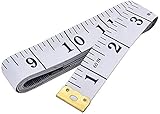
- Measuring range: 0 to 60 inches and 0 to 150 centimeters. There is a centimeter scale on the back, which is accurately printed in inches and centimeters. Both sides can be measured according to your requirements. You can put one in your pocket or backpack without taking up too much space
- Great Material: Tailor Vinyl tape measure won't stretch or deform, provides superior measurement consistence; Soft tape measure, a flexible and portable tape measure, made from soft plastic material, white color
- Operate and Read: Black markings on bright white tape is big enough for you to read, the tape has metal tabs on each end of the cloth tape measure to butt-up against the item your measuring; The metal ends also can prevent fraying
- Wide Application: Cloth tape measure; body tape measure,sewing tape measure,measuring tape tailor. Good sewing tool, accurate tape measuring for sewing, tailoring, body, waist measurement or measuring any curved surface. can provide you accurate measurements, suitable for a seamstress, a crafter, a quilter or whoever just need a flexible measuring tape
How do I measure a watch before buying it?
Use the manufacturer’s specification sheet, a retailer’s dimension diagram or a technical drawing. Do not assume that a listed “40 mm” value includes the crown, lugs or the full cushion length; different makers define measurements differently.
- Write down your wrist data. Keep circumference and flat width together in your notes, with the units clearly marked.
- Confirm case width and length. Look for separate width and length values. If only one dimension is listed, ask the seller whether it is the widest case measurement.
- Find lug-to-lug. If it is absent, measure a dimensioned drawing or request the figure. Do not substitute case length unless the lugs are known to be integrated.
- Check thickness. Include the crystal and case back when the specification defines thickness that way. Note whether the crown or guards add clearance at the side.
- Verify lug width. A 19 mm gap needs a 19 mm strap; Wristcheck’s 2024 guide uses this one-to-one rule.
- Apply the overhang test. Reject or reconsider a model whose lug-to-lug exceeds your flat wrist width, unless you consciously want an extended, fashion-forward look and can accept less stability.
- Review photographs carefully. Use straight-on wrist images only as a supplement. Camera angle, lens distortion and a bent wrist can make a watch appear smaller or larger than it is.
What strap width and length should I choose?
Strap width must match the lug gap exactly. A strap that is too narrow leaves visible gaps and allows more lateral movement; one that is too wide will not seat correctly or may stress the spring bars. Measure between the inside faces of the lugs, not across the outside of the case.
Strap length should be based on circumference, case thickness and how much overlap you prefer. Wristcheck’s 2024 examples describe short straps for 14.5–17.5 cm wrists and regular straps for 16.5–19 cm wrists. Those are example ranges, not universal standards: padding, deployant clasps and the watch’s case length change the amount of strap needed.
Timex currently lists men’s link, mesh and strap fit of 150–205 mm and women’s fit of 135–190 mm. These are that brand’s strap ranges, not universal case-size rules, so use them only when evaluating a Timex strap or bracelet. For any watch, the practical test is whether the buckle sits near the centre underside without the tail bunching under the keeper.
Do these 3 things before closing this tab:
1Repair Windows errors before they cause bigger problems2Fix the driver behind crashes, sound loss and screen glitches3Clear out junk files and repair common Windows errorsWhat thickness is comfortable with sleeves and cuffs?
Thickness controls vertical clearance. A thick cushion case stands farther above the wrist, can catch on a shirt cuff and increases the watch’s perceived scale. A thin case usually slides under sleeves more easily and feels less top-heavy.
Compare thickness with your clothing rather than chasing a universal maximum. If you wear fitted cuffs, prioritize a lower profile and a case back that does not create a pressure point. If your clothing is loose or you prefer a substantial sports-watch presence, extra thickness may be acceptable provided the strap holds the watch securely.
Remember that crystal shape, bezel height, crown guards and a domed case back can add practical bulk beyond the headline thickness. Ask whether the published figure includes those parts and compare like with like.
Also popular on Amazon

- Accurate Ring Sizing: This ring sizing tool measures US sizes 1-17, helping you find the perfect ring size quickly and accurately. The clear scale markings make it easy to measure fingers at home, ensuring a comfortable fit when ordering rings online or shopping for gifts without guessing
- Convenient Bracelet Measuring: This bracelet sizer measuring tool measures from 15-25 cm (5.9-9.8 inches), allowing you to measure wrist and bangle sizes with ease. The flexible design wraps comfortably around your wrist, giving you accurate measurements for bracelets, bangles, and watches every time
- Dual-Size Indicator: This bracelet sizer set includes two pieces—a black bracelet sizer and a white ring size measuring tool. The bracelet sizer measures 10.63 x 0.59 inch (27 x 1.5 cm), while the ring sizer is 4.53 inch (11.5 cm) long, providing all the sizing options you need
- Easy to Read & Use: This ring sizer tool features clear silk-printed scales that are easy to read. The smooth surface and flexible design make it simple to use, giving you accurate measurements every time for jewelry DIY projects and online shopping
- Essential Jewelry Tool: This bracelet sizer measuring tool is perfect for home use, jewelry shopping, or professional settings. A must-have for anyone buying or selling rings, bracelets, and bangles. A practical gift for jewelry enthusiasts and online shoppers
Will a cushion-case watch look too big on a small wrist?
It can, but nominal width alone does not decide the result. A 40 mm cushion case with short, curved lugs may fit better than a 38 mm model with long, straight lugs. The larger watch can remain inside the wrist’s support area while the smaller one overhangs.
Free tools Windows power users keep installed
One-click scans. No signup required.
For a small wrist, prioritize a short lug-to-lug measurement, moderate thickness and a restrained corner spread. A narrow strap can also reduce visual mass, while a broad strap emphasizes the case. If you want a deliberately bold look, choose the larger option only when the lugs still sit on the wrist and the extra presence is intentional.
Independent reader supportYour contribution helps us test, update, and keep practical guides available for everyone.What should I do if I am between two sizes?
Choose the shorter lug-to-lug option for the safest, most conservative fit. Select the larger option when you specifically want more dial presence, have enough flat wrist width to support it and have confirmed that the lugs do not overhang.
When the dimensions are close, use secondary factors to break the tie:
- Choose the thinner case for frequent cuff wear or a flatter, quieter profile.
- Choose the shorter case length when your wrist is narrow from top to bottom.
- Choose the larger case only if the dial, bezel and corners create the visual emphasis you want.
- Choose the strap length that leaves adjustment holes on both sides of your preferred buckle position.
How can I troubleshoot an uncomfortable fit?
The lugs extend beyond the wrist
Try a model with shorter lugs or a smaller case length rather than simply reducing the advertised width. A curved end link or more flexible strap can improve contact, but it cannot eliminate a fundamentally excessive lug-to-lug span.
The watch rocks from side to side
Check that the strap width matches the lug gap and that the strap is tight enough to hold the case without pinching. A case that is too thick or top-heavy may need a shorter, more supportive lug design.
The watch catches on cuffs
Compare total thickness, including crystal and case back, with the cuff opening. A thinner reference or a flatter strap may solve the problem; changing diameter alone often does not.
Also popular on Amazon
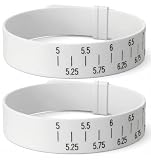
- Accurate bracelet sizer: This portable bracelet sizer helps you measure wrist sizes quickly and precisely for bangles, cuffs, and watches. The clear inch scale and smooth PU material ensure reliable readings without discomfort
- Versatile wrist measurement tool: This bracelet sizer measuring tool is suitable for making custom bracelets, resizing existing pieces and checking gift sizes. Ideal for birthdays, weddings, or holiday gift-making projects
- Durable Material: This bracelet sizer is made of high-quality PU, reusable, tasteless, with a smooth surface that won't irritate your wrists
- Lightweight & Portable: This bracelet sizer for jewelry making measures 10.6 × 0.7 × 0.1 inches, making it extremely portable. You can store it in your jewelry tool bag, handbag, or work drawer—quickly measure your wrist anytime, anywhere
- Complete set & easy to use: Each order includes 2 pieces of white PU wrist size measuring tools (packed in pearl bags). Simple to operate: just wrap around the wrist, read the measurement, and select the ideal bracelet size
The buckle sits off-centre
Recheck strap length and the number of usable holes. If the buckle consistently lands to one side, choose a shorter or longer strap range rather than forcing the watch into an uncomfortable position.
The watch looks larger than expected
Assess the cushion corners, dial opening, bezel width and strap width together. A rounded-square case can occupy more visual area than a round case with the same width, so compare the complete proportions.
Quick wins for a faster PC:
Fix the driver behind crashes, sound loss and screen glitchesFind Drivers →Repair Windows errors before they cause bigger problemsFix Now →Scan for outdated or missing drivers - takes under a minuteDriver Scan →Are diameter charts enough to choose a cushion-case watch?
No. Diameter charts are useful for building a shortlist, but they cannot account for lug geometry, cushion length, corner spread or thickness. They also ignore how a watch sits on an individual wrist, which is why circumference and flat width should be measured first.
Use a chart to identify plausible case widths, then verify the physical dimensions. This two-stage approach prevents both common errors: choosing a case that is technically within a diameter band but overhangs, or rejecting a slightly wider cushion case whose short lugs would actually fit better.
What is the final fit checklist?
- Wrist circumference measured at the intended wearing position.
- Flat top wrist width recorded in the same units as the watch dimensions.
- Case width and case length confirmed separately.
- Lug-to-lug equal to or below the usable wrist width, unless overhang is deliberate.
- Thickness compatible with cuffs and the amount of visual height you want.
- Lug width matched exactly to the replacement or supplied strap.
- Strap length suited to your circumference, case thickness and buckle position.
- Cushion corners, bezel and dial weight considered alongside the numbers.
- Movement, materials and water resistance evaluated only after physical fit is acceptable.
Frequently Asked Questions
Can I measure my wrist with string instead of a tape measure?
Yes. Wrap a non-stretching cord or narrow paper strip around the wearing position, mark the overlap, then measure it flat against a ruler. Avoid elastic material because it can understate circumference.
Does wearing a watch above the wrist bone change the size I need?
It can change both circumference and the available flat width. Measure at the exact position you normally use, because moving the case toward the hand or forearm changes lug support and strap length.
PC Slower Than It Used to Be?
A free scan shows the junk files, broken settings and background clutter dragging Windows down - then fixes them in one click.Free scan · Windows 10 & 11Crashes, No Sound, or Screen Glitches?
Random freezes, missing sound and display glitches usually trace back to one bad driver. Find and replace yours safely.Free scan · under a minuteShould I include the crown when comparing case width?
Usually no: published case width normally describes the case body, not the crown. The crown still affects side clearance and comfort, so check its projection separately if you wear the watch close to the hand.
Can a watchmaker shorten a strap if the case fits but the strap is too long?
Leather and rubber straps can often be replaced or trimmed according to their construction, while metal bracelets require removing links or using micro-adjustment. Confirm the lug width and clasp system before ordering a replacement.

