What’s actually slowing this PC down?
Pick the symptom - the matching free tool is one click away.
A watch spec sheet is a manufacturer’s compact description of a model. To judge whether it suits you, read beyond the headline case diameter: check thickness and lug-to-lug for fit, then decode the movement, materials, water-resistance rating and functions against how you plan to wear it. Brands organize their listings differently, so use the terms below as a guide rather than expecting every field on every product page.
How should you read a watch spec sheet?
Start with the measurements that affect wear, then look at construction, movement and practical features. Finally, compare only the specifications that matter for your wrist and routine. A product page describes the watch, but it cannot by itself tell you whether it feels comfortable or represents good value.
- Fit: case diameter, thickness, lug-to-lug and, if strap sizing matters, lug width.
- Construction: case and crystal materials, plus the bracelet, strap and clasp details.
- Movement: power source or winding method, caliber, stated accuracy, jewels, frequency and power reserve when listed.
- Use: water resistance and functions such as a date display, GMT hand or chronograph.
- Decision: weigh those details against your intended wear rather than treating one number as a verdict.
What do case diameter, thickness and lug-to-lug mean?
Case diameter is the width of the case, usually given in millimeters. It is useful, but it does not tell the whole fit story. Thickness measures how tall the watch is from the case back to the top of the crystal; it can matter if you want the watch to slide under a cuff. Lug-to-lug is the distance from one end of the lugs to the other. It helps you judge how far the watch may span across your wrist.
For a model-specific example, Seiko lists the Presage SPB465 at 40.2 mm in diameter, 13.0 mm thick and 46.0 mm lug-to-lug. Those are that model’s measurements, not a rule for what will fit every wrist. Seiko’s SPB465 specifications also list 20 mm between the lugs.
#1 Best Overall

- Clear, Bright Glass Lens for Precise 0bservation: This jewelers loupe uses high-quality glass lenses and a lightweight plastic frame to provide clear, distortion-free magnification. It is ideal for watch repair, jewelry testing, circuit board repair, coin and stamp collecting, and industrial applications
- Comfortable Headband Design for Hands-free Operation: The detachable wire headband is easily adjustable to ensure a secure fit and keep the magnifying glass stable while you work. This innovative hands-free design allows you to focus on delicate operations without holding the lens, reducing fatigue and increasing accuracy
- Unveiling Hidden Details of Antique Watches: Clearly reveals minute scratches, fine cracks, and minor damage that are almost imperceptible to the naked eye. It is an essential tool for assessing the condition of antique watches or performing routine maintenance on modern timepieces
- Precise Magnification for Delicate Repairs: Every gear, spring, and engraving is clearly visible. This level of precision allows you to confidently handle complex mechanics, making it an indispensable companion for professional watchmakers and seasoned enthusiasts
- Protect Precision Components During Maintenance: By providing you with a magnified, accurate view of the work area, this watchmakers loupe significantly reduces the risk of accidental damage to sensitive watch parts. A smart addition to any repair bench or hobby toolbox
What is lug width, and how is it different from lug-to-lug?
Lug width—also called interhorn width or lug spacing in some listings—is the gap between the lugs. It is the measurement to check when choosing an additional or replacement strap. Width alone does not guarantee compatibility: confirm the attachment method and whether the strap is made for that watch.
What do case and crystal materials tell you?
A listing may name a case material such as steel, titanium, a precious metal, carbon, ceramic or a brand-specific material. Crystal descriptions commonly include acrylic, mineral glass and sapphire. Read these as descriptions of what the manufacturer says the watch is made from; a material name alone does not establish overall quality or mean a watch is automatically a better choice. Brand-specific labels may not have a universal meaning.
Rank #2

- Reliable Material: our jewelers loupe is made of double layer glass lens and lightweight thermoplastic body, fine workmanship, light weight and high magnification, which can provide you with long service
- 5 Models to Meet Your Needs: these portable monocular magnifiers are in 5 different magnification levels, 5X, 10X, 15X, 20X, 30 x 36 mm, you can choose the proper magnification according to your own needs to use, so you can see clearly and carefully
- Variety to View: the magnifying glass jewelry tools are suitable for examining and viewing a wide variety of items, such as jewelry, gemstones, diamonds, coins, stamps, currency, antiques, paintings, photography, film negatives and other intricate details
- Portable to Carry: the small size of our eye magnifying glass is suitable to put in your pocket, backpack, makeup bag, shoulder bag, so that you can observe what you are interested in anytime and anywhere
- Be Willing to Share: you can share these jewelry magnifier glasses with your friends who love to experiment, elders who collect jewelry and antiques, and friends who collect coins, so that their work or hobby can get good support and progress
What does the movement or caliber tell you?
The movement is the mechanism that runs the watch. The terms quartz, hand-wound mechanical and automatic describe different ways it is powered or wound. A caliber is commonly the model name or designation for a movement. For a specific movement’s features, use the watchmaker’s documentation rather than assuming every caliber in a category behaves identically.
- Quartz: uses an electrically stimulated quartz oscillator.
- Hand-wound mechanical: is powered by a wound mainspring that the wearer winds by hand.
- Automatic mechanical: is self-winding; Swatch describes its automatic watches as powered by motion rather than a battery.
For an accuracy figure, check how the maker expresses it—often as seconds gained or lost per day. Seiko states a precision of +25 to −15 seconds per day for the SPB465. That is the manufacturer’s specification, not a promise that every wearer will see exactly that result. Grand Seiko’s mechanical-watch manual explains that actual usage accuracy can vary with the mainspring’s condition, arm movement, temperature and position. Grand Seiko’s mechanical-watch manual describes those factors.
Rank #3

- Multiple Magnifications for Precise Inspection: This jewelry magnifier offers four different magnification levels: 5x, 10x, 15x, and 20x. Each lens provides a clear and sharp view, facilitating detailed inspection. The multiple magnifications cater to a variety of tasks, from initial checks to analysis of complex components.
- Hands-Free Ergonomic Design: The magnifier features a durable wire headband for safe and comfortable hands-free operation. This design allows you to hold the magnifier directly in front of your eye, freeing your hands for fine repairs or assembly work, thus improving efficiency.
- Durable Optical Construction: The magnifier uses high-quality glass lenses encased in a combination of metal and plastic. This construction is designed to provide lasting clarity and durability for professionals and hobbyists alike. It is designed to withstand everyday use in workshop or studio environments.
- Intended Use and Applications: This magnifier is suitable for fine inspection and repair of watches, jewelry, circuit boards, coins, and other small items. It is designed for repair technicians, hobbyists, and craftspeople who need to observe fine details, mechanical structures, and engravings up close.
- Product Specifications and Contents: The set includes a multi-magnification lens with fixed lenses, offering magnification of 5x, 10x, 15x, and 20x. It also features an adjustable wire headband for hands-free use. Its compact and portable design makes it suitable for various occasions.
Do jewel count and frequency indicate quality?
In a mechanical movement, jewels are synthetic corundum bearings used to reduce friction at contact points. Jewel count gives descriptive context, but a higher number is not a simple quality score.
Frequency describes how often the movement oscillates. It may be shown in hertz (Hz) or vibrations per hour (vph). Fratello gives 21,600 and 28,800 vph as common examples; 28,800 vph is equivalent to 4 Hz. Frequency alone does not determine accuracy or quality. Fratello’s explanation of watch frequency provides that context.
Rank #4

- Reduce Fatigue: This watch loupe for textile and loupe magnifier for watch is an ideal choice for fine processing operations and watch repair magnifier is easy operation of watches, watch monocular magnifier loupe and watchers eye loupe can help you reduce fatigue during prolonged use; The jewelery magnifying glass has mooth and rounded edge will not scratch your hands or skin; Diameter: 2.5cm
- 20X Magnifying Glass: Watchmakers inspection loupe magnifier and watch loupe for optical circuit can read clearly in the hot sun, high hardness, watch loupe for watchmaker and watchmaker magnifying glass is more wear resistance; Watch makers magnifying loupe is suitable for watchmakers and watch repairing workers to use; Glass Diameter 2.5cm / 1in
- Good Transparency: This watchmakers repair eye loupe good transparency and impact resistance, aluminum alloy watch loupe and loupe watch repair is durable to use; Eye loupe for photos, watchmaker loupe glasses has high in magnification, good in transparency and strong in impact resistance
- Portable and Mini Size: 1.3in 20x watchmaker loupe for gems and 20x eye loupe is ultra light and compact in size make watchmaker loupe for rocks easy to carry in your pocket, handbag or purs; You can use eye magnifier loop anywhere, anytime, 20x eye loop is very convenient
- Multiple Applications: Watchmaker loupe for stamps and jewelry eye loop magnifier is very suitable for everyone from jewelers to amateurs, and watchmakers inspection loupe magnifier, watch loop magnifier is an ideal choice for various industries such as jewelry, stamps, coins, and watches
What is power reserve?
Power reserve is the maker-stated time a fully wound mechanical watch can run without further winding. Seiko lists approximately 72 hours for the SPB465. Treat that as a specification for that model, not a general figure for mechanical watches.
Independent reader supportYour contribution helps us test, update, and keep practical guides available for everyone.What does a water-resistance rating mean?
Water resistance may be expressed in bar, atmospheres or meters/feet. Do not treat a printed depth as permission to take the watch to that depth in ordinary use. The meaning and recommended activities depend on the specific watch and its maker’s instructions.
Best Value
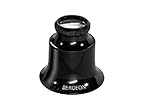
- Bergeon 1458-A-15, double lens eyeglass, 15x magnification. Lenses removable
- Watchmaker Tools
Swatch says its 2, 3, 10 and 20 bar markings correspond to water-resistance tests under ISO 22810. It also says continued resistance depends on the components remaining intact and warns: “Crown and pushers must never be manipulated under water!” That guidance is from Swatch, not a universal instruction for every watch; consult the manual for your exact model and planned activity. Swatch’s technical information explains its ratings and precautions.
How should you read functions and other details?
Check which features are actually listed and whether you will use them. A chronograph is a stopwatch function, according to Swatch’s technical information. A listing may also name a date display, GMT hand, luminous material, clasp, bracelet or strap. The specification sheet identifies features; the model’s instructions explain how to operate them.
How do you compare two watch spec sheets?
Put the two models side by side using the dimensions and functions that affect your decision. A spec comparison can help narrow a shortlist, but it cannot settle comfort, overall quality or value on its own.
Quick Recap
| Priority | Specifications to compare | What to ask |
|---|---|---|
| Wrist fit | Diameter, thickness and lug-to-lug | Will the case height work under a cuff? Does the lug span suit the wrist? |
| Strap changes | Lug width and attachment details | Does the replacement strap match both the width and the watch’s attachment method? |
| Timekeeping and upkeep | Movement type, caliber and stated accuracy | Do you prefer quartz, hand-winding or automatic winding? What accuracy does the maker specify? |
| Winding intervals | Power reserve, if listed | How long does the fully wound watch run without further winding? |
| Construction | Case and crystal materials | Are the named materials and finish what you want? Avoid inferring overall quality from one label. |
| Water exposure | Water-resistance rating and manufacturer’s instructions | Does the maker’s guidance cover the activity you have in mind? |
| Useful features | Date, GMT hand, chronograph, luminous material and other listed functions | Will you use these features, and do you understand how the watch’s manual says to operate them? |
Product prices and availability are accurate as of the date/time indicated and are subject to change. Any price and availability information displayed on Amazon at the time of purchase will apply.
Free tools Windows power users keep installed
One-click scans. No signup required.