The Omega Flightmaster is a distinctive vintage pilot-oriented chronograph, reintroduced in 1969 with an independently adjustable second-time-zone hand. Its bold, color-coded tonneau design combines elapsed-time timing with a second time zone, while the early calibre 910 and later calibre 911 differ at the 9 o’clock register.
It is often treated as an eccentric Speedmaster relative. That undersells its unusual combination of functions and the reference-specific details that matter to collectors. Its case, crystal fitting, dial, hands, and movement can vary, so identifying a Flightmaster means checking the watch as a whole—not relying on one visual clue.
What makes the Omega Flightmaster special?
The Flightmaster’s defining feature is not its resemblance to the Speedmaster. It is the combination of chronograph timing and an independently adjustable second-time-zone hand in a striking, aviation-oriented design.
- A manually wound chronograph for elapsed-time measurement.
- An independently adjustable hour hand for a second time zone.
- An AM/PM or 24-hour register on early calibre 910 configurations.
- Running seconds at that position on calibre 911 configurations.
- A bold tonneau case and color-coded indications.
The result is a watch with a distinctive, information-rich dial rather than a conventional dress or racing chronograph. The configuration and appearance vary by reference, so details such as hands, register, case, and crystal should be checked against specialist reference material.
The Tool Desk
Outbyte Driver Updater FREEScan for outdated or missing drivers - takes under a minuteDriver Scan →Outbyte PC Repair FREERepair Windows errors before they cause bigger problemsFix Now →#1 Best Overall

- Model 210.90.42.20.01.001
The Flightmaster was reintroduced in 1969 as a pilot-oriented watch. Specialist research discusses earlier use of the Flightmaster name, but the production watch collectors usually mean is the late-1960s chronograph.
A pilot’s watch, not a decorative Speedmaster
The Flightmaster appeared in 1969 amid expanding intercontinental air travel. Its combination of chronograph and independently adjustable second-time-zone hand gave it a distinct practical purpose within Omega’s range.
A wearer could use the chronograph to time an event and track another time zone without relying on a standard chronograph alone. The design’s large, colorful indications and prominent controls contribute to its unmistakable appearance.
The case and dial can seem excessive by modern minimalist standards. That visual character is part of the model’s appeal, but it also means that details should be assessed by reference rather than assumed to be interchangeable across the family.
What’s actually slowing this PC down?
Pick the symptom - the matching free tool is one click away.
How to read the Flightmaster’s functions
The key functional distinction is the independently adjustable second-time-zone hand. The 9 o’clock register also helps distinguish the principal movement configurations:
| Configuration | 9 o’clock register | What it indicates |
|---|---|---|
| Calibre 910 | AM/PM or 24-hour register | Distinguishes day and night for the indicated time. |
| Calibre 911 | Running seconds | Shows that the watch is running while retaining the second-time-zone function. |
Specific hand colors and dial details vary by reference and variant. Do not treat a single color or hand configuration as universal; compare the individual watch with specialist reference material.
Calibre 910 versus calibre 911
The principal Flightmaster configurations are associated with manually wound chronograph calibres 910 and 911. Their most immediately visible difference is the register at 9 o’clock.
| Movement | Typical configuration | Register at 9 o’clock |
|---|---|---|
| Omega calibre 910 | Early Flightmaster family | AM/PM or 24-hour indication |
| Omega calibre 911 | Later Flightmaster family | Running seconds |
On calibre 910, the 9 o’clock register is an AM/PM or 24-hour indication. On calibre 911, it is running seconds, allowing the wearer to see that the watch is operating while retaining the second-time-zone function.
Rank #2

- Stainless steel case
- Black dial
- Swiss-automatic movement
- Case diameter: 40mm
- Water resistant to 330 feet
This is a useful identification clue, not a complete authentication rule. Transitional examples complicate a simple reference-to-calibre match: Watchfid reports ST145.013 examples with calibre 911, based on its research and Omega archive extracts. Confirm the movement, reference, and supporting documentation together rather than rejecting or authenticating a watch from the register alone.
Reference differences extend beyond the movement. Case profile, crystal fitting, finishing, dial, and hands all matter. A movement or dial can also have been changed, so inspect the watch as a whole and consult dedicated specialist material.
The case: bold, distinctive, and reference-specific
The Flightmaster is recognizable for its substantial tonneau case. A Christie’s catalogue entry for one 145.026 example describes a 43 mm steel case; that is a detail of the catalogued example, not a universal specification for every reference.
Case profiles and crystal fitting differ across the family. Hodinkee describes professional “Pilote” and non-professional ST145.026 variants with different crystal-fitting approaches, while specialist coverage also notes distinctions between the 145.026 and 145.036. Do not infer that every Flightmaster has the same case construction or crystal arrangement.
Recommended Free Tools
A vintage watch’s historical water-resistance specification, if known, does not establish its condition today. Seals, crystal, crowns, and case may have deteriorated or been altered. Have the individual watch inspected and tested by a qualified watchmaker before exposing it to water.
The principal Omega Flightmaster references
The principal steel reference families are ST145.013, ST145.026, and ST145.036. The guide below is a starting point, not a substitute for checking the individual movement, case, dial, and documentation.
| Reference family | Commonly associated movement | Useful identifying context |
|---|---|---|
| ST145.013 | Calibre 910; calibre 911 is also reported in transitional examples | Early steel family; the 9 o’clock register and transition details require careful checking. |
| ST145.026 | Calibre 911 | Running-seconds configuration; variants differ, including in crystal fitting. |
| ST145.036 | Calibre 911 | Later family with reference-specific case, crystal, and finishing distinctions. |
| BA345.0801 / BA145.013 | Calibre 910 reported | Gold family reported in bracelet and strap configurations. |
Fratello lists the principal steel reference sequence as ST145.013, ST145.026, and ST145.036, and reports the gold BA345.0801/BA145.013 family. These associations are useful, but reference-to-calibre rules are not absolute: Watchfid reports transitional ST145.013 examples with calibre 911. Do not use serial ranges as infallible identifiers.
When evaluating a particular watch, compare its movement and caseback reference with its dial, hands, case, crystal, and any archive or service documentation. Transitional or serviced examples need individual assessment; a mismatch is a reason to investigate, not by itself a definitive verdict.
Rank #3
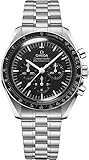
- Model 310.30.42.50.01.001
The gold Flightmasters
Fratello reports an 18-carat gold calibre 910 Flightmaster model produced in 1971, in bracelet and strap configurations. The same source estimates 200 gold examples across those configurations. Treat that figure as a secondary-source estimate, not an independently verified production total.
For a gold Flightmaster, originality and provenance are especially consequential. Check the case, hallmarks, bracelet or strap configuration, dial, hands, movement, and available documentation together. Do not pay a premium based on an unsupported rarity or provenance claim.
The Alexei Leonov and Apollo-Soyuz connection
The Flightmaster is associated in specialist coverage with Soviet cosmonaut Alexei Leonov and the Apollo-Soyuz Test Project. That association should not be turned into an unsupported claim that the watch was officially issued or mission-certified.
The Flightmaster’s original purpose was pilot-oriented. Its historical associations should be described on the evidence available for the individual claim, and should not be equated with the Speedmaster Professional’s formally documented NASA qualification history.
Outdated Drivers Are Slowing You Down
One free scan finds every outdated or missing driver and matches the right update for your exact hardware.Free scan · exact hardware matchWindows Errors? Fix Them Before They Spread
Repair common Windows errors and clear accumulated junk for a smoother, more stable PC - no reinstall needed.Free scan · no reinstallWhy collectors care about the Flightmaster
Collectors are drawn to the model for several overlapping reasons:
- Distinctive design. Its bold tonneau case and color-coded display set it apart.
- Unusual functionality. The independently adjustable second-time-zone hand accompanies chronograph timing.
- Reference variety. The principal steel families and gold variants create a focused collecting field.
- Movement distinction. The 910 and 911 differ visibly at the 9 o’clock register.
- Component-level originality. Case, crystal, dial, hands, and movement details should agree with the particular reference or documented variant.
The Flightmaster is not a watch where an attractive case and a running movement are enough for a confident purchase. Reference-specific parts and transitional configurations make careful identification important. The research does not establish a reliable current representative market price or current service and parts availability, so avoid treating an old listing as a present valuation or a promise of support.
How to buy and identify an Omega Flightmaster
Start by reconciling the reference, movement, and available archive or service documentation. Then assess the visible components and condition together.
- Confirm the movement and reference. Request a clear movement photograph and a clear view of the inside caseback reference. Check their consistency, while allowing for reported transitional ST145.013 examples with calibre 911.
- Compare the register, dial, and hands. Check the 9 o’clock register, dial details, and hand configuration against specialist material for the reference and variant.
- Inspect the case and crystal. Compare case profile, finishing, and crystal fitting with the claimed reference and variant; do not assume these details are the same across the family.
- Assess originality and condition. Look for mismatched components, altered or obscured details, and evidence that case, dial, hands, pushers, crystal, and movement belong together.
- Evaluate provenance claims cautiously. Ask what documentation supports claims such as rare, original, or associated with a notable person. Do not pay a premium for a story without credible evidence.
- Arrange independent inspection. Have a watchmaker experienced with vintage Omega chronographs inspect the movement, case, chronograph operation, setting mechanism, and water resistance before purchase.
- Use current evidence for price and support. Seek geographically relevant current market evidence and ask a qualified watchmaker about service and parts availability. The research does not establish a current representative price or a general assurance of parts availability.
Good photographs can help with an initial review, but they are not a substitute for opening the watch or obtaining an independent inspection. For a costly example, make that inspection part of the buying decision.
Rank #4

- Omega Speedmaster Chronograph Automatic 38 mm Watch 324.30.38.50.03.001
What not to assume when evaluating one
- Do not assume every ST145.013 contains calibre 910. Transitional calibre 911 examples are reported; verify the individual watch and documentation.
- Do not treat the 910/911 register clue as complete authentication. It helps identify a configuration but does not establish that all components belong together.
- Do not assume all references share the same case or crystal fitting. Reference and variant details matter.
- Do not treat an old listing as a current valuation. The research did not establish a reliable current market price.
- Do not assume service or parts availability. Check with a qualified watchmaker for the specific watch and work required.
- Do not turn a historical association into an unsupported issue or certification claim. Describe the evidence for each claim accurately.
The essential collector reference
For anyone seriously identifying, buying, or restoring a Flightmaster, a dedicated model reference is more directly relevant than a general Omega history. Flightmaster Only: The Omega’s Pilot’s Watch, by Grégoire Rossier and Anthony Marquié, documents the model’s evolution and component-level differences. Fratello describes the book as including a historical overview by Petros Protopapas and Ilias Giannopoulos, as well as reference-by-reference component treatment.
The value of a dedicated reference is that Flightmaster identification depends on details such as movement, case, crystal, dial, and hands—and on how those parts relate to a specific reference or transition. A book can help a buyer spot questions to investigate, but it does not replace movement inspection or an appraisal.
Final assessment
The Omega Flightmaster stands out for its bold, color-coded design and combination of chronograph and independently adjustable second-time-zone functions. Its calibre 910 and 911 configurations, multiple references, and transitional examples make it both technically interesting and demanding to identify.
Before buying, verify the reference, movement, and components together, use specialist documentation, and arrange an experienced watchmaker’s inspection. That is a more reliable basis for judging a Flightmaster than appearance or a seller’s story alone.
FAQ
What is the Omega Flightmaster?
It is a vintage, pilot-oriented Omega chronograph reintroduced in 1969, notable for an independently adjustable second-time-zone hand and bold tonneau design.
What is the difference between Flightmaster calibre 910 and 911?
Calibre 910 uses an AM/PM or 24-hour register at 9 o’clock. Calibre 911 uses running seconds at that position while retaining the second-time-zone function.
How do I identify an Omega Flightmaster reference?
Check the caseback reference, movement, dial and register, hands, case, and crystal together. Allow for reported transitional ST145.013 examples with calibre 911; do not rely on a single clue or serial range.
What should I check before buying a vintage Flightmaster?
Confirm the reference and movement, compare the dial and hands with specialist material, inspect the case and crystal, assess originality and condition, and arrange an independent watchmaker’s inspection. Obtain current evidence rather than relying on old listings for price or assumptions about parts availability.
Quick wins for a faster PC:
Scan for outdated or missing drivers - takes under a minuteDriver Scan →Clear out junk files and repair common Windows errorsFree Scan →Fix the driver behind crashes, sound loss and screen glitchesFind Drivers →How many gold Flightmasters were made?
Fratello reports an estimate of 200 gold examples across bracelet and strap configurations. Treat it as a secondary-source estimate, not an independently verified production total.
Quick Recap
Product prices and availability are accurate as of the date/time indicated and are subject to change. Any price and availability information displayed on Amazon at the time of purchase will apply.