Recommended Free Tools
To assess a vintage Swiss watch, start with the specific watch—not its country-of-origin marking or chronometer label. Check its identity and records, inspect condition and originality, and seek a qualified watch specialist when authenticity, service needs, or value matters. Swiss watchmaking has a long regional history, but neither that history nor a general certification can establish the present condition or authenticity of an individual watch.
What “Swiss watch” tells you—and what it does not
Swiss watchmaking has roots in Geneva that reach back to the mid-sixteenth century. The Federation of the Swiss Watch Industry (FH) dates the industry’s emergence there to that period. Its account connects the 1541 ban on ornamental objects by Jean Calvin with goldsmiths and jewellers turning toward watchmaking; that is one part of the history, not a complete explanation of how Swiss watchmaking developed. (FH, “From the origins to the present day.”)
| # | Preview | Product | Price | |
|---|---|---|---|---|
| 1 |
|
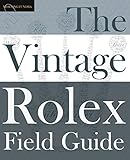
The Vintage Rolex Field Guide: A survival manual for the adventure that is vintage Rolex | $45.00 | Buy on Amazon |
| 2 |

|
Watches: A Guide by Hodinkee | $120.00 | Buy on Amazon |
The story is regional as well as national. A 2025 Swiss government feature describes watchmaking across areas including the Vallée de Joux and the Neuchâtel Jura. It reproduces historical estimates for around 1785: about 20,000 people worked in Geneva watchmaking, where 85,000 watches were produced, while 50,000 watches were made in the Neuchâtel Jura. These are historical estimates, not figures for present-day production. (Presence Switzerland, 2025.)
That context can help explain why a vintage watch may reflect a particular maker, place, and period. It cannot authenticate a watch by itself. A Swiss name, style, or marking is a clue to investigate alongside the watch’s construction and documentation.
#1 Best Overall
How to interpret “Swiss” and “Swiss made” on an older watch
“Swiss” and “Swiss made” are regulated geographical indications for watches. The FH’s Watch.swiss page explains that the criteria address the origin of components and activities such as design, manufacture, assembly, and final inspection; it also says the rules were significantly strengthened in 2016. (Watch.swiss, “Geographical indications.”)
For a vintage watch, the date matters: do not apply today’s criteria automatically to a marking from an earlier era. Interpret an origin claim using the rules relevant to the watch’s period and the evidence available for that particular model. The marking describes an origin claim under applicable rules; it does not, on its own, prove that the watch remains original, has not been altered, or is currently working properly.
What a chronometer certificate establishes
COSC—the Swiss Official Chronometer Testing Institute—describes a defined movement-testing process. Its industry page says COSC was founded in 1973 and that testing lasts 15 days, in five positions and at three temperatures from 8°C to 38°C. The process concerns movement testing and certificate issuance. (FH, “COSC.”)
A chronometer certificate is evidence of the result of that test, not a report on every aspect of a watch. It does not establish the current accuracy or condition of a decades-old watch, prove its originality or authenticity, or guarantee how it will perform now. For those questions, the specific watch needs assessment.
Outdated Drivers Are Slowing You Down
One free scan finds every outdated or missing driver and matches the right update for your exact hardware.Free scan · exact hardware matchPC Slower Than It Used to Be?
A free scan shows the junk files, broken settings and background clutter dragging Windows down - then fixes them in one click.Free scan · Windows 10 & 11How to assess a vintage watch before buying
Compare like with like: the same model or reference where possible, with attention to condition, included records, and the exact watch being offered. The following is a practical inspection framework, not a universal grading scale; the available sources do not establish one.
Establish the watch’s identity
- Record the brand and any model or reference information supplied by the seller.
- Note movement and case details, along with serial numbers where appropriate, and ask whether they are consistent with the claimed identity.
- Request the records supporting the watch’s history, such as service documentation or other relevant paperwork. Treat unsupported statements about ownership or past work as claims to verify, not established provenance.
Examine condition and originality
- Look at the visible condition and ask which parts, if any, have been replaced, restored, or refinished.
- Ask whether the movement has been examined and whether the watch’s functions have been checked. A seller’s description is not a substitute for a specialist’s assessment.
- Consider the quality and relevance of service records. A document should be tied to the watch and the work described; the presence of paperwork alone does not settle condition or originality.
Match the watch to its intended use
Mechanical and quartz watches have different operating systems and maintenance considerations. The FH provides general material on watch types and care, but the sources here do not establish a fixed service interval for every vintage watch. Ask a watchmaker familiar with the specific movement what examination or maintenance is appropriate before relying on it for regular use.
Use a specialist when the decision depends on expertise
Authentication, valuation, restoration, and documentation are watch-specific services. Certification d’Horlogerie Suisse describes offering examination, documentation, valuation, and restoration or repair; that description does not establish the outcome for any particular watch. Ask what will be examined, what evidence the provider will consider, and what the resulting report or certificate does—and does not—cover. A registration document based on submitted information should not be treated as independent proof of every historical claim.
Rank #2
- By Hodinkee (Author)
- 300 Pages
- Over 100 Illustrations
- Rubberized Hardcover
- Imported
How to think about price and watch references
There is no single vintage Swiss watch price that can be inferred from age, brand, or country of origin alone. Compare the exact model or reference, condition, originality, documentation, and the market context available at the time of purchase. A valuation for an individual watch requires evidence about that watch; a general guide cannot replace it.
The American Watchmakers-Clockmakers Institute (AWCI) has identified Classic Wristwatches: The Price Guide for Vintage Watch Collectors as a reference covering European manufacturers, including German and Swiss makers. The cited context refers to a 2014/2015 edition. Treat it as a historical research aid, not an official Swiss-only authority or a current appraisal; confirm the edition and availability before relying on it.
Care questions to settle before wearing one
Before putting a vintage watch into regular use, find out whether a specialist has assessed the particular watch and whether its condition is suitable for the way you plan to wear it. Ask about the movement type, known maintenance needs, and any limitations identified during inspection. General care guidance cannot resolve a watch-specific concern, and no fixed service interval is established here.
The FH’s watch knowledge pages address care, buying, mechanical and quartz watches, and terms such as chronograph and chronometer. These distinctions are useful when discussing a watch with a seller or watchmaker, but they should not be confused with an examination of the watch itself.
A useful way to read a vintage-watch guide
A book can help you learn terminology, makers, and historical context; it cannot determine whether a specific watch is authentic, original, correctly described, or fairly valued. Use reference material to prepare questions, then compare the watch and its records and obtain specialist assessment when the stakes warrant it. Keep historical price information in its date context, particularly when the available guide edition dates to 2014/2015.
The Tool Desk
Outbyte Driver Updater FREEFix the driver behind crashes, sound loss and screen glitchesFind Drivers →Outbyte PC Repair FREEClear out junk files and repair common Windows errorsFree Scan →For wider economic context only, Presence Switzerland reported that the Swiss watch industry was worth more than CHF 24 billion in 2022 and was Switzerland’s third-largest exporter that year. Those are 2022 figures reported in a 2023 overview, not a measure of the vintage-watch market or current 2026 industry value.
Quick Recap
Product prices and availability are accurate as of the date/time indicated and are subject to change. Any price and availability information displayed on Amazon at the time of purchase will apply.