The Omega Flightmaster 910 pairs a manual-winding chronograph with a separately adjustable second-time-zone hand, but its defining detail is at 9 o’clock: a 24-hour indication that the later Flightmaster 911 replaced with running seconds. That combination of timing functions, a clear second-zone display and dedicated case controls gives the 910 a distinctive place in Omega’s late-1960s watch history.
How the Flightmaster 910 came about
The Flightmaster name was proposed in 1956–57, according to Watchfid’s historical account, but the production model took shape in 1967–68 and went on sale in fall 1969 with the manual-winding calibre 910. Watchfid describes its intended audience as airline pilots and intercontinental travelers, and attributes the period advertising phrase “for intercontinental travelers” to the model’s marketing. This establishes the watch’s design and promotional intent; it does not demonstrate standard airline equipment or document specific operational use in aviation. Watchfid’s Flightmaster history
A museum-contributed object record hosted by Google Arts & Culture dates a Flightmaster to 1970, describes it as manual winding and calls it a derivative of the Speedmaster Professional. That lineage description belongs to the catalog record; it is not, by itself, a complete technical history of the model. Museum of Arts and Crafts, Zagreb, Flightmaster object record
How the calibre 910’s controls work
The 910 combines a conventional chronograph function with a separate colored hand for tracking another time zone. The museum record describes the upper-left control as adjusting that hand and the lower control as rotating the bezel. The chronograph has its own start/stop and reset controls, while the bezel provides another reference for reading elapsed or second-zone time. The visible hand and accessible controls make the watch’s travel-oriented functions central to its design, rather than hidden behind the dial.
#1 Best Overall
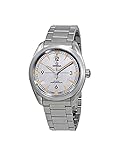
- Omega Seamaster Railmaster Automatic Men's Watch 220.10.40.20.06.001
The most important display detail is the subdial at 9 o’clock. On the calibre 910 it provides a 24-hour indication, helping distinguish day from night in the time shown by the second-zone hand. This is a separate display function from the chronograph elapsed-time registers.
Flightmaster 910 versus 911
| Feature | Flightmaster 910 | Flightmaster 911 |
|---|---|---|
| Movement | Manual-winding calibre 910 | Calibre 911 |
| 9 o’clock subdial | 24-hour indication | Running seconds |
| Identification context | Earlier configuration; reference and movement still need to be checked together | Later configuration; transition examples can complicate a reference-only identification |
The change at 9 o’clock is more than a cosmetic dial variation: it changes which information the subdial reports. The sources support these display and calibre distinctions, but do not establish service-part interchangeability between the two movements. For a reference overview, Watchbreaker’s guide to Flightmaster references and calibres 910 and 911 is a useful starting point.
Rank #2

- Model 310.30.42.50.01.001
Why reference numbers alone can mislead
Published reference lists are useful for orienting an identification, but transitional examples mean the caseback reference is not conclusive proof of the movement inside. Watchfid documents examples around the changeover that retained an earlier reference while using the later calibre 911 and its running-seconds dial. An unusual pairing should be investigated, not labeled counterfeit simply because it differs from a simplified reference chart. Watchfid’s notes on transitional Flightmasters
For a particular watch, compare the evidence as a set:
Recommended Free Tools
Rank #3

- Omega Speedmaster Chronograph Automatic 38 mm Watch 324.30.38.50.03.001
- Movement: Confirm whether the installed calibre is 910 or 911.
- Dial: Check whether the 9 o’clock subdial shows a 24-hour indication or running seconds.
- Case: Record the reference, but do not use it as the sole identifier.
- Serial context: Consider the serial alongside the movement and case evidence.
- Documentation: Use archival documentation where available to help assess an unusual combination.
For a deeper illustrated history and component reference, the publisher lists Flightmaster Only as a 224-page book with approximately 450 illustrations, covering the model’s introduction, history, components and models. Its English edition is listed with ISBN 978-2-940506-20-0.
Quick Recap
Rank #4

- Stainless steel case
- Black dial
- Swiss-automatic movement
- Case diameter: 40mm
- Water resistant to 330 feet
Product prices and availability are accurate as of the date/time indicated and are subject to change. Any price and availability information displayed on Amazon at the time of purchase will apply.