Short answer: Choose the 2021 Calibre 3861 Moonwatch if you want the strongest technical specification, the better bracelet, and a current-production watch. Choose the preceding Calibre 1861 generation if you want the traditional Moonwatch movement, a discontinued reference, or the character and potential value of a carefully selected pre-owned example. The 3861 is a respectful modernization, not a replacement that makes the 1861 obsolete.
Verdict: The 2021 Omega Speedmaster Moonwatch with Calibre 3861 is the better all-around buy, especially when purchasing new. It keeps the 42 mm steel case, hand-wound chronograph, three-register layout, tachymeter bezel, and Apollo-era visual language of the classic Moonwatch, then adds a Master Chronometer movement, resistance to magnetic fields up to 15,000 gauss, hacking seconds, a substantially improved bracelet, and more historically specific dial and case details.
The preceding Calibre 1861 generation is not obsolete. References such as the 3570.50 and 311.30.42.30.01.005 are the mature endpoint of the traditional mainstream Moonwatch formula. They remain the more compelling choice for buyers who want the older movement architecture, a discontinued reference, a traditional presentation, or a potentially lower pre-owned entry price. This is a modernization rather than a redesign: the 3861 is the rational default, while the 1861 is the character-and-value alternative.
Scope note: In this comparison, “new” means the standard-production generation introduced in January 2021 with Calibre 3861. “Old” means the immediately preceding standard-production generation with Calibre 1861, not every vintage, transitional, or special-edition Speedmaster. Wearing observations are attributed to the specialist comparison cited below rather than presented as firsthand testing.
#1 Best Overall

- Model 310.30.42.50.01.002
Omega Moonwatch 3861 vs. 1861 at a glance
| Category | 2021-and-later Calibre 3861 | Pre-2021 Calibre 1861 |
|---|---|---|
| Basic format | 42 mm steel, manually wound chronograph, three registers, tachymeter bezel | 42 mm steel, manually wound chronograph, three registers, tachymeter bezel |
| Movement | Co-Axial Master Chronometer Calibre 3861 | Cam-actuated Calibre 1861 |
| Magnetic resistance | Specified by Omega up to 15,000 gauss | No equivalent 3861/METAS anti-magnetic specification |
| Hacking seconds | Yes | No |
| Dial | Stepped dial with additional Apollo-era details | Generally flat dial on the mainstream generation |
| Bracelet | More compact, vintage-inspired five-arched-link-per-row design | Older, more utilitarian construction |
| Crystal choices | Hesalite or sapphire, depending on reference | Hesalite or sapphire, depending on reference |
| Water resistance | 50 metres | Typically 50 metres, subject to condition and service history |
| Best for | New buyers, technical performance, daily wear, and modern convenience | Traditionalists, collectors, and value-focused pre-owned buyers |
What actually changed in the case and dial?
Omega retained the essential Moonwatch silhouette, but the 3861 generation is more historically deliberate in its details. It brought back a stepped dial and incorporated cues associated with the fourth-generation Speedmaster style commonly identified with reference ST 105.012, the form associated with the Apollo 11-era watch. The case remains asymmetrical, and the newer design includes a double-beveled caseback and the historically specific “dot-over-90” and diagonally placed dot near 70 on the tachymeter scale. Omega describes those details as deliberate references to the Speedmaster worn during Apollo 11; its 2021 announcement explains the design and certification changes in more detail.
Omega’s 2021 Moonwatch announcement is useful context here because the visual changes are easy to mistake for a wholesale redesign. They are not. The new model still has the familiar 42 mm steel case, black chronograph dial, three subdials, manually wound operating ritual, and external tachymeter bezel that define the modern Professional Moonwatch.
The older 1861 Moonwatch generally has a flatter dial and lacks some of those specific historical updates. That does not make it less authentic. In fact, the 1861’s appeal is partly that it represents the long-established Moonwatch appearance many enthusiasts grew up recognizing. The 3861 is more explicitly styled as an Apollo-era tribute; the 1861 is the more familiar expression of the late traditional production watch.
A tiny dial detail with a technical reason
The 3861’s chronograph seconds track is divided into three subdivisions per second. That matches the movement’s 3 Hz operating frequency, or 21,600 vibrations per hour. The older 1861 also operated at 21,600 vibrations per hour, so this is not a dramatic performance difference. It is a subtle piece of dial-and-movement coordination rather than a feature that changes how most owners use the stopwatch.
Do not confuse the standard comparison with newer variants
The classic black-dial 3861 models use an aluminium tachymeter bezel, and the baseline choice remains Hesalite versus sapphire. Omega has also extended the 3861 platform into newer lacquered-dial and ceramic-bezel executions, including black-and-white “reverse panda” steel models reported in the 2026 catalogue. Those are current variations on the platform, not replacements for the standard black-dial Hesalite and sapphire watches compared here.
Calibre 1861 vs. Calibre 3861: the important mechanical difference
Both movements preserve the hand-wound Moonwatch concept. You still wind the watch by hand, start and stop a traditional three-register chronograph, and reset it with the pushers. The 3861 is therefore not a change from a mechanical Moonwatch to an automatic or electronic watch. Its significance is what happens inside that familiar architecture.
| Movement feature | Calibre 3861 | Calibre 1861 |
|---|---|---|
| Winding | Manual | Manual |
| Chronograph system | Modernized Moonwatch architecture with Co-Axial escapement | Cam-actuated traditional Moonwatch architecture |
| Certification | Master Chronometer certified as a complete watch | No equivalent Master Chronometer certification |
| Magnetism | Omega specifies resistance up to 15,000 gauss | No equivalent modern anti-magnetic specification |
| Hacking | Yes; the seconds hand stops when the crown is pulled to the time-setting position | No |
| Service continuity | Newer design, with many parts changed from the 1861 | Long production history and broad familiarity among watchmakers |
Calibre 3861 adds Omega’s Co-Axial escapement, anti-magnetic materials, hacking seconds, additional jewels, and more elaborate finishing. Fratello reported that Omega indicated roughly half of the movement’s parts had been replaced and that many of those parts are not interchangeable with Calibre 1861 components. That matters for owners considering a “conversion”: a 3861 is not a simple drop-in upgrade or a conventional 1861 service conversion.
The largest practical improvement is not a marketing label but the combination of certification and magnetic resistance. Omega states that the new Moonwatch resists magnetic fields reaching 15,000 gauss. The Master Chronometer certification evaluates the complete cased watch rather than just an uncased movement. METAS testing covers areas including water resistance, chronometric performance, magnetic resistance, and power reserve.
Rank #2

- Stainless steel case
- Black dial
- Swiss-automatic movement
- Case diameter: 40mm
- Water resistant to 330 feet
That does not make the 1861 unreliable. The defensible distinction is narrower: the 3861 gives you newer technical features and a modern certification regime, while the 1861 gives you continuity with the traditional Moonwatch movement lineage. The 1861’s long service history can also be reassuring when buying a well-documented example, although the individual watch’s condition matters more than the movement name alone.
What hacking seconds changes in practice
With the 3861, pulling the crown to set the time stops the seconds hand, making precise synchronization straightforward. The 1861 does not offer that factory hacking function. This is a small convenience, but it is one of the clearest daily-use differences between the two generations because it requires no specialist knowledge to appreciate.
The bracelet is the biggest everyday upgrade
More than the dial details, the redesigned 3861 bracelet is likely to determine whether a new owner notices an immediate improvement. It uses a more vintage-inspired five-arched-link-per-row design, has a slimmer visual profile, and closes with a modern clasp arrangement. The Hesalite version uses an all-brushed bracelet; the sapphire version introduces polished surfaces between the links.
In the specialist comparison, the newer bracelet was described as a substantial improvement over the older one. The preceding 1861 bracelet is more utilitarian and uses a different construction and fastening approach. It remains period-correct for the older watch, which is exactly why some collectors prefer it: replacing it with a newer bracelet can improve comfort but make the watch feel less internally consistent.
Quick wins for a faster PC:
Fix the driver behind crashes, sound loss and screen glitchesFind Drivers →Repair Windows errors before they cause bigger problemsFix Now →The newer bracelet has also been fitted to older Moonwatch cases by specialist reviewers. Treat that as observed compatibility, not an official universal retrofit guarantee. End-link geometry, the lip or notch at the end link, spring bars, and the exact case reference can affect whether the result is tight and properly aligned. If the watch is expensive or the bracelet is new, professional fitting is the safer choice.
What to inspect on an older bracelet
A pre-owned 1861 can be a bargain only if the bracelet is honestly assessed. Check for:
- noticeable stretch between the links;
- clasp wear, deformation, or a loose closure;
- missing removable links;
- the correct end-link reference for the case and bracelet; and
- deep scratches or polishing that has altered the link edges.
A complete original bracelet can materially affect the desirability and resale of an older reference, but “has a bracelet” is not the same as “has the correct, complete, healthy bracelet.”
Hesalite or sapphire? Keep this separate from 1861 vs. 3861
The crystal decision applies to both generations. It should not be treated as a proxy for the movement decision.
Recommended Free Tools
Rank #3

- Model 310.32.42.50.01.001
| Crystal | Advantages | Trade-offs |
|---|---|---|
| Hesalite | Closest to the historical visual character; less reflective; traditionally associated with the NASA-era presentation | More vulnerable to scratches; usually paired with a closed caseback on the relevant standard model |
| Sapphire | Much greater scratch resistance; the relevant model offers a display back; easier to live with for some daily wear | More reflective; changes the visual and tactile character; generally costs more |
Choose Hesalite if the point of the Moonwatch is its historical feel and you accept that light scratches may eventually need polishing or crystal replacement. Choose sapphire if scratch resistance and seeing the movement matter more than absolute period character. The 1861 and 3861 generations can each be evaluated through that same collector-versus-practicality lens. A buyer can reasonably prefer a Hesalite 3861 or a sapphire 1861; there is no rule that one crystal belongs exclusively with one movement.
For a broader discussion of the 3861’s crystal and display-back choices, see Hodinkee’s Calibre 3861 review.
Water resistance: 50 metres is not a dive-watch rating
The standard Moonwatch is rated to 50 metres of water resistance. It should not be treated as a dive watch, and water resistance is not a permanent property: gasket age, crown seating, case condition, and service history all matter.
Fratello reports Omega’s position that 50 metres is sufficient for swimming, while also advising against operating the crown or chronograph pushers in water and against diving. A sensible interpretation is conditional rather than absolute: a recently tested modern watch may tolerate ordinary swimming, but an older 1861 with unknown gasket or pressure-test history deserves much more caution. Never press the chronograph pushers or manipulate the crown while the watch is wet or submerged.
The Tool Desk
Outbyte PC Repair FREEClear out junk files and repair common Windows errorsFree Scan →Outbyte Driver Updater FREEFix the driver behind crashes, sound loss and screen glitchesFind Drivers →What the Moonwatch’s space history does—and does not—mean
The historical claim is substantial but needs to be stated accurately. According to Swatch Group’s account of NASA’s qualification process, the Speedmaster was the only one of three tested watches to receive NASA flight qualification for all manned space missions and extravehicular activities on March 1, 1965. That is the heritage behind the Moonwatch name.
The 3861’s Apollo-era design references do not mean the modern consumer watch was newly flight-qualified by NASA. Modern Master Chronometer certification is a separate testing system, administered through METAS and concerned with the performance of the complete modern watch. NASA’s 1965 qualification and the 3861’s present-day certification should not be conflated. The historical account is summarized in Swatch Group’s history of the 1965 qualification.
This distinction also clarifies the emotional choice between generations. The 1861 connects directly to the long-running traditional production lineage, while the 3861 uses contemporary engineering to reinterpret the Apollo-era appearance. Both have legitimate space-history appeal; neither should be advertised as a newly NASA-qualified consumer watch on the basis of the older qualification.
Which one should you buy?
Buy the 3861 if you are buying new
The 3861 is the default recommendation for most first-time buyers. It offers:
Do these 3 things before closing this tab:
1Scan for outdated or missing drivers - takes under a minute2Clear out junk files and repair common Windows errors3Fix the driver behind crashes, sound loss and screen glitchesRank #4
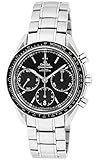
- OMEGA Speedmaster Racing Chronograph 326.30.40.50.01.001
- Master Chronometer certification of the complete watch;
- specified resistance to magnetic fields up to 15,000 gauss;
- hacking seconds for easier synchronization;
- the more historically detailed stepped dial and tachymeter treatment;
- the substantially redesigned bracelet; and
- a current production watch with the manufacturer’s modern support and warranty context.
If the price difference between a new 3861 and a clean 1861 is not decisive, the new model gives you more capability without abandoning the Moonwatch identity. For a new purchase, compare the current Omega Speedmaster Moonwatch through Omega or an authorized retailer, and verify the exact crystal, bracelet, caseback, warranty, and regional price before committing.
Buy the 1861 if the older character matters more
The 1861 makes more sense when you specifically want:
- the traditional Moonwatch movement architecture;
- a discontinued mainstream reference such as the 3570.50 or 311.30.42.30.01.005;
- the older dial, bracelet, and presentation as a coherent period package;
- a potentially lower acquisition cost on the pre-owned market; or
- the emotional satisfaction of owning the final mainstream generation before the 2021 modernization.
Those are legitimate reasons, not excuses for buying an inferior watch. The 1861’s lack of Co-Axial technology, hacking, 15,000-gauss specification, and Master Chronometer certification is real, but those omissions do not erase its historical and mechanical appeal. When shopping for a pre-owned Omega Speedmaster Professional Calibre 1861, prioritize reference verification, originality, service records, return rights, and seller authentication over a small difference in asking price.
Independent reader supportYour contribution helps us test, update, and keep practical guides available for everyone.How to evaluate a pre-owned 1861
- Confirm the reference. Do not assume every black-dial Speedmaster is equivalent to a 3570.50 or 311.30.42.30.01.005. Transitional and special-edition watches can differ in movement, crystal, caseback, bracelet, and collectability.
- Ask for movement and case details. The seller should be able to explain whether the watch contains the expected Calibre 1861 and whether the case has been heavily polished or altered.
- Demand service evidence. A service invoice, timing information, pressure-test result, or clear service history is more useful than a vague claim that the watch “runs perfectly.”
- Check originality. Inspect the dial, hands, bezel, bracelet, end links, clasp, crown, pushers, and caseback. Non-original parts are not automatically bad, but they should be disclosed and reflected in the price.
- Inspect the bracelet separately. Stretch, missing links, a mismatched clasp, or incorrect end links can turn an apparently attractive deal into an expensive restoration.
- Use the seller’s protections. Authentication, a meaningful return period, secure payment, and a written condition description are decision-critical when a program or marketplace has not been independently verified.
Pricing without a misleading snapshot
Moonwatch pricing changes by geography, tax, material, dial, bracelet, crystal, reference, and retailer. The 1861 is especially variable because pre-owned prices reflect condition, service history, box and papers, bracelet completeness, seller reputation, and the exact production reference. A lower advertised price is not automatically better value if it requires a movement service, bracelet replacement, or correction of undisclosed aftermarket parts.
Do not use the reported US launch price of $10,400 for the 2026 black-and-white reverse-panda steel Moonwatch as the price of the standard black-dial Hesalite or sapphire models. That figure applies to a different lacquered-dial catalogue variation. The launch report is useful only as context for the newer variant; check the current regional price for the exact standard Moonwatch reference at publication or purchase.
Changing straps without damaging the watch
The Moonwatch’s 20 mm lug width makes strap changes a practical way to alter its appearance, but the fit still depends on the exact reference, spring-bar dimensions, end-link clearance, and strap thickness. The family is offered across bracelet, leather, rubber, and nylon or fabric configurations, so an alternate strap is a genuine use case rather than an attempt to force an unrelated accessory into the comparison. Omega’s catalogue material shows the breadth of those configurations.
A 20 mm NATO watch strap is a sensible lower-cost wardrobe change for owners who want a lighter or more casual alternative to the bracelet. It is a third-party accessory, not an Omega-manufactured part, so verify the lug width, spring-bar fit, hardware quality, and strap thickness before installation. NATO-style straps can also raise the watch slightly on the wrist and may alter how the crown and pushers feel relative to the wrist.
A guarded watch spring-bar tool can help an experienced owner change straps, but a tool does not remove the risk of slipping and scratching the lugs or case. If the watch is valuable, if the bracelet has tight end links, or if you have never removed a spring bar, professional fitting is usually the better trade-off. Never force a bar that does not release cleanly.
Best Value

- Rubber
- Rotating bezel, gmt
- Automatic-self-wind movement
- Case diameter: 40mm
- Water resistant to 330 feet
Final verdict
For a buyer choosing between equivalent-condition examples, the Calibre 3861 Moonwatch wins on technical specification, magnetic resistance, certification, hacking convenience, bracelet design, and historically deliberate detailing. It is the model to buy new unless the older generation’s price or character is the point of the purchase.
The Calibre 1861 remains a serious and emotionally distinct alternative. It is the traditional Moonwatch architecture in its mature form, and a carefully bought example can offer a more satisfying connection to the pre-2021 lineage than a new watch can. Choose the 3861 with your head; choose the 1861 with your sense of history—and in either case, choose the exact reference, crystal, condition, and seller with care.
Frequently Asked Questions
Is the Omega Speedmaster 3861 better than the 1861?
The 3861 is the better default for most new buyers because it adds Co-Axial technology, Master Chronometer certification, resistance to magnetic fields up to 15,000 gauss, hacking seconds, and a redesigned bracelet. The 1861 may be preferable when traditional movement architecture, a discontinued reference, or lower pre-owned cost matters more.
Can the 3861 bracelet fit an older 1861 Moonwatch?
Yes, specialist reviewers have fitted the newer bracelet to older Moonwatch cases, but that is observed compatibility rather than an official universal retrofit guarantee. End-link geometry, spring bars, and the exact case reference can affect fit, so professional installation is recommended for an expensive watch.
PC Slower Than It Used to Be?
A free scan shows the junk files, broken settings and background clutter dragging Windows down - then fixes them in one click.Free scan · Windows 10 & 11Outdated Drivers Are Slowing You Down
One free scan finds every outdated or missing driver and matches the right update for your exact hardware.Free scan · exact hardware matchShould I choose Hesalite or sapphire?
Hesalite offers the more traditional appearance and less reflective character but scratches more easily. Sapphire is more scratch-resistant and comes with a display back on the relevant model, but it is more reflective and generally costs more. Both crystal choices can be found across the 1861 and 3861 comparison.
Is the modern Calibre 3861 Moonwatch newly NASA-qualified?
The historical Speedmaster received NASA flight qualification for all manned space missions and extravehicular activities on March 1, 1965. The modern 3861 is Master Chronometer certified through METAS; it should not be described as newly NASA flight-qualified.
The Bottom Line
Bottom line: Buy the Calibre 3861 for the best modern Moonwatch experience and the Calibre 1861 for traditional movement character, discontinued-reference appeal, and potential pre-owned value. Neither makes the other obsolete.