Free tools Windows power users keep installed
One-click scans. No signup required.
Samsung’s AI-health plan is no longer just a teaser. The company announced its new Samsung Health experience on June 4, 2026, began rolling it out on June 8, and introduced the Galaxy Watch9 and Galaxy Watch Ultra2 on July 22. Both watches became generally available in select markets on August 7.
The upgrade is less about the watch suddenly diagnosing illness and more about turning repeated sleep, activity, cardiovascular and recovery measurements into scores, trends and recommendations. Samsung calls this a more proactive health companion, but its new AI features remain wellness tools—not substitutes for a doctor, diagnostic test or regulated medical device.
As an Amazon Associate I earn from qualifying purchases.
What Samsung’s new AI health features actually do
Samsung’s next-generation health experience includes Vitals, Heart Health Score, Daily Cardio Load, Fitness Index, updated Antioxidant Index and AGEs Index functions, and Hearing Health. The feature family is associated with the Galaxy Watch9 and Galaxy Watch Ultra2, although Samsung says availability varies by model, market, phone and software version.
The Tool Desk
Outbyte PC Repair FREERepair Windows errors before they cause bigger problemsFix Now →Outbyte Driver Updater FREEScan for outdated or missing drivers - takes under a minuteDriver Scan →In practical terms, “proactive” means the system:
#1 Best Overall

- TRACK HEALTH PATTERNS¹ IN YOUR SLEEP WITH VITALS²: Stay aware of the subtle changes in your body with Vitals¹–it tracks health metrics while you sleep, catches shifts from your usual patterns, and provides tailored guidance based on the insights.²
- A PERSONALIZED COACH FOR YOUR FITNESS GOALS: Whether you're building endurance for a long trek or training to build muscle, Fitness Index³ delivers tailored guidance based on your fitness level goals. Finally, train smarter with your fitness watch.
- EVERYDAY AI ASSISTANCE, SIMPLIFIED: With the Galaxy Watch9, you can just raise your wrist, start talking naturally and get instant AI assistance⁴—no wake phrase needed. This smart watch won’t slow you down.
- ONE PERSONALIZED SCORE TO KNOW YOUR HEART BETTER: Instead of checking multiple metrics separately, track the single Heart Health Score⁵ based on sleep time, BMI, activity and vascular load to stay aware of your wellness.
- TRACK YOUR NIGHTS. OWN YOUR DAYS: Galaxy Watch9 gives you personalized recommendations and habit-building guidance with Advanced Sleep Coaching.⁶ Plus, Bedtime Guidance⁷ helps you find your optimal bedtime so you can wake up feeling refreshed.
- Collects repeated measurements.
- Compares them with a personal baseline or estimated capacity.
- Identifies a change, trend or training pattern.
- Offers a recommendation that the user must interpret.
That is more useful than a dashboard of isolated numbers, but it is not autonomous medical monitoring. Samsung describes the new features as intended for wellness, not for diagnosing or treating medical conditions. Samsung’s global announcement is explicit about that distinction.
The new features at a glance
| Feature | What it does | Best use | Main limitation |
|---|---|---|---|
| Vitals | Compares five overnight measurements with a personal baseline | Spotting changes from normal | Needs consistent sleep data; not diagnostic |
| Heart Health Score | Combines sleep, stress, activity and body-composition information | Lifestyle feedback | Not a clinical cardiovascular-risk score |
| Daily Cardio Load | Estimates accumulated cardiovascular strain and training capacity | Planning workouts and rest | An algorithmic estimate, not medical clearance |
| Fitness Index | Uses heart rate, VO₂ max and steps for a peer comparison | Motivation and goal-setting | Peer benchmarks and wrist-based estimates may be opaque |
| Antioxidant Index | Adds trend charts and daily history connecting nutrition with physical responses | Long-term lifestyle feedback | Not blood antioxidant testing |
| AGES Index | Uses automatic overnight measurements to build a longer-term lifestyle picture | Tracking lifestyle patterns | Not a definitive biological-age test |
| Hearing Health | Analyzes surrounding sound exposure across the Watch, phone and Galaxy Buds ecosystem | Awareness of noisy environments | Not a hearing examination |
Vitals: a personal-baseline alert system
Vitals compares five overnight measurements with the wearer’s usual resting pattern:
- Heart rate
- Heart-rate variability
- Respiratory rate
- Skin temperature
- Blood oxygen
The important detail is that this is baseline-based pattern recognition, not a universal medical threshold. A result that is unusual for you may be worth noticing even if it falls within a broad “normal” range for the population.
That also means the feature needs regular sleep wear. It must accumulate enough data to understand your baseline, and incomplete or poor-quality measurements can weaken its conclusions. Travel, alcohol, stress, illness, hard exercise, a loose band or ordinary sensor noise can all change an overnight reading.
Several nights of elevated heart rate and altered respiration might prompt you to rest or pay attention to how you feel. The watch cannot establish whether the cause is infection, overtraining, anxiety, poor sleep or a measurement error. A normal Vitals result also does not rule out a health problem.
Heart Health Score is a wellness score—not a clinical risk calculation
Samsung’s Heart Health Score combines categories including sleep, stress, activity and body composition into a daily metric intended to show lifestyle factors that influence cardiovascular health.
Rank #2
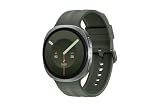
- TRACK HEALTH PATTERNS¹ IN YOUR SLEEP WITH VITALS²: Stay aware of the subtle changes in your body with Vitals¹–it tracks health metrics while you sleep, catches shifts from your usual patterns, and provides tailored guidance based on the insights.²
- A PERSONALIZED COACH FOR YOUR FITNESS GOALS: Whether you're building endurance for a long trek or training to build muscle, Fitness Index³ delivers tailored guidance based on your fitness level goals. Finally, train smarter with your fitness watch.
- EVERYDAY AI ASSISTANCE, SIMPLIFIED: With the Galaxy Watch9, you can just raise your wrist, start talking naturally and get instant AI assistance⁴—no wake phrase needed. This smart watch won’t slow you down.
- ONE PERSONALIZED SCORE TO KNOW YOUR HEART BETTER: Instead of checking multiple metrics separately, track the single Heart Health Score⁵ based on sleep time, BMI, activity and vascular load to stay aware of your wellness.
- TRACK YOUR NIGHTS. OWN YOUR DAYS: Galaxy Watch9 gives you personalized recommendations and habit-building guidance with Advanced Sleep Coaching.⁶ Plus, Bedtime Guidance⁷ helps you find your optimal bedtime so you can wake up feeling refreshed.
That can be convenient for someone who wants one high-level signal, but the score can hide important questions: which input changed, how much weight Samsung assigns each input, whether missing data affected the result, and whether the user’s baseline is representative. A single score is also an inherently simplified view of cardiovascular health.
PC Slower Than It Used to Be?
A free scan shows the junk files, broken settings and background clutter dragging Windows down - then fixes them in one click.Free scan · Windows 10 & 11Outdated Drivers Are Slowing You Down
One free scan finds every outdated or missing driver and matches the right update for your exact hardware.Free scan · exact hardware matchUse it as a prompt to inspect the underlying trends and make sustainable lifestyle changes—not as an equivalent to a physician-calculated cardiovascular-risk assessment.
Daily Cardio Load turns workout records into training advice
Workout recording answers, “What did I do?” Daily Cardio Load attempts to answer, “What should I do next?” Samsung says it estimates accumulated cardiovascular strain, compares it with maximum training capacity and recommends training targets or rest periods. Samsung’s U.S. announcement describes the feature as personalized training guidance.
This may be useful for recreational users who struggle to balance hard and easy days. It is still an estimate. Optical heart-rate readings can be affected by movement, sweat, tattoos, skin contact and an incorrectly fitted band. Recommendations may also be unsuitable for people with injuries, medical conditions or highly irregular schedules.
“Rest” from the watch is an algorithmic suggestion, not medical clearance. Serious athletes may prefer platforms with more transparent workload models, specialized sports metrics or broader training ecosystems. Samsung representatives have described the goal as identifying patterns and helping users make better decisions—not definitively predicting that they will become ill or injured. T3 reported that explanation.
Fitness Index offers motivation through comparison
Fitness Index uses inputs such as heart rate, VO₂ max and daily steps. Samsung says it compares the result with peers, identifies strengths and weaknesses and helps generate personalized goals.
Rank #3
![Samsung Galaxy Watch 8 40mm Bluetooth Smartwatch, Cushion Design, Quick Button, Sleep Coaching, Now Bar, Running Coach, Energy Score, Graphite [US Version, Amazon Exclusive 2Yr Warranty]](https://m.media-amazon.com/images/I/41pVUmtVzHL._SL160_.jpg)
- WHY GALAXY WATCH8: Advanced health and sleep tracking features.* A lighter, more snug design for all day comfort.* Improved user interface.* Personal AI assistant for hands free help.⁴* 2-Year Warranty.
- SLEEP SMARTER. LIVE BETTER: Energize your days with a great night’s rest using Advanced Sleep Coaching¹ - improved with even more ways to keep your nights on track. Plus, Bedtime Guidance² helps you find your optimal bedtime.
- YOUR RUN, YOUR COACH: Step up your running routine with a Running Coach³ that analyzes your performance and gives you real-time feedback. Training for an event? Try specific programs built for 5Ks, marathons and more.
- NEW DESIGN. LIGHTWEIGHT FEEL: Maximize your days with a minimalist design. The sleek, thinner-than-ever silhouette makes Galaxy Watch8 look as good as it functions. With a snug fit and sporty style, it gives you readings without getting in your way.
- A PERSONAL ASSISTANT, RIGHT ON YOUR WRIST: Your Watch just became your personal assistant.⁴ Stay one step ahead of your day with a watch that helps you navigate your tasks and to-do lists.
Peer comparison can motivate some users, but “peers” needs context. Age, sex, region, activity level and the dataset behind the comparison all matter. A wrist-derived VO₂ max is an estimate, not laboratory testing, while step counts and heart-rate measurements vary with activity and fit.
Being above or below Samsung’s benchmark is neither a medical judgment nor a complete measure of athletic ability. It may reward consistency more than it captures strength, mobility, technique or sport-specific performance.
Antioxidant Index and AGEs Index need especially careful interpretation
Samsung says the updated Antioxidant Index adds clearer trend charts and daily logs that connect nutritional choices with physical responses. It says the AGEs Index now supports automatic overnight measurements and a longer-term view of how lifestyle choices accumulate in the body. Samsung’s global release provides the company’s description.
Free tools Windows power users keep installed
One-click scans. No signup required.
These should be treated as Samsung’s proprietary consumer-wellness indexes. “Antioxidant” does not mean the watch is performing a blood antioxidant test, and an AGEs score should not be treated as a definitive biological-age measurement or clinical metabolic evaluation. Any dietary suggestions are lifestyle feedback, not personalized medical nutrition therapy.
Hearing Health is noise awareness, not a hearing test
Hearing Health uses the Galaxy Watch, phone and Galaxy Buds ecosystem to analyze surrounding sound exposure and provide personalized analytics intended to help protect hearing.
Ambient-noise exposure is not the same as measuring hearing ability. Earbud volume, fit and listening duration affect actual exposure, and a watch may not measure sound at the ear as precisely as a microphone positioned near the ear canal. Anyone with hearing loss, tinnitus, pain or other symptoms should see an audiologist rather than rely on this feature.
Rank #4
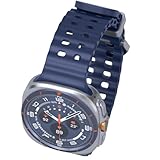
- 47mm - 1.5" Super AMOLED, 480x480px, 590mAh Battery, MIL-STD 810H certified, IP68/10ATM 100m water resistant, ECG certified
- 64GB, 2GB RAM, Exynos W1000 (3nm), Penta-core, Mali-G68 GPU, Android Wear OS 5, One UI Watch 8 with AI Assistant
- Unlock your full potential with Galaxy AI: Track and improve your fitness performance, monitor heart health with precision, get personalized wellness tips, optimize your sleep for better health, stay connected with smart replies, and enjoy music or podcasts on the go—all from your Galaxy Watch.
- Compatible with Android devices Only. Supports Google Pay. 3G: 850/900/1700/2100/1900/2100MHz, 4G LTE: 1/2/3/4/5/7/8/12/13/18/19/20/25/26/28/40/66/71 - eSIM.
- International Model - No Warranty. 100% Unlocked but Most US carriers may not allow International models. Will still work as Bluetooth Watch. Works outside US with all carriers. (Country selection may not be available during setup. Select Any, as Country will updated later after Connecting to WIFI in Settings.)
Galaxy Watch9 versus Galaxy Watch Ultra2
The Watch9 is the mainstream option, available in 40mm and 44mm sizes. The Ultra2 is a 47mm model aimed at users who value rugged construction, a larger battery and specialized outdoor capabilities. Samsung says both use the Snapdragon Wear Elite Platform and support the new health-companion direction. Samsung’s product announcement lists the hardware and health positioning.
The Ultra2 should not be bought solely for the AI scores. Its stronger reasons are its outdoor design, larger 800mAh battery, 5,000-nit display, and trail-running and diving features. The Watch9 is the more sensible choice if the shared health tools are the main attraction, especially for users who want a smaller or lighter watch and do not need specialist outdoor hardware.
Samsung’s U.S. MSRP sheet lists the Watch9 from $349.99 for the 40mm Bluetooth model and the Ultra2 at $649.99 for listed LTE configurations. Prices, promotions and availability vary. Samsung’s U.S. store showed an August 7–September 27, 2026 promotion offering up to $50 in Samsung Credit with a Watch9 and up to $100 with an Ultra2, while supplies last. That credit may not reduce the watch’s purchase price directly. Check Samsung’s live buying page before relying on any offer.
Independent reader supportYour contribution helps us test, update, and keep practical guides available for everyone.Compatibility: do not assume every Galaxy Watch gets everything
Samsung’s global requirements for the new health features include:
- An Android phone running Android 10 or later
- Samsung Health version 7.0 or later
- A Samsung account
Samsung’s U.S. material additionally refers to a compatible Galaxy Watch running One UI 9. The company warns that supported devices, rollout timing and feature availability vary by model and market. Therefore, separate the Samsung Health app additions from features that require Watch9 or Ultra2 hardware, a Galaxy phone, Galaxy Buds or local regulatory approval.
Quick wins for a faster PC:
Fix the driver behind crashes, sound loss and screen glitchesFind Drivers →Clear out junk files and repair common Windows errorsFree Scan →Scan for outdated or missing drivers - takes under a minuteDriver Scan →Some Health Monitor functions require a compatible Galaxy smartphone, and Samsung says they may be restricted to watches and phones purchased in supported markets. An Android phone alone does not guarantee access to the complete Samsung health ecosystem. iPhone owners should not expect this to be a viable full-featured path.
Best Value
![SAMSUNG Galaxy FIT 3 [2024] 1.6' AMOLED Display | 14 Days Battery Life | 100+ Watchfaces | 100+ Exercise Modes | International Model - (Gray)](https://m.media-amazon.com/images/I/31JyN7HkB8L._SL160_.jpg)
- Vibrant 1.6” AMOLED Display – Large, high-res screen with smooth touch for easy navigation
- 5ATM & IP68 Water Resistance – Swim-ready and dust-resistant for active lifestyles
- Up to 14 Days Battery Life – Powerful 208mAh battery for long-lasting performance
- 101+ Workout Modes with Auto Detection – Automatically tracks common workouts for seamless fitness tracking. Advanced Health Tracking – Includes sleep coaching, SpO2, heart rate, and snore detection
- International Model No Warranty in the US. ONLY compatible with Android devices. Samsung Pay - Not Supported. NOT compatible with iPhone or iOS devices.
Do not confuse wellness AI with medical features
Samsung also offers separate health tools, including blood-pressure monitoring, ECG, irregular-heart-rhythm notifications and Sleep Apnea detection. These are not interchangeable with the new AI scores.
Samsung’s blood-pressure feature estimates blood pressure and requires calibration with an upper-arm cuff every 28 days. In the U.S., Samsung began a phased rollout on March 31, 2026, for Galaxy Watch4 and later under stated operating-system and availability requirements. The function is not intended to diagnose disease. See Samsung’s blood-pressure announcement and its Health Monitor page for the applicable restrictions.
Likewise, Samsung says Sleep Apnea detection is not a replacement for traditional diagnosis and treatment. ECG and irregular-rhythm functions have their own eligibility, interpretation and regional limitations. A medical-device authorization for one function does not make every AI-generated score medically validated.
Recommended Free Tools
Should you upgrade?
Upgrade makes sense if you:
- Already use Samsung Health and want interpretation rather than raw measurements.
- Exercise regularly and value training-load or recovery prompts.
- Will wear the watch consistently, including overnight.
- Own a compatible Galaxy phone and Samsung account.
- Want newer hardware, battery capacity or sensor processing.
You probably do not need to upgrade if you:
- Mainly want notifications, steps and basic sleep tracking.
- Already own a recent Galaxy Watch that receives the relevant software features.
- Use an iPhone or do not have a compatible Samsung phone.
- Need clinically validated monitoring for a medical condition.
- Dislike proprietary scores that are difficult to audit.
- Will not wear a watch during sleep.
Owners of a Watch7 or Watch8 should verify model-by-model support before paying for a Watch9. Samsung’s app announcement means some capabilities may arrive through software, but it does not establish feature parity with the new hardware. A discounted Watch8 or Watch7 could be better value if it supports the particular features you want.
Serious endurance athletes may find Garmin’s training ecosystem more suitable; iPhone users should look first at Apple’s ecosystem; Google Android users may prefer Fitbit or Pixel Watch; discreet sleep and recovery tracking may favor Oura; and connected home-health measurements may make Withings a better fit. Those alternatives differ by device, platform, validation and service terms, so they should not be treated as feature-for-feature equivalents.