Windows Errors? Fix Them Before They Spread
Repair common Windows errors and clear accumulated junk for a smoother, more stable PC - no reinstall needed.Free scan · no reinstallOutdated Drivers Are Slowing You Down
One free scan finds every outdated or missing driver and matches the right update for your exact hardware.Free scan · exact hardware matchFor a vintage Grand Seiko with a slim, restrained automatic profile, start with the 56GS; for high-frequency mechanics, consider the 61GS; for a hand-wound alternative, the 45GS; and for a more colorful, angular King Seiko, look at the VANAC. These are historically notable choices, not a verified ranking by current price, rarity, performance, or resale value. Two of the Grand Seiko families began in 1968, so their origins predate the 1970s even though they belong in the decade’s story.
How King Seiko and Grand Seiko differed
King Seiko and Grand Seiko were related but distinct Seiko projects. Seiko’s corporate history associates Grand Seiko with Suwa Seikosha and King Seiko with Daini Seikosha (Seiko corporate heritage). That context helps explain why they make a useful comparison, but it does not establish that one line was universally better. The choices below reflect differences in period, winding, movement, and design.



Grand Seiko models to know
56GS: a 1970 automatic with a slim, clean design
Grand Seiko dates the 56GS to 1970. Its official history describes it as an automatic 8-beat watch developed in response to demand for lighter, thinner, more user-friendly watches, with a clean, slim design (Grand Seiko historical timeline). It is a natural starting point if you want a 1970s-era automatic Grand Seiko with a restrained dress-watch character.
61GS: high-frequency automatic, introduced before the decade
The 61GS was introduced in 1968, not the 1970s. Grand Seiko describes it as Japan’s first automatic model running at 36,000 vibrations per hour (5 Hz), and its history records a V.F.A. version in 1969. V.F.A.—“Very Fine Adjusted”—was associated with a stated rate of ±one minute per month at the time. That is a historical specification, not a prediction of how an individual vintage watch will perform now (Grand Seiko historical timeline).
Do these 3 things before closing this tab:
1Repair Windows errors before they cause bigger problems2Fix the driver behind crashes, sound loss and screen glitches3Clear out junk files and repair common Windows errorsThe 1970 61GS Special is separately listed with a historical average daily rate of ±3 seconds. This figure describes the published specification for that model, not a modern test result or a guarantee for a watch that may have decades of wear or an unknown service history (Grand Seiko historical timeline).
45GS: hand-wound and also a 1968 introduction
The 45GS is another late-1960s-origin family that continued to matter in the period. Introduced in 1968 after the automatic 61GS, it used a manual-winding, 36,000-vibrations-per-hour (5 Hz) movement, according to Grand Seiko’s history. Its hand-wound format makes it the clearest choice here for someone who prefers winding a watch by hand rather than choosing an automatic (Grand Seiko historical timeline; Grand Seiko Museum, “CHALLENGE”).
Rank #2
Two less familiar historical options
- 56GAC 036: The Grand Seiko Museum documents this 1971 model with an 18K yellow-gold case, dial, and band. It offers a precious-metal example of the era beyond the more familiar steel-watch shortlist (Grand Seiko Museum, “VARIETY”).
- 19GS V.F.A.: The museum records this 1972 women’s mechanical watch with a square form and green gradient dial. Grand Seiko’s historical timeline gives its V.F.A. specification as ±2 minutes per month. As with the other period accuracy figures, this is a historical claim, not expected performance for an individual watch today (Grand Seiko Museum, “VARIETY”; Grand Seiko historical timeline).
The King Seiko choice: VANAC
VANAC: bold design from 1972
Seiko dates the King Seiko VANAC series to 1972. Its official history highlights colorful dials and multifaceted designs, a departure from King Seiko’s more classically restrained look. That makes VANAC the standout choice in this shortlist if expressive period styling matters more to you than a quieter design (King Seiko history).
VANAC is a series, not one uniform specification: confirm the exact reference and compare its dial and case with reliable documentation before deciding whether a particular watch is correct.
The Tool Desk
Outbyte PC Repair FREERepair Windows errors before they cause bigger problemsFix Now →Outbyte Driver Updater FREEScan for outdated or missing drivers - takes under a minuteDriver Scan →Rank #3

- See-through case back
- Date display
- Screw-down crown
- 40mm Diameter
- Weight 178.0 g
Compare the models by what you want to wear
| Model | Introduction | Winding or movement detail | Design or historical distinction |
|---|---|---|---|
| Grand Seiko 56GS | 1970 | Automatic 8-beat | Clean, slim design; conceived to be lighter, thinner, and more user-friendly |
| Grand Seiko 61GS | 1968 | Automatic; 36,000 vibrations per hour (5 Hz) | High-frequency model; a 1969 V.F.A. version is documented |
| Grand Seiko 45GS | 1968 | Manual winding; 36,000 vibrations per hour (5 Hz) | Hand-wound alternative in the high-frequency Grand Seiko story |
| King Seiko VANAC | 1972 | Not stated in the cited Seiko history | Colorful dials and multifaceted designs |
The dates and descriptions are from the Grand Seiko historical timeline and Seiko’s King Seiko history. This comparison distinguishes documented traits; it does not rank present-day performance or value.
What to check before buying a vintage example
A model’s historical importance cannot establish the condition, authenticity, service history, or current value of a specific watch. The cited official histories do not provide current prices, live inventory, service costs, seller quality, or parts availability for individual references. Before buying, check the particular watch rather than relying on the family name:
Rank #4
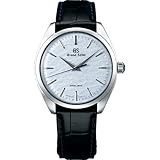
- Three-fold clasp with push button release
- Dual-curved sapphire crystal
- Power reserve display on the back
- Power resrve Approx. 72 hours(3 days)
- Confirm the exact reference and whether its visible details match reliable documentation for that reference.
- Assess originality of the dial and case; ask about replaced or refinished parts.
- Ask about movement condition and request service documentation where available.
- Review the seller’s evidence, return terms, and any inspection options with a qualified vintage Seiko specialist.
Vintage production and the modern King Seiko revival
Original King Seiko production was discontinued in the 1970s, but the collection was revived in 2022. Seiko designer Takuya Matsumoto said in the official King Seiko Fan Meeting highlights: “Although King Seiko production was discontinued in the 1970s, the collection was revived in 2022 and continues to thrive today.” (King Seiko Fan Meeting highlights). The revival is useful context, but it is separate from the vintage VANAC and other original watches discussed above.
Quick Recap
Best Value
Product prices and availability are accurate as of the date/time indicated and are subject to change. Any price and availability information displayed on Amazon at the time of purchase will apply.