Quick wins for a faster PC:
Fix the driver behind crashes, sound loss and screen glitchesFind Drivers →Clear out junk files and repair common Windows errorsFree Scan →The original Fitbit was a clip-on activity tracker that used a three-axis accelerometer to record steps and other movement. A computer-connected base station handled data transfer to an online account and charged the tracker. Its engineering challenge was integrating sensing, useful feedback, wireless syncing, and everyday wear in a small device.
What was the first Fitbit?
The first Fitbit was a wireless digital pedometer and activity tracker, not a wristwatch. It measured movement with a three-axis accelerometer and attempted to estimate calories from motion information, including movement that did not involve walking. That makes it more accurate to describe it as a motion-sensing activity tracker than as a step counter alone. The historical documentation does not establish clinical accuracy.
The product was unveiled in September 2008, while the first devices were distributed and the original clip-on model was released in 2009. Those are separate milestones, not one launch date.
How the original Fitbit worked
The tracker turned body movement into a record that users could review on the device and later sync to an online account. Historical documentation describes it tracking steps, distance, energy expenditure, and sleep. Its small LED screen and one physical button let users cycle through current-day values and an activity flower representing recent activity.
Free tools Windows power users keep installed
One-click scans. No signup required.
#1 Best Overall

- 【All-day Activity Tracker】: ENGERWALL IP68 Waterproof fitness tracker can record and track your daily steps, calories burned, exercise distance and time. It can also monitor your Body Temp, Heart Rate, Blood Oxygen and Blood Pressure. IP68 waterproof ensures that you don't need to take it off for daily hand washing and swimming, but don't soak it in water for a long time or wear it for hot baths, saunas.
- 【Slim and simple band design】The design concept of this tracker’s band is slim and unique, offering a comfortable and lightweight wearing experience. Suitable for men, women and the elderly.
- 【Heart Rate Monitor and Sleep Tracker】: Smart tracker can detect heart rate, blood pressure, blood oxygen, and body temperature in daily life. Monitor your sleep and analyze your sleep quality through Fall Sleep, Deep Sleep, Light Sleep, REM Sleep. You can view daily, weekly, and monthly data in the APP "Runmefit" to help you better understand your health status and lead a healthy lifestyle. [IMPORTANT] The blood pressure measurement feature must be downloaded and enabled within the app.
- 【Call and message notifications】: You can receive text messages and SNS notifications (including Facebook, Twitter, WhatsApp and Instagram) directly on your wrist. When your phone's Bluetooth is turned on, if you receive a message, the watch will vibrate to remind you and you can view the specific message. This function is very practical whether in work or life.
- 【Working Time】: Smart Fitness Watch is the best partner at work, you can set it on the mobile APP ‘Runmefit’: up to 5 sets of alarms, you don’t have to worry about being late for appointments or forgetting important things. You can set drinking Water Reminders and Sedentary Reminders to establish a healthy way of working.
| Part of the system | Role |
|---|---|
| Three-axis accelerometer | Recorded steps and movement. |
| Tracker display and button | Showed selected daily values and activity feedback. |
| Tracker storage and wireless link | Held activity information and transferred it to the base station. |
| Computer-connected base station | Converted signals into computer-readable data, synced with an online account, and charged the tracker when docked. |
The original system therefore depended on a connected computer and base station rather than syncing directly with a smartphone. The available evidence documents a radio frequency range for a base-station filing, but does not establish the specific radio chip, protocol implementation, or software design.
Designed for different ways of wearing it
The original tracker clipped into a plastic belt holster designed for thick belts. The package also included a nylon sleep wristband, allowing the tracker to be clipped on for sleep monitoring. Day wear and sleep wear were thus related parts of the product, but used different attachment methods.
This arrangement reflects a practical design choice: the tracker could be worn on clothing during the day and secured to the wrist at night. Historical accounts describe a small display and a single button, keeping local interaction simple while the online account provided a longer-term view of activity.
Rank #2
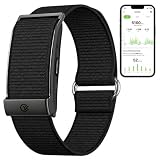
- Simple & Screen-Free Design – Easy to use and ultra-lightweight, comfortable for all-day wear without the distraction of a screen
- Powerful Health Monitoring – Accurately tracks heart rate, blood pressure, blood oxygen, HRV, sleep quality, and stress levels to help you better understand your body
- 100+ Sports Modes – Supports a wide range of fitness activities with precise tracking, making it your reliable companion for workouts and daily movement
- Ultra-Long Battery Life – Just 2 hours of charging powers up to 47 days of standby, so you can focus on your goals without constant recharging
- No Subscription Required – Enjoy all features with the free app, fast syncing, and easy Bluetooth connection—no hidden costs
Balancing size, battery, and capability
Early prototypes were about 10 by 15 centimeters and could connect to test equipment. The team worked to shrink the system while preserving step counting, local data storage, smooth data transfer, a simple interface, and a battery that did not need daily charging. James Park, Fitbit cofounder, said, “Figuring out the right balance of battery life, size, and capability kept us occupied for about a year.”
The Tool Desk
Outbyte PC Repair FREERepair Windows errors before they cause bigger problemsFix Now →Outbyte Driver Updater FREEFix the driver behind crashes, sound loss and screen glitchesFind Drivers →A University of California, San Diego dissertation reports approximately seven days of battery life for the original Fitbit. Treat that as a historically reported specification, not as an independent battery test. The same dissertation lists an original price of $99.
| Reported detail | Evidence and qualification |
|---|---|
| Battery life | Approximately seven days, as reported in a UC San Diego dissertation’s historical description. |
| Original listed price | $99, according to the dissertation’s device history table. |
| 2009 sales | Almost 6,000 devices, a company figure summarized by the dissertation; it is not an independently audited engineering measure. |
Release and regulatory milestones
The product history includes an unveiling in 2008 and distribution or release in 2009. A U.S. customs ruling is dated August 12, 2009, and FCC equipment filings followed in September and October 2009. These records document distinct steps in the product’s history; they should not be collapsed into a single date.
Rank #3

- What You Get - A 12-month membership, WHOOP 5.0 device, a SuperKnit band, and a waterproof* Wireless PowerPack. Choose from a range of band and accessory combinations, and add a waterproof Wireless PowerPack for on-the-go charging.
- HSA/FSA Eligible - All 12-month WHOOP memberships and battery packs qualify for HSA/FSA reimbursement.
- Screenless, Distraction-Free - No screen, no buzzing notifications. WHOOP focuses entirely on your health and performance, with up to 14+ day battery life so you can wear it around the clock.
- Healthspan with Pace of Aging - Understand how your daily habits shape long-term health. Healthspan measures your WHOOP Age and Pace of Aging so you can take science-backed action to slow biological aging and extend your prime years.
- 24/7 Health Insights - WHOOP monitors your heart rate every second of every day, delivering personalized Sleep, Strain, Recovery, VO2 max, Menstrual Cycle, and Heart Rate insights along with a Real-time Stress Monitor that pinpoints your stressors and shows how your body responds in the moment, so you can make better decisions about training, rest, and daily performance.
The FCC-indexed record for the F002 base identifies a filing frequency range of 2402–2480 MHz. That supports a description of the base station’s regulatory filing, but not claims about a specific chip or internal implementation.
How the original compares with later trackers
The first Fitbit combined a clothing clip, computer-connected base station, small display, button, and online account. Later devices changed how trackers were worn and how data moved between device and service. The later Fitbit Ultra, for example, is described in patent material as having a pixelated display, battery, sensors, wireless communications, a button, and an integrated clothing clip; that successor description should not be treated as proof of the original model’s internal design.
| Comparison point | Original Fitbit | Later tracker context |
|---|---|---|
| Attachment | Clothing clip, with a separate sleep wristband in the package. | Successor products could alter attachment and wearing location. |
| Data transfer | Computer-connected base station synced data to an online account. | Transfer methods evolved across later devices; do not assume a phone-based workflow for the original. |
| Local interaction | Small LED screen and one button. | Successor interfaces varied by model. |
What the evidence does and does not show
Historical sources support the original tracker’s three-axis motion sensing, display and button, base-station syncing and charging, belt holster, sleep wristband, and reported battery life. They do not establish a component-level bill of materials or an original-model laboratory accuracy figure. Results about other Fitbit generations should not be transferred to the first model without checking the underlying studies.
Rank #4

- 【24/7 Wellness Tracking & Free App — No Subscription】This screenless fitness tracker monitors heart rate, SpO2, HRV, stress, steps, distance and calories throughout the day. Sync your wellness data to the free QwatchPro app to review daily, weekly and monthly trends with no subscription or hidden membership fees. A lightweight smart band for people who want useful fitness data without another screen competing for their attention
- 【Sleep Tracking, AI Wellness Insights & Daily Energy】Track light, deep and REM sleep to better understand your nightly patterns and recovery. The QwatchPro app combines sleep, heart rate, SpO2, HRV, stress and activity trends to provide AI-powered wellness insights. Daily Energy tracking also shows how your body energy changes throughout the day, helping you decide when to train harder, stay active or prioritize rest
- 【170+ Sports Modes & Connected GPS via Smartphone】Choose from 170+ sports and activity modes including walking, running, cycling, hiking, yoga, Pilates and more. This fitness bracelet records steps, distance, workout duration and calories, while Connected GPS through your smartphone can map supported outdoor activities in the app. Review daily, weekly and monthly activity trends to stay consistent with your fitness goals
- 【20–30 Day Battery, 25g Lightweight & IP68】Powered by a 180mAh battery, this screenless fitness tracker is designed for extended everyday use and recharges in about 2 hours with the magnetic charger. At only 25g, the lightweight smart bracelet is designed for comfortable workouts, daily wear and overnight sleep tracking, while IP68 water resistance helps handle sweat, rain and hand washing
- 【Private Alerts, Women's Health & Everyday Smart Features】Stay connected without putting another display on your wrist. This smart bracelet for men and women provides customizable vibration alerts for calls, messages and supported app notifications, plus women's health tracking, sedentary reminders, alarms, remote camera control, do-not-disturb mode and device finding. The 22mm quick-release design also lets you replace the wrist strap when you want a different fit or style
FAQ
How did the first Fitbit work?
Its three-axis accelerometer recorded steps and other movement. The tracker showed selected activity information, then communicated with a computer-connected base station that synced data to an online account and charged the device.
What sensors were in the original Fitbit?
The 2009 customs ruling describes a three-axis accelerometer. The available research does not establish a complete component-level inventory.
How did the original Fitbit sync?
It used a wireless connection to a base station connected to a computer. The base station converted the signals into computer-readable data, and the system synced activity to an online account.
What’s actually slowing this PC down?
Pick the symptom - the matching free tool is one click away.
How long did the first Fitbit battery last?
A UC San Diego dissertation’s historical description reports approximately seven days of battery life. This is a reported historical specification, not an independent performance test.
Was the first Fitbit a watch?
No. It was a clip-on tracker. The package included a belt holster and a separate wristband for sleep monitoring.
Quick Recap
Product prices and availability are accurate as of the date/time indicated and are subject to change. Any price and availability information displayed on Amazon at the time of purchase will apply.