What’s actually slowing this PC down?
Pick the symptom - the matching free tool is one click away.
The rise and apparent fall of the Seiko Kinetic range is real as a change in visibility, but not a proven worldwide discontinuation. Seiko launched body-powered quartz commercially in 1988, expanded it through GMT, chronograph, Perpetual, and Direct Drive variants, and still shows Kinetic in regional pages and official caliber documentation.
Kinetic was one of Seiko’s most ambitious attempts to combine quartz accuracy with mechanical energy generation. Wrist movement powers a generator, a capacitor stores the electricity, and a quartz circuit runs the analog watch. The design avoided a conventional battery in the documented calibers, but it did not eliminate maintenance: the storage component can age and must be matched to the movement.
The result is a range that rose dramatically, diversified into unusual complications, and later became harder to find in Seiko’s headline collections. The historical record supports “less prominent,” “regionally retained,” and “legacy-oriented” more confidently than “globally discontinued.”
Key takeaways
- Seiko showed the first Kinetic prototype at the 1986 Basel Fair and commercially launched the technology in 1988, initially using the AGS name.
- Seiko Kinetic is body-powered analog quartz: wrist motion spins a generator, and a capacitor stores electricity for the quartz movement.
- Seiko reported more than eight million Kinetic watches sold from the 1988 launch through 2007; that figure is not a current cumulative sales total.
- Kinetic developed into Auto Relay, chronograph, Perpetual, GMT, and Direct Drive variants rather than remaining a single basic movement.
- The range appears less prominent in Seiko’s modern mainstream portfolio, but the reviewed official evidence does not prove a worldwide discontinuation.
- Capacitor replacement is caliber-specific, so the caliber printed on the case back should be identified before any part is purchased.
What happened to Seiko Kinetic watches?
Seiko Kinetic did not simply disappear. The technology became much less prominent in Seiko’s main collection story, while official regional product pages, caliber instructions, remaining stock, and the repair market still preserve a Kinetic presence.
PC Slower Than It Used to Be?
A free scan shows the junk files, broken settings and background clutter dragging Windows down - then fixes them in one click.Free scan · Windows 10 & 11Crashes, No Sound, or Screen Glitches?
Random freezes, missing sound and display glitches usually trace back to one bad driver. Find and replace yours safely.Free scan · under a minute#1 Best Overall
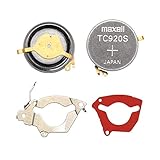
- Seiko Kinetic Battery for 5M42, 5M43, 5M22, 5M23
- New Lithium-Ion Model
- Self-Winding; charged while wearing watch
- Watch caliber can be found on the back of watch
The most accurate description is an apparent decline rather than a confirmed global end. Seiko’s reviewed current collection structure gives much more visibility to King Seiko, Prospex, Presage, Astron, 5 Sports, and other projects than to Kinetic. However, a current UK Seiko Premier Kinetic page remains online, and Seiko’s official instruction system still lists numerous Kinetic calibers.
Those facts establish reduced visibility and regional retention, not a worldwide production claim. No reviewed official source supplies one global discontinuation date for every Kinetic model.
How did the Seiko Kinetic range begin?
The Seiko Kinetic story began as an attempt to combine quartz timekeeping with energy generated by the wearer. Seiko unveiled a prototype at the 1986 Basel Fair under the trial name AGM, then launched the first commercial watch in 1988 under the AGS name. The Kinetic name later became the public identity for the platform.
Seiko’s own heritage account describes the 1988 breakthrough this way: “In 1988 came the big breakthrough with the Seiko Kinetic, a watch with an oscillating weight that converted the wearer’s motion into electricity and thus powered the quartz movement.” The quotation appears on Seiko Watch Corporation’s official heritage page.
The concept addressed a clear quartz-watch annoyance: conventional quartz watches were convenient and accurate, but their batteries eventually needed changing. Kinetic kept quartz regulation while using wrist movement as the energy source, making the technology a bridge between ordinary battery quartz and traditional mechanical watchmaking.
Seiko Kinetic timeline
| Year | Development | Why it mattered |
|---|---|---|
| 1986 | Prototype shown at the Basel Fair under the trial name AGM. | Seiko demonstrated a watch designed to convert kinetic movement into electrical energy. |
| 1988 | First commercial Kinetic-era watch launched, initially under the AGS name. | The experimental technology became a consumer product. Seiko’s official history identifies 1988 as the breakthrough year. |
| 1998 | Kinetic Auto Relay introduced. | The system could extend the at-rest operating period to up to four years, addressing the problem of a motion-powered watch being left unworn. |
| 1999 | Ultimate Kinetic Chronograph introduced. | Kinetic expanded into a high-function chronograph combining mechanical and electronic watchmaking capabilities, according to Seiko. |
| 2003 | A further Kinetic Chronograph followed. | The technology continued to develop as a family of specialized movements. |
| 2005 | Kinetic Perpetual introduced, using caliber 7D48. | The model combined Kinetic operation with a perpetual calendar designed to remain correct through February 28, 2100, plus an Auto Relay sleep system. |
| 2007 | Kinetic Direct Drive introduced. | Seiko’s published Kinetic history also recorded more than eight million Kinetic watches sold by 2007. |
These milestones are summarized in Seiko’s official Kinetic technology history and its official heritage chronology.
Named statistic: According to Seiko Watch Corporation (2007), more than eight million Kinetic watches had been sold from the 1988 launch through 2007. The figure describes sales through 2007; it is not a current total.
How does a Seiko Kinetic watch work?
A Seiko Kinetic watch uses wrist motion to generate electricity for an analog quartz movement. The wearer’s arm moves an oscillating weight, the rotor turns a generator, a coil produces current, and a capacitor stores the resulting electricity for the quartz circuit.
The Tool Desk
Outbyte Driver Updater FREEScan for outdated or missing drivers - takes under a minuteDriver Scan →Outbyte PC Repair FREEClear out junk files and repair common Windows errorsFree Scan →Seiko’s owner documentation explains the operating principle directly: “The AUTOMATIC POWER GENERATOR works as you move your arm while wearing the watch.” That wording comes from Seiko Watch Corporation’s official Cal. 3M22/5M42/5M43 instruction manual.
- Movement creates input: Wearing the watch causes the oscillating weight to move.
- The generator converts motion: The rotor drives the generating mechanism and coil.
- Electricity is stored: The generated current is held in a capacitor, which Seiko also describes as a Kinetic electricity-storage unit.
- Quartz controls the time: Stored electricity powers the analog quartz movement.
That architecture makes Kinetic a quartz technology, not a mechanical automatic movement. Kinetic has a mechanical energy-generation mechanism, but the timekeeping circuit is quartz-regulated rather than governed by a traditional mechanical balance wheel.
Rank #2
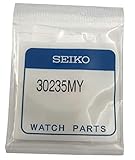
- 30235MY Battery Size: MT920
- Movements: 5M22, 5M22A, 5M23, 5M23A, 5M25, 5M25A, 5M42, 5M42A, 5M43, 5M43A, 5M45, 5M45A, 5M47, 5M47A
The 3M22/5M42/5M43 manual says that the documented watches do not use a conventional battery and instead use a capacitor. Sellers and owners often use the word “battery” informally, but “capacitor” is the more accurate term for the storage component in this architecture.
How long does a Seiko Kinetic watch run when fully charged?
Seiko Kinetic power reserve varies substantially by caliber, so no single reserve figure applies to the entire range. The 3M22, 5M42, 5M43, 5M65, and 7D48 figures below describe different movements or functions and should not be treated as interchangeable.
Free tools Windows power users keep installed
One-click scans. No signup required.
| Caliber or system | Documented duration | Important qualification |
|---|---|---|
| 3M22 | More than three days when fully charged | Figure given in Seiko’s 3M22 instruction manual. |
| 5M42 and 5M43 | More than seven days when fully charged | Figure given in the same Seiko instruction manual; it does not apply automatically to other Kinetic calibers. |
| 5M65 Kinetic GMT | Approximately six months on a full charge | Seiko’s Kinetic technology material identifies this caliber and duration. |
| 7D48 Kinetic Perpetual | Up to four years while not worn in Auto Relay sleep mode | This is an at-rest preservation feature, not the same thing as ordinary full-charge running time. |
According to Seiko Watch Corporation’s official 3M22/5M42/5M43 manual, caliber 3M22 runs for more than three days when fully charged, while calibers 5M42 and 5M43 run for more than seven days. Seiko’s official Kinetic material separately gives approximately six months for caliber 5M65 and describes the longer Auto Relay behavior of Kinetic Perpetual caliber 7D48.
A watch that stops after being removed from the wrist is not automatically defective. The result may reflect the caliber’s normal reserve, the amount of charge stored, or the condition of the capacitor. A watch that stops unusually quickly or cannot hold a charge needs diagnosis rather than a generic replacement part.
Which Seiko Kinetic variants were developed?
Kinetic was a platform rather than one movement. Seiko used the idea in simple watches and in specialized models with extended storage, chronograph functions, perpetual calendars, GMT displays, and Direct Drive technology.
| Variant | Documented feature or role | Ownership implication |
|---|---|---|
| Basic Kinetic | Body-powered analog quartz timekeeping, with versions offering basic calendar functions. | Usually a simpler starting point for understanding the technology, although exact service needs remain caliber-specific. |
| Kinetic Auto Relay | Extended the at-rest operating period to up to four years. | Better suited to an owner who rotates watches or leaves a watch unworn for long periods. |
| Ultimate Kinetic Chronograph | Chronograph platform introduced in 1999. | More functions generally mean a more specialized movement to diagnose and service. |
| Kinetic Chronograph | Further chronograph development introduced in 2003. | Shows that Seiko continued refining the family after the original launch. |
| Kinetic Perpetual | Caliber 7D48, perpetual calendar through February 28, 2100, and Auto Relay sleep behavior. | Technically impressive but more complex than a basic three-hand Kinetic. |
| Kinetic GMT | GMT functionality using caliber 5M65, with approximately six months’ duration on a full charge. | Combines travel functionality with a relatively long documented reserve. |
| Kinetic Direct Drive | A distinct Kinetic variant introduced in 2007. | Represents the later expansion of the platform into a different interaction and display concept. |
Seiko’s official Kinetic overview records these developments and makes clear why it is misleading to judge every Kinetic watch by the reserve or repair experience of one basic caliber.
Why did Seiko Kinetic become less prominent?
Seiko Kinetic appears to have fallen because the technology is no longer foregrounded in the brand’s main collection structure, while newer collections and energy systems occupy more of Seiko’s public narrative. The available evidence supports several contributing factors, but it does not prove that one event killed the range.
Kinetic lost collection-level visibility
On the reviewed current Seiko regional pages, the main navigation emphasizes collections such as King Seiko, Prospex, Presage, Astron, 5 Sports, and the Seiko power design project. Kinetic is not presented as one of the principal current collections in that structure. That is strong evidence of reduced prominence, not proof that every Kinetic model has stopped being made.
Seiko’s technology story moved elsewhere
Seiko’s official heritage chronology gives substantial attention to later technologies and product directions, including Spring Drive and Astron GPS Solar. Those technologies offer Seiko newer ways to tell stories about energy, precision, travel, and engineering. The shift helps explain why Kinetic may feel absent from the modern brand conversation, but the dossier does not establish a direct commercial displacement claim.
The ownership promise became more complicated with age
Kinetic’s original appeal was avoiding routine conventional battery changes. The watch still relies on an energy-storage component, however, and that component can eventually lose the ability to hold a useful charge. At that point, owners need a caliber-specific capacitor or professional movement service, so the ownership message is closer to “avoid ordinary battery changes” than “never replace an energy-storage part.”
What’s actually slowing this PC down?
Pick the symptom - the matching free tool is one click away.
Rank #3

- Brand New Capacitor for Seiko
- Fit For Calibers: 5J21, 5J22, 5J23, 7D48, VS13 Series and many more.
- Capacitor 3023.24X for Seiko Watches
- Brand New in Package
Global discontinuation is not established
Seiko still maintains an official instruction index containing many Kinetic calibers, and the UK site retains a Seiko Premier Kinetic product page. Manuals and product pages can remain online after production changes, so those pages do not prove broad current manufacture; they do, however, make a precise worldwide discontinuation date impossible to substantiate from the reviewed evidence.
Are Seiko Kinetic watches still made?
The defensible answer is: possibly in limited or regional form, but the reviewed evidence cannot confirm a broad worldwide production range. Kinetic remains officially documented, and at least one current UK regional page retains the name, while Kinetic is much less visible in Seiko’s main collection presentation.
| Evidence | What it supports | What it does not support |
|---|---|---|
| Seiko UK Seiko Premier Kinetic page | Kinetic still has an official regional web presence. | It does not prove worldwide availability or a continuously refreshed global range. |
| Seiko official instruction index | Seiko continues to provide documentation for numerous Kinetic calibers. | Instructions do not prove that every listed caliber remains in new production. |
| Current main collection structure | Kinetic is less prominent than several other Seiko collections and technology stories. | Lower prominence is not a formal discontinuation announcement. |
| Remaining stock and pre-owned market | Older and regional Kinetic watches can still be found outside the main current range. | Used or remaining-stock availability is not evidence of current manufacture. |
For buyers, “still made” is therefore the wrong question to apply to the entire family. Ask instead whether a particular reference is currently listed in the buyer’s region, whether the movement is supported, whether parts remain available, and whether the watch has a serviceable capacitor and intact seals.
Is Seiko Kinetic better than automatic, conventional quartz, or solar?
Seiko Kinetic is not universally better; Kinetic is better for a buyer who wants quartz regulation and wrist-powered generation, while conventional quartz, mechanical automatic, and solar watches solve different problems.
| Type | Energy or regulation concept | Main advantage | Main trade-off |
|---|---|---|---|
| Seiko Kinetic | Wrist motion generates electricity for an analog quartz movement; a capacitor stores the energy. | Quartz timekeeping without the conventional battery arrangement in the documented calibers. | The capacitor and generator create a caliber-specific maintenance path, and the watch benefits from regular wear unless it has extended reserve or Auto Relay. |
| Conventional quartz | Quartz timekeeping supplied by a conventional battery. | Simple ownership and no need to wear the watch to generate power. | The battery eventually needs replacement. |
| Mechanical automatic | Traditional mechanical watchmaking rather than Kinetic’s generator-and-quartz architecture. | Mechanical character and a direct connection to traditional watch construction. | It does not offer Kinetic’s quartz-regulated operating concept. |
| Solar or other newer energy systems | A separate energy and product strategy in Seiko’s portfolio. | May be more visible in Seiko’s current technology narrative. | The dossier does not provide a like-for-like accuracy, reserve, price, or service comparison with Kinetic. |
Kinetic’s practical middle ground is its strongest argument: the watch feels more technically distinctive than ordinary quartz while avoiding the traditional mechanical automatic format. The compromise is that Kinetic replaces routine battery changes with a generator, capacitor, and caliber-specific repair question.
What should you check when a Seiko Kinetic will not hold a charge?
Start with the caliber, not the appearance of the watch or the wording used by a marketplace listing. The caliber number printed on the case back determines which instructions, capacitor, clamps, and related movement parts apply.
- Read the case back: Record the complete caliber number, not just “Kinetic” or the watch’s model family.
- Check the correct manual: Use Seiko’s instruction system to locate documentation for that caliber rather than assuming that a nearby-looking movement has the same reserve or charging behavior.
- Separate normal reserve from failure: Compare the observed running time with the documented behavior for the exact movement. A short reserve may indicate a worn capacitor, but it can also point to problems in the generator, circuit, contacts, or other movement components.
- Match the storage component: Buy a capacitor or rechargeable storage component only after confirming the caliber and part compatibility. A generic battery is not a safe substitute for a caliber-verified Kinetic component.
- Choose the repair method: A simple, inexpensive watch may be a reasonable candidate for careful DIY work. A valuable, water-resistant, sentimental, chronograph, GMT, or Perpetual model is a stronger candidate for professional service.
- Protect water resistance: Opening the case can disturb the gasket or case sealing. A watch intended for water exposure should be inspected and pressure-tested by a competent professional after service.
Seiko’s technical documentation shows why compatibility matters: the parts catalogue and technical material identify movement-specific clamps and rechargeable-battery components rather than one universal Kinetic storage part. A Seiko Kinetic capacitor replacement can be the correct repair path, but only after the caliber and replacement specification have been verified.
Marketplace and specialist listings may use terms such as “Kinetic battery,” “rechargeable cell,” or “capacitor.” The terminology does not remove the compatibility requirement. A part advertised for one 5M-series or 7D-series caliber should not be assumed to fit another Kinetic movement.
Should you repair or replace an old Seiko Kinetic?
An old Seiko Kinetic is worth repairing when the case, dial, hands, bracelet, and movement justify the service and a compatible storage component is available. A capacitor replacement may restore normal operation, but no replacement part can guarantee that a watch with a damaged generator, circuit, worn gears, compromised seals, or other faults will return to full working order.
| Situation | Usually sensible next step | Reason |
|---|---|---|
| Basic Kinetic stops quickly but is otherwise clean and complete | Obtain a caliber-specific diagnosis and capacitor quote. | The storage component is a plausible maintenance issue, but the movement should not be assumed healthy. |
| Valuable, sentimental, water-resistant, chronograph, GMT, or Perpetual Kinetic | Use a qualified watchmaker or verified Seiko service channel. | Specialized movements and case sealing make incorrect DIY work more consequential. |
| Watch has severe corrosion, damaged case, missing parts, or an unidentified caliber | Ask for an inspection before buying parts. | Part compatibility and total repair value cannot be judged from the Kinetic label alone. |
| Repair estimate approaches the value of an ordinary replacement watch | Compare sentimental value, condition, service history, and replacement availability. | A low market price does not automatically make a well-preserved or meaningful watch disposable. |
A Watch repair tool kit may be useful for an experienced owner working on an appropriate non-water-resistant watch, but tools are not a substitute for movement knowledge. Opening the case incorrectly can damage the case back, gasket, movement, or water resistance. DIY work is not necessary for every capacitor replacement and is not the safest choice for every Kinetic.
Rank #4

- 【Wide Compatibility】: Designed to replace Capacitor 3023.5MY (MT920) and Kinetic 3023-5MZ, this battery supports movements including 5M22/A, 5M23/A, 5M25/A, 5M42/A, 5M43/A, 5M45/A, and 5M47/A. Ideal for Kinetic watches requiring reliable power
- 【Advanced Lithium-Ion Technology】: Features a durable lithium-ion design for extended lifespan and consistent performance, ensuring your watch stays powered longer with minimal maintenance
- 【Self-Charging Convenience】: Automatically charges through natural wrist movement while wearing the watch, eliminating frequent replacements and keeping your timepiece running smoothly
- 【Easy Installation】: Locate your watch’s caliber number (e.g., 5M22, 5M43) on the caseback to confirm compatibility. Includes clear instructions for hassle-free replacement
- 【Quality Assurance】: Precision-engineered to meet specifications, this capacitor delivers seamless integration and reliable operation for Kinetic and standard watches
For difficult or valuable examples, a qualified watchmaker can verify the movement, test whether the generator is charging, replace the correct storage component, inspect the seals, and identify faults that a parts swap would miss. Readers seeking an official route should verify the availability and geographic coverage of a Seiko service center directly rather than assuming that every regional service program handles every older Kinetic caliber.
Seiko’s official technical documentation for Kinetic-related movements supports the central repair lesson: the component and fitting details are movement-specific. The Seiko Service USA technical supplement is useful evidence that Kinetic servicing involves more than choosing a generic battery.
Do these 3 things before closing this tab:
1Fix the driver behind crashes, sound loss and screen glitches2Clear out junk files and repair common Windows errors3Scan for outdated or missing drivers - takes under a minuteWhere can you find the remaining Seiko Kinetic models?
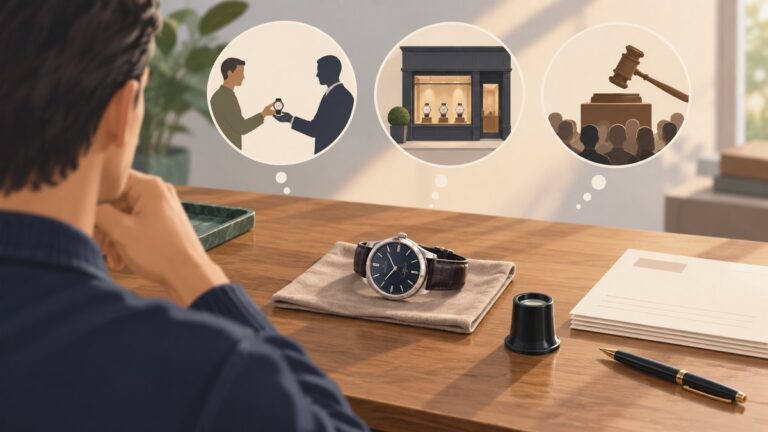
Remaining Kinetic watches are most likely to appear through regional official listings, old stock, specialist dealers, and the pre-owned market. Availability should be judged reference by reference rather than by assuming that the existence of one Premier page means every historic Kinetic variant is still sold new.
If you are considering a pre-owned Seiko Kinetic watch, ask for the exact reference and caliber, the date and quality of the last service, the measured running time after charging, the capacitor history, and whether the case has been opened or pressure-tested. A low asking price can conceal a repair requirement, while a properly documented example may be a better purchase even if it costs more.
For discontinued or regional models, the relevant question is not simply whether the watch is rare. Check whether the movement has identifiable parts, whether a competent repairer will accept the caliber, and whether the watch’s condition makes restoration economically and emotionally worthwhile.
What is the lasting significance of Seiko Kinetic?
Seiko Kinetic was significant because it made body-powered quartz a substantial product platform rather than a short-lived experiment. From the 1986 prototype and 1988 AGS launch through Auto Relay, chronographs, Perpetual, GMT, and Direct Drive models, Seiko used the concept to explore the boundary between electronic accuracy and mechanical energy generation.
The range’s apparent fall is best understood as a change in emphasis. Kinetic is less visible in Seiko’s current mainstream collection story, but official documentation and regional presence prevent the stronger claim that the entire range vanished worldwide on a known date.
For today’s owner, the history leads directly to a practical rule: identify the caliber before discussing a capacitor, a battery, a repair, or a replacement. That single step avoids the most common mistake in maintaining an aging Seiko Kinetic.
The Bottom Line
Seiko Kinetic has receded from the center of Seiko’s modern portfolio, but the evidence does not prove a worldwide discontinuation. The technology remains a distinctive form of analog quartz, and older examples can be worthwhile to repair when the exact caliber, capacitor compatibility, movement condition, and service options are checked first.
Quick Recap
Product prices and availability are accurate as of the date/time indicated and are subject to change. Any price and availability information displayed on Amazon at the time of purchase will apply.
Quick wins for a faster PC:
Fix the driver behind crashes, sound loss and screen glitchesFind Drivers →Repair Windows errors before they cause bigger problemsFix Now →Scan for outdated or missing drivers - takes under a minuteDriver Scan →