Free tools Windows power users keep installed
One-click scans. No signup required.
Omega Megasonic and Megaquartz watches use different electronic timekeeping technologies. The Megasonic calibre 1220 is a 720 Hz tuning-fork movement; “Megaquartz” covers quartz watches, including both the high-frequency 2.4 MHz Marine Chronometer line and separate 32 kHz calibres. For a collector, the meaningful choice is between unusual tuning-fork engineering and Omega’s varied quartz history—not a simple ranking of which watch is better.
What separates Megasonic from Megaquartz?
Megasonic refers to a particular electromechanical tuning-fork approach. Specialist technical reference material describes the Omega calibre 1220 as operating at 720 Hz. Megaquartz, by contrast, is a broader label for quartz-regulated watches, not one movement or frequency. Omega’s official vintage catalogue includes a distinct “Megaquartz 32 Khz” category, while the best-known 2.4 MHz models belong to another branch of the family.
That distinction matters when comparing examples: a watch marked Megaquartz is not necessarily a 2.4 MHz Marine Chronometer, and the 32 kHz designation should not be treated as another name for Megasonic. The Accutron Watch Page’s Megasonic reference describes calibre 1220’s mechanism; Omega’s vintage catalogue lists the 32 kHz category.
How the movements work
Megasonic: a 720 Hz tuning fork and indexing system
The technical account of calibre 1220 describes a 29 mm by 5 mm movement with a 180-tooth index wheel and a sealed micromotor assembly. Rather than a conventional tuning-fork arrangement, it says two clicks perform the indexing or pawl function. The wheel runs on balls between ruby discs inside the sealed motor. The design is attributed to Max Hetzel. These are secondary technical-reference descriptions, not claims drawn from a currently inspected Omega service document.
#1 Best Overall
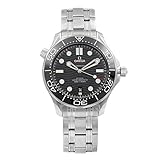
- Omega Seamaster Automatic Chronometer Black Dial Men's Watch 210.30.42.20.01.001
Calibre 1230 is identified in the same reference as the day-date derivative. A hosted reproduction of Omega’s historical calibre list also associates 1220 and 1230 with 720 Hz, but it is a corroborating copy rather than a directly retrieved official Omega page. The mechanism’s unusual construction is part of the appeal, but it also makes it important to establish that a prospective watch’s exact calibre can be assessed by a suitably capable watchmaker.
Megaquartz: two frequencies, not one movement
The 2.4 MHz Megaquartz watches are the high-frequency quartz branch. Omega Prototypes traces the commercial sequence from the Constellation Megaquartz 2.4 MHz reference 1510 to Marine Chronometer references 1511 and 1516. Separately, Omega’s vintage catalogue lists Megaquartz 32 kHz, and the hosted calibre list identifies calibre 1310 as a 32 kHz movement. Do not infer a watch’s frequency from the Megaquartz name alone; verify the reference and calibre.
Rank #2
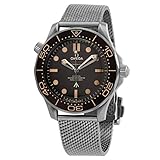
- Model 210.90.42.20.01.001
The 2.4 MHz Megaquartz timeline and variants
| Model or milestone | Date or description | What the evidence establishes |
|---|---|---|
| 1510 Constellation Megaquartz 2.4 MHz | 1973 | Omega Prototypes places the model’s appearance in 1973 and estimates about 1,000 standard examples. That figure is the specialist source’s estimate, not a settled official production count. Omega Prototypes |
| 1511 Marine Chronometer | 1974 | Omega Prototypes places the 1511 in 1974 and estimates about 900 first-edition examples. Omega’s official timeline records a 1974 Megaquartz Marine Chronometer certification milestone. Omega history timeline |
| 1516 Marine Chronometer | 1976 | Omega Prototypes places the 1516 in 1976 and estimates 1,800 examples. The collector guide reports different totals based on movement-number and certification evidence and discusses inconsistencies, so the estimate should not be read as definitive. Omega Prototypes; collector guide |
The 1510 is described by the collector guide as a dress Constellation, while the 1511 and 1516 are Marine Chronometer variants. That guide also discusses the TSA (time-second-adjustment) feature: independent hour adjustment and a separate pusher for setting seconds. Treat those design and variant details as collector-reference reporting rather than as a substitute for checking the individual watch and its documentation.
Which one suits your collecting priorities?
| Collector priority | Why it may point toward Megasonic | Why it may point toward Megaquartz |
|---|---|---|
| Movement interest | The 1220’s tuning fork, indexing clicks and sealed micromotor offer a distinctive electromechanical design to study. | The label spans quartz models at different frequencies, including the historically prominent 2.4 MHz line and a separate 32 kHz category. |
| Historical focus | A good fit if you want to explore Omega’s tuning-fork engineering of the 1970s. | A good fit if you want the 2.4 MHz development story, especially the Constellation-to-Marine-Chronometer sequence and the 1974 certification milestone. |
| Watch format | Confirm the exact reference and condition of the individual watch; the material cited here does not establish a single case format for all Megasonic examples. | The collector guide distinguishes the dress-style 1510 Constellation from the 1511 and 1516 Marine Chronometer variants. Check the specific reference rather than generalizing across Megaquartz. |
| Accuracy comparison | No dependable named-publisher annual performance statistic for Megasonic is established here. | The available sources do not provide a like-for-like, sourced performance specification for every Megaquartz calibre discussed. Avoid choosing on a blanket accuracy claim. |
What to check before buying or servicing one
- Identify the watch precisely. Record the reference and calibre, then establish whether it is a 720 Hz Megasonic, a 2.4 MHz Megaquartz, or a different Megaquartz such as the 32 kHz family. The name on the dial is not enough to settle the movement family.
- Inspect condition and originality. Compare the case, dial, hands, crown, pushers and movement against reliable information for that exact variant. For Marine Chronometer examples, assess any claimed TSA function and supporting documentation with a knowledgeable specialist.
- Ask for service records and a movement-specific assessment. A general claim that a watch “runs” does not establish the condition of its electronic movement or the work it may need. Seek confirmation from a watchmaker who has experience with the exact calibre.
- Confirm service capability before committing. Omega says its authorized centres offer solutions for current and vintage watches, but that general guidance does not confirm that a particular centre accepts a Megasonic 1220/1230 or Megaquartz 1510/1511/1516, or that the necessary parts are available. Contact the centre with the exact calibre before purchase or shipment. Omega customer service
How certain are the production totals?
The available specialist sources do not establish a single authoritative production total for the 2.4 MHz models. Omega Prototypes gives estimates of about 1,000 standard 1510s, about 900 first-edition 1511s and 1,800 1516s. The collector guide presents other totals derived from movement numbers and certification records and discusses inconsistencies. These figures are best used as attributed estimates, not as proof of a particular watch’s rarity or value. No current market price or live listing is established here.
Quick Recap
Best Value

- Rubber
- Rotating bezel, gmt
- Automatic-self-wind movement
- Case diameter: 40mm
- Water resistant to 330 feet
Rank #4

- Model 310.32.42.50.01.001
Rank #3

- Stainless steel case
- Black dial
- Swiss-automatic movement
- Case diameter: 40mm
- Water resistant to 330 feet
Product prices and availability are accurate as of the date/time indicated and are subject to change. Any price and availability information displayed on Amazon at the time of purchase will apply.