Zaratsu polishing is a hand-controlled case-finishing process associated with Grand Seiko. A craftsperson holds and moves a watch case against an abrasive-covered rotating metal disc, then applies a final buff. Done correctly, the process produces broad, mirror-polished planes with clear reflections while retaining the sharp ridges between them. It is therefore about controlling the case’s geometry as much as creating shine.
What the name “Zaratsu” means
Grand Seiko says “Zaratsu” is the Japanese pronunciation of the name of a European company that manufactured a polishing machine. The polishers who used that machine adopted the pronunciation for the process. The word refers to a method and its equipment, not to a particular polishing compound.
Grand Seiko’s descriptions explain how the brand uses the term. They establish its own manufacturing practice and history; they do not prove that every watchmaker uses the same machine, abrasives or sequence.
Why Zaratsu polishing is necessary
A conventional final buff can make metal look shiny, but shine alone does not show whether the underlying surface is flat. Uneven polishing can leave waviness or distortion in reflections and can soften the boundary where two planes meet. Grand Seiko says Zaratsu is used to create a smooth, distortion-free surface while maintaining crisp ridge lines.
PC Slower Than It Used to Be?
A free scan shows the junk files, broken settings and background clutter dragging Windows down - then fixes them in one click.Free scan · Windows 10 & 11Crashes, No Sound, or Screen Glitches?
Random freezes, missing sound and display glitches usually trace back to one bad driver. Find and replace yours safely.Free scan · under a minute#1 Best Overall
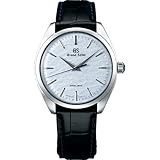
- Three-fold clasp with push button release
- Dual-curved sapphire crystal
- Power reserve display on the back
- Power resrve Approx. 72 hours(3 days)
This distinction is central to the Grand Seiko Style. In 1962, a designer studying watch displays at Tokyo’s WAKO store concluded that Grand Seiko needed a clearer visual identity and more brilliance. The resulting direction emphasized sharper angles and undistorted surfaces. The 44GS, launched in 1967, and the 61GS, released in 1968, were the first two timepieces Grand Seiko identifies as demonstrating that style. The 44GS’s flat polished planes make the reason for the technique especially visible.
How the process works
The exact sequence varies with the case material, but Grand Seiko and Seiko describe a staged operation rather than a single pass with a cloth.
- Case preparation: Preliminary sanding and rough buffing even the case and establish the surfaces that will receive their final finishes.
- Zaratsu polishing: The polisher holds the case surface in front of a rotating metal disc carrying abrasive material. The surface is moved across the disc rather than simply held against its side.
- Hand-controlled correction: Pressure, contact time and movement speed are continuously adjusted. The disc’s center and edge behave differently, so the operator must control where and how the case meets the abrasive.
- Final buffing: A final buff burnishes the prepared surface to a mirror appearance.
- Hairline finishing where specified: Selected surfaces can then receive directional brushing, leaving mirror and brushed areas in deliberate contrast.
The operator judges the result by feel as well as sight and must consider the case as a whole. Grand Seiko specialist Yuji Kuroki describes the difficulty as “achieving a perfect balance.” A mirror appearance by itself cannot establish that Zaratsu was used.
Why hand control changes the result
Small changes in pressure, dwell time and movement speed remove different amounts of material. Excessive contact can alter a plane or round an edge; insufficient contact can leave distortion. Because the disc does not behave identically across its surface, the polisher has to compensate while keeping the intended geometry consistent from one part of the case to another.
Quick wins for a faster PC:
Clear out junk files and repair common Windows errorsFree Scan →Fix the driver behind crashes, sound loss and screen glitchesFind Drivers →Rank #2
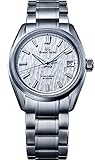
- See-through case back
- Date display
- Screw-down crown
- 40mm Diameter
- Weight 178.0 g
Zaratsu, mirror polish and hairline finishing
Mirror polish and hairline finishing are complementary, not competing definitions of the same surface.
| Finish or stage | Appearance | Purpose and constraint |
|---|---|---|
| Mirror-polished plane | Sharp, bright reflection | Requires a flat, undistorted base so the reflection remains clear. |
| Hairline surface | Fine, directional brushed lines | Adds controlled texture to selected areas after the mirror work; cutting too deeply cannot be corrected at this stage. |
| Case preparation | Evened, ready-to-finish metal | Rough sanding and buffing establish a consistent foundation. |
For hairlines, Grand Seiko describes pressing and sliding the case against a metal plate covered with 400–800 grit sandpaper. Flat sections are moved left and right; on curved sections the wrist is twisted to follow the contour. The directional lines are applied after mirror polishing, so they depend on the underlying surface being properly controlled.
How material affects the work
Seiko states that its polishing process changes for stainless steel, titanium, 18K gold and platinum. In the process description that supplies these figures, titanium and 18K gold take 1.5 times as long to polish as stainless steel, while platinum takes five to six times as long. The figures are material-specific ratios from Seiko’s account; they are not a universal timing rule for every workshop.
The same account says the cited case has gone through more than 20 polishing steps by the time the described rough buffing, Zaratsu, final buffing and hairline stages are complete. The source does not state a publication year for these figures.
Rank #3

- 24-hour hand (dual time display function)
- Power Reserve Approx. 55 hours
- See-through case back
What Zaratsu polishing does—and does not—tell you
- It indicates controlled surface geometry: The intended result is a flat-looking reflection and a sharp transition between planes.
- It does not mean every surface is a mirror: Grand Seiko commonly combines mirror planes with hairline-brushed areas.
- It is not equivalent to wiping on polish: The described operation uses abrasive machinery and skilled hand movement.
- It does not make a case scratch-proof: The finish remains a metal surface that can be marked or damaged.
- It is not a safe consumer replication project: The process depends on controlling material removal and preserving case geometry; a polishing cloth cannot reproduce it.
How to recognize the design effect
Look across a broad polished plane and watch the reflected edge of a window or light. A well-controlled surface produces a clean, stable reflection rather than a visibly wavering one. Then inspect the boundary where that plane meets an adjacent facet: the ridge should remain visually definite instead of appearing rounded. These observations describe the design goal, not a reliable way to authenticate a particular manufacturing process.
On a finished Grand Seiko case, the visual impact comes from contrast: bright mirror planes catch light, while hairline areas absorb and stretch it into fine directional lines. The combination makes the case’s angles legible from changing viewpoints.
Independent reader supportYour contribution helps us test, update, and keep practical guides available for everyone.Common misunderstandings
“Zaratsu” is a type of metal
No. The name comes from the Japanese pronunciation of a European machine maker’s name, according to Grand Seiko.
Any shiny watch has Zaratsu polishing
No. A final buff can create shine without producing the same degree of flatness, reflection control or edge definition. Appearance alone does not identify the process.
Do these 3 things before closing this tab:
1Fix the driver behind crashes, sound loss and screen glitches2Repair Windows errors before they cause bigger problems3Scan for outdated or missing drivers - takes under a minuteRank #4

- STUNNING BLUE DIAL: this automatic men's watch features a deep blue, pressed pattern and gloss finish surrounded by a stainless steel watch case
- AUTOMATIC: these self-winding, automatic men's watches are powered by your movement, with a power reserve of 41 hours
- STAINLESS STEEL: features a durable stainless steel watch case and bracelet with see through caseback
- WATER-RESISTANT: these men's wrist watches are water-resistant down to 50 meters
- 4R35 CALIBER: equipped with the reliable caliber 4R35 automatic movement, this accurate men's watch keeps precise time
The technique is only about mirror shine
No. Its defining challenge is balancing reflectivity with preserved geometry. Hairline brushing is a separate finishing operation performed on selected areas after the mirror work.
The timing ratios apply to every polisher
No. The 1.5-times and five-to-six-times figures come from Seiko’s description of its process and materials. They should not be generalized to all makers or workshops.
Why the technique matters to Grand Seiko
Grand Seiko’s design language depends on sharply defined planes and transitions. Without controlled polishing, those planes can appear wavy and their ridges can lose definition; with it, changing light emphasizes the architecture of the case. That is why Zaratsu is treated as a defining craft within the Grand Seiko Style rather than as a cosmetic last step.
Quick Recap
Product prices and availability are accurate as of the date/time indicated and are subject to change. Any price and availability information displayed on Amazon at the time of purchase will apply.
The Tool Desk
Outbyte PC Repair FREERepair Windows errors before they cause bigger problemsFix Now →Outbyte Driver Updater FREEFix the driver behind crashes, sound loss and screen glitchesFind Drivers →