PC Slower Than It Used to Be?
A free scan shows the junk files, broken settings and background clutter dragging Windows down - then fixes them in one click.Free scan · Windows 10 & 11Outdated Drivers Are Slowing You Down
One free scan finds every outdated or missing driver and matches the right update for your exact hardware.Free scan · exact hardware matchThe Rolex Datejust 1601 makes its strongest case through design and wearability, not an objective ranking: it pairs a 36 mm Oyster case and fluted bezel with a pie-pan dial and the vintage character of an acrylic crystal. Its main compromise is practical: the date is not quickset, so setting it means advancing the hands through midnight. For readers who prize that older look over modern convenience, the 1601 can be the most compelling Datejust of its generation.
What is the Rolex Datejust 1601?
The Datejust is part of Rolex’s Oyster Perpetual family. Rolex says it launched in 1945, combining a self-winding movement, a waterproof case, chronometer certification and a date display. The name refers to the date shown in a dedicated dial window; Rolex says it introduced the Cyclops lens in 1950 to make that date easier to read. Rolex’s Datejust feature page explains the naming and date display, while its model timeline documents the milestones.
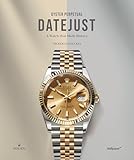
A specialist reference guide places the four-digit 1601 in production from 1959 to 1977. It describes a 36 mm case, fluted bezel, acrylic crystal with Cyclops magnifier, and automatic calibres 1565 or 1575. These are reference-guide specifications rather than details confirmed on the official Rolex pages cited here; individual watches may vary through replacement parts or later service.
What distinguishes the 1601 from the 1600 and 1603?
In the four-digit Datejust family, the bezel is the quickest distinction: the 1600 has a smooth bezel, the 1601 a fluted bezel, and the 1603 an engine-turned bezel. All belong to the same broad generation. The 1601’s defining visual feature is therefore not a unique case shape but the contrast of its fluted bezel with the generation’s characteristic dial and crystal.
Fratello’s vintage Datejust buying guide describes the four-digit generation’s tall acrylic crystal and pie-pan dial, whose perimeter slopes down from the center. The look gives the watch more dimensionality than the flatter dial of later models, though whether that is an advantage is a matter of taste.
Does the Datejust 1601 have a quickset date?
No. The 1601’s date is not independently quickset. To change it, advance the hands through midnight until the date moves. That is a small inconvenience when the watch is worn regularly, but it becomes more noticeable after the watch stops or sits unworn for several days.
Rank #2

- Imported
- Pre-Loved Condition: Very Good; Minor scratches and wear on case and band.
- Case Size/Width: 36mm, Watch Height: 12mm, Band Width: 20mm, Wrist circumference: 7.0"
- Band material: Stainless steel with 18k yellow gold.
- Case material: Stainless Steel
The reference guide and Fratello identify the 1565 and 1575 movements used in the 1601 as non-quickset. Rolex’s timeline places the introduction of calibre 3035 and an independently quickset date in the later Datejust generation of 1977. The guide reports 18,000 vibrations per hour for calibre 1565 and 19,800 for calibre 1575; it also says the 1575 gained hacking seconds around 1972. Those are technical specifications, not evidence by themselves of a particular watch’s accuracy or reliability.
How does the 1601 compare with a later Datejust?
Rolex introduced the five-digit generation in 1977. Fratello identifies the steel 16014 and two-tone 16013 as successors to the fluted-bezel 1601 line. The changes most relevant to a buyer are the later generation’s flat dial, quickset date and, for the 16014, sapphire crystal, as identified by the reference guide.
Rank #3

- Pre-Loved Condition: Very Good; Light scratching and wear throughout watch
- Length: , Height: , Depth:
- Made in Switzerland
- Oyster clasp closure
- Signature upon delivery required
| Feature | Datejust 1601 | Later 16014 |
|---|---|---|
| Bezel | Fluted | Fluted |
| Dial profile | Pie-pan, according to the reference guide and Fratello | Flat, according to Fratello |
| Crystal | Acrylic with Cyclops magnifier, according to the reference guide | Sapphire, according to the reference guide |
| Date setting | Not quickset; advance hands through midnight | Quickset, according to Fratello |
Choose the 1601 if its older dial and acrylic-crystal character matter more than fast date correction. A later model is the more practical fit if quickset adjustment or sapphire crystal is a priority. Neither is universally better; the choice depends on which trade-off suits your use.
What should you check before buying a 1601?
Condition and originality matter as much as the reference number. Vintage examples can have replacement or refinished parts, so photographs and a plausible-looking dial are not enough to establish originality. A specialist guide recommends examining the dial’s period consistency, the case shape and signs of polishing, bracelet condition, and documentation.
Rank #4

- Imported
- Pre-Loved Condition: Very Good; Scratches and minor wear on case and band.
- Case Size/Width: 26mm, Watch Height: 11mm, Band Width: 13mm, Wrist circumference: 5.5"
- Band material: Stainless steel with 18k yellow gold.
- Case material: Stainless Steel
- Dial: Look for consistency with the watch’s period, and ask whether the dial has been refinished or replaced.
- Case: Check that the shape and edges remain defined; extensive polishing can soften the original profile.
- Bracelet: Verify its condition and ask whether it is original to the watch. Jubilee bracelet construction changed over time, so a plausible appearance alone does not prove a match.
- Movement and service: Request service records and have the specific watch inspected by a qualified watchmaker. A listing that says a watch is running does not establish its accuracy or power reserve.
- Fit and accessories: The reference guide gives a 20 mm lug width. Confirm the individual watch’s measurement, spring bars and end-link fit before ordering a strap.
A Sotheby’s listing for a used 1975 example illustrates why that distinction matters: its condition report said the movement was running when catalogued, but accuracy and power reserve were not tested and future operation was not guaranteed. That single listing describes only that watch at that time; it does not establish typical performance or condition across 1601 examples.
Independent reader supportYour contribution helps us test, update, and keep practical guides available for everyone.Why the 1601 can still feel like the one to beat
The 1601’s appeal is the way its features work together: the fluted bezel adds definition, the pie-pan dial gives the face depth, and the acrylic crystal reinforces its period character. Its 36 mm case is the size reported by the reference guide, not a guarantee of how every example will wear; wrist fit depends on the individual watch and wearer. The non-quickset date is a real inconvenience, but also part of the older generation’s operating experience.
Quick wins for a faster PC:
Clear out junk files and repair common Windows errorsFree Scan →Fix the driver behind crashes, sound loss and screen glitchesFind Drivers →Best Value
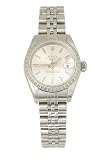
- Pre-Loved Condition: Very Good; Light scratching and scuffing throughout hardware
- Length: , Height: , Depth:
- Made in Switzerland
- Oyster clasp closure
- Signature upon delivery required
Calling it supreme is a judgment about that combination, not a claim that it outsells or objectively outperforms other references. If vintage design is the priority, the 1601 has a persuasive case. If daily convenience is the priority, the later quickset generation may be the better choice.
Quick Recap
Product prices and availability are accurate as of the date/time indicated and are subject to change. Any price and availability information displayed on Amazon at the time of purchase will apply.