Free tools Windows power users keep installed
One-click scans. No signup required.
XREAL One is a major improvement in wearable display glasses, but it is not the standalone, transparent AR computer the future-of-AR headlines suggest. Its built-in XREAL X1 chip handles native 3DoF spatial-screen processing, so the virtual display can remain stable as you move your head without an older Beam accessory. That makes One especially compelling for private movies, gaming, travel, and portable laptop work.
It still needs a connected device for content and power. Full 6DoF spatial anchoring requires the optional XREAL Eye camera module and usually the Beam Pro companion device. In practical terms, XREAL One is best understood as a refined tethered AR display system—and possibly the future of portable personal screens—not yet the future of fully transparent, standalone augmented reality.
What XREAL One actually is
There are four different products people often lump together as “AR glasses”:
- Wearable display glasses put a large virtual screen in front of your eyes.
- 3DoF spatial displays can keep that screen stable relative to your head’s rotation. Turn your head and the screen can remain positioned rather than moving exactly with your gaze.
- 6DoF mixed-reality systems track movement through space, allowing virtual content to remain attached to a physical location as you walk around.
- Standalone AR glasses contain their own battery, processor, operating system, sensors, wireless connectivity, and app environment.
XREAL One primarily belongs in the second category. It is a pair of tethered display glasses with native 3DoF processing, not a self-contained computer and not a full room-aware mixed-reality headset.
#1 Best Overall

- XREAL's Self-Developed X1 Spatial Computing Chip: Delivers Native 3DoF tracking with ultra-low 3ms M2P latency, ensuring stable visuals even during rapid movements. With the optional XREAL Eye, full 6DoF spatial anchoring. It delivers high processing power, seamless compatibility with devices, and distortion-free visuals through advanced stabilization.
- The New Optic Engine-X-Prism Optics: XREAL’s advanced lens and projection system—ultra-slim, precision-engineered optics that project a large, sharp virtual screen right in front of your eyes, while still letting you see your real surroundings clearly. With a best-in-class 57° FOV, Optic Engine 4.0 recreates the feeling of watching a massive 171-inch screen from four meters away—all in lightweight, compact design. Its advanced anti-glare design minimizes reflections and light interference, enhancing clarity and immersion.
- Experience True AR with 6 DoF, Spatial Anchor Anytime: Pairing with XREAL Eye, anchor your screen anywhere in your room, so it stays perfectly fixed in place—even as you walk around, lean in, or change your position. Unlike 3DoF, which keeps the screen at a constant distance relative to your head movements, 6DoF keeps your virtual screen locked to a real spot in your space for true spatial freedom and a more natural, immersive AR experience.
- REAL 3D – Turn everything you watch into an immersive 3D experience: REAL 3D Now Available on All One Series Glasses, instantly transforming all your content—from games and movies to apps and photos—into true 3D with a single switch. Experience richer depth and lifelike visuals across everything you watch or play.
- 57°FOV, 171'' Spatial Screen – More Immersive Visual Experience: Experience a virtual screen starting at 171 inches wide, filling your view with blockbuster visuals, thanks to XREAL’s advanced optics and industry-leading 57° FOV. Powered by Sony’s 0.55' Micro-OLED display technology and a smooth 120Hz refresh rate, get swept into your games or movies with immersion that rivals traditional home theaters—without the size, setup, or space concerns.
The front electrochromic lenses can reduce the visibility of the outside world, while the wearer can still see through the glasses when the dimming is reduced. But the main experience is a virtual screen floating in front of you—not convincing holographic objects mapped throughout a room.
Why the built-in XREAL X1 chip matters
The central change is that XREAL has moved basic spatial-screen processing into the glasses. The company describes the X1 as a self-developed spatial-computing chip and presents native 3DoF as a defining One-series feature in its launch announcement.
In practical use, this means you can position or stabilize a virtual screen without needing the older Beam accessory just to provide that basic function. There are fewer components between a compatible laptop, phone, handheld, or console and the display in front of your eyes.
That does not mean the glasses are standalone. The X1 handles spatial display functions, but the connected device still supplies the video source and, in most setups, power. Apps and content also come from the attached source unless you add a Beam Pro.
What’s actually slowing this PC down?
Pick the symptom - the matching free tool is one click away.
The distinction is important: XREAL One reduces accessory dependence for a spatial display; it does not turn the glasses into a general-purpose AR computer.
Specifications and what they mean
The following are manufacturer-listed specifications for XREAL One, rather than independent laboratory measurements:
| Feature | XREAL One |
|---|---|
| Resolution | 1,920 × 1,080 per eye |
| Maximum refresh rate | 120Hz |
| Field of view | 50° |
| Listed brightness | 600 nits |
| Dimming | Three-mode electrochromic dimming |
| Optics | Birdbath optics |
| Display | Sony 0.68-inch Micro-OLED |
| Weight | 82g |
| Spatial modes | Native 3DoF; 6DoF with XREAL Eye |
| Audio | Sound by Bose |
XREAL also lists 100% UV protection and TÜV Rheinland certifications on the official product page. Those are product claims and certifications, not a reason to treat the glasses as medical eye-protection equipment.
Several headline numbers need context:
- 600 nits is not directly comparable to the brightness of a conventional television or phone viewed in the same way. The optics, dimming, ambient light, and perceived contrast all affect the result.
- 120Hz is a maximum. The actual refresh rate depends on the source, connection, resolution, and mode.
- A quoted virtual screen size such as 310 inches describes an apparent-image comparison. It is not a literal physical screen occupying 310 inches of space.
- A 50° field of view is generous for consumer display glasses, but it does not fill your entire visual field. You can still see around the virtual image.
Is XREAL One really augmented reality?
Yes, in the broad product-category sense used by XREAL—but “AR glasses” can imply more than One delivers by itself.
Quick wins for a faster PC:
Scan for outdated or missing drivers - takes under a minuteDriver Scan →Clear out junk files and repair common Windows errorsFree Scan →Fix the driver behind crashes, sound loss and screen glitchesFind Drivers →With the base glasses, you see the outside world through the lenses and a virtual screen in front of it. Native 3DoF lets that screen respond to head rotation and appear less like an image permanently glued to your face.
What One does not provide on its own is full room-aware placement. The base model cannot independently understand where walls, tables, and objects are so that virtual content remains fixed to a physical spot as you move around.
Rank #2
- XREAL's Self-Developed X1 Spatial Computing Chip: Delivers Native 3DoF tracking with ultra-low 3ms M2P latency, ensuring stable visuals even during rapid movements. With the optional XREAL Eye, full 6DoF spatial anchoring. It delivers high processing power, seamless compatibility with devices, and distortion-free visuals through advanced stabilization.
- The New Optic Engine-X-Prism Optics: XREAL’s advanced lens and projection system—ultra-slim, precision-engineered optics that project a large, sharp virtual screen right in front of your eyes, while still letting you see your real surroundings clearly. With a best-in-class 57° FOV, Optic Engine 4.0 recreates the feeling of watching a massive 171-inch screen from four meters away—all in lightweight, compact design. Its advanced anti-glare design minimizes reflections and light interference, enhancing clarity and immersion.
- Experience True AR with 6 DoF, Spatial Anchor Anytime: Pairing with XREAL Eye, anchor your screen anywhere in your room, so it stays perfectly fixed in place—even as you walk around, lean in, or change your position. Unlike 3DoF, which keeps the screen at a constant distance relative to your head movements, 6DoF keeps your virtual screen locked to a real spot in your space for true spatial freedom and a more natural, immersive AR experience.
- REAL 3D – Turn everything you watch into an immersive 3D experience: REAL 3D Now Available on All One Series Glasses, instantly transforming all your content—from games and movies to apps and photos—into true 3D with a single switch. Experience richer depth and lifelike visuals across everything you watch or play.
- 57°FOV, 171'' Spatial Screen – More Immersive Visual Experience: Experience a virtual screen starting at 171 inches wide, filling your view with blockbuster visuals, thanks to XREAL’s advanced optics and industry-leading 57° FOV. Powered by Sony’s 0.55' Micro-OLED display technology and a smooth 120Hz refresh rate, get swept into your games or movies with immersion that rivals traditional home theaters—without the size, setup, or space concerns.
For that, XREAL offers the optional XREAL Eye camera module. Paired with Beam Pro, Eye is marketed as a 6DoF accessory for spatial anchoring and first-person photo or video capture. That is an upgrade path toward a more complete spatial experience, not a feature that makes the base glasses a standalone mixed-reality headset.
Movies, gaming, and work
Movies and private entertainment
This is the clearest reason to buy XREAL One. The glasses can give you a large private image on an airplane, train, hotel room, bedroom, or shared living space without carrying a portable monitor or occupying the television.
They are also useful when someone else is using the room’s display. The image is personal, the glasses are relatively portable, and the 3DoF modes can make longer viewing more comfortable than a screen that moves with every small head movement.
You still need a compatible source, a cable, and enough power. Streaming convenience improves substantially when Beam Pro is added, because it supplies a more complete app and media environment instead of forcing every session through a phone or laptop.
Gaming
XREAL One’s large private image and maximum 120Hz refresh rate make it appealing for handheld gaming. A Steam Deck or similar device can become a much larger personal display, provided its USB-C connection supports video output and sufficient power.
Consoles are possible, but usually require more planning. PlayStation, Xbox, and Nintendo Switch setups may need an HDMI-to-USB-C solution, a hub, or Beam Pro. Video and audio behavior depends on the entire chain, so the glasses should not be treated as a universal plug-and-play console accessory.
The Tool Desk
Outbyte PC Repair FREEClear out junk files and repair common Windows errorsFree Scan →Outbyte Driver Updater FREEScan for outdated or missing drivers - takes under a minuteDriver Scan →The glasses are not a substitute for a room-scale VR headset. They give you a private display rather than a fully immersive 3D environment, and the wired connection remains part of the experience.
Laptop productivity
For travel, XREAL One can function like a large private monitor without the bulk of a portable screen. Spatial or ultrawide modes can be useful in a cramped seat, hotel room, or temporary workspace.
Productivity has more caveats than entertainment. A wide virtual workspace may extend beyond the most comfortable visible area, and fine text depends on scaling, eye alignment, prescription correction, and the quality of the computer connection. Multiple virtual monitors may require compatible software, a suitable computer, or Beam Pro; they will not work identically from every source.
At 82g, One is also considerably heavier than ordinary eyeglasses. Some people will be comfortable for long sessions, while others will notice pressure from the nose pads, cable routing, face shape, or prescription inserts. It is best considered a portable monitor you wear, not a normal pair of glasses for an entire workday.
PC Slower Than It Used to Be?
A free scan shows the junk files, broken settings and background clutter dragging Windows down - then fixes them in one click.Free scan · Windows 10 & 11Crashes, No Sound, or Screen Glitches?
Random freezes, missing sound and display glitches usually trace back to one bad driver. Find and replace yours safely.Free scan · under a minuteRank #3
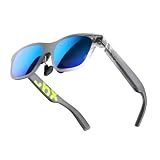
- YOUR PRIVATE 147” BIG SCREEN, ANYWHERE — Plug the a01+ into your phone, tablet, handheld, or laptop and a giant 147” screen appears in front of you—for movies, gaming, or getting work done on the couch, on a flight, or in bed. A true portable display you wear, in a soda-can-sized 210g case that drops in your pocket.
- ALWAYS RIGHT IN FRONT OF YOU — The screen follows your view with smooth, stabilized tracking and stays centered as you look around—nothing to anchor or set up, and no drift to reset. Press play and your big screen is simply there.
- 62G — LIGHT ENOUGH TO FORGET — At just 62g, with three nose-pad sizes and flexible temples, the a01+ stays comfortable through a long movie or flight, even lying down.
- LOOKS LIKE SUNGLASSES, NOT A GADGET — A slim, sunglasses-style frame with a signature semi-transparent chassis and neon logo—light and low-profile enough to actually wear out.
- WORKS WITH YOUR USB-C GEAR — No Battery to Charge — Connects and powers over a single USB-C DisplayPort cable: iPhone 15/16/17, iPad, DP-capable Android phones, Steam Deck, ROG Ally, Mac and PC. Nintendo Switch/Switch 2 and older (Lightning) iPhones need an adapter. For long phone sessions, add the XREAL Hub to charge and watch at once.
Compatibility: what you need to check
XREAL’s connection documentation identifies smartphones, tablets, computers, handheld gaming devices, and consoles as possible sources. Compatibility depends on the exact device, however—not simply on whether it has a USB-C socket.
Before buying, verify all four requirements:
- Video output: the USB-C port must support DisplayPort Alt Mode or another compatible video-output method.
- Power: the source must provide enough power, or the setup must include a hub or other power solution.
- Cable and adapter: the connection must carry the required video and power signals.
- Device-specific support: operating-system behavior, app support, and adapter requirements vary by phone, console, and computer model.
Typical setups
- USB-C laptop or tablet: usually the simplest arrangement, assuming the port supports DisplayPort video.
- Compatible Android phone: can work directly when the phone supports the required video output and power.
- iPhone: commonly requires an appropriate adapter, hub, or Beam Pro rather than a simple direct USB-C assumption.
- Steam Deck and similar handhelds: generally attractive use cases, but battery drain and simultaneous charging may require a hub.
- PlayStation, Xbox, or Switch: HDMI output means an appropriate HDMI-to-USB-C solution or Beam/Beam Pro setup is normally needed.
- Mac or Windows computer: useful for a single large display and, depending on software and connection method, ultrawide or multi-monitor workflows.
A USB-C connector alone is not a compatibility guarantee. Check the exact model before ordering.
Beam Pro: optional for display, valuable for the ecosystem
XREAL Beam Pro is not required for every basic XREAL One setup. If you only want to connect the glasses to a compatible laptop, phone, or handheld, One can serve as a display accessory on its own.
Beam Pro becomes more useful when you want:
- Android apps through Google Play;
- spatial browsing and app use;
- streaming without depending on a phone;
- a dedicated companion computer for XREAL content;
- a more complete spatial-media experience;
- the broader 6DoF-related capabilities of an XREAL Eye and Beam Pro combination.
The practical distinction is:
- One alone: a compact spatial display for an existing device.
- One plus Beam Pro: a more self-contained portable media and app system.
- One plus Eye plus Beam Pro: the fullest One-series spatial setup, including camera-assisted 6DoF-related features.
Beam Pro adds convenience and capability, but it does not make the glasses wireless or fully independent in the way a standalone headset is.
What XREAL Eye adds
XREAL lists Eye at $99 in its US shop and markets it as a camera module for One-series 6DoF spatial anchoring and first-person capture. It is the accessory to consider if a stable 3DoF screen is not enough.
The trade-offs are significant:
- It adds cost and another component to carry.
- It introduces a camera and therefore additional privacy considerations.
- It still does not remove the need for a connected computing device.
- It should not automatically be equated with the environmental understanding of a high-end mixed-reality headset.
Camera use may be inappropriate in workplaces, schools, transport, private spaces, or venues with recording restrictions. Treat Eye as a real camera accessory, not an invisible software upgrade.
XREAL One versus One Pro
| Feature | XREAL One | XREAL One Pro |
|---|---|---|
| US shop price observed | $399 | $599 |
| Field of view | 50° | 57° |
| Listed brightness | 600 nits | 700 nits |
| Optics | Birdbath | X Prism |
| IPD approach | Software-based adjustment | Two physical IPD sizes |
| Weight | 82g | 87g |
| Spatial processing | XREAL X1 | XREAL X1 |
| 6DoF | Requires XREAL Eye | Requires XREAL Eye |
According to XREAL’s One Pro product page, the Pro model adds a wider field of view, brighter listed display, X Prism optics, improved reflection control, a thinner front frame, and physical IPD options.
Choose One for the better value if you mainly want a private screen for media, travel, gaming, or occasional work.
Choose One Pro if reflections, field of view, or optical fit are particularly important and the extra $200 is acceptable. It remains the same broad product category: tethered display glasses with native 3DoF, not a standalone headset.
Independent reader supportYour contribution helps us test, update, and keep practical guides available for everyone.What about XREAL 1S?
XREAL’s US shop lists the 1S at $449, although current promotions and stock can change. Because the available official material does not provide a complete, directly comparable 1S specification table here, buyers should check the live product page rather than assuming every One feature carries over identically.
Rank #4

- Giant Virtual Screen – Immersive Theater Anywhere: Step into a breathtaking virtual screen up to 500 inches, transforming movies, games, and apps into larger‑than‑life experiences. Whether you’re commuting, flying, or unwinding at home, your personal cinema travels with you—bringing immersive entertainment wherever life goes.
- Premium Display Quality – Smooth, Sharp, and True-to-Life: XREAL 1S delivers ultra‑smooth viewing with a 120Hz refresh rate in 3DoF mode and a 90Hz global refresh that eliminates flicker and blur. Every unit is individually color‑tuned for precise, natural hues. The redesigned optical engine boosts clarity by 9%, delivering crisp detail from center to edge. Advanced optical alignment ensures each image point locks perfectly to your eye, keeping visuals sharp, vivid, and lifelike.
- Spatial Viewing Modes – Work, Watch, and Play on Your Terms: Shape your environment with XREAL 1S. Effortlessly switch between 0DoF follow mode, 3DoF anchor mode, Ultrawide Mode (32:9 or 21:9), Real 3D Mode, and Side-View Mode — ideal for both deep focus and entertainment. Pair with XREAL Eye to unlock 6DoF spatial anchoring, allowing for total freedom of movement while your screen stays pinned.
- Native 3DoF Spatial Screen – Plug & Play Freedom: XREAL 1S brings your AR experience to life with native 3DoF spatial viewing powered by the X1 chip. No apps, no setup — simply connect to any USB‑C DP‑enabled device and step straight into expansive spatial content. With rock‑solid stability and smooth head tracking, every session feels natural and comfortable, free from motion sickness and distractions, keeping you fully immersed.
- REAL 3D – Instant Spatial Depth for Everything You Watch: XREAL 1S debuts the world’s first on‑glasses REAL 3D spatial technology, instantly transforming all your content—from games and movies to apps and photos—into true 3D with a single switch. Experience richer depth and lifelike visuals across everything you watch or play, supported at up to 30fps with just 90–100ms latency for smooth, natural viewing.
Compare:
- the current sale price rather than launch MSRP;
- field of view and display characteristics;
- which spatial functions are included;
- prescription-lens compatibility;
- stock in your country;
- whether the more established One feature set is worth the price difference.
At the observed US prices, a discounted XREAL One may be the more logical purchase than a 1S listed at a higher price, but that conclusion depends on the live promotion and the exact specifications available when you buy.
Cheaper alternatives
If your goal is simply a private large screen, you may not need the One-series spatial-processing platform. XREAL’s US catalog has included these lower-cost routes:
Recommended Free Tools
- XREAL xbx a01+: listed at $299 on sale from $359, positioned as a simpler display-glasses option.
- XREAL Air 2: listed at $199 from $249.
- Refurbished XREAL Air 2 Pro: listed at $199 from $299.
These models may make sense for movies and basic monitor use, but do not assume they provide the same stabilization, latency, field of view, or spatial modes as XREAL One without checking their current documentation. The relevant catalog links are XREAL’s accessories collection and all-products catalog.
A standalone headset such as Meta Quest 3 is a different alternative rather than a direct replacement. It offers broader VR and mixed-reality capabilities, but is heavier, less glasses-like, and less convenient when the main goal is an ordinary portable external monitor.
The hidden cost of the complete setup
Observed US prices in XREAL’s shop include:
- XREAL One: $399, shown against a $499 reference price.
- XREAL One Pro: $599, shown against $649.
- Beam Pro: from $199.
- XREAL Eye: $99.
- XREAL Hub: $39.99.
That means an Eye-plus-Beam-Pro upgrade adds $298 before prescription lenses, adapters, or a charging hub. The One plus Beam Pro bundle has been listed from $648.
Prices, promotions, stock, and regional availability change. The US One page has shown both a $399 price and a “notify me when available” message, so confirm availability for your country before treating the listed price as an immediately orderable deal.
Do these 3 things before closing this tab:
1Repair Windows errors before they cause bigger problems2Fix the driver behind crashes, sound loss and screen glitches3Clear out junk files and repair common Windows errorsPrescription support
XREAL says Air and Air 2 prescription lenses are not compatible with the One series. You need One-series prescription lenses or a compatible third-party service. XREAL’s US shop has listed One/1S prescription lenses from $49.90, but the final cost depends on the prescription and ordering process. Do not assume an existing Air or Air 2 insert will transfer.
Who should buy XREAL One?
- You want a private big-screen experience for travel, movies, or gaming.
- You use a compatible USB-C laptop, tablet, phone, or handheld.
- You value head-stable 3DoF display positioning.
- You want a portable monitor without carrying a conventional screen.
- You accept a wired setup and understand that Beam Pro and Eye are optional upgrades.
Who should choose One Pro?
- You are particularly sensitive to reflections.
- You want the wider 57° field of view.
- Your eye spacing is better served by the available physical IPD options.
- You want XREAL’s stronger optical package and are willing to pay the premium.
Who should choose something cheaper?
Choose a less expensive display model if your main requirement is a virtual movie screen or monitor and you do not need native One-series spatial processing. Air 2, refurbished Air 2 Pro, or another simpler XREAL model can be more sensible around the $200–$300 range, subject to current specifications, stock, warranty, and compatibility.
Who should avoid XREAL One?
- Anyone expecting a standalone wireless computer.
- Anyone wanting full-time transparent AR overlays across a room.
- Anyone who requires a built-in camera.
- Anyone who strongly dislikes cables.
- Anyone seeking ordinary glasses for all-day public wear.
- Anyone assuming every USB-C phone, tablet, or computer will work.
- Anyone wanting room-scale VR or advanced environmental tracking from the base glasses alone.
Final verdict
XREAL One is probably the future of portable personal screens. The X1 chip makes a real practical difference by putting native 3DoF spatial processing into the glasses, reducing the need for an external accessory during ordinary display use. The result is a convincing private screen for travel, entertainment, gaming, and selected productivity tasks.
But it is not yet the future of transparent, standalone augmented reality. It has no independent battery, general-purpose operating system, or complete app environment in the glasses. Full 6DoF requires Eye and usually Beam Pro, while the entire setup remains tethered to external hardware.
Buy XREAL One if you want the best value in this kind of wearable monitor and are comfortable with those limits. Choose One Pro for better optics and fit, or a cheaper Air-series model if a private screen is all you need. The headline is defensible only when “the future” means better wearable displays—not the science-fiction version of AR glasses.
Quick Recap
Product prices and availability are accurate as of the date/time indicated and are subject to change. Any price and availability information displayed on Amazon at the time of purchase will apply.