What’s actually slowing this PC down?
Pick the symptom - the matching free tool is one click away.
From the 1963 Cosmograph Daytona to the 1988 Daytona redesign, Rolex’s watches of this period were shaped by distinct uses: endurance racing, deep-sea diving, travel and exploration. The years also brought changes within established lines, including deeper-rated Submariner Date and Sea-Dweller models, and the introduction of 904L-family steel in Rolex cases.
1963: The Cosmograph Daytona puts racing in focus
Rolex dates the Cosmograph’s launch to 1963, describing it as a new-generation chronograph for endurance-racing drivers. Its tachymetric bezel was designed to help calculate average speed, giving the watch a function tied directly to motor racing rather than simply another way to display the time. Rolex’s historical account places the Daytona at the start of this period’s sequence of watches designed around professional settings.


1967–1979: Rolex develops its professional dive watches
Sea-Dweller: built for deep-sea work
Rolex says it introduced the Sea-Dweller in 1967 for professional deep-sea divers. At launch, the model was rated waterproof to 610 metres (2,000 feet), according to Rolex. Its helium escape valve addressed a particular part of professional diving: helium from breathing mixtures used in hyperbaric chambers could build up inside a watch and escape during decompression. The launch rating is specific to the Sea-Dweller as described in Rolex’s historical account, not a rating for every later version. Rolex’s history of the model explains its purpose and launch specification.
Sea-Dweller 4000: a later, deeper-rated model
Rolex dates the Sea-Dweller 4000 to 1978 and gives it a depth rating of 1,220 metres (4,000 feet). That is a later model and specification than the original Sea-Dweller’s 1967 rating; the figures should not be treated as interchangeable. Rolex’s historical timeline records the Sea-Dweller 4000 launch.
#1 Best Overall
Submariner Date: date display and a higher rating
Rolex’s Oyster Story dates the date-equipped Submariner to 1969. The initial stated depth rating was 200 metres; Rolex says it increased to 300 metres in 1979. These figures describe the model’s historical progression, not every Submariner reference. Rolex’s Oyster Story provides the launch date and rating history.
1971: The Explorer II and the Comex relationship
Explorer II: reading a 24-hour indication
Rolex presented the Explorer II in 1971 for polar explorers, speleologists and others pushing the boundaries of exploration. Its 24-hour hand could help distinguish day from night in places where sunlight was absent, such as caves or polar conditions. Rolex’s description captures the intended audience: “Rolex presented the Explorer II, dedicated to polar explorers, speleologists, and all those pushing the boundaries of exploration.” The brand’s 1971–1992 history gives that purpose and wording.
Rank #2
Comex: Sea-Dwellers in deep-diving work
Rolex also dates the establishment of a preferential relationship with the French diving company Comex to 1971. The brand says Comex divers wore Rolex Sea-Dwellers while working at great depths. This was a professional relationship associated with the Sea-Dweller’s diving role, distinct from the Explorer II’s exploration-focused 24-hour display. Rolex’s timeline records the relationship.
1982–1983: The GMT-Master II changes time-zone adjustment
Rolex’s Oyster Story says the GMT-Master II was unveiled in 1982 as the successor to the GMT-Master. A secondary account identifies the 1983 reference 16760 as introducing an independently adjustable hour hand. Adjusting that hand made it easier to set local time while retaining the other time display; in combination with the bezel, the arrangement could support reading a third time zone. The mechanism detail is reported by Fratello’s feature; the 1982 unveiling date comes from Rolex’s Oyster Story.
Quick wins for a faster PC:
Scan for outdated or missing drivers - takes under a minuteDriver Scan →Repair Windows errors before they cause bigger problemsFix Now →Fix the driver behind crashes, sound loss and screen glitchesFind Drivers →1985: Rolex adopts 904L-family steel for cases
Rolex says it became the first watchmaking brand to use steel from the 904L family for watch cases in 1985. The company describes the alloy family as corrosion-resistant and later named its version Oystersteel in 2018. The 2018 name is useful context for the material, but the milestone in this period is the reported 1985 adoption. Rolex’s historical account states: “In 1985, Rolex became the first watchmaking brand to use this steel from the 904L family for its cases.”
1988: The Daytona receives a major redesign
A Fratello feature reports that the 1988 Daytona reference 16520 brought a larger 40 mm case, a sapphire crystal and the automatic caliber 4030, based on Zenith’s El Primero. These are reference-specific details from secondary reporting; Rolex’s historical timeline sources do not substantiate them. The redesign marks the endpoint of this history, rather than a claim about all Daytona models. Fratello’s feature on the Daytona covers the reference.
Rank #4
How these Rolex models differed
| Model or milestone | Intended task | Period-specific function or specification |
|---|---|---|
| Cosmograph Daytona (1963) | Endurance racing | Chronograph and tachymetric bezel for calculating average speed, per Rolex [Rolex history]. |
| Sea-Dweller (1967) | Professional deep-sea diving | Helium escape valve; launch rating of 610 metres (2,000 feet), per Rolex [Rolex history]. |
| Submariner Date (1969) | Diving | Date display; 200-metre initial rating, raised to 300 metres in 1979, per Rolex Oyster Story. |
| Explorer II (1971) | Exploration, including polar and cave environments | 24-hour hand to help distinguish day from night, per Rolex historical timeline. |
| Sea-Dweller 4000 (1978) | Professional deep-sea diving | 1,220-metre (4,000-foot) rating, per Rolex historical timeline. |
| GMT-Master II (1982; reference 16760 detail from 1983) | Travel and time-zone reading | Independently adjustable hour hand on reference 16760, as reported by Fratello; unveiling date from Rolex. |
| Daytona reference 16520 (1988) | Chronograph use | 40 mm case, sapphire crystal and caliber 4030 based on Zenith’s El Primero, as reported by Fratello. |
The specifications belong to particular models and points in time. They illustrate how Rolex’s lineup addressed different tasks, not a single ranking of which watch was best.
Quick Recap
Best Value
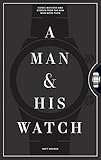
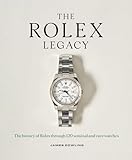
- Book - a man and his watch: iconic watches and stories from the men who wore them
- Language: english
- Binding: hardcover
Product prices and availability are accurate as of the date/time indicated and are subject to change. Any price and availability information displayed on Amazon at the time of purchase will apply.
The Tool Desk
Outbyte Driver Updater FREEScan for outdated or missing drivers - takes under a minuteDriver Scan →Outbyte PC Repair FREEClear out junk files and repair common Windows errorsFree Scan →