Apple Watch became a must-have wearable by changing what the watch was for. Announced in 2014 as a highly personal extension of the iPhone, it gradually became a fitness companion, an independent cellular communicator, a health-and-safety device, and—through the Ultra line—a rugged computer for endurance sports, navigation, and diving. The history is less about annual specification bumps than about that change in purpose.
Apple Watch did not become a must-have wearable in a single launch. It changed jobs over time. The first model was primarily an intimate iPhone companion: a personalized timepiece for notifications, Apple Pay, quick communication, and activity rings. GPS made it more useful for exercise, cellular made it less dependent on the phone, and the ECG and fall-detection features turned it into a health-and-safety device. The Ultra family then widened the audience again with rugged hardware, longer battery life, navigation, diving features, and satellite communication.

That is the most useful way to understand Apple Watch history. The story is not simply a list of faster processors and brighter screens. It is the gradual transformation of a fashionable wrist accessory into an increasingly independent computer for communication, fitness, health information, personal safety, and outdoor adventure.
The phrase must-have is ultimately a judgment, not a universal fact. Apple Watch still requires an iPhone for setup and some functions, and many health features depend on the model, software, region, and regulatory authorization. But its evolution explains why the product became far more consequential than an ordinary notification screen.
Do these 3 things before closing this tab:
1Repair Windows errors before they cause bigger problems2Fix the driver behind crashes, sound loss and screen glitches3Clear out junk files and repair common Windows errors#1 Best Overall

- Watch JIU
Apple Watch history at a glance
| Period | What Apple Watch primarily did | The turning point |
|---|---|---|
| 2014–2015 | Extended the iPhone to the wrist | Personalization, glanceable information, notifications, Apple Pay, and Activity tracking |
| 2016–2017 | Became a more capable fitness and communication device | Built-in GPS, swimming support, and cellular connectivity |
| 2018–2020 | Became a health-and-safety platform | ECG, irregular-rhythm notifications, fall detection, sleep tracking, and Family Setup |
| 2021–2022 | Improved everyday usability and split into mainstream and adventure tiers | Larger displays, faster charging, Series 8 safety features, and Apple Watch Ultra |
| 2023–2025 | Added software intelligence and more specialized health, fitness, and off-grid functions | Smart Stack, Training Load, Vitals, sleep-apnea and hypertension insights, 5G, and satellite communication |
2014–2015: Apple Watch starts as an iPhone companion
The 2014 announcement established the product philosophy
Apple unveiled Apple Watch on September 9, 2014. Rather than presenting it as only a smartwatch or fitness tracker, Apple described it as its most personal device. The product combined traditional watchmaking cues with a Digital Crown, a Taptic Engine, wrist-based communication, health and fitness apps, Apple Pay, and a watch-specific developer platform.
The original lineup was divided into Apple Watch, Apple Watch Sport, and Apple Watch Edition collections. Buyers could choose 38mm or 42mm cases and personalize the device with a wide range of materials and bands. That broad positioning was strategically important. The Sport collection made the product approachable to mainstream and fitness-oriented buyers, while the Edition collection gave Apple Watch a luxury-adjacent identity. Apple was testing whether one platform could function as a personal computer, a piece of jewelry, and a mass-market activity device.
Personalization was not merely cosmetic. A watch is worn continuously, so case material, size, color, and band affect whether it feels like part of the wearer’s identity. The original Apple Watch therefore looked less like a small phone on a strap and more like a new category of personal object.
The April 2015 launch revealed the first model’s limits
Apple Watch became available on April 24, 2015, initially in nine countries, including the United States, United Kingdom, China, Japan, Australia, Canada, France, Germany, and Hong Kong. Apple emphasized glanceable information, notifications, third-party wrist apps, Activity rings, Workout tracking, heart-rate sensing, Apple Pay, and advertised all-day battery life of up to 18 hours.
Recommended Free Tools
The first generation depended heavily on a paired iPhone. Its GPS and Wi-Fi assistance were tied substantially to that relationship, and the watch was best understood as a low-friction remote interface rather than a fully independent phone replacement. That limitation did not make the first Apple Watch historically unimportant. It established the interaction model that would define the platform:
- Feel a haptic cue instead of hearing a phone alert.
- Raise the wrist for information that can be understood quickly.
- Respond to a message or call without reaching for the phone.
- Use activity feedback to create a small, repeatable motivation loop.
The first model’s lasting contribution was not independence. It was proving that a wrist computer could be useful when it did less than a smartphone, provided that it did those smaller tasks with less friction.
2016–2017: GPS, swimming, and cellular make the watch practical
Series 2 moves Apple Watch toward independent fitness
Apple Watch Series 2, introduced on September 7, 2016, addressed several of the original model’s practical weaknesses. It added a brighter display, built-in GPS, and water resistance suitable for swimming.
Built-in GPS mattered because outdoor workouts no longer had to depend as heavily on the iPhone for location data. A runner could leave the phone behind and still record a route, while swimmers gained a watch designed to remain useful in the water. These changes moved Apple Watch from an activity recorder assisted by a phone toward a credible dedicated fitness device.
Outdated Drivers Are Slowing You Down
One free scan finds every outdated or missing driver and matches the right update for your exact hardware.Free scan · exact hardware matchPC Slower Than It Used to Be?
A free scan shows the junk files, broken settings and background clutter dragging Windows down - then fixes them in one click.Free scan · Windows 10 & 11Apple also expanded the ecosystem through Apple Watch Nike+. The significance was larger than the branding exercise itself: Apple Watch could be adapted for a particular community without losing the common watchOS foundation. Fitness users could see the product as more than a general-purpose accessory.
Series 3 gives the watch a phone connection of its own
Series 3, introduced in 2017, added built-in LTE and UMTS cellular connectivity in supported configurations. With a compatible carrier arrangement and coverage, users could make calls, receive messages, stream music, and stay connected when the iPhone was not nearby. The model also brought a faster dual-core processor, a W2 wireless chip, a barometric altimeter, and watchOS 4.
Cellular changed the social meaning of Apple Watch. GPS had made the watch more independent for exercise; cellular made it more independent for communication. Running, swimming, errands, and other situations where carrying a phone was inconvenient became more convincing use cases.
Cellular was never a universal promise that every Apple Watch could work everywhere without an iPhone. Availability depended on the model, carrier, region, and service arrangement. Nevertheless, Series 3 established a crucial direction: Apple Watch was no longer only a remote screen for the iPhone. In the right configuration, it could function as a communications device in its own right.
2018–2020: health and safety become central
Series 4 is the strategic pivot
Apple Watch Series 4, introduced in 2018, was the clearest turning point in the product’s history. It received a redesigned case with a display more than 30 percent larger, thinner borders, a new electrical heart sensor, the ECG app, and fall detection.
The ECG app used the electrical heart sensor to create a single-lead recording. Apple described results that could classify a rhythm as atrial fibrillation, sinus rhythm, or inconclusive. In the United States, the ECG app and irregular-rhythm notifications became available in December 2018 through watchOS 5.1.2. Availability in other locations depended on regulatory authorization and software support.
ECG was a major change in the product’s purpose. Activity rings told users how much they had moved. An ECG could provide information about heart rhythm that might prompt a conversation with a clinician. That distinction also requires careful wording: the feature is not a substitute for medical diagnosis, and an Apple Watch should not be presented as a universal medical device.
Fall detection extended the same idea into personal safety. The watch used motion sensors and algorithms to identify a hard fall. If the wearer remained immobile after an alert, it could automatically contact emergency services under the specified conditions. It was an important safety aid, but not a guarantee of detection, contact, rescue, or a particular medical outcome.
Free tools Windows power users keep installed
One-click scans. No signup required.
Series 4 made health and safety central reasons to own an Apple Watch rather than secondary benefits attached to a notification device. The larger display and redesigned case helped, but the strategic message was more important than the industrial design: the watch could watch over its wearer as well as display information.
Rank #2
Series 5 makes Apple Watch feel more like a watch
Series 5, introduced in 2019, added an Always-On Retina display. The screen could remain visible while dimming when the wrist was down, preserving the basic watch function without requiring a wrist raise. That reduced friction when checking the time, reading a workout metric, or glancing at an active timer.
Series 5 also added a built-in compass, elevation information, and international emergency calling. watchOS 6 introduced Cycle Tracking, the Noise app, and Activity Trends. These features broadened the product’s usefulness without requiring a completely new physical identity.
The importance of Series 5 was therefore experiential. Apple Watch became less like a screen that had to be deliberately activated and more like a conventional watch that happened to contain a computer. The always-on display also exposed a lasting wearable constraint: the best screen is not useful if it demands too much battery, weight, or attention.
Series 6 adds Blood Oxygen; SE creates a clearer price ladder
Apple Watch Series 6 added a Blood Oxygen sensor and app, a faster S6 system-in-package, and an always-on altimeter. Blood Oxygen was positioned as a wellness and fitness insight, not a medical diagnosis.
There is an especially important United States qualification. Apple Support states that, for certain U.S. models purchased on or after January 18, 2024, Blood Oxygen data analysis is performed on the paired iPhone, with results viewed in the Health app. That means the presence of a Blood Oxygen-related feature in a model’s technical history does not by itself tell a buyer exactly how the feature works or whether the same experience is available in every market.
watchOS 7 added Family Setup, sleep tracking, automatic handwashing detection, new workouts, and watch-face sharing. These software additions showed how Apple could expand the watch without changing its case every year. Family Setup also helped Apple Watch serve people who did not use the watch in exactly the same way as the iPhone owner who configured it, although an iPhone remained part of the setup and management relationship.
Apple Watch SE arrived during the same product cycle as a lower-cost entry point. It preserved the familiar design and core safety functions while omitting some premium sensors. This created the portfolio structure that would become increasingly clear: an affordable SE tier, a mainstream flagship Series tier, and eventually a high-end Ultra tier.
2021–2022: bigger displays, faster charging, and the Ultra split
Series 7 improves the everyday experience without changing the basic shape
Series 7, introduced in 2021, brought nearly 20 percent more screen area, borders as thin as 1.7mm, a more crack-resistant front crystal, IP6X dust resistance, WR50 water resistance, and 33 percent faster charging.
This was a characteristic wearable upgrade: more usable display without a radical increase in case dimensions. More screen area made text, buttons, watch faces, and workout metrics easier to read while preserving the established wrist-friendly form. Faster charging addressed one of the recurring compromises of sleep tracking and continuous health monitoring: the watch has to spend enough time on the charger to be ready when the wearer needs it.
Series 7 also illustrates why physical accessories became a meaningful part of Apple Watch ownership. The display became larger and more durable, but the watch remained exposed to impacts, scratches, sweat, water, and daily wear. A Apple Watch screen protector or protective case can be relevant for owners who work outdoors or regularly train with the watch, but compatibility must be checked by case size and generation before purchase.
Series 8 makes safety more proactive
Series 8 added temperature sensing through a two-sensor design: one sensor near the skin and another under the display to help reduce environmental bias. It enabled retrospective ovulation estimates and other cycle-related insights. The model also added Crash Detection and international roaming.
Recommended Free Tools
Crash Detection used a more powerful accelerometer, a gyroscope, and sensor-fusion algorithms. If the user was unresponsive after a countdown, the watch could dial emergency services. As with fall detection, this is an assistive safety feature operating under specified conditions, not a promise that every crash will be recognized or that emergency help will arrive immediately.
Apple Watch Ultra creates a second identity
Apple Watch Ultra, introduced on September 7, 2022, was more than a tougher version of the regular Series watch. It created a new category within Apple’s lineup.
The Ultra used a 49mm titanium case, a flat sapphire crystal, a customizable Action button, up to 36 hours of normal-use battery life, and up to 60 hours in a low-power configuration. It added WR100 water resistance, a depth gauge, a siren, and dual-frequency L1/L5 GPS. Its bands were designed around trail running, alpine activities, and ocean sports.
The watch also supported recreational scuba-diving functions through the Oceanic+ app developed with Huish Outdoors. That positioned Ultra against specialized outdoor and dive products rather than only against conventional smartwatches.
The Ultra’s importance was audience expansion. Apple Watch no longer had to appeal only to people who wanted notifications, payments, health information, or casual fitness tracking. It could also target serious runners, hikers, endurance athletes, water-sports users, and divers who valued legibility, ruggedness, navigation, physical controls, and more battery life.
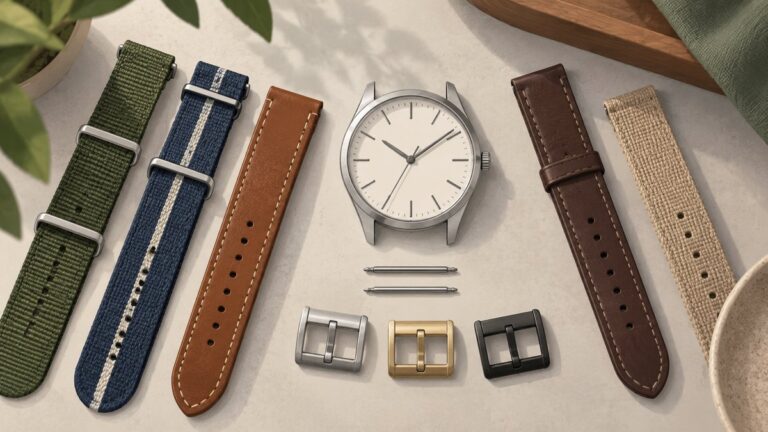
For owners moving between generations, personalization remained part of the appeal. Apple Watch bands continued to make a watch feel personal and allowed wearers to adapt one device to work, exercise, travel, or formal settings. When buying Apple Watch bands, check both the case-size compatibility and the connector details rather than assuming that every band fits every watch.
Rank #3

- 【50-Day Ultra-Long Battery Life】 Powered by a high-capacity 1000mAh battery and an efficient low-power chip, the watches for men deliver exceptional endurance. With magnetic fast charging, a full charge takes only 2 hours and provides up to 18 days of daily use or an incredible 50 days of standby time. Whether you're on a business trip or a wilderness hike, you can leave the charger behind and focus on your journey.
- 【Rugged Design Built for Adventure】 Crafted for the man who loves the outdoors and demands durability. The Soudorv S50 rugged smart watch features a robust build that has successfully passed 12 military-grade tests, standing up to dust, mud, and extreme environments. It's more than just a watch—it's gear on your wrist. Equipped with a built-in bright LED flashlight with a lighting distance of up to 5 meters, it's your most reliable companion for night runs, camping trips, or navigating dark parking lots and power outages.
- 【2026 New Bluetooth 5.3 Calls & Smart Notifications】 Built with an advanced microphone and HD speaker, the mens watches utilize the latest Bluetooth 5.3 technology for stable, crystal-clear call quality with zero lag. Make, answer, or reject calls directly from your wrist and sync your contacts. It also supports real-time message notifications from Facebook, WhatsApp, Instagram, Twitter, and more (Message reply not supported), ensuring you never miss important updates while working out or focusing on your day.
- 【All-Day Wellness Tracking】 Stay connected to your body's natural rhythms. The Soudorv S50 tracks your heart rate trends, daily stress levels, and sleep patterns (including deep sleep, light sleep, and awake time) right from your wrist. It also includes a menstrual cycle logging feature for daily wellness recording. Use the data to better understand your habits and make informed choices for a healthier lifestyle. This device is intended for general wellness and fitness purposes only.
- 【110+ Sports Modes & IP68 Waterproof】 From running, cycling, and hiking to yoga, skipping rope, and skiing—the fitness watch supports 110+ exercise modes to meet all your indoor and outdoor needs. It accurately tracks your steps, distance, and calories burned in real-time, helping you train smarter and achieve optimal results. With IP68 waterproof rating, it's protected against rain and hand washing, perfect for daily use.
2023–2025: software intelligence, sleep insights, 5G, and satellite communication
Series 9 and Ultra 2 refine the platform
Series 9 introduced the S9 SiP, a four-core Neural Engine, a brighter display, on-device Siri capabilities for some requests, Precision Finding for iPhone, and the double-tap gesture. Double tap allowed certain actions to be performed with a finger-and-thumb gesture, reducing the need to touch the screen with the other hand.
watchOS 10 redesigned major apps, added the Smart Stack, and expanded cycling, hiking, and mental-wellness tools. The Smart Stack helped Apple Watch become more context-aware by surfacing relevant information without requiring the wearer to open each app manually. Apple also presented selected Series 9 configurations as its first carbon-neutral products, a claim that applies to those configurations rather than automatically to every Series 9 model.
Outdated Drivers Are Slowing You Down
One free scan finds every outdated or missing driver and matches the right update for your exact hardware.Free scan · exact hardware matchPC Slower Than It Used to Be?
A free scan shows the junk files, broken settings and background clutter dragging Windows down - then fixes them in one click.Free scan · Windows 10 & 11Ultra 2 continued the outdoor-performance strategy while improving processing, brightness, and battery-related capabilities. The overall story of 2023 was refinement rather than reinvention: the platform became faster and more capable while retaining the health, safety, communications, and fitness foundations established in earlier generations.
Series 10 makes the mainstream watch thinner and more health-aware
Series 10, introduced on September 9, 2024, became the thinnest Apple Watch yet and offered the largest display Apple had placed in an Apple Watch at that time. It added faster charging, water-depth and temperature sensing, and sleep-apnea notifications.
watchOS 11 added Training Load and the Vitals app. Training Load helped users put recent workout effort into context, while Vitals brought together overnight measurements so that changes could be noticed more easily. Neither feature turns the watch into a clinical training or diagnostic instrument; they are tools for personal monitoring and decision-making.
Ultra 2 received a black-titanium option in 2024. Its watchOS 11 additions included Training Load, Vitals, sleep-apnea notifications, the Tides app, and expanded Action-button customization. The two product identities were now clear: Series was being made thinner and more comfortable for everyday wear, while Ultra retained a rugged, high-end sports identity.
2025 extends the watch beyond the phone network
Apple’s 2025 lineup included Apple Watch Series 11, Apple Watch SE 3, and Apple Watch Ultra 3. Series 11 added notifications for signs of chronic high blood pressure, sleep score, longer battery life, a more scratch-resistant display, and 5G cellular connectivity.
These additions continued Apple’s movement toward health information rather than simple activity counting. A notification about possible signs of chronic high blood pressure is not the same as a diagnosis. Sleep score is also an interpretation of recorded sleep-related data, not a replacement for professional assessment when symptoms or concerns persist.
Ultra 3 pushed the adventure concept further with built-in satellite communications, Emergency SOS via satellite, Messages and Find My via satellite, 5G, a larger display, and up to 42 hours of normal-use battery life or up to 72 hours in Low Power Mode. Satellite capabilities depend on model, region, availability, and the conditions required for a satellite connection. They should be treated as an additional communication and safety option, not as guaranteed coverage or guaranteed rescue.
By 2025, Apple Watch had become a platform with several overlapping forms of independence. GPS reduced the need to carry an iPhone during an outdoor workout. Cellular reduced the need for the phone during communication. Satellite features extended selected safety and messaging functions beyond ordinary cellular coverage. Each step made the watch more useful when the phone was absent, but none eliminated the need to check model, carrier, regional, software, and service requirements.
Do these 3 things before closing this tab:
1Fix the driver behind crashes, sound loss and screen glitches2Clear out junk files and repair common Windows errors3Scan for outdated or missing drivers - takes under a minutewatchOS is why Apple Watch history is cumulative
Hardware generations provide the obvious milestones, but much of Apple Watch’s evolution arrived through watchOS. Watch faces, sleep tracking, Family Setup, Workout metrics, automatic handwashing detection, Cycle Tracking, Noise, Smart Stack, Training Load, Vitals, sleep score, and accessibility improvements can change the experience of an existing watch without changing its case.
This creates a compounding history. A supported older watch can gain meaningful capabilities years after its original launch. At the same time, software support does not make every model equivalent. Hardware sensors, processors, displays, battery condition, cellular radios, and regional approvals still determine which features are available.
As of August 12, 2026, Apple’s model guide lists Series 11, Ultra 3, SE 3, Series 10, Ultra and Ultra 2, Series 9, Series 8, SE 2, Series 7, and Series 6 among the models compatible with watchOS 26. Apple also notes that not all watchOS 26 features are available on every device or in every region. The practical lesson for a used-watch buyer is simple: check the exact model and feature requirements, not merely the watchOS version.
The major evolutionary arcs
1. From iPhone accessory to independent communicator
The first Apple Watch relied extensively on the iPhone. Series 2 introduced built-in GPS, reducing phone dependence during outdoor exercise. Series 3 introduced cellular, reducing phone dependence during calls, messages, music, and everyday errands. Ultra 3 extends the same arc with satellite communication for selected messaging, location, and emergency functions.
Quick wins for a faster PC:
Scan for outdated or missing drivers - takes under a minuteDriver Scan →Repair Windows errors before they cause bigger problemsFix Now →The progression was gradual because independence is expensive in a small device. GPS, cellular radios, brighter displays, faster processors, and more sensors all compete for limited battery, space, and thermal headroom. Apple’s history shows it adding independence where it creates the clearest benefit rather than trying to reproduce the entire iPhone on the wrist.
2. From Activity rings to a health-and-safety platform
Activity tracking existed from the beginning, but Series 4 made health a defining purpose through ECG and fall detection. Blood Oxygen, temperature sensing, Crash Detection, sleep-apnea notifications, Vitals, sleep score, and hypertension notifications continued the expansion.
These features differ in what they measure and what they can legitimately tell a wearer. Some are wellness and fitness insights. Others provide health information or can trigger safety actions. None should be described casually as diagnosing every condition, replacing a clinician, or guaranteeing emergency assistance. Model, software, geography, regulatory status, and sometimes purchase configuration matter.
Rank #4

- Make/Answer Call & Message Notification: Bluetooth call smartwatch is equipped with built-in HD speaker, after connecting to your android/iOS phones via bluetooth, you can answer or make calls, store emergency contacts and view call history through directly use the smart watch; The mens smart watch can also receive notifications from apps including Facebook, WhatsApp, Instagram, Twitter, SMS, etc. So that you will never miss any important information
- 1.83" HD Color Screen & 100+ DIY Dial: Smart watches for men women is equipped with a 1.83" extra-large hd full touch color screen, clear picture quality and high touch sensitivity; In the "Da Fit" app, you can download more than 100+ watch faces for your fitness activity tracker smartwatch, or design upload personalized photo and set it as your desktop for android/ iphone smart watch
- Personal Health Steward: The health monitoring smartwatch adopting advanced sensors, 24-hour a day monitors your heart rate, blood oxygen and sleep. you can more understand your real-time heart rate, blood oxygen saturation and sleep status(deep/light/wakeful sleep) by our fitness tracker watch, to make you understand your physical health through this smart watch for android phones
- 100+ Sports Modes Activity Fitness Tracker: This fitness watch for men women supports multiple sports modes, including running, hiking, cycling, skipping, walking, basketball, yoga, football and more. Activity trackers and smartwatches will record your data like heart rate, steps, calories burned, etc during your exercise; IP68 waterproof design of the sports watch perfectly meets your daily waterproof needs, But it is not recommended for use in hot water, seawater, swimming, diving or bathing
- 30 Days Standby Time & Multifunction Smartwatch: Smart watch for men has multiple functions such as timer, stopwatch, alarm clock, find your phone, sedentary reminder, music control, weather forecast, do not disturb mode, brightness adjustment, camera control, female cycle tracking; The smart watch for iPhone compatible charging for 2 hours, 5-7 days of normal use and 30 days of standby time. This android/iPhone watch for men is compatible with smartphones with Android 5.0 and iOS 9.0 or above
3. From personalization to segmentation
The original collections, case sizes, materials, and bands made Apple Watch a personal object. Apple later added Nike and Hermès collaborations, the lower-cost SE, the mainstream Series line, and the Ultra family.
The Tool Desk
Outbyte PC Repair FREERepair Windows errors before they cause bigger problemsFix Now →Outbyte Driver Updater FREEFix the driver behind crashes, sound loss and screen glitchesFind Drivers →That segmentation allowed one operating system to serve several audiences: people who wanted an affordable smartwatch, people who wanted an everyday health and fitness device, people drawn to luxury-adjacent styling, and athletes or adventurers who needed a larger, tougher watch. Apple did not have to choose between fashion, fitness, and outdoor performance because the product line increasingly offered a version for each.
4. From annual hardware novelty to software compounding
Annual hardware releases still matter for sensors, radios, screens, battery life, and durability. But the platform’s history increasingly depends on software that accumulates across supported models. That makes an older Apple Watch potentially more useful than its launch-day specification sheet suggests, while also making compatibility checks more important.
5. From smartwatch to personal safety infrastructure
Fall Detection, Emergency SOS, Crash Detection, irregular-rhythm notifications, and satellite communication give Apple Watch a recurring safety role. The product is not a substitute for emergency judgment or medical care, but it can provide information, raise an alert, or contact services under defined conditions when a phone may be difficult to reach.
Independent reader supportYour contribution helps us test, update, and keep practical guides available for everyone.Current Apple Watch lineup: Series 11, SE 3, and Ultra 3
For readers approaching the history from a buying decision, the current named generations as of the research date are Series 11, SE 3, and Ultra 3. Series 10 and Ultra 2 remain relevant because they are part of the supported ecosystem and may be available through older inventory or the used market.
| Model | Best understood as | Historical position | Important qualifications |
|---|---|---|---|
| Apple Watch Series 11 | The mainstream flagship | Everyday smartwatch with health, fitness, safety, 5G cellular, hypertension notifications, sleep score, longer battery life, and a more scratch-resistant display | Health and cellular features vary by model, region, carrier, software, and regulatory status |
| Apple Watch SE 3 | The lower-cost entry tier | Core Apple Watch experience without automatically including the premium sensor package | Do not assume ECG, Blood Oxygen, temperature, or other premium health features without checking the exact model |
| Apple Watch Ultra 3 | The adventure and endurance model | Larger display, longer battery life, rugged construction, navigation, diving-related capabilities, 5G, and satellite communication | Satellite, cellular, and diving-related functions have their own model, region, service, app, and availability requirements |
If you are comparing current hardware rather than studying the timeline, Apple Watch Series 11 is the natural reference point for the mainstream line. The right choice still depends on whether you value a thinner everyday design, a lower entry price, or the Ultra’s battery, controls, navigation, and outdoor capabilities.
What to check when buying an older Apple Watch
- Exact model: Identify the Series, SE generation, or Ultra generation. A watchOS update does not give an older watch every feature found on a newer model.
- Software support: Confirm that the model is supported by the current watchOS version you intend to use. As of August 12, 2026, watchOS 26 support extends through Series 6 and SE 2, plus all Ultra models, but feature parity is not implied.
- Health features: Check whether the sensor and feature you want exist on that model and whether the feature is authorized and available in your region. Blood Oxygen has configuration-specific restrictions in the United States for certain models purchased on or after January 18, 2024.
- Cellular requirements: A cellular watch needs a compatible model, carrier, region, and service arrangement. Cellular capability does not mean that the watch can connect to every network.
- Battery condition: Apple’s battery figures are estimates under stated conditions, not independently tested guarantees. An older battery may deliver substantially less practical runtime than the original specification.
- Case, band, and charger compatibility: Confirm the case size and accessory fit before buying replacements. A magnetic charging cable may be physically familiar across the product line, but charging speed and compatibility can vary by model and cable.
- Physical condition: Inspect the display, case, buttons, Digital Crown, speaker, microphone, sensors, and water-sealing history. A watch that was designed for swimming or outdoor use is not necessarily still water-safe after damage or repair.
What Apple Watch still cannot promise
The more health and safety features Apple adds, the more important it becomes to separate capability from guarantee.
- It is not automatically a medical device. ECG and other health functions have specific purposes and limitations. Wellness measurements should not be presented as diagnoses.
- It cannot guarantee emergency assistance. Fall Detection, Crash Detection, Emergency SOS, and satellite services depend on detection, wearer response, connectivity, region, and service conditions.
- It is not independent in every respect. Setup requires an iPhone, and some functions still depend on the phone, a carrier, an app, or an internet connection.
- Battery life is a trade-off. Apple’s estimates vary by use and mode. The Ultra line lasts longer under Apple’s stated conditions, but intensive GPS, cellular, satellite, and workout use can change real-world runtime.
- Feature names are not enough. The same broad feature may behave differently by model, purchase date, country, software release, or regulatory status.
Why Apple Watch became important
Apple Watch’s historical significance comes from the way its roles reinforce one another. Notifications make the watch worth wearing. Activity tracking gives it a daily habit. GPS and cellular make the habit less dependent on a phone. Health sensors give the device a reason to remain on the wrist overnight. Safety features make continuous wear potentially valuable in situations the wearer did not anticipate. Bands and case options make the device acceptable as a personal style object, while the Ultra line gives it credibility in demanding outdoor activities.
What’s actually slowing this PC down?
Pick the symptom - the matching free tool is one click away.
Each role supports the others. A product that is worn only for notifications may be left at home during exercise. A fitness tracker may be removed at night. A safety device that is uncomfortable may not be worn consistently. Apple Watch’s evolution has been an effort to make the same object useful across more parts of the day without abandoning the convenience and identity of a watch.
From the first 38mm and 42mm collections to the current Series, SE, and Ultra families, Apple has progressively changed what the wrist computer is for. The original Apple Watch made the iPhone glanceable. Series 2 and Series 3 made it more independent. Series 4 made it health-aware. Series 8 and Ultra made safety and serious activity more prominent. Series 10, Series 11, and Ultra 3 continue to divide the problem between a thin everyday computer and a rugged adventure computer.
Frequently Asked Questions
Does Apple Watch require an iPhone?
Yes. An iPhone is required for Apple Watch setup and remains necessary for some capabilities. GPS and cellular models reduce the need to carry the phone in specific situations, but cellular requires a compatible carrier and region. Satellite features also have model and availability requirements.
Is Apple Watch a medical device?
No. ECG, irregular-rhythm notifications, Blood Oxygen, temperature-related insights, sleep-apnea notifications, and hypertension notifications have specific purposes and limitations. They may provide information or alerts, but they should not be treated as universal diagnoses or substitutes for medical care.
Free tools Windows power users keep installed
One-click scans. No signup required.
Which Apple Watch is the current model?
Series 11 is the mainstream flagship, SE 3 is the lower-cost entry tier, and Ultra 3 is the larger, longer-lasting adventure model with outdoor and satellite features. Series 10 and Ultra 2 remain relevant where they are available and supported, but older models do not have identical sensors or capabilities.
When did Apple Watch become independent from the iPhone?
Apple Watch became more independent in stages. Series 2 added built-in GPS, Series 3 added cellular connectivity, and Ultra 3 added selected satellite communication features. These capabilities reduce phone dependence for particular activities but do not make every Apple Watch function independently.
Which older Apple Watch models still receive watchOS updates?
As of August 12, 2026, watchOS 26 supports Series 6 and later, Apple Watch SE 2 and later, and all Ultra models. Support does not mean every watch receives every feature, so buyers should verify the exact model, sensor, region, and software requirements.
The Bottom Line
Bottom line: Apple Watch became a must-have wearable by changing jobs gradually: from personalized iPhone accessory to fitness companion, independent communicator, health-information platform, safety device, and outdoor computer. The current lineup reflects that history, with Series 11 for mainstream use, SE 3 for a lower-cost entry point, and Ultra 3 for endurance and adventure. The best model is therefore determined less by the newest feature list than by how much independence, health sensing, battery life, and ruggedness you actually need.
Quick Recap
Product prices and availability are accurate as of the date/time indicated and are subject to change. Any price and availability information displayed on Amazon at the time of purchase will apply.