Yes—augmented reality in a contact lens is a real engineering and research achievement. No—it is not yet a broadly available consumer product. As of August 12, 2026, companies and university researchers have demonstrated several important pieces: microdisplays, wireless power, eye tracking, sensing, wireless interaction, and flexible electronics. But no generally available, full-featured AR contact lens was identified in the reviewed commercial and regulatory materials.
The practical distinction matters. A convincing demonstration is not the same as a lens that can be safely fitted, powered, cooled, manufactured at scale, regulated, and worn reliably every day. The first useful products may also be systems in which the contact lens works with external glasses, a helmet, a processor, a battery, or other equipment rather than operating as a self-contained computer on the eye.
The short answer: real technology, unavailable product
When people ask whether AR contact lenses are real, they are usually asking two different questions:
- Can engineers put electronics, sensors, or a display into a contact-lens form factor? Yes. Multiple research groups and companies have demonstrated parts of that system.
- Can an ordinary consumer buy a prescription-ready AR contact lens and wear it like a normal contact lens? No broadly available product was identified as of August 12, 2026.
That gap explains why headlines about smart lenses can sound more advanced than the products actually are. A prototype may show a display, track eye movement, measure a biological signal, or communicate wirelessly while still being years away from routine ophthalmic use.
#1 Best Overall

- Material: Our contact lens cases are made of high-quality plastic, sturdy and durable to storage.
- Size: Measures about 6.6*3.1*1.5cm/2.6 * 1.2 * 0.6 inch. Compact and portable. Easy for you to carry around.
- Easy to Identify: You will find right/ left signs on the screw top that will help you put the right contact in the right eye or left eye.
- Bright Colors: Comes with 4 different colors contact lens case. Different colors screw top combination will help you organize your different contact lens a lot.
- One Year Supply Bulk: It is recommended to replace contact lens box once a month. 4 pack contact lens cases set can well meet your needs to change your contact case monthly to keep your contacts clean.
It is also important not to confuse an AR contact lens with colored contacts, novelty lenses, blue-light glasses, a contact-lens case, or a conventional lens with a cosmetic tint. Those products do not create augmented-reality overlays.
Mojo Vision demonstrated the idea, then slowed its lens program
Mojo Vision was one of the companies that made AR contact lenses seem close to reality. During demonstrations from roughly 2020 through 2022, the company described Mojo Lens as a smart-contact-lens platform combining a microLED display with wireless communications, sensing, and external computing and power components.
Those demonstrations were significant because they showed that a contact-lens-shaped device could be part of a complete AR system. They did not establish that the lens was ready for general sale or ordinary all-day wear.
In January 2023, Mojo Vision announced that it was pivoting toward microLED technology and decelerating work on Mojo Lens after failing to secure sufficient additional private funding. That is a commercial and development setback, not proof that the underlying engineering was imaginary. It does mean older videos and demonstrations should be described as prototype demonstrations or a development program, not as evidence of a product currently shipping to consumers.
Mojo Vision’s current optometry information describes Mojo Lens as a future product that would require professional fitting and a prescription when available. That wording is materially different from a retail product listing. It supports the conclusion that Mojo Lens should not be presented as a consumer AR contact lens people can buy today.
XPANCEO is active, but its evidence is still prototype-level
XPANCEO is one of the most visible active efforts in this field. The company reported six smart-contact-lens prototypes at GITEX Global in October 2025. One, described as an Interactive Smart Contact Lens for AR Vision, used a microdisplay and an external sensor suite for spatial tagging and position tracking.
That external equipment is an important detail. It suggests a system architecture in which the lens supplies part of the visual or interactive experience while other components handle sensing, computation, power, or tracking. It is still meaningful progress, but it is not the same as placing a complete standalone computer inside a conventional soft lens.
XPANCEO also described a holographic smart lens paired with a helmet companion that supplied power and content. In March 2025, the company reported additional prototypes involving wireless power, intraocular-pressure sensing, biochemical sensing, and enhanced AR and data-reading concepts.
Quick wins for a faster PC:
Clear out junk files and repair common Windows errorsFree Scan →Fix the driver behind crashes, sound loss and screen glitchesFind Drivers →Repair Windows errors before they cause bigger problemsFix Now →In December 2025, XPANCEO announced that ground testing had begun for a smart lens intended for a space-related application, paired with equipment in a space-helmet environment. This is an ambitious development milestone and evidence that the company is continuing to explore specialized use cases. It is not evidence of consumer availability, regulatory clearance, or routine human-market deployment.
In other words, XPANCEO’s smart-contact-lens prototypes demonstrate a continuing research and engineering direction. They do not yet answer the harder consumer questions: How long can the lens be worn? How is it fitted? What happens if wireless power or tracking fails? Is it safe across different eyes and prescriptions? Can it be manufactured consistently and sold under applicable medical-device rules?
SEED is building an ecosystem rather than selling a finished AR lens
SEED’s Smart Contact Lens Development Platform illustrates why commercialization may depend on more than a single company producing a tiny screen. The platform describes a common architecture intended to accelerate development across applications including augmented and mixed reality.
SEED’s 2026 updates reported prototype scheduling, a 2026 prototype program, and delivery of a prototype flexible substrate to a Japanese university. A flexible substrate can be important because rigid electronics are difficult to integrate into a device that must conform to the eye and remain comfortable.
Do these 3 things before closing this tab:
1Fix the driver behind crashes, sound loss and screen glitches2Repair Windows errors before they cause bigger problems3Scan for outdated or missing drivers - takes under a minuteRank #2
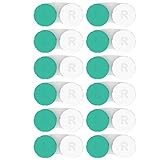
- TOP SELLING CONTACT LENS CASES - Good for soft or hard lenses. Updated 3/2018 Leakproof Design
- PREMIUM QUALITY - premium quality safe materials. Good for doctor's office or personal use
- ONE YEAR SUPPLY - bulk supply, you can now change your contact lens cases monthly. 12 Pack
- PROTECT YOUR EYES - protect your eyes by changing your cases
- STANDARD SIZE - universal screw top contact lens case size, industry standard
The significance of SEED’s smart-contact-lens development platform is therefore industrial as much as optical. A practical product could require coordinated progress in:
- soft, transparent, biocompatible lens materials;
- flexible electronics and microdisplays;
- wireless power and communications;
- eye tracking, motion sensing, and position stability;
- manufacturing and quality-control processes;
- ophthalmic fitting and prescription support;
- software, content, and external computing; and
- clinical validation and regulatory review.
The platform announcements do not establish that a finished consumer AR contact lens is commercially available. They do show why the sector may eventually develop as an ecosystem rather than as one isolated gadget.
What academic research has already proved
Academic work is often more precise than product headlines because researchers usually isolate one technical problem and measure it directly. The results are impressive, but they should not be mistaken for a complete consumer AR system.
Eye tracking without a battery or chip
A 2024 paper in Nature Communications demonstrated a chip-free, battery-free smart contact lens for eye tracking and wireless eye-machine interaction. The researchers reported angular accuracy below 0.5 degrees and demonstrated interactions including eye drawing, game control, web interaction, camera control, and control of a robot or vehicle.
What’s actually slowing this PC down?
Pick the symptom - the matching free tool is one click away.
The study also reported biocompatibility testing in cell and rabbit models. Those results matter: accurate eye tracking could let a wearer select or control digital content without touching a controller. However, the work was presented as a platform for human-machine interaction, with relevance to AR—not as a commercial, full-color, general-purpose AR display for ordinary consumers.
This is a useful example of why “smart contact lens” is a broad term. A lens can be smart because it senses eye movement or transmits an input signal even when it does not display a visible AR image.
Sensing and display pixels in a soft lens
Other research has integrated wireless circuits, glucose sensing, and display pixels into a soft contact lens, alongside in-vivo tear-glucose experiments. Integrating those functions into a lens is a meaningful demonstration of miniaturized electronics and biological sensing.
It is primarily a medical-monitoring research result, however, rather than a consumer AR system. Measuring a tear biomarker and presenting a controlled display signal are different challenges from producing stable, useful, full-color spatial overlays while a person walks, blinks, changes lighting conditions, and looks around.
A touchless input component
Researchers have also demonstrated a transparent magnetoreceptive mesh attached to a contact lens as a touchless input device for prospective AR interaction. This kind of component could provide a way to control a system without a handheld controller.
Again, it is an interaction component and proof of concept—not a complete commercially deployable AR contact lens. The research record is best understood as a collection of building blocks that still need to be combined into a safe, durable, manufacturable product.
How an AR contact-lens system would probably work
A useful AR lens would need to do more than display a tiny image. A likely system would contain or connect to several functions:
- Image formation: A microdisplay or optical element would create the image. It must place that image in the wearer’s field of view without blocking ordinary vision or causing distracting blur.
- Optical alignment: The image must remain correctly positioned as the eye rotates. A display that shifts unpredictably with each blink would be unsuitable for precise overlays.
- Eye tracking: Sensors could determine where the wearer is looking and help stabilize or select digital content.
- Motion and spatial tracking: The system must understand head and eye movement, nearby surfaces, and the relationship between the digital overlay and the real world.
- Power: A battery may be too large, heavy, warm, or unsafe for the lens. Wireless power or an external companion may be necessary.
- Communication and computation: The lens may need to communicate with a phone, glasses frame, helmet, belt-worn computer, or cloud-connected device.
- Thermal and electrical safety: The system must prevent excessive heating or unsafe electrical exposure on the cornea.
- Clinical and mechanical performance: It must remain biocompatible, allow adequate oxygen transmission, preserve visual quality, and stay stable during normal wear.
This is why a prototype with a microdisplay is only one milestone. The final experience depends on the entire chain working at the same time.
Free tools Windows power users keep installed
One-click scans. No signup required.
Rank #3

- 【Optimal Size & Convenient Design】This pack includes contact lens cases with dimensions of 2.6 x 1.22 x 0.6 inches, offering a larger yet compact size for easy storage and handling. The case is perfectly suited for everyday use and travel.
- 【Regular Replacement Reminder】 Each contact lens case is equipped with a helpful reminder to replace your lens case regularly, promoting better hygiene and care for your lenses.
- 【Leak-Proof & Secure Seal】 The contact lens case features a tight, leak-proof screw-top design, preventing soaking liquid from spilling. You can confidently carry it in your bag without worrying about leaks.
- 【Durable & Long-Lasting】 Made from premium ABS plastic, these contact lens cases are designed to be durable and sturdy, ensuring reliable protection for your lenses and long-lasting use.
- 【Portable & Lightweight】 Despite its slightly larger size, this case remains lightweight and portable. It's easy to carry in your pocket, purse, or backpack, allowing you to keep your lenses secure wherever you go.
The hardest problems are power, heat, transparency, and safety
Power and heat
Power is arguably the central constraint. A useful AR experience requires energy for display operation, sensors, wireless communication, and sometimes computation. A conventional contact lens has almost no room for a conventional battery.
Wireless power can move the battery off the eye, but it introduces alignment, range, efficiency, and safety questions. An external battery pack or helmet can solve some of those problems while making the system less discreet and less convenient. If a lens depends on a nearby transmitter, processor, or helmet, “AR contact lens” describes only one component of the wearable system.
Heat is equally important. Electronics that would be tolerable on a glasses frame are positioned directly on the eye in a contact lens. The design must control heat while avoiding damage to the cornea, drying, irritation, or reduced comfort.
Transparency and oxygen transmission
A contact lens must allow the eye to function normally. Electronics, wiring, antennas, sensors, and display structures can reduce the open area available for light and oxygen. The lens must remain sufficiently transparent or optically useful while preserving adequate oxygen transmission to the cornea.
Recommended Free Tools
That is a more demanding requirement than making a transparent circuit on a laboratory sample. A research device can demonstrate a signal under controlled conditions; a consumer lens must work across prescriptions, eye shapes, tear conditions, blinking patterns, lighting environments, and long periods of wear.
Fit, movement, and visual quality
Ordinary contact lenses already require correct fitting. An AR lens adds the need for stable electronics and optical alignment. If the lens rotates or shifts, the display can move relative to the real world. A product may need individualized fitting, prescription customization, or software calibration.
Motion stability also affects safety. Incorrectly aligned overlays could distract the wearer, obscure hazards, or create discomfort. High resolution alone would not solve that problem; the image must be stable, legible, correctly focused, and synchronized with the wearer’s movement.
Manufacturing yield and reliability
Laboratory prototypes can be built and tested individually. Consumer medical devices must be produced consistently, inspected, packaged, fitted, supported, and replaced when necessary. The lens must survive handling, cleaning where applicable, shipping, storage, and expected wear without exposing the eye to broken components or contamination.
Windows Errors? Fix Them Before They Spread
Repair common Windows errors and clear accumulated junk for a smoother, more stable PC - no reinstall needed.Free scan · no reinstallCrashes, No Sound, or Screen Glitches?
Random freezes, missing sound and display glitches usually trace back to one bad driver. Find and replace yours safely.Free scan · under a minuteManufacturing yield matters because a complex lens with many embedded parts may be expensive if too many units fail quality checks. That cost challenge is one reason flexible substrates, shared development platforms, and external components are important parts of the commercial story.
Independent reader supportYour contribution helps us test, update, and keep practical guides available for everyone.What is the regulatory situation?
Regulatory language needs to be handled carefully. The FDA maintains an AR/VR medical-device list and states that devices listed there have met applicable premarket requirements. The agency also warns that the list is not comprehensive.
The FDA materials reviewed for this topic did not identify a general-purpose consumer AR contact lens as an authorized product. Contact-lens records reviewed in the search concerned conventional or medical contact-lens indications rather than a general-purpose AR display.
The most accurate conclusion is therefore: no FDA-cleared consumer AR contact lens was identified in the reviewed FDA materials. That is more precise than claiming that no such device could exist anywhere. It also avoids confusing a company announcement, patent, university demonstration, or prototype test with regulatory clearance.
Do these 3 things before closing this tab:
1Scan for outdated or missing drivers - takes under a minute2Repair Windows errors before they cause bigger problems3Fix the driver behind crashes, sound loss and screen glitchesRank #4

- [16 Pack] Aoutrow Contact Lens Case Box size is2.4 X 1.1X0.6 Inches. The candy colors can bring you pleasant visual effect: green, pink, blue, and purple.
- [High Quality] The Contact Lens Case Box is made from best quality ABS plastic which is durable and shatterproof. Please wash the contact lens case for a few times with hot water before first use.
- [Special Design] Aoutrow Contact Lens Case Set has circular arc design. Each edge is smooth polished without burrs. So it is a perfect container for keeping your contact lens clean and clear.
- [Well Sealed] Our use Leak proof design can prevents the care solution from overflow and leak. Meanwhile, the small size can easy to use, so that you can go out easily.
- [Convenient] The colorful contact lens case box's is lightweight and portable. Meanwhile, You can take it anywhere for convenient use. And you can always be assured to enjoy more views.
Any future product would likely face more than a display review. Its evaluation could involve optical performance, electrical and thermal safety, biocompatibility, oxygen transmission, sterility or hygiene, prescription fitting, wireless exposure, software behavior, and the consequences of failure. The exact pathway would depend on the product’s claims, design, and intended use.
What can consumers buy today?
As of August 12, 2026, consumers can buy conventional contact lenses, contact-lens care supplies, AR viewers, and smart glasses. Those categories should not be presented as interchangeable.
| Product | What it provides | Is it an AR contact lens? |
|---|---|---|
| Conventional prescription or cosmetic contact lenses | Vision correction or appearance changes | No |
| Contact-lens care products | Storage, cleaning, and routine lens hygiene | No |
| AR viewers and headsets | Digital overlays through a device worn in front of the eyes | No |
| Smart glasses | Near-eye displays, cameras, audio, sensors, or connected features, depending on the model | No, but they are the closest practical consumer form factor |
If you want an actual near-eye AR experience now, augmented reality smart glasses are the honest alternative to waiting for a contact-lens system. They are not contact lenses: they sit on the face, remain visible, and may have different field-of-view, prescription, comfort, and privacy trade-offs. Their advantage is that batteries, processors, cameras, and heat-producing components can be placed away from the cornea and serviced more easily.
Do not buy ordinary colored contacts, novelty lenses, blue-light glasses, or a lens case expecting AR features. None of those products creates a digital overlay merely because it is marketed as smart, futuristic, or wearable.
What would prove that AR contact lenses are ready?
A credible consumer launch would need to answer questions that prototype announcements often leave open:
- Is there a clearly identified product, price, ordering process, and delivery channel?
- Does the manufacturer specify prescription ranges and professional fitting requirements?
- What is the approved or cleared intended use, and in which country or region?
- How is the lens powered, and what happens when the external power or connection fails?
- How long can it be worn, and what cleaning, replacement, and hygiene rules apply?
- What are the measured optical resolution, brightness, field of view, latency, and image-stability limits?
- How are heat, oxygen transmission, wireless exposure, and biocompatibility tested?
- What happens if the lens rotates, loses tracking, overheats, or displays incorrect information?
- Can the manufacturer produce the lens consistently at a scale and cost suitable for ordinary users?
Until those answers are available from a product manufacturer and relevant regulators—not only from a trade-show demonstration—the responsible description remains prototype, research platform, or development program.
So, is augmented reality in a contact lens the real deal?
It has crossed the line from science fiction into serious engineering. Mojo Vision demonstrated an early vision of the system; XPANCEO has reported a series of newer prototypes and specialized tests; SEED is working on an enabling development platform; and academic groups have demonstrated eye tracking, wireless interaction, sensing, display pixels, and touchless input.
But the technology has not crossed the more important consumer line. A broadly available AR contact lens must combine those pieces without compromising vision, oxygen transmission, comfort, safety, reliability, regulation, or manufacturability. The evidence available as of August 12, 2026 does not show that this has happened.
Quick wins for a faster PC:
Clear out junk files and repair common Windows errorsFree Scan →Scan for outdated or missing drivers - takes under a minuteDriver Scan →The likely near-term path is a hybrid one: a lens handling a specialized optical or sensing task while a phone, glasses frame, helmet, or other external device supplies power and computation. That could still become useful, especially in professional, medical, industrial, or specialized environments. It simply would not be the invisible, self-contained computer-on-the-eye imagined by the most ambitious headlines.
Frequently Asked Questions
Can I buy an augmented-reality contact lens now?
No generally available consumer AR contact lens was identified as of August 12, 2026. The documented products and projects remain prototypes, research platforms, or development programs. Smart glasses are the practical consumer alternative for near-eye AR today.
Are Mojo Lens and XPANCEO lenses available for ordinary consumers?
They should not be described that way. Mojo Vision slowed its Mojo Lens work in January 2023, and its current optometry information describes the lens as a future product requiring professional fitting and prescription when available. XPANCEO has reported prototypes and development tests, not a broadly available retail product.
Would an AR contact lens be completely self-contained?
Not necessarily. Current development concepts often use external power, sensing, computing, content delivery, glasses, or helmet equipment. The first practical systems may be hybrid wearables in which the contact lens is only one part of a larger platform.
Does a smart contact lens research prototype prove it is safe for everyday wear?
No. Some studies have reported biocompatibility testing or successful demonstrations, but everyday use requires broader evidence covering long-term wear, oxygen transmission, heat, electrical safety, optical stability, fitting, hygiene, manufacturing consistency, and applicable regulatory requirements.
The Bottom Line
Bottom line: AR contact lenses are real as prototypes and research platforms, but not yet as a broadly available consumer product. If you want near-eye augmented reality today, choose a device designed to be worn in front of the eyes—especially smart glasses—not conventional contact lenses marketed with futuristic language.