The best Rolex watches from the 1960s are the Explorer 1016, Submariner 5513, GMT-Master 1675, and Cosmograph Daytona 6239—but the right choice depends on the job. Choose the Explorer for restrained simplicity, the Submariner for tool-watch character, the GMT-Master for dual-time travel, and the Daytona for collector significance and risk.
Those four references represent four different ways to buy a vintage Rolex. The Explorer is time-only and discreet, the Submariner is the archetypal professional dive watch, the GMT-Master adds a date and second time zone, and the Daytona is a historically important manual-wind chronograph whose value can depend heavily on originality and provenance.




Key takeaways
- The Rolex Explorer 1016 is the best 1960s choice for understated, time-only simplicity and a highly legible black dial.
- The Rolex Submariner 5513 is the strongest tool-watch choice, with early gilt and meters-first examples offering important reference-specific variations.
- The Rolex GMT-Master 1675 is the most functionally distinctive option because it combines a date, a second-time-zone display, and a rotating 24-hour bezel.
- The Rolex Cosmograph Daytona 6239 has the deepest collector appeal, but originality, authentication, and financial risk matter more than the reference number alone.
- Auction results illustrate market dispersion rather than guaranteed value: Phillips recorded $30,240 for a circa-1967 Submariner 5513 and $381,000 for a circa-1968 stainless-steel Daytona 6239 Paul Newman.
How should you choose the best Rolex watches from the 1960s?
There is no objective single winner among the best Rolex watches from the 1960s. The correct choice depends on intended use, wrist presence, complication, dial and bezel originality, movement condition, service history, provenance, completeness, and budget.
Rolex’s historical material places the Explorer and Submariner in the 1953 generation of professional watches, the GMT-Master in 1955, and the Cosmograph Daytona in 1963. Rolex’s official history also records that, “In 1963, Rolex introduced the Oyster Perpetual Cosmograph Daytona.” You can compare those historical milestones in Rolex’s 1953–1967 history and its official history document.
#1 Best Overall
| Reference | Best for | Function | Defining visual or historical clue | Main buying risk |
|---|---|---|---|---|
| Explorer 1016 | Discreet everyday wear | Time only | Black dial, luminous 12 o’clock triangle, and 3-6-9 numerals | Incorrect dial, handset, luminous plots, or over-polished case |
| Submariner 5513 | Classic tool-watch character | Dive-watch time display with rotating bezel | Early gilt or meters-first dials; later matte variations | Replacement dial or bezel, excessive polishing, or incorrect bracelet |
| GMT-Master 1675 | Travel and daily practicality | Local time, second time zone, date, and 24-hour bezel | Period-correct 24-hour hand and bezel insert | Swapped service parts and incorrect bezel or hand configuration |
| Cosmograph Daytona 6239 | Specialist collecting | Manual-wind racing chronograph | First Cosmograph Daytona reference; tachymeter scale on the bezel | Counterfeit or altered exotic dial, incorrect parts, and very high pricing |
Which 1960s Rolex is best for most buyers?
For most buyers, the Explorer 1016 is the least complicated entry point, while the Submariner 5513 offers the strongest iconic tool-watch identity. The GMT-Master 1675 is more useful if you genuinely want a second time zone, and the Daytona 6239 is best reserved for a specialist collector who can authenticate an expensive, highly variant watch.
1. Rolex Explorer 1016: the restrained everyday classic
The Rolex Explorer 1016 is the best 1960s Rolex for a buyer who wants a discreet, time-only watch with a strong historical identity and little visual complexity.
The reference is recognized by its steel construction, black dial, luminous triangle at 12 o’clock, and Arabic 3-6-9 numerals. Christie’s identifies early reference 1016 examples with non-hacking caliber 1560 and describes gilt dials as characteristic of the 1960–1967 series in its record of an early gilt-dial Explorer 1016. Later examples use different printing and dial execution, so a seller’s claim that a dial is simply an “early 1016” is not enough.
Why buy the Explorer 1016?
- Its time-only layout is easier to read and less visually busy than a GMT-Master or Daytona.
- The black dial and 3-6-9 layout give the watch a distinctive identity without requiring a rare exotic configuration.
- It suits a buyer who values restrained proportions and everyday versatility over additional complications.
What should you inspect on an Explorer 1016?
Check whether the dial is gilt or later silver-print, whether the hands and luminous plots belong with the claimed period, and whether the case retains its original geometry. Match the serial and date evidence, movement caliber, bracelet, and any case-back date stamp to the listing. Look closely for polishing that has softened the lugs or changed the case profile.
Recommended Free Tools
A serious listing should show the dial, hands, case sides, lugs, case back, movement, bracelet, and clasp. Christie’s circa-1960 example is useful as a model for the level of documentation a buyer should want because the record includes a case-back date stamp and Rolex service documentation. Documentation does not automatically prove that every component remains period-correct, but missing documentation should make a high originality claim harder to accept.
2. Rolex Submariner 5513: the archetypal vintage dive watch
The Rolex Submariner 5513 is the best 1960s Rolex for a buyer who prioritizes recognizable professional-watch design, broad historical importance, and a rich field of dial, bezel, case, and bracelet variations.
Rolex launched the Submariner 5513 in 1962, and Phillips describes the reference as remaining in production until 1989. That long production run explains why two authentic 5513 watches can look substantially different. Early examples can have glossy gilt dials, while later watches use matte black dials. Early-1960s examples may also have a meters-first depth rating, with meters printed before feet.
The phrase “meters first” describes the order of the depth-rating units on the dial; it is a dial characteristic, not proof that a particular vintage watch is currently water-resistant. Phillips’ record of a meters-first Submariner 5513 shows why the exact combination of dial, movement, case, and bracelet matters.
Crashes, No Sound, or Screen Glitches?
Random freezes, missing sound and display glitches usually trace back to one bad driver. Find and replace yours safely.Free scan · under a minutePC Slower Than It Used to Be?
A free scan shows the junk files, broken settings and background clutter dragging Windows down - then fixes them in one click.Free scan · Windows 10 & 11Why buy the Submariner 5513?
- It has the clearest traditional tool-watch identity in the shortlist.
- The reference offers many legitimate period variations, giving knowledgeable buyers more ways to find a fitting example.
- It is easier to understand as a design than the Daytona, while offering more visual and historical variety than the time-only Explorer.
What should you inspect on a Submariner 5513?
Start with the dial: determine whether the watch has a gilt or matte dial and whether the meters-first or feet-first layout is appropriate for the claimed period. Then inspect the luminous material and plots, bezel insert, crown guards, case-back date, movement, bracelet reference, end links, and clasp.
Case condition deserves special attention. A heavily polished Submariner can retain an apparently correct dial and movement while losing the sharp geometry that collectors value. Ask for straight-on and side-on photographs of the lugs and crown guards, not only attractive wrist shots.
Phillips’ 2022 catalogue record for a circa-1967 meters-first 5513 describes a 40 mm case, caliber 1520, and a riveted Rolex bracelet; the example sold for $30,240. That result is evidence for one documented auction example, not a value for every 5513.
3. Rolex GMT-Master 1675: the practical travel choice
The Rolex GMT-Master 1675 is the best 1960s Rolex for a buyer who wants a date, a second-time-zone display, and more visual personality than the Explorer.
Free tools Windows power users keep installed
One-click scans. No signup required.
Rolex’s historical account identifies the GMT-Master as a 1955 watch designed to show local time and another time zone simultaneously using an additional 24-hour hand and rotating 24-hour bezel. Christie’s record of a circa-1960 GMT-Master 1675 documents the combination of automatic movement, date, dual-time display, and bracelet.
Why buy the GMT-Master 1675?
- The additional 24-hour hand and rotating bezel provide a function that is genuinely different from the other three choices.
- The date makes the GMT-Master a practical candidate for regular wear, provided the individual watch is in sound condition.
- The bezel and 24-hour hand give the watch greater visual character than the restrained Explorer.
What should you inspect on a GMT-Master 1675?
Inspect the bezel insert for color, period correctness, and signs of replacement. Check the 24-hour hand, dial printing, luminous material, crown guards, case thickness, bracelet, and movement. Ask specifically whether parts were changed during servicing, because a GMT-Master can appear complete while containing later or incorrect components.
A GMT-Master 1675 can be practical to wear every day only when the individual example’s movement, seals, case, bracelet, and service condition support that use. The reference’s travel function does not remove the need to evaluate an older watch on its own condition.
4. Rolex Cosmograph Daytona 6239: the high-risk, high-reward collector’s choice
The Rolex Cosmograph Daytona 6239 is the best 1960s Rolex for a specialist collector who values historical importance, manual-wind chronograph mechanics, and exceptional collector demand more than simplicity or predictable ownership costs.
Rank #3
Rolex introduced the Cosmograph Daytona in 1963. Phillips states that, “The reference 6239 introduced in 1963 was the very first Cosmograph Daytona model.” The 6239 moved the tachymeter scale from the dial to the bezel. Early examples were associated with the “Le Mans” name before Daytona became established, while exotic dials later became known as “Paul Newman” dials. Rolex’s Cosmograph Daytona historical material provides the official model context.
Why buy the Daytona 6239?
- It is the first Cosmograph Daytona reference and therefore has unusual historical significance.
- The manual-wind chronograph layout gives it a fundamentally different mechanical and collecting proposition from the Explorer, Submariner, and GMT-Master.
- Rare dial configurations and documented provenance can place individual watches in a very different market tier from ordinary examples.
What should you inspect on a Daytona 6239?
Inspect dial originality before becoming attached to a color or patina. Verify the subdial configuration, bezel scale, pushers, movement caliber, case serial, bracelet, end links, and service history. A visually attractive exotic dial is not automatically genuine, and “Paul Newman” should be treated as a claim requiring reference-specific evidence.
Phillips’ auction-catalogue research estimates that approximately 14,000 reference 6239 watches were produced from 1963 to 1969, including approximately 300 cased in 18K yellow gold. The production estimate is discussed in a Phillips 6239 catalogue record; the rarity of a configuration still needs to be evaluated alongside originality and condition.
Prices demonstrate the risk of treating a headline result as a normal market value. Phillips recorded $381,000 for a circa-1968 stainless-steel 6239 Paul Newman in its 2024 catalogue record. A separate Phillips Hong Kong catalogue record lists HK$3,402,000 for a circa-1967 stainless-steel 6239 Paul Newman. Those results are not interchangeable: the examples, currencies, auction venues, dates, and documentation differ.
What’s actually slowing this PC down?
Pick the symptom - the matching free tool is one click away.
What are the dressier alternatives from the 1960s?
Readers who prefer formal styling, a date window, precious metal, or a quieter presentation should also consider the Datejust, Oyster Perpetual Date, Day-Date, Air-King, and Cellini families.
| Alternative | Why consider it | Historical timing supplied by the research |
|---|---|---|
| Datejust | Date-oriented dress styling | Included among the period’s dressier Rolex choices |
| Oyster Perpetual Date | Date display with quieter styling | Included among the period’s dressier Rolex choices |
| Day-Date | Dress-oriented choice for buyers considering precious-metal styling | Debuted in 1956 |
| Air-King | Less overtly professional styling | Included among the period’s dressier Rolex choices |
| Cellini | Formal, non-professional alternative | The Cellini collection was created in 1968 |
Rolex’s official historical material records the Day-Date’s 1956 debut and the Cellini collection’s creation in 1968. These alternatives may be better personal fits, but the Explorer 1016, Submariner 5513, GMT-Master 1675, and Daytona 6239 remain the most historically distinctive and directly comparable professional references for this buying guide.
How do you compare two vintage Rolex candidates?
Compare the individual watches across originality, condition, provenance, completeness, function, service risk, and market depth rather than comparing reference numbers alone.
| Buying axis | Questions to ask | Warning sign |
|---|---|---|
| Originality | Are the dial, hands, luminous plots, bezel, case, movement, bracelet, and clasp appropriate for the reference and approximate year? | The seller relies on the reference number or attractive patina without component evidence. |
| Condition | Does the case retain its shape, and are the dial and luminous plots intact? | Softened lugs, altered crown guards, deep scratches, or unexplained dial damage. |
| Provenance | Are receipts, service records, original guarantee papers, ownership history, or auction documentation available? | A dramatic ownership story has no supporting paperwork. |
| Completeness | Are the correct bracelet, end links, clasp, box, papers, and accessories included? | Period-correct parts are substituted with later components without disclosure. |
| Function | Do you need time only, a date, a second time zone, or a chronograph? | You pay for a complication that you do not need while accepting greater service complexity. |
| Service risk | Has the watch been serviced, and are replacement parts documented? | “Recently serviced” appears without an invoice or replaced-parts information. |
| Market depth | Is the model widely traded, or does the asking price depend on a rare dial, provenance story, or unusual configuration? | The price depends on an unsupported claim such as “investment-grade.” |
What should you look for when buying a vintage Rolex?
- Request complete photographs. Ask for clear images of the dial, hands, bezel, case sides, lugs, case back, crown, bracelet, clasp, and movement. Request additional photographs when a seller supplies only wrist shots or heavily edited images.
- Match the reference to the claimed period. Compare the reference and serial evidence with the approximate production date. A correct reference number does not prove that the dial, bezel, hands, movement, or bracelet is correct.
- Identify the dial configuration. For an Explorer, determine whether the dial is gilt or later silver-print. For a Submariner, check gilt versus matte and meters-first versus feet-first. For a GMT-Master, check dial printing and luminous material. For a Daytona, verify the complete exotic or standard configuration rather than relying on a nickname.
- Study the case geometry. Ask whether the case has been polished and examine the lugs, crown guards, case sides, and bezel seat for softened or reshaped surfaces.
- Confirm the movement. Request the caliber and movement photographs, and obtain service documentation where available. A movement that runs is not automatically a movement that is correct for the reference or properly serviced.
- Audit the bracelet and accessories. Check the bracelet reference, end links, clasp, box, papers, and accessories separately. Completeness can matter, but an incorrect bracelet should not be presented as original merely because it is Rolex-branded.
- Challenge descriptive claims. Treat “tropical,” “patina,” “unpolished,” “all original,” and “investment-grade” as claims requiring evidence. Patina can be attractive without proving originality, and a service history can coexist with replaced components.
- Use independent expertise before committing substantial funds. Have a qualified vintage Rolex specialist inspect an expensive candidate before payment, especially a Daytona 6239 or any watch whose value depends on a rare dial or provenance.
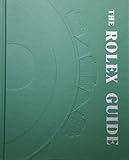
For structured background on authenticity, correctness, condition, model references, bracelets, movements, accessories, and buying, a vintage Rolex reference guide such as The Vintage Rolex Field Guide by Morningtundra can help organize your research. Independent coverage reports that the book can be found on Amazon.com. A book is a research aid, not a substitute for an in-person examination by a qualified specialist.
Rank #4
Disclosure: WatchRanker may earn a commission if a qualifying retail link is added to this recommendation.
Independent reader supportYour contribution helps us test, update, and keep practical guides available for everyone.How can you tell if a vintage Rolex dial is original?
You cannot establish dial originality from a single photograph or from the reference number alone. Compare the dial printing, luminous material and plots, handset, depth-rating layout, subdial configuration, and approximate production period with reference-specific examples, then have a qualified vintage specialist examine the watch.
Useful evidence includes consistent serial and date information, a documented ownership or service history, movement photographs, and clear photographs taken straight on and at an angle. “Gilt,” “meters first,” “tropical,” and “Paul Newman” describe potentially important characteristics, but each term needs to match the rest of the watch.
How much is a 1960s Rolex worth?
A 1960s Rolex does not have one reliable value without a date, geography, condition grade, originality assessment, and source methodology. Auction results are useful market references, but they are not retail price lists or guaranteed resale values.
Do these 3 things before closing this tab:
1Scan for outdated or missing drivers - takes under a minute2Clear out junk files and repair common Windows errors3Fix the driver behind crashes, sound loss and screen glitches| Example | Recorded result | What the result does—and does not—show |
|---|---|---|
| Circa-1967 Rolex Submariner 5513 meters first | $30,240 | Phillips’ 2022 catalogue record shows one documented auction result; it is not a price for every 5513. |
| Circa-1968 stainless-steel Rolex Daytona 6239 Paul Newman | $381,000 | Phillips’ 2024 catalogue record illustrates the premium attached to a particular documented example. |
| Circa-1967 stainless-steel Rolex Daytona 6239 Paul Newman | HK$3,402,000 | A Phillips Hong Kong catalogue record shows another result in a different currency and venue; it should not be directly averaged with the dollar result. |
These figures illustrate dispersion. A normal steel example, an altered example, a rare dial, and a documented original-owner watch can occupy entirely different market tiers. No reliable independent statistic in the research establishes a single average market price for all 1960s Rolex watches, so an apparently precise average would be misleading.
Where should you source a high-value 1960s Rolex?
For rare or expensive watches, look for a seller who provides reference-specific photographs, condition disclosures, provenance, service records, and a clear inspection or return process. Auction catalogues from established houses can be useful because they document reference, condition, provenance, estimates, and realized prices, but a catalogue entry does not eliminate the need to inspect the individual watch.
Use vintage Rolex auction catalogue records to study how comparable watches are described and priced. Do not assume that a particular lot is currently available, that an auction result equals a private-sale price, or that an auction-house listing removes the need for independent authentication.
How should you service a 1960s Rolex after buying it?
Separate technical service from collectible preservation. A technical service can improve running performance and reliability, while polishing, dial replacement, hand replacement, bezel replacement, or other interventions can affect originality and collector value.
Best Value
Rolex states, “Every Official Rolex Jeweler and Rolex affiliate is authorized to receive your Rolex watch for servicing,” according to its official watch-care and servicing guidance. An Official Rolex Jeweler or Rolex affiliate is an appropriate service pathway when authorized technical support is the priority. A qualified independent vintage specialist may be the better consultation for a valuable watch where preserving period-correct parts and case geometry is central to the decision.
Before authorizing work, ask for a written description of the proposed service, polishing policy, parts that may be replaced, and the return of removed components where possible. Do not assume that Rolex-branded service history proves that every component currently fitted to the watch is period-correct; request the actual service records and replaced-parts information.
Which 1960s Rolex is easiest for a beginner to buy?
The Explorer 1016 is the simplest starting point in this shortlist because it has a time-only display and fewer major external components to evaluate than the GMT-Master or Daytona. A beginner should still use a vintage Rolex specialist, because dial, handset, case, movement, bracelet, and service details can materially change the quality of any reference.
The Submariner 5513 is also approachable as a design, but its long production run creates many legitimate variations. The GMT-Master 1675 requires careful study of the bezel and 24-hour hand. The Daytona 6239 demands the greatest expertise because its value can depend heavily on dial originality, configuration, and provenance.
Quick wins for a faster PC:
Repair Windows errors before they cause bigger problemsFix Now →Scan for outdated or missing drivers - takes under a minuteDriver Scan →Frequently Asked Questions
What is the best vintage Rolex from the 1960s?
The best vintage Rolex from the 1960s depends on the buyer. Choose the Explorer 1016 for restrained time-only simplicity, the Submariner 5513 for iconic tool-watch character, the GMT-Master 1675 for a date and second time zone, and the Daytona 6239 for specialist collecting.
How much is a 1960s Rolex Submariner worth?
A 1960s Rolex Submariner 5513 has no single reliable market value because condition, originality, geography, date, and documentation differ. Phillips recorded $30,240 for a circa-1967 meters-first 5513 in its 2022 catalogue, but that result does not price every 5513.
What does meters first mean on a Submariner?
“Meters first” means the Submariner dial prints the metric depth rating before the feet rating. The layout is an important period clue, but it does not prove that an individual vintage watch is currently water-resistant.
Is a Rolex 1675 GMT-Master practical to wear every day?
A Rolex 1675 GMT-Master can be practical to wear regularly because it offers a date and dual-time display, but daily suitability depends on the individual watch’s movement, seals, case, bracelet, and service condition.
The Tool Desk
Outbyte Driver Updater FREEScan for outdated or missing drivers - takes under a minuteDriver Scan →Outbyte PC Repair FREEClear out junk files and repair common Windows errorsFree Scan →Is a Rolex 6239 a good investment?
A Rolex Daytona 6239 is not automatically a good investment. Auction results can be very high for particular original, documented examples, but the financial outcome depends on authenticity, condition, configuration, provenance, market conditions, and purchase price.
The Bottom Line
Choose the Explorer 1016 for understated simplicity, the Submariner 5513 for iconic tool-watch character, the GMT-Master 1675 for practical dual-time functionality, and the Daytona 6239 for the deepest collector appeal—and the greatest financial risk. In every case, buy the individual watch rather than the reference number: originality, condition, documentation, and professional inspection matter more than a compelling seller story.
Quick Recap
Product prices and availability are accurate as of the date/time indicated and are subject to change. Any price and availability information displayed on Amazon at the time of purchase will apply.