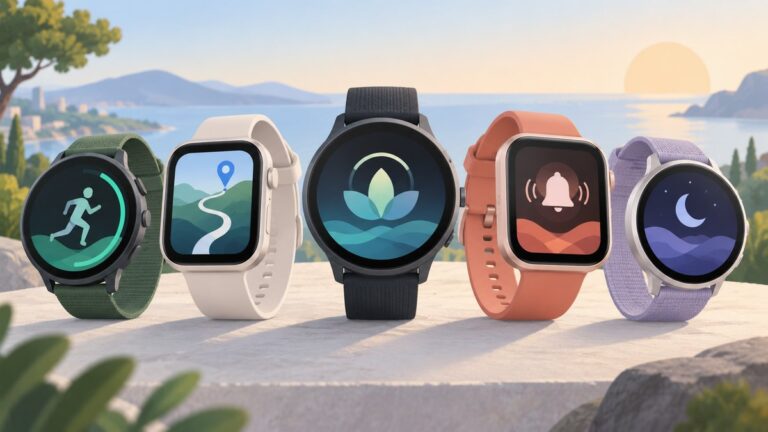
Yes. The Pixel Watch 3 offers opt-in Loss of Pulse Detection: while you wear it, the watch can identify a possible loss of pulse, check whether you respond, and attempt to contact emergency services if you do not. It is not a diagnosis of cardiac arrest, does not guarantee detection or a connected call, and is not a substitute for prescribed monitoring or emergency care.
Google says the feature is not intended for people under 22, people identified as being at high risk for sudden cardiac death, or people who need continuous or clinician-directed cardiac monitoring. People with conditions such as coronary artery disease or cardiomyopathy, or unexplained fainting, should not rely on it.
What Loss of Pulse Detection does—and does not do
The feature is designed to detect a potential loss of pulse, an event that can occur during cardiac arrest, respiratory or circulatory failure, overdose, or poisoning. It does not diagnose the cause, treat the event, or confirm that someone is in cardiac arrest. Its purpose is to check for a possible emergency and, if the wearer does not respond, try to summon help.
Google’s current support page lists the feature for Pixel Watch 3 and Pixel Watch 4. It must be set up, the watch must be worn and functioning, and the feature is available only in supported regions. Google warns that it may miss an event or be unable to place a call. Google Pixel Watch Help: Loss of Pulse Detection
Do these 3 things before closing this tab:
1Repair Windows errors before they cause bigger problems2Fix the driver behind crashes, sound loss and screen glitches3Clear out junk files and repair common Windows errors#1 Best Overall

- The Google Pixel Watch 3 is designed for performance, with advanced fitness from Fitbit[1,2]; the 45mm screen is twice as bright and 40% larger than before, making it easier to see your stats and info[1]
- Maximize your performance with advanced running features; build custom run workouts and get real-time guidance and advanced form tracking[3]
- Enhance your run routine with Fitbit Premium; Google AI uses your goals, past runs, and readiness to power personalized run recommendations[3]
- Know what your body is ready for each day with readiness; it uses sleep, resting heart rate, and heart rate variability to show if you’re ready to take on a workout or prioritize recovery[3]
- Cardio load measures how hard your heart works so you can see how hard you’ve pushed; compare trends to see if you’re under- or over-training[3]
How detection and the emergency call work
- Optical sensing: The watch’s optical heart-rate sensor uses green light to monitor signals associated with blood flow. If it detects signs of pulselessness, it uses red and infrared lights for additional pulse-related signals.
- Movement checks: The watch’s motion sensor checks whether you are moving. Google says algorithms combine pulse and movement signals to reduce false alarms.
- Check-in: If a possible loss of pulse is detected, the watch vibrates and asks whether you need help. If it detects movement or a pulse, the check-in can be dismissed automatically.
- Alarm and countdown: If no movement or pulse is detected, the watch plays a loud sound and starts a countdown after about 15 seconds. You can dismiss the alert if you do not need help.
- Attempted emergency call: If the countdown is not dismissed, the watch or connected phone attempts to call emergency services. If the call connects, an automated message can say that a pulse was not detected and share your location.
Detection and dispatch are separate steps: sensing a possible loss of pulse does not guarantee that emergency services can be reached. Battery, connectivity, regional availability, device configuration, and network conditions can affect the call. Google describes development testing that included clinical data, real-life data, and simulations; those descriptions are not an independent accuracy measure or a guarantee of performance in an individual emergency. Google’s Pixel Watch 3 announcement
How to turn it on
As of October 2026, Google’s listed setup path is:
- Open the Google Pixel Watch app on the paired phone.
- Tap Safety & emergency.
- Tap Loss of Pulse Detection.
- Follow the on-screen instructions. Sign in to Personal Safety with the Google Account used by the watch if prompted.
Setup is opt-in; do not assume the feature is active just because you own the watch. The wearer must be signed in to Personal Safety with a Google Account.
If the setting is missing
- Confirm the watch is a Pixel Watch 3 or Pixel Watch 4 and that you are in a supported country.
- Update Personal Safety on the watch and the Google Pixel Watch app on the phone.
- Check that setup is being completed under the Google Account associated with the watch.
App labels can change with software updates, so use Google’s current support instructions if the menu differs. Google’s setup and availability guidance
Does it work without a phone?
Calling depends on whether the watch is the Wi-Fi or LTE model. A Wi-Fi watch relies on its paired phone; an LTE watch can call without the phone nearby only when it has the required active connection and coverage.
Rank #2

- The Google Pixel Watch 3 is designed for performance, with advanced fitness from Fitbit[1,2]; the 41mm screen is twice as bright and 10% larger than before, making it easier to see your stats and info[1]
- Maximize your performance with advanced running features; build custom run workouts and get real-time guidance and advanced form tracking[3]
- Enhance your run routine with Fitbit Premium; Google AI uses your goals, past runs, and readiness to power personalized run recommendations[3]
- Know what your body is ready for each day with readiness; it uses sleep, resting heart rate, and heart rate variability to show if you’re ready to take on a workout or prioritize recovery[3]
- Cardio load measures how hard your heart works so you can see how hard you’ve pushed; compare trends to see if you’re under- or over-training[3]; and receive a daily target based on cardio load and readiness levels
| Pixel Watch configuration | What emergency calling depends on | Practical implication |
|---|---|---|
| Wi-Fi | The paired phone must generally be nearby, connected to the watch over Bluetooth, charged, working, and connected to a usable mobile network. | Without the Bluetooth-connected phone, the watch cannot independently place the emergency call or let you speak to responders from the watch. |
| LTE | An active LTE connection, adequate network coverage, sufficient battery, and emergency-calling support in the region. Some regions may require an active carrier plan or Google Safety Signal service. | It can be more independent when you are away from your phone, but LTE capability alone does not guarantee a call. |
Neither configuration can help if the watch is off, out of battery, not being worn, or unable to obtain an adequate signal. Google Pixel Watch emergency-safety requirements
Where it is available—and what happens when you travel
Google’s support page, checked for this article on October 3, 2026, lists Loss of Pulse Detection in Austria, Belgium, Canada, Denmark, France, Germany, Ireland, Italy, the Netherlands, Norway, Portugal, Spain, Sweden, Switzerland, the United Kingdom, and the United States. Google says it may add countries as regulatory clearance is obtained. In an unsupported region, the feature is temporarily suspended and resumes automatically when you return to a supported region.
Google announced U.S. FDA clearance on February 26, 2025, and said U.S. rollout would begin at the end of March 2025; the feature had initially launched in selected European markets in 2024. Clearance and availability do not mean the watch will detect every event or successfully connect every call. Google’s FDA-clearance announcement
How reliable is it, and what can cause a check-in?
There is no universal false-alarm rate or accuracy percentage in the cited public materials, so a precise probability of detection cannot be given. Google explicitly warns that a poor sensor reading during normal activity can prompt a check-in and that the feature may fail to detect a loss-of-pulse event or place an emergency call.
Fit and signal quality can be affected by factors such as a loose or shifted watch, poor skin contact, movement, an obstructed or dirty sensor, cold or reduced blood flow, or a damaged sensor surface. These are possible contributors, not a complete list or a diagnosis of why a particular alert occurred.
Rank #3

- The Google Pixel Watch 3 is designed for performance, with advanced fitness from Fitbit[1,2]; the 45mm screen is twice as bright and 40% larger than before, making it easier to see your stats and info[1]
- Maximize your performance with advanced running features; build custom run workouts and get real-time guidance and advanced form tracking[3]
- Enhance your run routine with Fitbit Premium; Google AI uses your goals, past runs, and readiness to power personalized run recommendations[3]
- Know what your body is ready for each day with readiness; it uses sleep, resting heart rate, and heart rate variability to show if you’re ready to take on a workout or prioritize recovery[3]
- Cardio load measures how hard your heart works so you can see how hard you’ve pushed; compare trends to see if you’re under- or over-training[3]
- If an alert appears: Respond to the check-in. If no emergency exists, use the on-screen control to dismiss the alarm and countdown.
- If check-ins recur: Adjust the watch for steady skin contact, keep the sensor surface clean, and update the watch and apps. Do not treat an isolated check-in as proof of a medical event or as proof that the feature is malfunctioning.
- If someone is unresponsive: A bystander should assess the person and call emergency services directly if needed rather than waiting for the watch’s automated sequence.
Google notes that the feature depends on a usable sensor signal, battery, connectivity, and regional support; an event may not be detected, and an emergency call may not connect. Google’s limitations and safety guidance
Independent reader supportYour contribution helps us test, update, and keep practical guides available for everyone.Who should not rely on it
Google says Loss of Pulse Detection is not intended for people under 22; people healthcare professionals have identified as at high risk for sudden cardiac death; people with conditions such as coronary artery disease or cardiomyopathy; people with unexplained fainting or syncope; or people who require continuous or prescribed cardiac monitoring. If any of these apply, follow clinician guidance rather than relying on a consumer watch.
What’s actually slowing this PC down?
Pick the symptom - the matching free tool is one click away.
The feature does not replace a medical-grade monitor, clinician-directed observation, CPR, an automated external defibrillator (AED), or emergency medical treatment. It should never be a reason to delay calling for help. Google’s safety and intended-use information
How it differs from other Pixel Watch safety features
| Feature | What it is designed to do | How it differs from Loss of Pulse Detection |
|---|---|---|
| Loss of Pulse Detection | Passively check for a possible absence of pulse, then check for response and potentially attempt an emergency call. | Begins with a suspected loss of pulse, not a user request, a rhythm classification, or a fall. |
| ECG | Record electrical heart activity when the user starts a recording, for specific rhythm information. | It is a user-initiated recording, not passive pulselessness detection or a replacement for a clinical ECG. |
| Irregular-rhythm notifications | Look for signs associated with atrial fibrillation. | They concern a possible irregular rhythm, not the absence of a detectable pulse. |
| Fall Detection | Respond to a suspected hard fall. | It starts from a suspected fall; a serious medical event can occur without a detectable fall. |
| Emergency SOS | Let the wearer manually initiate an emergency call. | It depends on the wearer being able to start it, whereas Loss of Pulse Detection is designed to check in and potentially escalate when the wearer may be unresponsive. |
These consumer features have different purposes; none is a general-purpose cardiac diagnostic system. Google Pixel Watch safety-feature guidance
Is the Pixel Watch 3 worth buying for this feature?
It may be a useful supplementary safety feature for an eligible adult who lives in a supported region, wears the watch consistently, and understands its limits. It should not be the deciding safeguard for someone who needs professional monitoring or clinical cardiac surveillance.
- Consider LTE if being able to call while away from the phone matters and you can maintain the required service and coverage.
- Wi-Fi may be sufficient if you usually carry the paired phone and can keep it charged and connected nearby.
- Consider another kind of support if the wearer needs caregiver escalation or professional monitoring; a dedicated medical-alert system may be a better fit. For prescribed cardiac monitoring, discuss an appropriate clinical device with a healthcare professional.
The watch needs to be worn, powered, and able to obtain a usable sensor signal. Before relying on the feature, complete setup, keep the watch charged, verify the relevant phone or LTE connection, add medical information and emergency contacts separately, and learn how to start Emergency SOS manually. Tell household members what the alarm may sound like. None of these steps turns the feature into guaranteed detection or dispatch.
The Tool Desk
Outbyte PC Repair FREEClear out junk files and repair common Windows errorsFree Scan →Outbyte Driver Updater FREEFix the driver behind crashes, sound loss and screen glitchesFind Drivers →Quick Recap
Product prices and availability are accurate as of the date/time indicated and are subject to change. Any price and availability information displayed on Amazon at the time of purchase will apply.