What’s actually slowing this PC down?
Pick the symptom - the matching free tool is one click away.
Short answer: Nike’s Vapor Strobe eyewear showed promise on specific visual-memory and eye–hand-coordination tests, but the research does not prove that it broadly improves vision, permanent memory, reaction time, or real-game performance for everyone.
The glasses used liquid-crystal lenses to alternate rapidly between transparent and opaque states. That temporary loss of visual information made catching, targeting, and other drills more demanding. Some controlled studies reported better performance after training; others found no significant improvement, and positive results did not consistently transfer to unrelated tasks or competition.
As an Amazon Associate I earn from qualifying purchases.
What Nike Vapor Strobe eyewear was
The product was sold under names including Nike Vapor Strobe and Nike SPARQ Vapor Strobe, within Nike’s SPARQ sensory-performance training ecosystem. It was not ordinary sunglasses, blue-light eyewear, or a flashing-light therapy device.
Recommended Free Tools
Its liquid-crystal lenses alternated between clear and opaque states. The cited research description lists eight difficulty levels, with opaque intervals of approximately 67 to 900 milliseconds and a constant clear interval of 100 milliseconds. Depending on the setting, the effective alternation rate was roughly 1–6 Hz.
#1 Best Overall

- Nike Elite one-piece lens for superior coverage and clarity
- Ventilated rubber nose bridge reduces fogging
- Adjustable temple arms with rubber tips for enhanced grip and optimal fit
- Injected frame material is derived from at least 45% castor bean oil
- UVA/UVB Protection
This is a form of temporal visual occlusion: instead of seeing a continuous stream of information, the wearer sees intermittent snapshots. During a drill, the athlete has to retain what was visible, predict what is happening during the blackout, and coordinate movement when the scene reappears.
The distinction matters. A device that makes a task harder can improve training specificity, but difficulty by itself is not evidence that the device produces a lasting or general benefit.
What the visual-memory research actually found
The key visual-memory study combined physical activity with a partial-report memory test. Participants performed activities such as playing catch while wearing either stroboscopic eyewear or transparent control eyewear. Researchers tested visual memory before and after training, including an immediate condition and a delayed condition 24 hours later.
The stroboscopic-training groups showed better retention at longer stimulus-to-cue delays—reported at approximately 640 to 2,560 milliseconds. In the delayed group, the benefit was still measurable at the 24-hour assessment. The published study is indexed by PubMed.
That result supports a narrow conclusion: stroboscopic training can improve performance on some measures of short-term visual-information retention. It does not show that users develop photographic memory, higher general intelligence, or better long-term memory. Nor does it demonstrate that an athlete will automatically remember plays, opponents, routes, or rapidly changing game scenes more effectively.
“Improves visual memory” is therefore too broad unless it is followed by the important qualification: the improvement was observed on a particular laboratory memory measure after a particular training protocol.
Rank #2
- Lenses are prescription ready (rx-able)
- Max optics provide precise clarity from all angles
- Lightweight, durable nylon frame
- A6-base frame offers everyday coverage
- Durable, high tension hinges
What broader visual-cognition research found
A Duke research program investigated whether stroboscopic training could produce wider visual-cognitive benefits. The protocol used Nike Vapor Strobe eyewear, transparent control eyewear, computer-based tests, and physical assessments before and after training. The full report is available through the National Library of Medicine.
The most important distinction is between three kinds of outcome:
- Trained-task improvement: the wearer gets better at the drill or test being practiced.
- Near transfer: the improvement carries to a similar but untrained task.
- Sport transfer: the improvement appears in actual practice or competition.
These are not interchangeable. A positive result on a trained computer task is useful evidence that the intervention affected that task, but it is not proof of a universal improvement in visual cognition or athletic performance. The research program itself was exploratory, so its findings should not be converted into a blanket claim about every visual ability.
The hand–eye-coordination evidence is mixed
A study published in Sport Sciences for Health examined eye–hand coordination with Nike Vapor Strobe eyewear. Participants first habituated to the eyewear for five minutes. The strobe condition used 100 milliseconds of clear vision followed by 150 milliseconds of opacity. During training, participants completed four sets of six trials, for a total of 480 illuminated targets.
Researchers assessed performance immediately after training, after 10 minutes, and after 10 days. The study reported significant treatment effects on its eye–hand-coordination measure at the post-training time points. However, a separate visual-search task showed no significant improvement, weakening the case for broad transfer to visual cognition. The study details are available from Springer.
Quick wins for a faster PC:
Repair Windows errors before they cause bigger problemsFix Now →Scan for outdated or missing drivers - takes under a minuteDriver Scan →The literature is not uniformly positive. Another short eye–hand-coordination intervention reported no significant improvement and recommended further research using different exposure durations, frequencies, and drills. That report is available as a PDF.
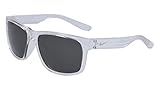
Rank #3

- NIKE Silver Flash Sport Men's Sunglasses NIKE SHOW X1 DX6520 011 58
These results may differ because the studies used different:
- Training durations and numbers of trials;
- Strobe frequencies and clear/opaque duty cycles;
- Participant skill levels and baseline abilities;
- Coordination tests and target arrangements;
- Statistical approaches to baseline performance; and
- Outcome timing, such as immediate performance versus delayed retention.
The defensible conclusion is not that the glasses either always work or never work. Rather, a particular protocol may improve a particular coordination task, while a shorter or differently designed intervention may not.
Did the gains transfer to real sports?
Evidence for broad sports-performance improvement is weaker than the product-style headline suggests. Laboratory target tests and controlled drills are valuable, but they do not automatically predict better decisions, passes, catches, shots, defensive reactions, or game statistics.
The Tool Desk
Outbyte PC Repair FREERepair Windows errors before they cause bigger problemsFix Now →Outbyte Driver Updater FREEScan for outdated or missing drivers - takes under a minuteDriver Scan →A 2026 collegiate-basketball study used Nike Vapor Strobe eyewear through the Senaptec Strobe app, with progressively changing strobe settings during basketball-specific training. It compared stroboscopic training plus sport-specific training with sport-specific training alone and regular training. This is more sport-relevant than a purely laboratory task, but it still does not establish that every athlete or consumer will improve competitive performance. Read the Frontiers study.
When evaluating a sports claim, ask:
- Was the outcome a standardized laboratory test, a sport-specific drill, or an actual game statistic?
- Was the control group given equivalent ordinary practice?
- Was the study randomized, and were assessors blinded?
- How many participants were included?
- Were benefits maintained after training stopped?
- Did the participants resemble the intended user—for example, trained athletes rather than general consumers?
At present, the evidence is strongest for selected visual-memory, anticipatory-timing, and coordination outcomes under particular protocols. It does not establish a universal improvement in vision, memory, reaction time, or game performance.
How stroboscopic training might work
The proposed mechanism is straightforward:
- The lenses intermittently remove visual input.
- The athlete must act from incomplete visual snapshots.
- The brain has to retain, interpolate, and predict information between visible moments.
- Repeated practice may strengthen perception–action coupling and anticipatory timing.
This is a plausible training explanation, not proof that the brain permanently becomes faster or that visual processing improves in every setting. Related research has found that stroboscopic conditions can increase attentional demand and alter performance depending on the task and strobe rate. See the related attentional-demand research.
Rank #4

- Lightweight frame design for all-day comfort
- Includes protective carrying case
- Suitable for everyday wear and outdoor activities
Safety: the glasses intentionally reduce vision
Because the eyewear obscures vision, it creates situational hazards. The Senaptec safety manual advises using it only in a clear training space and not while driving, operating heavy machinery, or taking part in activities where collision is possible. It also states that the eyewear is not sunglasses and does not provide UV protection.
Free tools Windows power users keep installed
One-click scans. No signup required.
A sensible progression is:
- Begin with stationary drills and the easiest setting.
- Remove obstacles and agree on a stop signal with a coach or partner.
- Use supervision for catching, striking, balance, or movement drills.
- Stop immediately if dizziness, headache, nausea, visual discomfort, or disorientation occurs.
Anyone with a history of photosensitive seizures, unexplained fainting, significant vestibular symptoms, or relevant eye or neurological disease should ask a clinician before use. The eyewear should not be described as a treatment for ADHD, concussion, amblyopia, visual impairment, or another medical condition without condition-specific clinical evidence and appropriate regulatory support.
Can you still buy Nike’s glasses?
Nike’s original Vapor Strobe product appears to be discontinued. A later thesis reports that Nike discontinued manufacture after the relevant study, but this is not verified here through a current Nike announcement. It is more accurate to describe Nike Vapor Strobe as a historical product than to imply that Nike currently sells it. See the thesis attribution.
Current commercial stroboscopic eyewear is sold under the Senaptec brand. Senaptec says its eyewear is controlled by a Bluetooth smartphone app and markets the products for sports and general performance—not as a guaranteed medical treatment. Its product pages also make commercial claims about the number of controlled studies and athletes associated with its technology; those claims should be treated as manufacturer claims rather than an independent systematic review.
Current Senaptec options
| Model | Price seen | Main features | Most suitable for |
|---|---|---|---|
| Strobe Classic | $299 | Four lens patterns, eight strobe-rate settings, app control, rechargeable battery, case and accessories, one-year manufacturer’s-defect warranty | Most sports users who need basic whole-field or left/right strobing |
| Strobe Pro | $399 | Eight patterns, including upper/lower visual-field splits, app control, eight difficulty levels, rechargeable battery, one-year warranty | Intermediate, high-school, and collegiate athletes needing visual-field-specific drills |
| Strobe Elite | $799 | Eleven quadrant-based patterns, app control, eight strobe-rate settings, rechargeable battery, one-year warranty | Elite or specialized programs focused on peripheral and sport-specific visual demands |
Prices are the figures listed in the supplied commercial information and can change. The Classic is the most defensible starting point for a buyer with a clear training objective. The Pro may make sense when upper/lower visual-field restrictions are central to the program. The Elite’s additional patterns are aimed at specialized users; there is no evidence that its higher price produces proportionally greater benefits.
For many people, working with a sports-vision professional or coach may be more valuable than owning advanced eyewear without a structured progression. The relevant question is not whether a product has more modes, but whether those modes match a measurable goal and a safe, repeatable drill.
How to judge the claim before buying
Use this checklist:
- Define the outcome: visual-memory retention, catching, striking, balance, reaction time, or sport-specific decisions.
- Match the evidence: look for research measuring that same outcome rather than a nearby laboratory task.
- Check the protocol: strobe rate, clear/opaque timing, session length, number of trials, and follow-up period all matter.
- Separate difficulty from benefit: a slower or more demanding setting may make training harder without being proven superior.
- Plan transfer: progress from stationary work to controlled movement and then to sport-specific drills.
- Account for risk and cost: these are expensive niche products that reduce vision and do not guarantee individual improvement.
Bottom line
Nike’s stroboscopic eyewear did not simply “improve visual memory and hand–eye coordination” as a universal product fact. Controlled research found better performance on specific visual-memory measures and, in one published study, on a practiced eye–hand-coordination task. A separate report found no significant coordination benefit, and the positive coordination study found no significant improvement on a visual-search transfer task.
The best description is that stroboscopic eyewear is a training constraint: it may help certain athletes practice prediction, visual retention, and perception–action skills when the protocol, drill, dosage, and supervision are appropriate. It is not corrective eyewear, a proven general vision enhancer, or a guarantee of better performance in competition.
Quick Recap
Product prices and availability are accurate as of the date/time indicated and are subject to change. Any price and availability information displayed on Amazon at the time of purchase will apply.
Recommended Free Tools