Schwarz Etienne makes mechanical movements and says its current calibres are developed and assembled in-house at Villa Sonnenheim in La Chaux-de-Fonds. The word “integrated” needs a qualification: a 2014 Swiss watch-industry report described machining, surface treatments and decoration as work then performed by partner firms, alongside stages managed by Schwarz Etienne. Its four movement families—ASE, MSE, TSE and ISE—show how the manufacture approaches winding, complications and what the wearer sees on the dial side.
What “integrated manufacture” means at Schwarz Etienne
Schwarz Etienne’s current movement overview says its movements are developed and assembled in-house at Villa Sonnenheim. That describes significant control over movement design and assembly, but it does not establish that every component or production operation is performed under one roof.
A Federation of the Swiss Watch Industry report published on March 19, 2014, gives a more detailed picture of the arrangement at that time. It said Schwarz Etienne managed development, logistics, quality control, pre-assembly, complete assembly and casing-up, while close partner companies carried out machining, surface treatments and decoration. This is a dated account of the structure described in 2014, not evidence that the same supplier arrangement remains unchanged today. Federation of the Swiss Watch Industry, March 19, 2014.
The distinction matters: “in-house” can describe movement development and assembly without meaning that every part is made internally. Schwarz Etienne’s present-day description establishes the former; the 2014 report documents how outside specialists contributed to the latter stages of production at that time.
PC Slower Than It Used to Be?
A free scan shows the junk files, broken settings and background clutter dragging Windows down - then fixes them in one click.Free scan · Windows 10 & 11Outdated Drivers Are Slowing You Down
One free scan finds every outdated or missing driver and matches the right update for your exact hardware.Free scan · exact hardware match#1 Best Overall
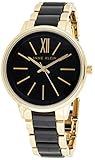
- Dress watch featuring gold-tone case and sleek black dial
- 37 millimeter metal case with mineral dial window
- Japanese quartz movement with analog display
- Resin band with jewelry-clasp closure
- Water resistant to 30 meter (99 feet): In general, withstands splashes or brief immersion in water, but not suitable for swimming.
From a movement business founded in 1902 to a watch brand
Origins and early work
Schwarz Etienne dates its founding to 1902, when Paul Arthur Schwarz and Olga Etienne established a mechanical-movement business in La Chaux-de-Fonds, Switzerland. The company’s history says its movements were used in watches sold under names including Alpha, Astin, Sultana Le Phare and Venus. It also recounts later partnerships with Caran d’Ache, Chanel, Dunhill and Mauboussin; these are part of the company’s historical account and do not imply current customer relationships. Schwarz Etienne’s official history.
Changes through the quartz era
According to the company, the founders’ sons took control in 1940. Schwarz Etienne says it diversified during the 1970s and 1980s, then returned in 1985 to its founding focus on movements and timepieces. Its own history places Raffaello Radicchi’s acquisition of the business in 2007.
The acquisition date differs in the Federation of the Swiss Watch Industry’s 2014 account, which says Radicchi acquired the business in 2003. The available sources therefore do not support presenting one year as undisputed: 2007 is the date on Schwarz Etienne’s current history page, while the federation’s report gives 2003. That report also says Schwarz Etienne acquired a majority holding in Radicchi Horlogerie production companies in 2013. Federation of the Swiss Watch Industry report.
How the four movement families differ
The current movement page divides Schwarz Etienne’s calibres into four families. The distinctions are useful for understanding the mechanics and dial-side display, but the company’s overview does not provide a complete specification table for every current watch or establish a movement-to-model assignment for all collections. Schwarz Etienne movement overview.
Quick wins for a faster PC:
Repair Windows errors before they cause bigger problemsFix Now →Scan for outdated or missing drivers - takes under a minuteDriver Scan →Rank #2

- Wall-to-wall mineral crystal lens
- Glossy black dial with genuine diamond at 12; rose gold-tone hands and markers
- Black ceramic adjustable link bracelet; jewelry clasp and extender
- Water resistant to 100 feet (30M)
- 33mm round rose gold-tone case; Wall-to-wall crystal with black dial frame
| Family | Winding or complication | What Schwarz Etienne highlights |
|---|---|---|
| ASE | Automatic, with a micro-rotor | The brand describes a variable-inertia balance as less susceptible to positional errors than an index-adjusted balance, with greater rate stability. This is the manufacturer’s technical claim, not an independently verified performance comparison. |
| MSE | Manual winding; twin barrels | Six bridges with hand-polished angles, concave jewel countersinks, a sandblasted rhodium-plated mainplate and straight Côtes de Genève. |
| TSE | Tourbillon family | The TSE 121.00 is described as a flying tourbillon without an upper bridge. The brand also says several TSE calibres invert the movement to put the micro-rotor on the dial side. |
| ISE | Inverted movement | Designed to show the regulating organ and micro-rotor from the dial side. The ISE 100.11 is given as an example with a visible date mechanism. |
ASE: automatic winding with a micro-rotor
The ASE family uses a micro-rotor rather than a more prominent full-size rotor. Schwarz Etienne also points to its variable-inertia balance and makes a comparative claim about positional errors and rate stability. The page does not supply independent test results, so those points are best read as the maker’s explanation of its design intent rather than a verified advantage over other movements.
MSE: a hand-wound movement with finishing on display
The MSE family is manually wound and uses twin barrels. The finishing details Schwarz Etienne identifies—particularly the hand-polished bridge angles and decorated mainplate—make this family a useful example of the visual craft the company chooses to emphasize.
TSE: tourbillons and inverted layouts
TSE is the tourbillon family. Schwarz Etienne describes the TSE 121.00 as a flying tourbillon, meaning its tourbillon cage has no upper bridge. The brand also notes that some TSE calibres invert the movement so the micro-rotor appears on the dial side; this is a layout choice, not a feature established for every TSE calibre.
ISE: showing the mechanism from the front
ISE calibres are inverted to make the regulating organ and micro-rotor visible from the dial side. The brand’s ISE 100.11 example also exposes a date mechanism. This orientation shifts the usual view of a watch movement: parts commonly seen through a caseback become elements of the front-side display.
Recommended Free Tools
Rank #3

- 22mm petite case; 0.87" diameter
- Floral shaped dial cover accented with 109 clear premium crystals; mirror on underside of cover
- Champagne sunray dial with gold-tone hands and markers
- Gold-tone stainless steel mesh bracelet with adjustable end links; jewelry clasp and extender; inner band circumference 6 3/4"
- Water resistant to 100 feet (30M)
Collections and watches currently featured
Schwarz Etienne’s homepage lists five collections: SYNERGY, 1902, GEOMETRY, ROSWELL and LA CHAUX-DE-FONDS. The company characterizes them, respectively, as a dialogue with invited watchmakers, a bridge between heritage and renewal, a meeting of mechanics and design, a contemporary line, and a focus on complicated watches. Schwarz Etienne homepage.
The homepage features the 1902 Petite Seconde, 1902 GMT and 1902 Reserve de Marche, as well as a 2026 1902 Petite Seconde Heure Dorée novelty. Those are examples shown on the homepage when reviewed; collection lineups and availability can change. The selection illustrates how the 1902 collection connects the brand’s founding date to current watches, but it does not establish which movement family powers each featured model.
What the evidence does—and does not—establish
Schwarz Etienne has a documented history as a movement maker dating to 1902, and its current materials describe movement development and assembly at Villa Sonnenheim. The 2014 federation report adds a concrete, historically bounded account of outside partners’ role in component machining, surface treatment and decoration. Taken together, these sources support describing the company as a manufacture with in-house movement development and assembly, while avoiding the stronger claim that all manufacturing operations are performed internally today.
The available sources do not provide production volumes, market share, independent movement-performance testing or a complete current model-to-calibre list. They also disagree on whether Radicchi acquired the business in 2003 or 2007, so the chronology should retain attribution to each source rather than flattening the discrepancy.
Quick Recap
Product prices and availability are accurate as of the date/time indicated and are subject to change. Any price and availability information displayed on Amazon at the time of purchase will apply.