What’s actually slowing this PC down?
Pick the symptom - the matching free tool is one click away.
There is no confirmed Garmin epix 3 release date because Garmin has not announced a separate epix 3. Garmin’s fēnix 8 Series, announced on August 27, 2024, added AMOLED models alongside solar versions and effectively took over the role that the AMOLED epix line had occupied.
As of August 12, 2026, the sensible comparison is therefore between the AMOLED or solar fēnix 8, the newer fēnix 8 Pro, and the older epix Pro (Gen 2). A fēnix 9 may arrive in the second half of 2026 according to unconfirmed reports, but Garmin has not confirmed its name, launch date, specifications, or price.
The short answer: epix 3 was never announced
Garmin announced the epix Pro (Gen 2) on May 31, 2023. It was a premium outdoor and multisport watch with an AMOLED display, maps, training tools, health features, three case sizes, and a built-in LED flashlight.
| # | Preview | Product | Price | |
|---|---|---|---|---|
| 1 |

|
Garmin fēnix® 8, 47mm, Black | $742.48 | Buy on Amazon |
| 2 |
|
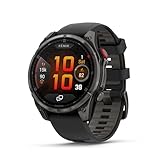
Garmin fēnix® 8 Pro, 51mm, Sapphire, DLC Titanium, Black/Pebble Gray | $1,196.86 | Buy on Amazon |
| 3 |

|
Garmin fēnix® 8, Sapphire, 43mm, Fog Gray/Dark Sandstone | $999.99 | Buy on Amazon |
| 4 |

|
Garmin fēnix® 8 Solar, Sapphire, 51mm, DLC Titanium, Black/Pebble Gray | $1,098.00 | Buy on Amazon |
| 5 |

|
Garmin fēnix® 8, 43mm, Whitestone | $799.99 | Buy on Amazon |
On August 27, 2024, Garmin launched the fēnix 8 Series with the choice of AMOLED or solar displays. That removed the clearest reason to maintain a separate epix product family: buyers could now get a bright, high-contrast AMOLED screen in a fēnix watch while retaining the fēnix line’s solar option and outdoor identity.
Garmin has not formally stated that the epix brand is permanently discontinued. The careful conclusion is that no separate epix 3 has been announced, and the AMOLED fēnix 8 appears to be the practical continuation of the epix concept. Readers should not treat an epix 3 launch as imminent.
#1 Best Overall
- Advanced multisport GPS smartwatch for athletes/adventurers features a bright 1.4” AMOLED display, stainless steel bezel, enhanced graphical interface and a built-in LED flashlight for after- dark visibility
- Power up your body’s performance, endurance and resistance to injury with targeted strength training plans, real-time stamina tracking, sport-specific workouts and a full range of built-in sports apps
- Battery performance: up to 16 days in smartwatch mode; up to 47 hours in GPS mode. Fits wrists with the following circumference: Silicone band: 125-208 mm UltraFit Band: 125-215 mm Leather Band: 132-210 mm Metal Band: 132-210 mm
- Your training readiness score is based on sleep quality, recovery, training load and HRV status to determine if you’re primed to go hard and reap the rewards (data presented is intended to be a close estimation of metrics tracked)
- For your active lifestyle, a built-in speaker and mic let you make and take phone calls from your wrist when your watch is paired to your smartphone — and you can even use your smartphone’s voice assistant to respond to text messages and more
Garmin fēnix and epix release-date timeline
| Product | Announcement date | What it means |
|---|---|---|
| epix Pro (Gen 2) | May 31, 2023 | The last separately announced epix generation; AMOLED displays in 42 mm, 47 mm, and 51 mm cases, plus a flashlight on every size. |
| fēnix 8 Series | August 27, 2024 | AMOLED models arrived in 43 mm, 47 mm, and 51 mm sizes. Solar models were offered in 47 mm and 51 mm sizes. U.S. launch pricing started at a suggested $999.99. |
| fēnix 8 Pro | September 3, 2025 | Added inReach satellite and cellular connectivity, two-way messaging, interactive SOS, and a 51 mm MicroLED model. |
| fēnix 9 | Not confirmed as of August 12, 2026 | Rumors point to a possible second-half or late-summer 2026 launch, but Garmin has confirmed neither the name nor the specifications. |
| epix 3 | No announcement | There is no official release date, product specification, or launch announcement to evaluate. |
Why Garmin merged the practical roles of fēnix and epix
Before the fēnix 8, the product distinction was relatively easy to understand. The fēnix family was Garmin’s rugged flagship outdoor watch, commonly associated with long battery life and solar charging. The epix family delivered a similar premium feature set but made AMOLED the defining display choice.
The epix Pro (Gen 2) already covered most of the high-end use cases: trail running, hiking, navigation, mapping, structured training, health monitoring, and multisport activities. Its three sizes also addressed different wrists and battery priorities.
The fēnix 8 made AMOLED a first-class fēnix option while keeping solar models in the range. It also added hardware and outdoor functions that strengthened the fēnix identity, including a speaker, microphone, dive features, leakproof metal buttons, and a redesigned sensor guard. With both screen technologies inside one product family, a separately named epix 3 would have needed a genuinely different design or software purpose to avoid being a duplicate.
Recommended Free Tools
That is why the most defensible wording is not that Garmin officially canceled epix 3. Rather, Garmin never announced one, and fēnix 8 absorbed the job the epix line was performing.
fēnix 8 models: AMOLED, Solar, and Pro
| Version | Confirmed configuration | Best suited to | Main trade-off |
|---|---|---|---|
| fēnix 8 AMOLED | 43 mm, 47 mm, and 51 mm cases | Readers who want a bright, colorful display for everyday use, maps, workouts, and watch faces. | AMOLED battery life is lower with always-on display enabled, particularly in the smaller case. |
| fēnix 8 Solar | 47 mm and 51 mm cases with Power Sapphire solar charging | Hikers, ultra-distance athletes, and travelers who prioritize endurance over maximum display brightness. | There is no 43 mm solar model in the original fēnix 8 range, and solar charging depends on exposure conditions. |
| fēnix 8 Pro AMOLED | AMOLED version with inReach technology | Users who need satellite or cellular communication, messaging, and SOS capabilities. | Satellite communication requires an active inReach service plan; regional coverage and service terms matter. |
| fēnix 8 Pro MicroLED | 51 mm case with a display rated up to 4,500 nits | Buyers who want the brightest display option and are willing to pay for the premium configuration. | It is limited to the 51 mm size, and the display specification is a manufacturer rating rather than an independent brightness test. |
| epix Pro (Gen 2) | AMOLED in 42 mm, 47 mm, and 51 mm cases | Buyers who find a substantial discount on an older but still capable premium AMOLED Garmin. | It is an older generation and lacks the fēnix 8 family’s newer hardware and dive-related capabilities. |
fēnix 8 AMOLED: the closest thing to an epix 3
The AMOLED fēnix 8 is the logical replacement for anyone searching for an epix 3 because it combines the display experience associated with epix with the broader fēnix platform. The 43 mm, 47 mm, and 51 mm choices provide a wider size range than the original fēnix 8 Solar lineup.
AMOLED is the better choice when screen readability, color, watch-face detail, and map presentation are more important than maximum endurance. The important qualification is always-on use: Garmin’s estimates drop considerably when the display remains active instead of turning on with a wrist gesture.
For buyers comparing current configurations, the Garmin fēnix 8 AMOLED is the mainstream choice when a bright display and Garmin’s full outdoor feature set matter more than solar endurance.
PC Slower Than It Used to Be?
A free scan shows the junk files, broken settings and background clutter dragging Windows down - then fixes them in one click.Free scan · Windows 10 & 11Crashes, No Sound, or Screen Glitches?
Random freezes, missing sound and display glitches usually trace back to one bad driver. Find and replace yours safely.Free scan · under a minutefēnix 8 Solar: the endurance-first alternative
The Solar models use Power Sapphire and are available in 47 mm and 51 mm sizes. They are aimed at buyers who would rather charge less often than view a more vivid AMOLED screen. The larger 51 mm case is especially relevant for long expeditions and endurance events because it has more room for battery capacity.
Rank #2
- Multisport GPS smartwatch with built-in inReach technology for two-way satellite and LTE connectivity (active subscription required; coverage limitations may apply; some jurisdictions regulate or prohibit the use of satellite communication devices)
- Rugged design with a bright 1.4" AMOLED touchscreen display, titanium bezel, scratch-resistant sapphire lens and other premium materials
- In an emergency, inReach satellite technology allows you to trigger an interactive SOS message to the Garmin ResponseSM coordination center for 24/7 assistance (active subscription required; coverage limitations may apply; some jurisdictions regulate or prohibit the use of satellite communication devices)
- LTE network connectivity lets you leave your phone behind; use your watch to exchange messages and make voice calls — plus let friends follow along with LiveTrack location sharing (30-second update rate) and location check-ins with the on-device Garmin Messenger app (active subscription required; coverage limitations may apply)
- inReach technology allows you to send messages and get location check-ins over satellite when taking on an off-grid adventure (active subscription required; coverage limitations may apply; some jurisdictions regulate or prohibit the use of satellite communication devices)
Garmin’s launch material claimed up to 48 days for the 51 mm Solar model under specified solar-exposure assumptions and said that the model received 50% more solar power than its predecessor. These are manufacturer estimates, not independent test results. Real-world performance varies with sunlight, GPS use, sensors, notifications, music, display settings, temperature, and other configuration choices.
A solar fēnix is not a watch that runs indefinitely without charging. Solar harvesting extends endurance under suitable conditions; it does not eliminate the effects of frequent GPS activity or poor light.
fēnix 8 Pro: the important newer generation
The fēnix 8 Pro changes the buying decision because it adds communication hardware rather than merely changing the display. Garmin says the Pro family uses inReach technology for satellite and LTE connectivity, two-way messaging, and interactive SOS alerts. This can reduce reliance on a paired phone in situations where communication is a primary reason to buy the watch.
What’s actually slowing this PC down?
Pick the symptom - the matching free tool is one click away.
Satellite communication requires an active inReach service plan. Before choosing the Pro, read the current Garmin inReach plan terms for the relevant country or region, including coverage, activation requirements, subscription cost, message limits, and battery implications. The existence of the hardware does not mean every communication feature is available everywhere under identical terms.
The 51 mm MicroLED model is also significant. Garmin lists its display as rated up to 4,500 nits. That makes it a premium display experiment within the fēnix 8 Pro family, but it is not a smaller-watch option and the stated brightness should not be confused with independent outdoor testing.
fēnix 8 battery life: the figures Garmin publishes
Garmin’s owner documentation gives the following maximum estimates for the AMOLED models. The smartwatch figures below use wrist-gesture operation unless noted otherwise.
| Case and display | Smartwatch mode, wrist gesture | Always-on display | GPS-only | All-satellite plus multi-band |
|---|---|---|---|---|
| 43 mm AMOLED | Up to 10 days | Up to 4 days | Up to 28 hours | Up to 21 hours |
| 47 mm AMOLED | Up to 16 days | Up to 7 days | Up to 47 hours | Up to 35 hours |
| 51 mm AMOLED | Up to 29 days | Up to 13 days | Up to 84 hours | Up to 62 hours |
These are maximum manufacturer estimates, not guarantees of typical ownership. GPS mode, multi-band positioning, music playback, pulse-ox or other sensor use, notifications, temperature, phone connection behavior, and screen settings can all change endurance. The large difference between gesture-mode and always-on estimates is the key point for AMOLED buyers: decide which display behavior you actually intend to use before comparing battery claims.
Rank #3
- Advanced multisport GPS smartwatch for athletes/adventurers features a bright 1.3” AMOLED display with scratch-resistant sapphire lens, durable steel or titanium bezel and a built-in LED flashlight for after-dark visibility
- Power up your body’s performance, endurance and resistance to injury with targeted strength training plans, real-time stamina tracking, sport-specific workouts and a full range of built-in sports apps
- Battery performance: up to 10 days in smartwatch mode; up to 28 hours in GPS mode
- Your training readiness score is based on sleep quality, recovery, training load and HRV status to determine if you’re primed to go hard and reap the rewards (data presented is intended to be a close estimation of metrics tracked)
- For your active lifestyle, a built-in speaker and mic let you make and take phone calls from your wrist when your watch is paired to your smartphone — and you can even use your smartphone’s voice assistant to respond to text messages and more
Confirmed fēnix 8 features
Outdoor hardware and navigation
- Built-in mapping and navigation tools.
- Multi-band GPS for supported positioning modes.
- A built-in LED flashlight.
- Built-in speaker and microphone for supported phone-connected functions.
- Leakproof metal buttons and a redesigned sensor guard.
- Dive functionality.
- Ruggedness testing against U.S. military standards for thermal, shock, and water resistance.
The flashlight is not an epix 3 differentiator waiting to arrive: the epix Pro (Gen 2) already included a built-in LED flashlight on all three case sizes. The fēnix 8’s broader hardware update is the combination of the flashlight with the speaker, microphone, revised buttons, sensor guard, and dive capabilities.
Training, health, and everyday functions
Garmin lists training readiness, sleep score and sleep insights, daily suggested workouts, endurance score, hill score, and other training metrics. The watch also supports music storage, Garmin Pay, notifications, and voice-enabled calls or texts when paired with a compatible smartphone.
The ECG app is available only in supported regions and requires compatible software and regulatory approval. Garmin states that the watch is not a medical device. ECG availability should therefore be checked for the buyer’s country rather than assumed from a U.S. listing or from another owner’s experience.
These functions make the fēnix 8 more than a navigation watch, but the feature list should not be mistaken for a promise that every metric is equally useful to every athlete. A casual runner may value suggested workouts and sleep insights, while an ultra-runner may care more about battery behavior, maps, GPS modes, and training load.
Free tools Windows power users keep installed
One-click scans. No signup required.
What is actually rumored about fēnix 9?
Several technology publications and rumor sources have suggested a possible fēnix 9 launch in the second half of 2026, with some speculation pointing to late summer or early fall. Garmin’s business outlook discusses new outdoor products, and the fēnix 8 Pro is part of the company’s current outdoor portfolio. Those facts make a major outdoor launch plausible, but they do not confirm a fēnix 9.
| Rumored or expected item | Confidence and responsible interpretation |
|---|---|
| Second-half or late-summer 2026 launch | Unconfirmed. It is a media and rumor-site prediction, not a Garmin announcement. |
| Base, Pro, and Pro with inReach models | Reported by a source citing Garmin Rumors, but not verified by official product documentation. |
| Three case sizes | Plausible based on previous generations, but exact sizes are not confirmed. |
| Display changes | Rumored in broad terms. No reliable official source confirms the panel technology, brightness, resolution, or battery effect. |
| Improved sensors and efficiency | Reasonable predictions for a successor, not confirmed specifications. |
| Exact processor, sensors, battery, price, and release date | Not officially confirmed as of August 12, 2026. |
The fēnix 8 Pro also changes how older rumors should be judged. Satellite messaging, SOS, cellular connectivity, and an extremely bright MicroLED display are no longer purely hypothetical features for a future fēnix generation; they already exist in the Pro family. A fēnix 9 would need to be compared with both the original fēnix 8 and fēnix 8 Pro, not just with the 2024 models.
The responsible expectation is incremental improvement: better sensor performance, more efficient battery use, continued AMOLED and solar differentiation, deeper inReach integration, software refinement, and possible display improvements. None of those should be presented as confirmed fēnix 9 specifications.
Rank #4
- Advanced multisport GPS smartwatch for athletes/adventurers features a 1.4” solar charged display with scratch-resistant sapphire lens, durable titanium bezel and built-in LED flashlight for after-dark visibility
- Battery performance: up to 48 days of battery life in smartwatch mode with solar charging (assumes all-day wear with 3 hours per day outside in 50,000 lux conditions) and up to 149 hours in GPS mode with solar charging (assumes continuous use for entire period in 50,000 lux conditions) — all with an always-on display, so you’re ready to take on the toughest challenges
- Power up your body’s performance, endurance and resistance to injury with targeted strength training plans, real-time stamina tracking, sport-specific workouts and a full range of built-in sports apps
- Your training readiness score is based on sleep quality, recovery, training load and HRV status to determine if you’re primed to go hard and reap the rewards (data presented is intended to be a close estimation of metrics tracked)
- For your active lifestyle, a built-in speaker and mic let you make and take phone calls from your wrist when your watch is paired to your smartphone — and you can even use your smartphone’s voice assistant to respond to text messages and more
What a future fēnix or epix watch should improve
- Make the display choice clearer. Keep AMOLED for maps and readability, improve its outdoor visibility and efficiency, and retain solar for buyers who value endurance.
- Improve always-on AMOLED endurance. Gesture-mode battery claims are strong, but always-on use produces a materially shorter runtime, especially in compact cases.
- Create a more coherent product ladder. Base, Pro, MicroLED, and inReach models should be separated by clearly explained use cases instead of overlapping names and specifications.
- Reduce communication-plan friction. Buyers should see regional coverage, plan requirements, recurring costs, and battery trade-offs before committing to an inReach model.
- Improve repairability. Replaceable bands, charging cables, screen protectors, and other wear items should remain practical and easy to source throughout the product’s life.
- Prioritize software stability. Reliable GPS, maps, notifications, music controls, and sensor behavior are more valuable than a long list of novelty features.
- Make recovery data easier to interpret. Sleep, recovery, readiness, and strength insights should help ordinary athletes make decisions rather than simply generate more numbers.
- Protect the compact flagship option. The 43 mm size is important, but smaller users should not have to accept disproportionate battery or feature compromises.
- Expand regional health availability. ECG and other regulated tools should be offered consistently where approvals permit, with country-level availability clearly disclosed.
- Give epix a real reason to return. A future epix should have a distinct display philosophy, design, or software experience. Releasing an AMOLED fēnix under another name would add confusion rather than value.
Should you buy a fēnix 8, fēnix 8 Pro, or wait?
Buy the fēnix 8 AMOLED if:
- You want the current mainstream premium Garmin outdoor watch with a bright display.
- You use maps, structured workouts, health monitoring, and multisport features.
- You need a choice of 43 mm, 47 mm, or 51 mm cases.
- You do not need inReach satellite or cellular communication.
The Garmin fēnix 8 AMOLED is also the closest practical answer to the question of what an epix 3 would have been. Choose the case size based on wrist comfort and battery needs, not only on the display type.
Quick wins for a faster PC:
Repair Windows errors before they cause bigger problemsFix Now →Fix the driver behind crashes, sound loss and screen glitchesFind Drivers →Buy the fēnix 8 Solar if:
- Long endurance is more important than AMOLED color and contrast.
- You regularly hike, travel, or train for long periods away from a charger.
- You are comfortable with a 47 mm or 51 mm case.
- You understand that solar charging extends battery life under suitable exposure but does not make charging unnecessary.
For this buyer, the Garmin fēnix 8 Solar is the better match than an AMOLED model. Treat the up-to-48-day 51 mm claim as a specified manufacturer estimate, not a universal result.
Choose fēnix 8 Pro if:
- Satellite or cellular communication is a central safety or expedition requirement.
- You need two-way messages or interactive SOS beyond ordinary phone pairing.
- You specifically want the 51 mm MicroLED option and its stated up-to-4,500-nit rating.
- You have checked inReach plan requirements, regional availability, and ongoing service costs.
The Pro is not simply a cosmetic refresh. Its communication features can justify the upgrade for the right user, but they are difficult to justify if all you want is an AMOLED training watch.
Consider epix Pro (Gen 2) only at the right price
The Garmin epix Pro Gen 2 remains a capable AMOLED sports and outdoor watch, with 42 mm, 47 mm, and 51 mm options and a built-in flashlight on every size. It can make sense when a retailer’s discount is large enough to outweigh the fēnix 8’s newer hardware and features.
Check warranty, condition, software support, battery health if buying used, and the exact model before purchasing. It should be treated as a discounted prior-generation alternative—not as evidence that an epix 3 is about to launch.
Wait only if you can tolerate uncertainty
Waiting for a possible fēnix 9 is reasonable if your current watch works well and you are comfortable with an unconfirmed launch timeline. It is not a strong strategy if you need a watch now, because there is no official release date and no confirmed specification to use in the decision.
Waiting specifically for epix 3 is less rational. Garmin has not announced it, and the fēnix 8 already fills the AMOLED flagship role. The naming strategy could change, but current evidence does not support treating epix 3 as an upcoming product.
Accessory checklist before buying
- Charging cable: A spare Garmin fēnix 8 charging cable can be useful for travel or a second charging location. Confirm the exact connector and model compatibility before ordering.
- Replacement band: A Garmin QuickFit replacement band is a practical way to change fit or replace a worn strap, but case size and band width must match.
- Screen protection: A Garmin fēnix 8 screen protector should be selected for the exact 43 mm, 47 mm, or 51 mm model and display shape. Do not assume that a protector for an epix Pro or another fēnix generation fits.
- Heart-rate accessory: A Garmin HRM-Pro Plus or another compatible Garmin heart-rate chest strap is optional, not essential. It is most relevant to runners and endurance athletes who want additional training data or a different heart-rate measurement setup.
- InReach service: For fēnix 8 Pro buyers, check the current Garmin inReach plan and regional terms before treating satellite communication as part of the ownership budget.
For exact regional configurations, health-feature availability, and current accessories, use Garmin fēnix 8 official product information rather than relying on a generic retailer listing. Retail stock, prices, and epix Pro availability can change by country and by case or lens variant.
Final verdict
Garmin fēnix 8 is the product that changed the epix 3 question. It brought AMOLED into the fēnix family without abandoning solar charging, and the later fēnix 8 Pro added the communication and MicroLED features that make the current range broader still.
Do these 3 things before closing this tab:
1Fix the driver behind crashes, sound loss and screen glitches2Clear out junk files and repair common Windows errors3Scan for outdated or missing drivers - takes under a minuteBest Value
- Advanced multisport GPS smartwatch for athletes/adventurers features a bright 1.3” AMOLED display, stainless steel bezel, enhanced graphical interface and a built-in LED flashlight for after- dark visibility
- Power up your body’s performance, endurance and resistance to injury with targeted strength training plans, real-time stamina tracking, sport-specific workouts and a full range of built-in sports apps
- Battery performance: up to 10 days in smartwatch mode; up to 28 hours in GPS mode
- Your training readiness score is based on sleep quality, recovery, training load and HRV status to determine if you’re primed to go hard and reap the rewards (data presented is intended to be a close estimation of metrics tracked)
- For your active lifestyle, a built-in speaker and mic let you make and take phone calls from your wrist when your watch is paired to your smartphone — and you can even use your smartphone’s voice assistant to respond to text messages and more
Buy the fēnix 8 AMOLED for the closest modern equivalent to an epix, the fēnix 8 Solar for endurance, or fēnix 8 Pro for inReach communication or MicroLED brightness. Consider epix Pro (Gen 2) only when discounted. Wait for fēnix 9 only if you can accept an unconfirmed launch. Do not wait for a promised epix 3: there is no such confirmed product.
Frequently Asked Questions
What is the Garmin epix 3 release date?
There is no Garmin epix 3 release date. Garmin has not announced a separate epix 3, and the AMOLED fēnix 8 appears to have taken over the epix line’s role.
Is Garmin discontinuing the epix series?
Garmin has not been cited as formally declaring the epix brand permanently discontinued. The safer conclusion is that no epix 3 was announced and the fēnix 8 now covers the premium AMOLED outdoor-watch position.
Is fēnix 8 better than epix Pro (Gen 2)?
The fēnix 8 is the newer generation and adds features such as a speaker, microphone, dive functionality, revised hardware, and solar configurations. The epix Pro (Gen 2) can still be attractive if heavily discounted, especially for buyers who want a capable AMOLED Garmin in a 42 mm case.
The Tool Desk
Outbyte Driver Updater FREEScan for outdated or missing drivers - takes under a minuteDriver Scan →Outbyte PC Repair FREEClear out junk files and repair common Windows errorsFree Scan →Should I wait for Garmin fēnix 9?
You can wait if your current watch works and you accept uncertainty. Rumors suggest a possible second-half or late-summer 2026 launch, but Garmin has not confirmed the name, date, price, sizes, battery, processor, or sensor package.
The Bottom Line
Bottom line: There is no confirmed epix 3 to wait for. The fēnix 8 AMOLED is the practical successor to the AMOLED epix concept, while fēnix 8 Solar targets maximum endurance and fēnix 8 Pro adds inReach communication and a MicroLED option. Treat fēnix 9 reports as rumors until Garmin publishes official details.