Free tools Windows power users keep installed
One-click scans. No signup required.
The Garmin fēnix 8 is an exceptional adventure watch, but the right version depends on one decision: do you want a brighter AMOLED display or the endurance-first Solar/MIP model? The series combines Garmin’s strongest training, mapping and navigation tools with a flashlight, microphone, speaker, depth sensor and recreational dive modes.
It is a compelling all-in-one device for outdoor athletes and multisport users. It is not an automatic upgrade for fēnix 7 Pro or Epix Pro owners, and it is not a substitute for a full smartwatch, technical dive computer or phone-independent emergency communicator.
Verdict
The Garmin fēnix 8 is an outstanding premium adventure and multisport watch, but its biggest improvement is choice rather than a completely new training platform. Garmin has effectively combined the fēnix and Epix propositions: you can now buy a fēnix with a bright AMOLED display, or choose a Solar model with a transflective MIP screen and greater endurance.
That makes the fēnix 8 especially compelling if you want maps, serious training analytics, multi-band GPS, long battery life, a built-in flashlight, music, smart notifications and recreational dive support in one device. It is a less obvious upgrade for owners of the fēnix 7 Pro or Epix Pro, whose core running, cycling, swimming and navigation experience remains broadly familiar.
#1 Best Overall

- Easy-to-use running watch monitors heart rate (this is not a medical device) at the wrist and uses GPS to track how far, how fast and where you’ve run.Special Feature:Bluetooth.
- Battery life: up to 2 weeks in smartwatch mode; up to 20 hours in GPS mode
- Plan your race day strategy with the PacePro feature (not compatible with on-device courses), which offers GPS-based pace guidance for a selected course or distance
- Run your best with helpful training tools, including race time predictions and finish time estimates
- Track all the ways you move with built-in activity profiles for running, cycling, track run, virtual run, pool swim, Pilates, HIIT, breathwork and more
Garmin announced the series on August 27, 2024, with US suggested retail prices starting at $999.99. That is the launch price, not a claim about the current street price or a live sale. You can compare the exact size and display configuration of the Garmin fēnix 8 AMOLED before buying, because the choice between AMOLED and Solar affects both everyday usability and battery life. Garmin’s launch announcement confirms the original lineup and feature set.
What is new on the fēnix 8?
The fēnix 8 is best understood as a consolidation and refinement of Garmin’s premium outdoor-watch lines. The headline change is the arrival of an AMOLED option in the fēnix family, bringing the brighter, higher-resolution display previously associated with Epix models.
Garmin also added several genuinely useful hardware features:
- A built-in microphone and speaker for calls and voice commands when paired with a compatible smartphone.
- Leakproof metal buttons and a sensor guard intended to improve durability around water and outdoor use.
- A depth sensor and dedicated recreational scuba and apnea activities.
- An integrated LED flashlight with variable intensity, red-light and strobe modes.
- A redesigned mapping and navigation interface.
Those additions make the fēnix 8 more versatile. They do not, however, transform Garmin’s underlying training ecosystem. The watch still feels like a highly capable fēnix first and a conventional smartwatch second.
Quick wins for a faster PC:
Repair Windows errors before they cause bigger problemsFix Now →Fix the driver behind crashes, sound loss and screen glitchesFind Drivers →Clear out junk files and repair common Windows errorsFree Scan →AMOLED or Solar/MIP?
This is the most important buying decision. The AMOLED models are brighter and more visually polished, with a display that is easier to appreciate indoors, at night and when viewing colorful maps or data screens. The trade-off is higher power consumption, particularly when Always-On Display is enabled.
The Solar models use a transflective memory-in-pixel display. It is less vivid than AMOLED, but it is designed for excellent outdoor readability and much longer endurance. Solar charging extends the battery under Garmin’s specified light and wear conditions; it does not eliminate charging, particularly for people who spend much of their time indoors, use demanding GPS modes or record long dive activities.
| Variant | Display and sizes | Smartwatch mode | All-satellite-systems plus multi-band | Best suited to |
|---|---|---|---|---|
| AMOLED 43 mm | 416 × 416 AMOLED | Up to 10 days with gesture wake; up to 4 days Always-On | Up to 21 hours | Smaller wrists and buyers who value comfort over maximum endurance |
| AMOLED 47 mm | 454 × 454 AMOLED | Up to 16 days with gesture wake; up to 7 days Always-On | Up to 35 hours | The broadest compromise between screen size, endurance and wearability |
| AMOLED 51 mm | 454 × 454 AMOLED | Up to 29 days with gesture wake; up to 13 days Always-On | Up to 62 hours | Buyers who want AMOLED without giving up as much battery life |
| Solar 47 mm | Solar MIP | Up to 21 days; up to 28 days under Garmin’s stated solar conditions | Up to 37 hours typical; up to 43 hours with solar | Long trips and users who prioritize charging avoidance |
| Solar 51 mm | Solar MIP | Up to 30 days; up to 48 days under Garmin’s stated solar conditions | Up to 52 hours typical; up to 65 hours with solar | Expeditions and maximum battery life |
These are Garmin’s maximum estimates, and the modes are not directly interchangeable. Gesture wake, Always-On Display, music playback, phone connectivity, temperature, sensors and satellite settings all affect the result. The official figures are documented in the fēnix 8 owner’s manual.
Independent testing helps put the numbers in context. Wareable reported roughly two weeks from a 51 mm AMOLED sample while using a mixture of gesture wake and Always-On settings, notifications, music, voice features, continuous health monitoring and GPS activities. Its test also recorded about 2% battery use during two hours of multi-band GPS, although that result should not be treated as a universal benchmark. Display settings, temperature, phone connection, sensor use and activity type can all produce different results. Wareable’s review provides that test context.
What’s actually slowing this PC down?
Pick the symptom - the matching free tool is one click away.
Rank #2

- Easy-to-use running smartwatch with built-in GPS for pace/distance and wrist-based heart rate; brilliant AMOLED touchscreen display with traditional button controls; lightweight design in 43 mm size
- Up to 11 days of battery life in smartwatch mode and up to 19 hours in GPS mode
- Reach your goals with personalized daily suggested workouts that adapt based on performance and recovery; use Garmin Coach and race adaptive training plans to get workout suggestions for specific events
- 25+ built-in activity profiles include running, cycling, HIIT, strength and more
- As soon as you wake up, get your morning report with an overview of your sleep, recovery and training outlook alongside weather and HRV status (data presented is intended to be a close estimation of metrics tracked)
Our buying rule: choose AMOLED if the display is part of the appeal and you want a more conventional smartwatch feel. Choose Solar/MIP if you routinely spend days away from a charger and can accept a dimmer, less colorful screen.
Size, weight and materials
AMOLED fēnix 8 models come in 43 mm, 47 mm and 51 mm sizes. Solar models are available in 47 mm and 51 mm. The 43 mm version is the sensible option for smaller wrists, while the 47 mm model is the safest general recommendation. The 51 mm version delivers the best battery life, but it is also the largest and heaviest choice and can feel excessive on a smaller wrist.
Titanium versions reduce weight compared with steel versions, but cost more. For frequent hiking, climbing, trail running or work around rock and equipment, a sapphire lens is the more sensible durability choice. Sapphire is not invulnerable, though, and it is not a guarantee against every cosmetic mark. Independent testing has reported substantial scratching on a non-sapphire sample, so buyers should consider both the lens material and how the watch will actually be used.
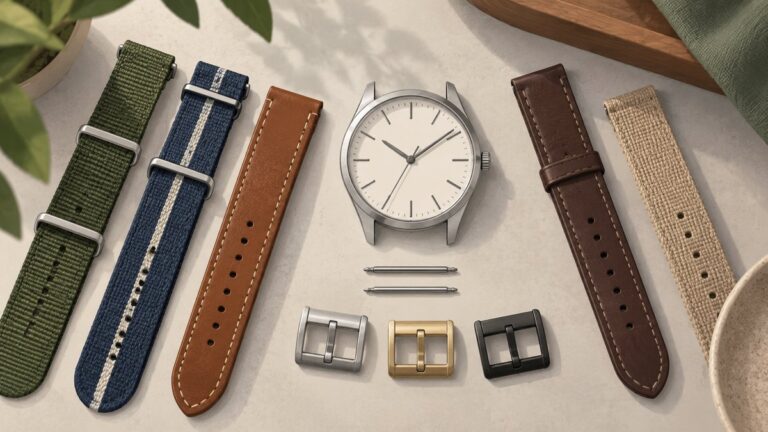
Band choice also affects comfort more than the case specifications suggest. A size-matched Garmin fēnix 8 replacement band can make a large watch more tolerable during sleep, training or hot-weather use, but verify the case size and band width before ordering. A leather band should not be used for swimming or showering.
Training and outdoor sports
The fēnix 8 covers an unusually broad range of activities, including running, cycling, swimming, triathlon, strength, HIIT, yoga, golf, skiing, snowboarding, surfing, mountain biking, whitewater rafting, scuba and apnea diving. That breadth is valuable for people whose training changes by season or who do not want to maintain separate devices for road training and outdoor adventures.
Its training platform includes:
- Training readiness, training status and daily suggested workouts.
- VO2 max, endurance score and hill score.
- Garmin Coach plans and race-oriented training tools.
- PacePro for pacing plans and grade-adjusted pace.
- ClimbPro for managing climbs on a route.
- Structured profiles for multisport events and a wide range of outdoor activities.
The important qualification is that the fēnix 8 is not automatically more accurate than every previous Garmin simply because it is newer. GPS and optical heart-rate results vary with wrist fit, movement, terrain, buildings, tree cover and the selected satellite mode. The dossier does not include independent laboratory validation, so claims about sensor accuracy should remain use-case-specific rather than absolute. Tom’s Guide’s testing praised the sports tracking while also noting that real-world performance depends on the activity and conditions.
Maps and navigation are still the core value
Navigation is one of the strongest reasons to buy a fēnix 8 rather than a general-purpose smartwatch. Garmin provides TopoActive terrain maps, customizable map layers, dynamic round-trip routing and route guidance. Golf-course and ski-resort maps are also available, and Garmin’s launch material says Sapphire versions include preloaded multi-continent TopoActive maps.
Do not confuse included map content with Outdoor Maps+. Outdoor Maps+ is optional content that can add features such as satellite imagery and enhanced topographic maps. Availability and included coverage can vary by model, region and edition, so check the exact configuration rather than assuming every fēnix 8 includes the same maps.
Do these 3 things before closing this tab:
1Clear out junk files and repair common Windows errors2Scan for outdated or missing drivers - takes under a minute3Repair Windows errors before they cause bigger problemsRank #3

- Easy-to-use running smartwatch with built-in GPS for pace/distance and wrist-based heart rate; brilliant AMOLED touchscreen display with traditional button controls; lightweight design in 43 mm size
- Up to 11 days of battery life in smartwatch mode and up to 19 hours in GPS mode
- Reach your goals with personalized daily suggested workouts that adapt based on performance and recovery; use Garmin Coach and race adaptive training plans to get workout suggestions for specific events
- 25+ built-in activity profiles include running, cycling, HIIT, strength and more
- As soon as you wake up, get your morning report with an overview of your sleep, recovery and training outlook alongside weather and HRV status (data presented is intended to be a close estimation of metrics tracked)
The watch supports multi-band GNSS and SatIQ. Multi-band positioning can be useful in difficult environments, while SatIQ is designed to balance positioning performance and battery use by selecting an appropriate satellite mode. Garmin’s manual cautions that using multiple GNSS systems reduces battery life compared with GPS-only operation. For a normal run in open terrain, GPS-only or an adaptive mode may be the more efficient choice; for dense urban streets, steep valleys or heavy tree cover, the more demanding modes can be worthwhile.
Recreational diving: a meaningful addition, with clear limits
The fēnix 8 is certified for recreational diving to 40 meters and includes both scuba and apnea activities. Its depth sensor is specified for 0 to 40 meters and the dive software uses the Bühlmann ZHL-16C decompression model.
In dive mode, the watch automatically starts a dive activity at approximately 1.2 meters. It can show dive data and compass navigation, record entry and exit locations when GPS is acquired at the surface, and provide ascent, no-decompression, safety-stop and decompression guidance. TechRadar’s field testing reported support for single-gas air or nitrox up to 40%.
This is a recreational feature, not a technical-diving solution. The fēnix 8 is not designed for technical-diving requirements, and it should not replace dive training, a backup computer or a professionally prepared dive plan. Garmin’s manual specifically tells divers to use a backup dive computer or dive plan if the depth sensor fails and warns against exceeding the depth rating.
The Tool Desk
Outbyte PC Repair FREERepair Windows errors before they cause bigger problemsFix Now →Outbyte Driver Updater FREEScan for outdated or missing drivers - takes under a minuteDriver Scan →Battery expectations also need special care. A DiveIn pressure-chamber test reported approximately 46 hours at 20 feet with maximum brightness, substantially below a headline smartwatch-mode maximum. That difference illustrates why dive mode, screen brightness and the length of a trip matter more than the largest general-use battery number. The watch’s 100-meter general water-resistance claim is separate from its 40-meter dive rating; the two should not be conflated.
Calls, voice commands and the flashlight
The built-in microphone and speaker let you take calls when the watch is paired with a compatible smartphone. Voice commands can perform tasks such as starting a strength activity, setting a timer or saving a waypoint, and some commands work without a phone connection.
These are useful additions, but they do not turn the fēnix 8 into a full Apple Watch or Galaxy Watch replacement. The watch still relies on a paired phone for ordinary call connectivity and for many safety functions. Notifications, Garmin Pay, incident detection, Assistance, LiveTrack, Garmin Share and music downloads are supported, while phone-free playback from Spotify, Deezer or Amazon Music requires the relevant premium subscription.
The standard fēnix 8 also does not have the fēnix 8 Pro’s cellular and satellite connectivity. In particular, do not buy the standard model expecting a phone-independent emergency lifeline. Garmin’s manual states that non-Pro models need a phone with data coverage for Assistance functions, and availability can depend on region and network coverage. The distinction is covered in Tom’s Guide’s fēnix 8 versus fēnix 8 Pro comparison.
Rank #4

- Brilliant AMOLED touchscreen display with traditional button controls; lightweight design in 46 mm size
- Up to 13 days of battery life in smartwatch mode and up to 20 hours in GPS mode
- As soon as you wake up, get your morning report with an overview of your sleep, recovery and training outlook alongside HRV status, training readiness and weather (data presented is intended to be a close estimation of metrics tracked)
- Plan race strategy with personalized daily suggested workouts based on the race and course that you input into the Garmin Connect app and then view the race widget on your watch; daily suggested workouts adapt after every run to match performance and recovery
- Training readiness score is based on sleep quality, recovery, training load and HRV status to determine if you’re primed to go hard and get the most out of your workout (data presented is intended to be a close estimation of metrics tracked)
The integrated LED flashlight is a more practical differentiator than the call feature for many outdoor users. Its variable intensity, red light and strobe modes are useful for early runs, camp chores, finding equipment in a tent or making yourself visible on a roadside.
Durability and care
Garmin says the fēnix 8 uses leakproof metal buttons, a sensor guard and optional titanium bezels and sapphire lenses. The series also undergoes US military-standard thermal, shock and water-resistance testing. Those claims describe a rugged design, not immunity from damage.
Care is particularly important because of the microphone and speaker openings. Garmin advises users not to expose them to sunscreen or other chemicals and not to clean the watch with high-pressure water. Rinse the watch after exposure to chlorine, salt water, sunscreen, cosmetics, alcohol or harsh chemicals, then allow it to dry properly.
A third-party fēnix 8 AMOLED screen protector may be worth considering for a non-sapphire watch used around rock or tools, but it is not risk-free. Garmin forum guidance warns that screen protectors can affect display visibility or touch performance and may have warranty implications. Match the protector to the exact case size and display type, and do not treat it as a substitute for choosing sapphire when the watch will face repeated impacts.
If you travel with the watch, a spare Garmin charging cable is a modest but sensible accessory. Check connector and model compatibility before ordering; Solar charging is helpful, but a cable remains the predictable way to recharge the watch before a long activity or after a demanding GPS or dive session.
Independent reader supportYour contribution helps us test, update, and keep practical guides available for everyone.Firmware and software state
Garmin has continued issuing bug fixes after launch. The official Garmin forum’s release information dated August 12, 2026 listed public system software 22.38 for the fēnix 8 family, including fixes for possible golf-activity crashes, a dive-depth issue and other model-specific problems. A subsequent Garmin update marked version 22.41 as 100% live for the fēnix 8, fēnix E, Enduro 3 and related models, with fixes including a golf-activity reset issue and treadmill-calibration behavior. Garmin’s forum release thread is the most useful reference for that release history.
Because Garmin’s consumer support pages can lag forum release notes, do not assume a version number quoted in an older review is still current or available identically in every region. Check the software version installed on your own watch or in Garmin Connect before troubleshooting a reported issue. Firmware updates may improve a problem without eliminating every report for every hardware configuration.
Which fēnix 8 should you buy?
| Your priority | Best choice | Why |
|---|---|---|
| Brightest, most attractive screen | AMOLED | Higher-resolution color and better indoor and low-light viewing |
| Maximum endurance | 51 mm Solar | Longest rated smartwatch and multi-band GPS life, subject to solar conditions |
| AMOLED with strong endurance | 51 mm AMOLED | Up to 29 days with gesture wake and up to 62 hours in the specified multi-band mode |
| Balanced everyday option | 47 mm AMOLED | A useful middle ground in screen size, battery and wearability |
| Smaller wrist or lighter feel | 43 mm AMOLED | The only 43 mm option and the easiest size to wear comfortably |
| Frequent expeditions or charging avoidance | 47 mm or 51 mm Solar | MIP display and solar support prioritize endurance over visual polish |
For most new buyers, the 47 mm AMOLED is the most balanced configuration. Move to 51 mm when battery life is more important than compactness. Choose 43 mm when fit is decisive. Choose Solar when the watch is an expedition tool first and a bright smartwatch display second.
Best Value

- Designed with a bright, colorful AMOLED display, get a more complete picture of your health, thanks to battery life of up to 11 days in smartwatch mode (5 days display always-on)
- Body Battery energy monitoring helps you understand when you’re charged up or need to rest, with even more personalized insights based on sleep, naps, stress levels, workouts and more (data presented is intended to be a close estimation of metrics tracked)
- Get a sleep score and personalized sleep coaching for how much sleep you need — and get tips on how to improve plus key metrics such as HRV status to better understand your health (data presented is intended to be a close estimation of metrics tracked)
- Find new ways to keep your body moving with more than 30 built-in indoor and GPS sports apps, including walking, running, cycling, HIIT, swimming, golf and more
- Wheelchair mode tracks pushes — rather than steps — and includes push and handcycle activities with preloaded workouts for strength, cardio, HIIT, Pilates and yoga, challenges specific to wheelchair users and more (data presented is intended to be a close estimation of metrics tracked)
Should fēnix 7 Pro and Epix Pro owners upgrade?
Usually, only for a specific reason. The upgrade case is strongest if you want:
- AMOLED in a watch carrying the fēnix name.
- The microphone and speaker for calls and voice commands.
- Recreational scuba and apnea features.
- Leakproof inductive buttons and the newer physical design.
- The redesigned navigation interface.
- A current warranty after an older watch has become unreliable.
If those features do not matter, a discounted fēnix 7 Pro or Epix Pro may deliver most of the same running, cycling, swimming, training and navigation experience for substantially less. The fēnix 8 is a better choice for a new buyer who wants the complete feature set, but it is not a compulsory upgrade for someone who already owns a recent Garmin flagship.
Who should buy the fēnix 8?
Buy it if you want one premium watch for serious training, navigation, long battery life, music, notifications, a flashlight and recreational diving. It is also a strong choice if you are deciding between an AMOLED outdoor watch and an endurance-first Solar/MIP model and prefer to keep both options within one product family.
Think twice if you mainly want broad smartwatch apps, a lightweight everyday watch, technical dive capability or phone-independent emergency communications. The fēnix 8 is large and expensive, and many of its best features are specialized rather than necessary for casual fitness.
Recommended Free Tools
Do not buy it primarily for full smartwatch app breadth, technical diving, or LTE and satellite SOS. Those expectations point toward a different device or, within Garmin’s range, the fēnix 8 Pro rather than the standard fēnix 8.
Frequently Asked Questions
Is the Garmin fēnix 8 AMOLED or Solar better?
Choose AMOLED if you want a brighter, higher-resolution color display and a more conventional smartwatch experience. Choose Solar/MIP if long battery life and fewer charging stops matter more than visual polish. Solar extends endurance under Garmin’s specified light conditions, but it does not eliminate charging.
Can the Garmin fēnix 8 be used as a dive computer?
The fēnix 8 is rated for recreational diving to 40 meters and includes scuba and apnea modes. It is not a technical dive computer and should not replace training, a backup computer or a properly prepared dive plan.
Should fēnix 7 Pro or Epix Pro owners upgrade?
Usually not unless you specifically want AMOLED, calls and voice commands, dive modes, leakproof inductive buttons, the updated interface or a current warranty. The core training and navigation experience remains similar enough that a discounted fēnix 7 Pro or Epix Pro can be better value.
Crashes, No Sound, or Screen Glitches?
Random freezes, missing sound and display glitches usually trace back to one bad driver. Find and replace yours safely.Free scan · under a minutePC Slower Than It Used to Be?
A free scan shows the junk files, broken settings and background clutter dragging Windows down - then fixes them in one click.Free scan · Windows 10 & 11Does the standard Garmin fēnix 8 have LTE or satellite SOS?
No. The standard fēnix 8 relies on a paired phone for ordinary calls and many Assistance features. It does not provide the fēnix 8 Pro’s cellular and satellite connectivity.
The Bottom Line
Bottom line: The fēnix 8 is Garmin’s most complete mainstream adventure watch, and the AMOLED option makes it more appealing for everyday wear. Buy the 47 mm AMOLED for balance, the 51 mm model for endurance, or Solar when expedition battery life matters most. Existing fēnix 7 Pro and Epix Pro owners should upgrade for AMOLED, calls, diving, hardware changes or warranty—not simply for a new name.