Yes—but only AirPods Pro 2 and AirPods Pro 3 support Apple’s Hearing Aid feature. With compatible Apple hardware, current software and firmware, and regional availability, eligible adults with perceived mild to moderate hearing loss can take Apple’s Hearing Test or import an audiogram, then use the AirPods to amplify surrounding sound.
Yes—but only certain AirPods Pro models work as a hearing aid
Apple’s Hearing Aid feature can turn compatible AirPods Pro 2 and AirPods Pro 3 earbuds into an over-the-counter hearing aid for adults with perceived mild to moderate hearing loss. You need compatible Apple hardware, current software and firmware, and access to the feature in your country or region.
It is not available on ordinary AirPods, AirPods Max or every Beats model. Apple’s Live Listen feature works with more devices, but Live Listen is a remote-microphone accessibility feature—not the same thing as the Hearing Aid feature.
What you need
| Requirement | What to check |
|---|---|
| AirPods | AirPods Pro 2 or AirPods Pro 3, with current firmware |
| Apple device | Compatible iPhone or iPad running iOS 18 or iPadOS 18 or later; compatible Mac support requires macOS Sequoia or later |
| Age and hearing profile | Generally 18 or older, with perceived mild to moderate hearing loss |
| Location | A country or region where Apple’s Hearing Aid feature has the required regulatory authorization |
| Fit | A secure ear-tip seal in both ears |
Apple currently identifies both AirPods Pro 2 and AirPods Pro 3 as supporting Hearing Test and Hearing Aid when paired with compatible Apple devices and current firmware. Regional regulations can affect whether Hearing Aid version 1 or version 2 appears on your devices, so the feature may not be available everywhere.
#1 Best Overall

- Compatibility: This right earbud (model: A3048) is specifically designed for the Earbuds Pro2st, perfectly matching the A2968 charging case.
- Important Compatibility Note: This product is compatible with the 2nd-generation Earbuds Pro charging cases (models A2968) and earphone modelsA3047, A3048, A3049. Please carefully check your device model before purchase.
- If you charge the charging case in advance, you can use it to charge the earbuds when you go out without a power supply. Please note that this earbud (model number A3048) is only compatible with the Earbuds Pro (2nd Generation) USB-C interface charging case (model number A2968).
- Quality Guarantee: This single earbud meets OEM standards with the same quality and performance as the original. It is a reliable, cost-effective replacement part.
- Pairing Guide: Remove existing earbud connections from your device's Bluetooth list. Charge the earbud for at least 30 minutes with your iPhone/iPad placed right next to it. Reset the earbud and re-establish the Bluetooth connection. If pairing fails, extend the charging time, preferably overnight. Encountering issues? Reach out to us. Note that the pairing process might take longer—patience is key!
AirPods Pro 2 versus AirPods Pro 3
Apple AirPods Pro 3 is the current directly relevant option if you need to buy compatible hardware. AirPods Pro 2 remains a valid choice if you already own a pair or find the previous generation at a suitable price. Do not buy an ordinary AirPods model expecting a software update to add Hearing Aid support.
Whichever generation you use, confirm the exact model, update the iPhone or iPad, and install the latest AirPods firmware before troubleshooting the feature.
How to take Apple’s Hearing Test
Apple’s in-ear hearing test takes about five minutes. Do it in a quiet room and allow enough time to complete it without interruption.
- Put the AirPods Pro 2 or AirPods Pro 3 in your ears and connect them to your iPhone or iPad.
- Move to a quiet location. Background speech, fans, traffic and other sounds can affect the test.
- Open Settings.
- Tap the name of your connected AirPods near the top of the screen.
- Tap Take a Hearing Test.
- Follow the on-screen instructions and respond whenever you hear the test tones.
- If Apple asks you to move somewhere quieter or adjust the earbuds, do so before continuing.
When the test ends, Apple classifies the apparent hearing loss and suggests next steps. You can also export the result as a PDF to share with a hearing-care professional.
Recommended Free Tools
If the Hearing Test will not start or looks unreliable
- Reseat both AirPods and make sure they are charged and connected.
- Try another included ear-tip size.
- Run the fit or acoustic-seal check again.
- Move farther away from people, appliances and other noise sources.
- Repeat the test if the result does not match what you normally experience.
AirPods Pro 2 uses the Ear Tip Fit Test. AirPods Pro 3 uses the Acoustic Seal Test on iOS or iPadOS 26 and later. The names differ, but the practical goal is the same: the earbud must seal well enough for accurate testing and consistent amplification. If your tips are worn or the fit is poor, consider model-specific AirPods Pro replacement ear tips. Choose tips for the correct AirPods Pro generation and size.
How to turn on Hearing Aid
After completing Apple’s Hearing Test—or if you already have an audiogram from a hearing professional—use these steps:
- Keep the AirPods connected and in your ears.
- Open Settings and tap the connected AirPods near the top of the screen.
- Tap Hearing Assistance.
- Tap Set Up Hearing Assistance.
- If you have no result, choose Take a Hearing Test. If you already have one, choose Use a Prior Test Result.
- Select an existing Hearing Test result, or tap Add Hearing Test Result.
- Scan the professional audiogram with the iPhone or iPad camera, or enter its values manually.
- Tap Set Up Hearing Aid.
- Tap Get Started, then Next, and finally Turn On Hearing Aid.
An imported audiogram is stored in the Health app and can be used to customize the AirPods. You do not have to repeat Apple’s in-ear test if you already have a suitable hearing test from a hearing professional.
Rank #2

- Replacement Apple AirPods Pro (2nd Generation) (Lightning) AirPod - right side (A2698). Easy to pair with your existing AirPods set, with pairing instructions included.
- Package includes 1 right Apple AirPod Pro 2nd Generation (Lightning) (A2698) and pairing instructions in generic envelope or box.
Why Apple may show Media Assist instead
Depending on the result, Apple may recommend Media Assist rather than Hearing Aid. These features serve different purposes:
- Hearing Aid: adjusts environmental sound for people using the AirPods as an OTC hearing aid.
- Media Assist: applies hearing-based adjustments to music, videos and calls.
Media Assist is not a replacement for Hearing Aid when you need amplification of surrounding conversation and other environmental sounds.
How to adjust amplification and sound
With Hearing Aid enabled, open the AirPods settings and select Hearing Assistance. Under Adjustments, you can change:
- Amplification: how much environmental sound is increased.
- Balance: the relative level sent to the left and right ears.
- Tone: whether the sound is brighter or darker.
- Ambient Noise Reduction: reduction of surrounding background noise.
- Conversation Boost: emphasis on a person speaking in front of you.
Make one small change at a time and listen for a while before changing another setting. Large, simultaneous changes can make it difficult to tell which adjustment helped or caused an unnatural sound.
Hearing Aid amplification is separate from ordinary media volume. On an iPhone or iPad, open Control Center and touch and hold the volume control to access the relevant controls. Compatible Mac and Apple Watch interfaces can also provide access to Hearing Aid controls.
Windows Errors? Fix Them Before They Spread
Repair common Windows errors and clear accumulated junk for a smoother, more stable PC - no reinstall needed.Free scan · no reinstallCrashes, No Sound, or Screen Glitches?
Random freezes, missing sound and display glitches usually trace back to one bad driver. Find and replace yours safely.Free scan · under a minuteRank #3
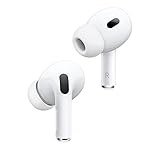
- This pre-owned product is not Apple certified, but has been professionally inspected, tested and cleaned by Amazon-qualified suppliers.
Apple stores the settings on the AirPods. They can therefore continue using the most recent Hearing Aid settings even when the paired iPhone or iPad is not nearby.
Transparency mode is required for environmental amplification
Hearing Aid amplifies surrounding sound only when the AirPods are in Transparency mode. If you switch to Noise Cancellation or another listening mode, it may seem as though Hearing Aid has stopped working. Check the listening mode before changing the amplification level.
Conversation Boost is intended mainly for one-on-one conversations and can focus the AirPods on a speaker in front of you. AirPods Pro 3 adds automatic Conversation Boost while using Hearing Aid on supported current software; the manual Conversation Boost control remains available in Hearing Aid settings where supported.
Hearing Aid versus Live Listen
Live Listen uses an iPhone or iPad as a remote microphone. It sends audio from the device’s microphone to connected AirPods or compatible Beats devices.
- Add Live Listen to Control Center if it is not already there.
- Put the connected AirPods in your ears.
- Open Control Center and tap Live Listen.
- Place the iPhone or iPad near the person speaking or another sound source.
This can help during a conversation or in a noisy setting, but it is not the same as Apple’s Hearing Aid feature. Live Listen’s broader device support does not make every AirPods or Beats model an OTC hearing aid. Hearing Aid is specifically documented for AirPods Pro 2 and AirPods Pro 3.
Rank #4

- Compatibility: This right earbud (model: A3047) is specifically designed for the Earbuds Pro2st, perfectly matching the A2968 charging case.
- Important Compatibility Note: This product is compatible with the 2nd-generation Earbuds Pro charging cases (models A2968) and earphone modelsA3047, A3048, A3049. Please carefully check your device model before purchase.
- If you charge the charging case in advance, you can use it to charge the earbuds when you go out without a power supply. Please note that this earbud (model number A3048) is only compatible with the Earbuds Pro (2nd Generation) USB-C interface charging case (model number A2968).
- Quality Guarantee: This single earbud meets OEM standards with the same quality and performance as the original. It is a reliable, cost-effective replacement part.
- Pairing Guide: Remove existing earbud connections from your device's Bluetooth list. Charge the earbud for at least 30 minutes with your iPhone/iPad placed right next to it. Reset the earbud and re-establish the Bluetooth connection. If pairing fails, extend the charging time, preferably overnight. Encountering issues? Reach out to us. Note that the pairing process might take longer—patience is key!
Troubleshooting AirPods Hearing Aid
“Hearing Aid” does not appear
- Confirm that the earbuds are AirPods Pro 2 or AirPods Pro 3.
- Update the paired iPhone or iPad to a supported version of iOS or iPadOS.
- Check that the AirPods have current firmware.
- Charge the AirPods and reconnect them.
- Check whether Hearing Aid is authorized in your country or region.
- Open the AirPods settings and check which Hearing Aid feature version is available.
Regional regulations can determine whether the feature appears and whether version 1 or version 2 is provided. A missing menu is not necessarily a hardware fault.
The sound is too loud, harsh or unnatural
- Lower Hearing Aid amplification, not just ordinary media volume.
- Confirm that Transparency mode is active for environmental amplification.
- Adjust Tone, Ambient Noise Reduction or Balance in small increments.
- Check that the Hearing Test or imported audiogram belongs to you and was entered correctly.
- Give yourself time to adapt before making further substantial changes.
If the sound remains uncomfortable, stop using the setting at that level and seek advice from a hearing professional.
One ear sounds louder than the other
Use the left-right Balance control under Hearing Aid adjustments and verify that the audiogram values were entered correctly. Do not indefinitely compensate for a large or newly noticed difference with a slider. Markedly asymmetric hearing can have an underlying cause and deserves professional evaluation.
Performance is inconsistent
- Charge both earbuds and the case.
- Check that the AirPods remain securely seated.
- Clean the microphones and speaker meshes using Apple’s cleaning guidance.
- Inspect the ear tips for debris, earwax or damage.
- Repeat the acoustic-seal or Ear Tip Fit Test.
Debris or earwax can affect microphones, speakers and noise-control performance. If you need maintenance supplies, an AirPods-compatible cleaning kit may be useful, but choose one that is safe for AirPods and follow Apple’s instructions. Do not assume a third-party tool is Apple-approved, and avoid abrasive methods, liquids entering the earbuds or sharp objects pressed into the meshes.
If the AirPods are repeatedly out of power, a compatible USB-C charging cable or charger can solve the basic setup problem. Charging is a prerequisite for reliable operation; it does not improve the hearing profile itself.
Independent reader supportYour contribution helps us test, update, and keep practical guides available for everyone.When not to self-fit AirPods as a hearing aid
Apple’s Hearing Aid feature is intended for adults with perceived mild to moderate hearing loss. It is not a diagnosis and is not suitable for every ear or hearing condition.
Arrange a medical or professional hearing evaluation instead of relying only on self-fitting if you have:
What’s actually slowing this PC down?
Pick the symptom - the matching free tool is one click away.
Best Value

- It is compatible with Earbuds Pro (2nd Generation), A2698/A2699/A2931 earbuds, and A2700 charging case. It only includes the Right earbud.Please check your charging case which has a Lightning port.
- Warm Tips: It is incompatible with USB-C charging case: A2968, earbuds A3047, A3048, A3049.
- If you charge the charging case in advance, you can use it to charge the earbuds when you go out without a power supply. Please note that this earbud (model numbers A2931, A2698, A2699) is only compatible with the Earbuds Pro (2nd Generation) charging case (model number A2700).
- Quality: Used but good, Meenova OEM (original equipment manufacturer) standard, guarantees the same quality and performance of the original earbuds and provides a reliable earphone solution.
- Pairing Instructions: 1. Forget your Earbuds from the device list; 2. Plug the charging case into a power source; 3. Put in the new earbud and wait for 30-60 minutes; 4. Open the lid of the charging case; 5.Press and hold the setup button on the back of the case for about 15 seconds, until the status light on the front of the case flashes amber, then white; 6. Connect the earbuds to your phone. **If it does not work, please check if the models of the left and right earbuds match.
- sudden or rapidly changing hearing loss;
- hearing loss that is clearly one-sided or markedly asymmetric;
- ear pain, drainage or other unusual ear symptoms;
- dizziness or balance symptoms;
- suspected excessive earwax;
- severe hearing difficulty or a result outside the feature’s intended range.
FDA materials describe a clinical study in which self-fitting produced similar perceived benefit to professional fitting of the same device for the studied participants. That evidence supports the self-fitting pathway for appropriate users; it does not mean AirPods are appropriate for every diagnosis or that they replace clinical assessment.
Important safety limits
- Hearing Aid is not hearing protection. Do not use it as protection against gunfire, fireworks, jackhammers or other extremely loud impulse sounds.
- Apple states that Hearing Protection is not suitable for extremely loud impulse sounds or sustained sounds above 110 dBA. Hearing Protection and Hearing Aid are separate functions.
- Avoid high listening levels for long periods. Excessive volume can permanently damage hearing.
- If you have an implanted medical device, ask your physician and the device manufacturer about possible interference from magnets and radio components. Apple advises keeping AirPods and their case more than 6 inches (15 cm) away unless a clinician or manufacturer gives different instructions.
Which setup makes sense?
| Your situation | Best next step |
|---|---|
| You already own AirPods Pro 2 | Update the AirPods and paired Apple device, check regional availability, then take the Hearing Test. |
| You need to buy compatible hardware | Consider Apple AirPods Pro 3, but confirm the feature is available where you live before purchasing solely for Hearing Aid. |
| You found an AirPods Pro 2 with USB-C charging case | It is a compatible previous-generation option when running current firmware and paired with supported Apple hardware. |
| You have a professional audiogram | Import or manually enter it through Use a Prior Test Result rather than taking Apple’s in-ear test again. |
| You need a remote microphone for a specific conversation | Try Live Listen if your AirPods or compatible Beats device supports it, but do not treat it as an OTC hearing aid. |
| You have sudden, painful, severe or asymmetric hearing loss | Seek medical or audiology evaluation rather than self-fitting AirPods. |
Bottom line
To use AirPods as a hearing aid, you need AirPods Pro 2 or AirPods Pro 3, supported Apple software, current firmware, a good ear-tip seal and regional access to Apple’s Hearing Aid feature. Take Apple’s Hearing Test or import a professional audiogram, then go to Settings > connected AirPods > Hearing Assistance > Set Up Hearing Assistance. Use Transparency mode for amplified environmental sound, adjust amplification separately from media volume, and treat Live Listen as a different feature.
For mild to moderate hearing difficulty this can be a practical self-fitting option. Sudden, one-sided, painful, severe or otherwise unusual hearing symptoms require professional assessment rather than more AirPods adjustments.
Frequently Asked Questions
No. Apple’s Hearing Aid feature is specifically documented for AirPods Pro 2 and AirPods Pro 3 with compatible Apple devices, current software and firmware. Live Listen supports more models, but it is not the same as Hearing Aid.
Can any AirPods be used as a hearing aid?
No. You can import an audiogram from a hearing professional by choosing Use a Prior Test Result during Hearing Assistance setup, then scanning it or entering its values manually.
Do I need to take Apple’s Hearing Test?
Check the AirPods model, firmware, iPhone or iPad software, regional availability, charge level, ear-tip seal and listening mode. Environmental amplification requires Transparency mode.
Why is AirPods Hearing Aid not working?
No. Live Listen turns an iPhone or iPad into a remote microphone. Hearing Aid is Apple’s hearing-based amplification feature specifically documented for AirPods Pro 2 and AirPods Pro 3.
Is Live Listen the same as Hearing Aid?
Not in every situation. The feature is intended for adults with perceived mild to moderate hearing loss. Sudden, rapidly changing, one-sided, painful, severe or unusual hearing symptoms should be evaluated by a medical or hearing professional.
Can AirPods Hearing Aid replace an audiologist?
The Bottom Line
In short: AirPods Pro 2 and AirPods Pro 3 can provide Apple’s Hearing Aid feature for eligible adults with perceived mild to moderate hearing loss. Complete the Hearing Test or import an audiogram, activate Hearing Assistance, and use Transparency mode for environmental amplification. Live Listen is useful but is not equivalent to Hearing Aid.