Whoop is the better choice for serious training, recovery coaching, workout classification, and a mature fitness app. Hume Band 2.0 is the more appealing ownership proposition for people who want a screen-free wellness tracker without a mandatory subscription and who are especially interested in Hume’s longevity-oriented scores.
That does not make Hume a subscription-free Whoop with the same capabilities. The two devices measure some of the same underlying signals—heart rate, HRV, movement, sleep-related data, and blood oxygen—but turn them into different products. Whoop is built around strain, recovery, sleep need, and training decisions. Hume emphasizes broader wellness trends, metabolic and longevity scores, and health-risk signals that remain less independently validated.
This comparison covers the U.S. products and prices observed on August 10, 2026. Prices, plan benefits, app requirements, regional availability, and regulatory status can change, so verify them immediately before purchasing.
The short answer: Whoop for training, Hume for subscription-free wellness
If your main question is whether you should replace Whoop with Hume Band 2.0, the answer depends on what you use Whoop for.
What’s actually slowing this PC down?
Pick the symptom - the matching free tool is one click away.
- Choose Whoop Peak for the best balance of training, recovery, stress, and Healthspan features.
- Choose Whoop One if you want the core strain, sleep, recovery, Strength Trainer, VO₂ Max, heart-rate-zone, and coaching experience without paying for the higher tiers.
- Choose Whoop Life only if you have a specific reason to want the Whoop MG hardware, ECG-related features, irregular-heart-rhythm notifications, and Blood Pressure Insights—and understand that these are not substitutes for medical care.
- Choose Hume Band 2.0 if avoiding a mandatory subscription matters more than having the strongest workout ecosystem, and you are willing to treat Hume’s biological-age, metabolic, resilience, and longevity scores as directional wellness estimates rather than clinical measurements.
- Choose neither if you need GPS, a display, highly precise workout heart rate, validated blood-pressure monitoring, or a medical device.
- Consider Garmin CIRQA before buying either one. It is a newer screenless band with Garmin’s fitness ecosystem, up to 10 days of claimed battery life, and no required subscription for its core experience.
Whoop has the stronger independent research record and the more mature analytics. Hume has the simpler long-term cost structure and a more distinctive longevity focus, but its public evidence and real-world reliability are not yet as convincing.
#1 Best Overall

- What You Get - A 12-month membership, WHOOP 5.0 device, a SuperKnit band, and a waterproof* Wireless PowerPack. Choose from a range of band and accessory combinations, and add a waterproof Wireless PowerPack for on-the-go charging.
- HSA/FSA Eligible - All 12-month WHOOP memberships and battery packs qualify for HSA/FSA reimbursement.
- Screenless, Distraction-Free - No screen, no buzzing notifications. WHOOP focuses entirely on your health and performance, with up to 14+ day battery life so you can wear it around the clock.
- Healthspan with Pace of Aging - Understand how your daily habits shape long-term health. Healthspan measures your WHOOP Age and Pace of Aging so you can take science-backed action to slow biological aging and extend your prime years.
- 24/7 Health Insights - WHOOP monitors your heart rate every second of every day, delivering personalized Sleep, Strain, Recovery, VO2 max, Menstrual Cycle, and Heart Rate insights along with a Real-time Stress Monitor that pinpoints your stressors and shows how your body responds in the moment, so you can make better decisions about training, rest, and daily performance.
Hume Band 2.0 and Whoop are solving different problems
Both devices are screenless, wrist-worn wearables designed to collect data continuously and send the useful information to a phone app. Neither is a smartwatch, and neither has built-in GPS. You will not look down at either band to check pace, heart rate, notifications, or directions.
| Category | Hume Band 2.0 | Whoop 5.0 or Whoop MG |
|---|---|---|
| Primary focus | Longevity, metabolic-health trends, and general wellness | Training load, recovery, sleep, and coaching |
| Display | No | No |
| Required subscription | No for core data and metrics | Yes for ongoing data collection and analysis |
| Current hardware | Hume Band 2.0 | Whoop 5.0 or Whoop MG, depending on membership tier |
| Battery claim | Up to 14 days | Up to 14 days |
| Built-in GPS | No | No; the phone and integrations can provide route data |
| Best use case | Long-term wellness trends without a mandatory monthly bill | Day-to-day training and recovery decisions |
| Main concern | Limited independent validation and reported reliability issues | Recurring cost, tier restrictions, and imperfect workout heart-rate readings |
What Hume Band 2.0 tracks
Hume positions Band 2.0 as a longevity and metabolic-health wearable. Its app presents scores and trends such as Metabolic Capacity, Metabolic Momentum, biological age, pace of aging, resilience, recovery, strain, and sleep. The band also reports or estimates heart rate, HRV, SpO₂, skin temperature, movement, and activity.
Hume also promotes the Band as an “early warning system,” saying that declining recovery, stress, and sleep patterns may be associated with future illness. That is a company marketing claim—not evidence that the band detects, predicts, or diagnoses chronic disease. The public product material does not provide enough detail about study protocols, sample sizes, reference devices, error margins, or peer-reviewed publications to establish those claims independently. See Hume’s chronic-illness and longevity page and its Band 2.0 product page.
Recommended Free Tools
The important distinction is between the signal and the interpretation. Hume may collect optical and motion data, but Metabolic Momentum is not the same as metabolic rate, insulin sensitivity, or a clinically validated metabolic-health measurement. Likewise, a biological-age or pace-of-aging score is an algorithmic summary, not a direct measurement of how old your tissues are.
Hume’s free app provides access to core data and metrics. Hume Premium starts at $8.99 per month on the observed product page and adds AI coaching and deeper analysis. Optional Hume Pod integration is intended to add body-composition information, making the overall system broader than the band alone.
What Whoop 5.0 and Whoop MG track
Whoop’s central concepts are Strain, Recovery, Sleep, Sleep Need, and Sleep Performance. It also provides activity tracking, heart-rate zones, VO₂ Max, a behavior Journal, AI Coach, community features, and Strength Trainer with muscular-strain context.
Whoop says its current automatic activity detection recognizes 45 activity types. It is therefore better suited to the question, “How much training stress did I place on my body, and how should I approach tomorrow?” Hume is better suited to the broader question, “How have my wellness trends changed over several weeks or months?”
Windows Errors? Fix Them Before They Spread
Repair common Windows errors and clear accumulated junk for a smoother, more stable PC - no reinstall needed.Free scan · no reinstallCrashes, No Sound, or Screen Glitches?
Random freezes, missing sound and display glitches usually trace back to one bad driver. Find and replace yours safely.Free scan · under a minuteWhoop’s membership tiers matter:
| Plan | Hardware | What it adds | U.S. price observed Aug. 10, 2026 |
|---|---|---|---|
| Whoop One | Whoop 5.0 | Core fitness and recovery features, including strain, sleep, recovery, Strength Trainer, VO₂ Max, heart-rate zones, and coaching | $149 for the first year, then $199 annually |
| Whoop Peak | Whoop 5.0 | One features plus Health Monitor, Stress Monitor, and Healthspan | $239 annually |
| Whoop Life | Whoop MG | Peak features plus ECG-related features, irregular-heart-rhythm notifications, and Blood Pressure Insights, subject to regional and eligibility limitations | $359 annually |
See Whoop’s current pricing and feature matrix before ordering. Whoop 5.0 does not include ECG or Blood Pressure Insights; those require the MG hardware.
The real five-year cost is where the comparison changes
Hume’s biggest advantage is not necessarily a lower first-day price. It is the possibility of continuing to use the core device without paying a platform subscription. Whoop includes the hardware with membership, but the membership is the product’s ongoing operating cost.
| Product | First year | Three years | Five years | Assumption |
|---|---|---|---|---|
| Hume Band 2.0, free app | $249 | $249 | $249 | Observed promotional hardware price; core app remains free |
| Hume Band 2.0 + Premium | About $356.88 | About $572.64 | About $788.40 | $249 hardware plus $8.99 per month, assuming the price does not change |
| Whoop One | $149 | $547 | $945 | $149 first year, followed by four years at $199 |
| Whoop Peak | $239 | $717 | $1,195 | $239 annually |
| Whoop Life | $359 | $1,077 | $1,795 | $359 annually |
| Garmin CIRQA | $199.99 | $199.99 | $199.99 | Hardware price; no subscription for the core experience |
The Hume product page observed on August 10, 2026 showed a $356 list price and a $249 promotional price. Treat $249 as a sale price, not a guaranteed everyday MSRP. These totals exclude sales tax, discounts, replacement accessories, replacement hardware, and future price changes.
Whoop’s plans are not simply a cloud backup service. According to Whoop’s cancellation documentation, historical data remains viewable after cancellation, but new biometric data is no longer collected, uploaded, or analyzed. During a Whoop trial, the terms may require returning the hardware and charger; failure to return them can result in a restocking fee. Check the current return policy rather than assuming a trial is risk-free.
Free tools Windows power users keep installed
One-click scans. No signup required.
Which is better for workouts?
Whoop wins clearly for training. Its strain model, activity detection, heart-rate zones, Strength Trainer, VO₂ Max, muscular-strain information, and recovery-oriented coaching form a much more complete training system.
Whoop is particularly useful for athletes who want to connect exertion with sleep and recovery. The Journal can help users compare behaviors—such as alcohol, late meals, travel, or meditation—with subsequent recovery trends. That does not prove that a single habit caused a score change, but it creates a practical feedback loop.
Rank #2
- What You Get - A 12-month membership, WHOOP MG device, a SuperKnit Luxe band, and a waterproof* Wireless PowerPack. Choose from a range of band and accessory combinations, and add a waterproof Wireless PowerPack for on-the-go charging.
- HSA/FSA Eligible - All 12-month WHOOP memberships and battery packs qualify for HSA/FSA reimbursement.
- Screenless, Distraction-Free - No screen, no buzzing notifications. WHOOP focuses entirely on your health and performance, with up to 14+ day battery life so you can wear it around the clock.
- Heart Screener with On-Demand ECG - Take an ECG reading from your wrist in seconds to check for signs of atrial fibrillation. Heart Screener gives you a medical-grade view of your heart rhythm whenever you need it.
- 24/7 Health Insights - WHOOP monitors your heart rate every second of every day, delivering personalized Sleep, Strain, Recovery, VO2 max, Menstrual Cycle, and Heart Rate insights along with a Real-time Stress Monitor that pinpoints your stressors and shows how your body responds in the moment, so you can make better decisions about training, rest, and daily performance.
Hume Band 2.0 does record movement, activity, strain, heart rate, and recovery-related trends. However, independent testing has described it as more of a wellness and longevity tracker than a serious training device. Wareable’s Hume Band 2.0 review reported limited workout-performance depth and observed inaccuracies in heart rate, sleep, and recovery measurements.
Workout limitations that apply to both
- Optical heart-rate sensors are not equally reliable in every sport. Strength training, gripping, rowing, cycling, intervals, rapid heart-rate changes, and wrist flexion can all challenge a wrist PPG sensor.
- A chest strap is preferable for exact workout heart rate. That matters if you train by narrow heart-rate zones, perform intervals, or need dependable data for structured training.
- Neither band replaces a GPS watch. Neither has built-in GPS or an on-device display. Whoop can use phone-based routes and connected integrations, but you need a phone or another device for route tracking and real-time information.
- Placement can help. Whoop supports wrist, bicep, and Any-Wear options. Upper-arm placement may improve readings for some activities, although comfort and feature support should be checked for the particular accessory. Hume’s off-wrist claims should likewise be verified metric by metric.
- Do not compare strain scores across brands. Hume Strain and Whoop Strain are proprietary scores. A 12 on one platform is not a standardized equivalent of a 12 on the other.
Whoop itself explains that the sensor has no built-in GPS, while the app can use phone routes and integrations. Its Apple Health support page describes related data integration.
Do these 3 things before closing this tab:
1Repair Windows errors before they cause bigger problems2Scan for outdated or missing drivers - takes under a minute3Clear out junk files and repair common Windows errorsWhich is better for sleep?
Both devices estimate sleep duration, timing, sleep stages, and sleep quality or efficiency. Whoop adds Sleep Need and Sleep Performance, which make its recommendations more actionable for athletes. Hume frames sleep as one component of its broader recovery, resilience, and longevity picture.
For either product, the most defensible use is longitudinal trend tracking. You can look at how your sleep timing changes after travel, alcohol, late meals, stress, illness, or hard training. You should be much less confident that a specific night’s exact REM or deep-sleep number is correct.
Wearables infer sleep stages from movement and physiological signals. They do not directly observe brain waves, eye movements, or muscle activity in the way a polysomnography study does. A systematic review found that WHOOP can be useful for broad sleep/wake and two-stage sleep categorization, while four-stage sleep and HRV accuracy were less consistent. A later multi-device validation study reported only fair agreement between Whoop 4.0 sleep-stage classifications and polysomnography. Relevant research includes the WHOOP sleep validation study, the wearable sleep systematic review, and the multi-device sleep-stage study.
Best use: compare your own trends over weeks. Bad use: diagnose sleep apnea, make a medical decision from one night, treat insomnia without professional evaluation, or assume that a higher sleep score always means better physiological sleep.
What’s actually slowing this PC down?
Pick the symptom - the matching free tool is one click away.
Recovery, stress, and longevity scores
Recovery and stress
Whoop has the more developed recovery framework. Recovery combines several signals into a daily readiness-style score and is connected to strain, sleep need, sleep performance, and coaching. Peak and Life add Health Monitor and real-time Stress Monitor.
Hume offers recovery, resilience, stress, sleep, and strain trends, but its presentation is more oriented toward general wellness and long-term change. Someone who wants a simple view of whether their overall health behaviors appear to be moving in a favorable direction may prefer Hume’s approach. Someone who wants a detailed answer about training load and the next workout will generally get more from Whoop.
Neither recovery score tells you whether it is medically safe to train. A low score can reflect poor sleep, a loose fit, missing data, illness, alcohol, stress, or algorithmic uncertainty. A high score does not override pain, fever, unusual shortness of breath, dizziness, or other symptoms.
Metabolic health, biological age, and “longevity”
Hume’s distinctive selling point is its attempt to turn wearable data into longevity-oriented insights. Its Metabolic Capacity, Metabolic Momentum, biological-age, pace-of-aging, and resilience concepts may appeal to quantified-self users who want more than steps and calories.
Recommended Free Tools
The trade-off is that these are proprietary composite scores. They should be treated as trend-oriented wellness indicators, not direct measurements of biological aging, insulin sensitivity, metabolic rate, or future disease risk. Hume’s claims about identifying patterns associated with chronic illness or illness before symptoms remain company claims rather than established diagnostic capabilities.
Whoop now has a comparable longevity layer through Healthspan, WHOOP Age, and Pace of Aging on Peak and Life. Whoop’s own Healthspan documentation acknowledges that WHOOP Age and Pace of Aging do not have a clinical benchmark for validating the metrics.
A score can still be behaviorally useful without being clinically validated. If seeing a trend encourages consistent sleep, exercise, or stress management, that may be valuable. But do not let a proprietary score create false reassurance, unnecessary alarm, or a market for repeated “optimization” purchases.
Rank #3
- What You Get - A 12-month membership, WHOOP 5.0 device, a CoreKnit performance band, and a Basic Charger. Choose from a range of band and accessory combinations, and add a waterproof Wireless PowerPack for on-the-go charging.
- HSA/FSA Eligible - All 12-month WHOOP memberships and battery packs qualify for HSA/FSA reimbursement.
- Screenless, Distraction-Free - No screen, no buzzing notifications. WHOOP focuses entirely on your health and performance, with up to 14+ day battery life on WHOOP 5.0 so you can wear it around the clock.
- 24/7 Health Insights - WHOOP monitors your heart rate every second of every day, delivering personalized Sleep, Strain, Recovery, VO2 max, Menstrual Cycle, and Heart Rate insights along with a Real-time Stress Monitor that pinpoints your stressors and shows how your body responds in the moment, so you can make better decisions about training, rest, and daily performance.
- Understand the Impact of Your Habits - Capture 300+ daily behaviors like training, diet, consistent wake time, stress levels, and more with the WHOOP Journal to understand how habits help or hurt your Recovery.
Blood-pressure features need a separate reality check
Blood pressure is the area where marketing language can create the most harm. Neither band should be purchased as a replacement for a validated upper-arm cuff.
The Tool Desk
Outbyte Driver Updater FREEScan for outdated or missing drivers - takes under a minuteDriver Scan →Outbyte PC Repair FREEClear out junk files and repair common Windows errorsFree Scan →Whoop Blood Pressure Insights
Whoop Life with MG offers Blood Pressure Insights after calibration with a traditional cuff. Whoop describes it as a nightly estimate of systolic and diastolic ranges, intended for wellness and performance insight rather than diagnosis.
The regulatory history is important. In July 2025, the FDA warned Whoop that Blood Pressure Insights was being marketed without authorization and stated that the FDA had not authorized it to measure or estimate blood pressure. On June 17, 2026, the FDA issued a closeout letter saying it did not intend to enforce device requirements for the feature as modified, under updated general-wellness guidance. That is not the same as FDA approval or clearance as a diagnostic blood-pressure monitor. See the 2025 FDA warning letter and 2026 closeout letter.
Whoop’s own June 2026 article reported 10,746 paired measurements and an absolute mean systolic error of 5.03 mmHg. That is a company-published validation claim, not a reason to treat the feature as a clinical cuff. Read the company’s Blood Pressure Insights methodology article alongside the regulatory material.
Hume Blood Pressure Insights
Hume’s current sales pages list Blood Pressure Insights as a new feature, while another Hume page says blood-pressure functionality is due in a future app update pending FDA approval. That inconsistency means the feature’s U.S. availability and status should not be assumed. Check the current product page and technical and longevity page at the time of purchase.
Quick wins for a faster PC:
Clear out junk files and repair common Windows errorsFree Scan →Scan for outdated or missing drivers - takes under a minuteDriver Scan →The FDA warns consumers not to rely on unauthorized blood-pressure devices because inaccurate readings can delay or distort diagnosis and treatment. If you have hypertension, cardiovascular disease, pregnancy-related blood-pressure concerns, symptoms, or medication questions, use an appropriate validated cuff and speak with a clinician. Do not change medication or ignore a high or low reading because a wearable produced a reassuring number. The FDA’s safety communication on unauthorized blood-pressure devices explains the risk.
Accuracy: which device should you trust?
The fairest answer is that Whoop has the stronger independent research record, but neither device is reference-grade for every metric. Hume’s public documentation makes larger accuracy claims than the available independent evidence currently supports.
What the sensors measure versus what the apps estimate
Optical sensors can estimate pulse-related signals and blood oxygen under suitable conditions. Motion sensors can help identify activity and sleep-like periods. Temperature sensors can show trends. The apps then combine those signals with algorithms, personal baselines, and sometimes self-reported information to generate recovery, strain, readiness, metabolic, or longevity scores.
That final score is not a direct measurement simply because the underlying sensor captured real data. Sensor quality, fit, motion, skin contact, algorithm design, missing data, and the choice of reference standard all affect the result.
Hume’s evidence
Hume says Band 2.0 uses five LEDs and four photodiodes, samples frequently, and offers “best-in-class” accuracy validated by laboratory studies and third-party testing. However, the public product pages do not clearly identify the relevant protocols, sample sizes, reference instruments, error margins, or peer-reviewed publications needed to evaluate those claims.
In one independent test, Wareable reported roughly seven days of battery life rather than the advertised 14 days and described inaccuracies in heart rate, sleep, and recovery data. That is one reviewer’s experience, not a universal laboratory result, but it is directly relevant to the headline claims.
An independent long-term comparison by Heal Nourish Grow found that Hume and Whoop sometimes produced different sleep durations on the same night, that Hume under-read peak lifting heart rate, and that a Hume blood-pressure result was close for systolic pressure but materially lower for diastolic pressure than a home cuff. This was an individual comparison, not clinical validation.
Whoop’s evidence
Whoop has a larger published research footprint, including studies involving earlier generations. The evidence suggests reasonable performance for heart rate and broad sleep estimation, but not perfect agreement for sleep stages or HRV.
Windows Errors? Fix Them Before They Spread
Repair common Windows errors and clear accumulated junk for a smoother, more stable PC - no reinstall needed.Free scan · no reinstallOutdated Drivers Are Slowing You Down
One free scan finds every outdated or missing driver and matches the right update for your exact hardware.Free scan · exact hardware matchRank #4

- BUILT FOR HIGH PERFORMANCE – SportFlex is designed with waterproof, sweatproof, and dirtproof silicone. It’s highly durable and designed to withstand your most intense workouts and adventures.
- MADE WITH SOFT-TOUCH SILICONE – SportFlex is ultra-smooth, hygienic, and easy to clean. Small scuffs can be wiped off, or you can deep-clean the band with isopropyl alcohol and a lint-free cloth followed by a water rinse.
- ADJUSTABLE AND BREATHABLE – SportFlex is made with an adjustable closure system to ensure a snug, secure fit—no matter how intense your workout. The band includes ventilation details, making it extra breathable and comfortable.
- 100% WATERPROOF – SportFlex is completely waterproof, making it an essential accessory for everything from swimming laps and surfing to high-sweat, high-intensity workouts.
- COMPATIBILITY – This is not compatible with the WHOOP 4.0
New hardware does not automatically inherit every result from an older validation study. Independent Wareable testing of Whoop 5.0/MG found inconsistent workout heart-rate readings: the device sometimes over-reported running heart rate and under-reported tennis and gym-session heart rate compared with a Garmin chest strap and Apple Watch. The reviewer still found the broader strain picture useful, but considered granular heart-rate analysis a weakness.
Do not turn a study-specific figure into a universal claim such as “Whoop is 99.7% accurate.” A result from one sleep-heart-rate study does not mean every Whoop metric, activity, body position, or user receives that level of accuracy.
How to use either device responsibly
- Use trends over several weeks rather than reacting to one unusual number.
- Compare the device against your own symptoms and a trusted reference, not against another brand’s proprietary score.
- Use a chest strap for precise training heart rate.
- Use a validated upper-arm cuff for blood pressure.
- Seek medical evaluation for symptoms or persistent abnormal measurements.
- Remember that a missing or poor-quality data segment can produce a misleading score.
App, integrations, and data ownership
Whoop has the stronger ecosystem
Whoop’s app is more mature for training and recovery dashboards, behavior journaling, automatic activity detection, coaching, and community features. It supports integrations including Apple Health, Health Connect, Strava, TrainingPeaks, Withings, and Cronometer, and it offers developer access and CSV data export.
Whoop supports Apple Health import and export, although ECG and Blood Pressure Insights are not currently exported to Apple Health because of regulatory limitations. See the company’s pages for Apple Health integration, app integrations, and data export.
Hume is simpler, but examine its privacy documents
Hume’s app is centered on health scores and longer-term insights rather than a deep athlete ecosystem. Hume says the app supports iPhone 8 and newer devices running iOS 14 or later, and Android devices running Android 8 or later, although current app-store requirements should be checked before purchase.
Hume’s public privacy language deserves careful reading. Its marketing material says health data is encrypted, stored on HIPAA-compliant servers, and never sold. Its end-user agreement says the application is not tailored to comply with HIPAA, while the privacy policy discusses targeted advertising, marketing partners, data providers, and other third-party processing. Hume also provides a data-sharing opt-out page.
Those statements are a documentation inconsistency, not proof of wrongdoing. The practical lesson is to read the current privacy policy, understand what data is shared and for which purposes, and avoid assuming that “HIPAA-compliant servers” means the entire consumer application is a HIPAA-covered service.
Independent reader supportYour contribution helps us test, update, and keep practical guides available for everyone.Comfort, battery, charging, and durability
Hume Band 2.0
Hume officially claims up to 14 days of battery life, IP68 water resistance up to 1 meter for up to 2 hours, and charging in approximately 20 to 80 minutes depending on the remaining battery level. The band uses five LEDs and four photodiodes and has no screen. Hume’s technical page provides the stated specifications.
In practice, battery life is the major qualification. Wareable reported approximately seven days in testing. Battery life will vary with syncing, firmware, placement, use, and signal conditions. Do not treat “up to 14 days” as a guaranteed interval. Also distinguish Band 2.0 from the original Hume Band, which had substantially shorter real-world battery life in older reviews. See the original Hume Band review and the Band 2.0 review rather than combining their results.
Whoop 5.0 and MG
Whoop claims up to 14 days of battery life for 5.0 and MG. The devices are approximately 26.5 grams and measure about 34.7 × 24 × 10.6 mm. Whoop lists IP68 water resistance up to 10 meters. Peak and Life include access to the Wireless PowerPack; One uses a different charging arrangement. Whoop 4.0 bands and chargers are not compatible with 5.0/MG. See Whoop’s 5.0 overview, basics page, and battery and charging guide.
Whoop’s ability to charge while worn is a meaningful ownership advantage because it can reduce gaps in continuous data. Hume’s quick-start material says the band can store up to 30 days of device memory, but any period without a functioning sensor can still affect baselines and scores.
Fit matters more than the brand
A loose band reduces optical-sensor contact; an overly tight one can cause chafing and irritation. Sweat, tattoos, darker skin tones, motion, cold extremities, and wrist flexion may affect optical readings. Whoop provides specific guidance on snug skin contact and placement in its accuracy guide. Hume’s claims about off-wrist wear should be checked for the exact accessory and metric.
Do these 3 things before closing this tab:
1Repair Windows errors before they cause bigger problems2Fix the driver behind crashes, sound loss and screen glitches3Clear out junk files and repair common Windows errorsBoth are suitable for people who want a discreet, screen-free device. Neither is ideal for somebody who wants immediate on-wrist feedback, notifications, GPS, or a workout timer.
Best Value
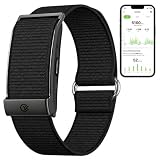
- Simple & Screen-Free Design – Easy to use and ultra-lightweight, comfortable for all-day wear without the distraction of a screen
- Powerful Health Monitoring – Accurately tracks heart rate, blood pressure, blood oxygen, HRV, sleep quality, and stress levels to help you better understand your body
- 100+ Sports Modes – Supports a wide range of fitness activities with precise tracking, making it your reliable companion for workouts and daily movement
- Ultra-Long Battery Life – Just 2 hours of charging powers up to 47 days of standby, so you can focus on your goals without constant recharging
- No Subscription Required – Enjoy all features with the free app, fast syncing, and easy Bluetooth connection—no hidden costs
Ownership problems to anticipate
Hume’s likely failure modes
User reviews in the Hume App Store listing report pairing failures, Bluetooth problems, missing sleep data, and difficulty syncing with Apple Health. These are user reports rather than controlled evidence, but they are relevant when assessing a device whose entire experience depends on an app. Check the current Hume app reviews before ordering.
Hume advertises a 45-day return or exchange window, although its sales pages have displayed differing policy labels. Confirm the current U.S. return terms, exclusions, shipping obligations, and refund process before buying; do not rely on a regional page or an old promotion.
Whoop’s likely failure modes
Whoop’s biggest practical failure mode is cost. A user can become dependent on its coaching and then discover that useful features are restricted to Peak or Life. The second is data continuity: once membership ends, new data collection and analysis stop even though historical data remains viewable.
App compatibility also matters. Whoop’s current documentation says iOS 15 is no longer supported, iOS 16 receives limited support, and Android 11 or newer is recommended for Whoop 5.0/MG, with stricter requirements for some MG features. Check the minimum software requirements for your phone.
Behavioral failure modes
Any recovery tracker can encourage score chasing. Users may become anxious about a low score, overtrain because a score looks favorable, or develop sleep anxiety by obsessing over estimated REM and deep sleep. This is particularly relevant when a product uses terms such as early warning, chronic illness, medical-grade, biological age, or longevity.
The most useful mindset is to treat the device as a prompt for questions: Am I sleeping consistently? Did my training load change? Do I feel different? If a score conflicts with your symptoms, take the symptoms seriously.
Who should buy which device?
Buy Hume Band 2.0 if…
- You refuse mandatory subscriptions.
- You want core wellness data without paying monthly.
- You are more interested in general trends than structured athletic training.
- You like the idea of Metabolic Capacity, Metabolic Momentum, resilience, and longevity scores.
- You are comfortable treating proprietary scores as directional rather than clinical.
- You want a screenless band and do not need GPS, a display, or smartwatch functions.
- You are willing to use the advertised return window to test comfort, syncing, battery life, and data quality.
Buy Whoop One if…
- You want the core strain, recovery, sleep, Strength Trainer, VO₂ Max, heart-rate-zone, and coaching package.
- You do not need Health Monitor, Stress Monitor, Healthspan, ECG, or Blood Pressure Insights.
- You are comfortable paying annually for continued data collection and analysis.
Buy Whoop Peak if…
- Training and recovery are central, but you also want Health Monitor, Stress Monitor, and Healthspan.
- You want the best balance of Whoop’s capabilities without paying Life pricing for MG-specific features.
Buy Whoop Life if…
- You have a specific, informed reason to want MG, ECG-related features, irregular-heart-rhythm notifications, or Blood Pressure Insights.
- You understand the regional, eligibility, regulatory, and wellness-only limitations of those features.
- You are willing to pay the highest recurring cost and still use a cuff or clinician for blood-pressure and heart-related decisions.
Choose neither if…
- You need precise real-time workout heart rate; use a chest strap with a suitable watch or phone instead.
- You need GPS, route navigation, a display, timers, or smartwatch functions.
- You need clinical blood-pressure monitoring.
- You want reliable medical decision-making, diagnosis, or chronic-disease detection.
- You are prone to health anxiety and know that daily scores make you feel worse rather than more informed.
Alternatives worth considering
| Alternative | Why consider it | Trade-off |
|---|---|---|
| Garmin CIRQA | Screenless $199.99 band, up to 10 days of claimed battery life, no required subscription for core use, and continuity with Garmin Connect. It offers Garmin-oriented features such as training readiness, VO₂ Max, HRV status, recovery time, and connected GPS. | It is a better fit for Garmin users than for somebody specifically seeking Hume’s longevity scores. Check current product availability and feature support. |
| Fitbit Air | Lower upfront cost at $99.99, screenless design, and approximately one week of claimed battery life. Advanced coaching can be optional through Google Health Premium. | It is less attractive if you want long battery life or a completely free advanced analytics experience. See the product page and announcement. |
| Oura Ring | Strong choice when sleep and recovery matter more than workout strain, and a ring is preferable to a wrist band. | It still requires a membership for the full experience. U.S. membership observed at $5.99 monthly or $69.99 annually after the included first month; see Oura’s membership terms. |
| Ultrahuman Ring AIR | Worth comparing if you prefer a ring and want to investigate a different subscription model and wellness ecosystem. | Fit, ring comfort, workout needs, and current pricing should be checked directly at Ultrahuman’s current product page. |
| Garmin or Apple Watch | Better when GPS, a display, live workout feedback, route data, and broader smartwatch functionality matter. | They are not screen-free, and their form factor may be less discreet than Hume or Whoop. |
| Validated upper-arm cuff | The appropriate choice for home blood-pressure monitoring. | It is not a wearable, but that is precisely why it should not be replaced by a wellness band. |
Final decision framework
- Start with your primary goal. If it is training load and recovery decisions, choose Whoop. If it is subscription-free wellness trends, choose Hume.
- Decide whether recurring cost is acceptable. Hume’s free tier is the key value proposition. Whoop’s hardware is inseparable from its membership.
- Ignore the most ambitious medical-sounding language. Longevity, biological age, metabolic momentum, stress, and blood-pressure outputs are not interchangeable with clinical tests.
- Check the feature tier. Whoop One, Peak, and Life are materially different products. ECG and Blood Pressure Insights are not included with ordinary Whoop 5.0.
- Match the form factor to your training. If you need live pace, GPS, or exact heart rate, choose a GPS watch and chest strap instead.
- Use the return window as a test. Check fit, skin comfort, battery life, sync reliability, missing data, and whether the app actually changes your decisions.
Frequently Asked Questions
Is Hume Band 2.0 a subscription-free alternative to Whoop?
It is subscription-free for Hume’s core data and metrics, but it is not a feature-for-feature replacement for Whoop. Hume Premium adds AI coaching and deeper analysis for $8.99 per month on the observed product page. Whoop requires an active membership for ongoing data collection and analysis.
Which is more accurate, Hume or Whoop?
Whoop has the stronger independent research record and more mature analytics, but neither is reference-grade for every metric. Independent reviews have reported Hume heart-rate, sleep, recovery, battery, and syncing concerns, while testing has also found inconsistent Whoop workout heart-rate readings. Use either mainly for personal trends, not diagnosis.
Can Hume or Whoop replace a blood-pressure cuff?
No. Whoop Blood Pressure Insights is a calibrated nightly estimate available with Life and MG, and Hume’s public pages are inconsistent about the U.S. availability and status of its blood-pressure feature. Neither should replace a validated upper-arm cuff or guide medication decisions.
What happens to Whoop data after canceling?
Whoop says historical data remains viewable, but new biometric data is no longer collected, uploaded, or analyzed after cancellation. This makes Whoop a continuing platform subscription rather than a one-time hardware purchase.
Is Hume or Whoop better for sleep?
Both can be useful for tracking sleep duration, timing, and personal trends. Whoop offers the more developed sleep-need and sleep-performance coaching system. Neither should be trusted for exact sleep stages on a particular night, sleep-apnea diagnosis, or medical treatment decisions.
Free tools Windows power users keep installed
One-click scans. No signup required.
The Bottom Line
Give Hume Band 2.0 a try if your priority is a screen-free wellness tracker that you can keep using without a mandatory subscription. It is the more appealing value proposition for trend-focused users, but its Metabolic Capacity, Metabolic Momentum, biological-age, and longevity outputs should be treated as proprietary wellness estimates—not proof of metabolic health, aging rate, or disease risk.
Choose Whoop if your priority is training and recovery. Whoop has the stronger coaching ecosystem, activity detection, strain model, sleep-need framework, and research record. Peak is the most balanced plan; One is sufficient for the core fitness experience; Life is only sensible when its MG-specific features justify the substantially higher cost.
If you need GPS, live workout feedback, precise heart rate, or clinical blood-pressure monitoring, neither is the right primary device. Look at Garmin CIRQA for a subscription-free screenless fitness ecosystem, a Garmin or Apple Watch for on-device training, and a validated upper-arm cuff for blood pressure.