Lenovo’s AI glasses are real hardware, but they are not a real product you can buy—at least not yet. Lenovo demonstrated the Lenovo AI Glasses Concept at CES 2026 on January 6. The company describes it as a proof of concept, with no announced price, release date, preorder, or consumer purchase page.
The glasses resemble the conventional-eyewear format popularized by Ray-Ban Meta, but the comparison should not be mistaken for a product launch. Lenovo has shown what it is exploring; it has not confirmed a retail device.
As an Amazon Associate I earn from qualifying purchases.
What Lenovo actually announced
Lenovo presented the AI Glasses Concept among its CES 2026 experimental devices. The company’s official announcement repeatedly identifies the glasses as a concept or proof of concept, rather than a shipping product.
Do these 3 things before closing this tab:
1Repair Windows errors before they cause bigger problems2Scan for outdated or missing drivers - takes under a minute3Clear out junk files and repair common Windows errorsThat distinction matters. The device is a physical demonstration, not simply a design render, but Lenovo has not committed to selling this exact hardware. The company has also not published final specifications or a consumer launch plan.
#1 Best Overall

- Capable of playing music through the glasses bringing you the ultimate hands-free experience
- Attaches to your eye for a comfortable and secure fit
What the concept is supposed to do
Lenovo positions the glasses as part of its Lenovo and Motorola Qira personal-AI ecosystem. The announced features include:
- Live translation: Lenovo describes the translation response as “sub-millisecond.” That is a company claim, not an independently tested end-to-end latency measurement; no test conditions or methodology have been published.
- Image recognition: The glasses are intended to interpret visual information through their cameras.
- Catch Me Up: This feature is designed to summarize important notifications from connected devices.
- Teleprompter mode: Lenovo presents the glasses as a possible tool for presentations and speaking engagements.
- Calls and music: The concept includes hands-free calling and music playback.
- Touch and voice controls: Lenovo has not detailed the available gestures or commands.
These are capabilities Lenovo says the concept is designed to support. They should not be treated as features available in a finished, independently tested product.
The important catch: they are tethered
Lenovo says the glasses connect wirelessly to a smartphone or another smart device. Coverage from Android Central indicates that the paired device handles much of the computing and AI processing.
In practical terms, “wireless” does not mean “standalone.” A compatible phone or computer may be required for advanced functions, and performance could depend on the paired device, network connection and cloud services. Lenovo has not published a final compatibility list or confirmed whether the glasses will work independently of Lenovo or Motorola hardware.
Rank #2
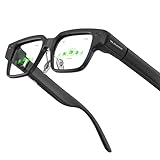
- Dual-Lens Waveguide Display Technology: Engineered with an advanced binocular waveguide optical system, these AR smart glasses deliver a truly immersive viewing experience. The ultra-bright 1200-nit MicroLED display produces crisp, vivid visuals, allowing you to view notifications clearly, real-time data, and digital content. Includes translation of more than 40 languages.
- All-Day Comfort, Virtually Weightless: Designed to feel natural from the moment you put them on, these ultralight 37g AR smart glasses combine an ergonomic frame with two soft nose pads for lasting comfort. From focused work sessions to active evenings, they stay comfortable, secure, and effortlessly wearable throughout your day.
- Your Personal AI Assistant, Always On: Designed for seamless everyday use, these AI AR agent glasses put a powerful AI assistant at your fingertips. Easy access to leading AI models delivers instant answers, intelligent recommendations, and hands-free support, helping professionals, students, and innovators stay informed and productive wherever they go.
- Live Basketball Updates Anywhere: Stay connected with real-time, text-based basketball scores and game updates displayed directly in your field of view. Designed for sports fans on the go, these smart glasses let you follow live games hands-free while commuting, working, traveling, or staying active. It's the ultimate basketball fan-themed gift for sports lovers!
- Real-Time Communication, Translation, Messaging, Music, Teleprompter, Navigation: These smart AR glasses act as a companion, offering real-time multilingual translation. Integrated messaging alerts keep you informed instantly, while the built-in teleprompter supports meetings, presentations, or content creation. Enjoy immersive access to music, notifications, and information suitable for global travelers, business professionals, and presenters who need efficiency and convenience on the go. (Auxiliary route guidance, prioritizing safe observation of the real-world environment.)
Tethering may help keep the frames lighter, but it also means another device contributes to the system’s battery use and usability. The concept may not deliver its full AI experience when the paired device is unavailable.
Weight and battery claims
| Specification | What is known |
|---|---|
| Weight | Lenovo says 45 grams |
| Battery | Lenovo claims up to eight hours |
| Compute | Wirelessly tethered to a smart device |
| Controls | Touch and voice |
| AI platform | Lenovo Qira |
| Price | Not announced |
| Release date | Not announced |
The 45-gram weight and eight-hour figure are Lenovo’s claims for a concept device, not verified retail-product specifications. Real battery life could vary with camera use, translation, display activity, calls, music, wireless signal strength and the workload placed on the connected phone.
Does Lenovo’s concept have a display?
This remains one of the biggest unanswered questions. Lenovo’s promotional imagery and descriptions of visual interactions suggest that information may be presented through the glasses, but the company has not disclosed the display type, resolution, brightness, field of view, optical technology or whether the display is monocular or binocular.
Free tools Windows power users keep installed
One-click scans. No signup required.
Do not confuse the concept with Meta Ray-Ban Display. Meta’s product page specifies a 600×600-pixel full-color display in its own glasses. That specification does not apply to Lenovo’s concept.
Rank #3

- [Quantum Leap in Image Quality]:RayNeo's latest HueView empowers vision with 98% DCI-P3, ΔE <2 color accuracy, 200,000:1 infinite contrast, and 145% sRGB vibrant colors. Enjoy incredible detail on a 201" mega screen while watching the movies, TV shows, and games you love.
- [Rest-Assured OptiCare️]:Eye comfort is enhanced with RayNeo's exclusive OptiCare, which intelligently utilizes 3840 Hz DC dimming and PWM dimming to eliminate flickering and unstable color displays under varying brightness conditions. Additionally, the stepless brightness control satisfies various needs in different settings. TÜV SÜD Low Blue Light & Flicker-Free Certification guarantees low blue light emission, flicker-free operation, and comfort for long-term use.
- [Game, Movie & Standard: Magic among All]:Feel games come alive with infinite color details and a 120 Hz smooth refresh rate, delivering fluid, lag-free animations. Connect deeply with the movie characters and immerse yourself in captivating storylines. Or swipe to standard mode for everyday use.
- [Better Sound Surrounding]:Stronger bass from drums, clearer mids from vocals, and crisper highs from violin, all achieved through the world's first dual opposing acoustic chamber design like no others. And even more precise audio cues to win in the final moment.
- [Comfort Reminder]:For your comfort and the best viewing experience, we suggest giving your eyes (and yourself) a 10-minute break after every 30 minutes of use.
Until Lenovo publishes technical documentation, it is safest to say that the concept appears intended to support visual information—not that its display specifications are known. Questions about outdoor readability, navigation, teleprompter visibility and prescription-lens support remain open.
Lenovo AI Glasses Concept versus Ray-Ban Meta
| Category | Lenovo AI Glasses Concept | Ray-Ban Meta and Meta Ray-Ban Display |
|---|---|---|
| Status | CES 2026 proof of concept | Commercial product lines |
| Availability | No confirmed retail launch | Official product and shopping pages exist |
| Compute | Designed to be tethered to a smart device | Product-specific app and hardware requirements |
| Display | Not fully disclosed | Meta lists a 600×600 display for Meta Ray-Ban Display |
| AI | Lenovo Qira | Meta AI |
| Weight | Lenovo claims 45 grams | Meta lists 68 or 70 grams for Meta Ray-Ban Display, depending on size |
| Battery | Lenovo claims up to eight hours | Meta lists up to six hours for its Display glasses |
| Price | Not announced | Varies by model, lenses and market |
This is a comparison of known status and architecture, not proof that Lenovo has matched Meta’s production capabilities. Ray-Ban Meta is a shipping consumer product; Lenovo’s device is still an experiment.
Independent reader supportYour contribution helps us test, update, and keep practical guides available for everyone.Privacy and ecosystem questions
Camera-equipped AI glasses raise practical questions that Lenovo has not answered. The company has not explained how recording is indicated, whether image or audio data is processed locally or in the cloud, how bystanders’ information is handled, or what controls exist for data retention and enterprise administration.
Crashes, No Sound, or Screen Glitches?
Random freezes, missing sound and display glitches usually trace back to one bad driver. Find and replace yours safely.Free scan · under a minuteWindows Errors? Fix Them Before They Spread
Repair common Windows errors and clear accumulated junk for a smoother, more stable PC - no reinstall needed.Free scan · no reinstallThere are also unanswered ecosystem questions. Lenovo has not confirmed supported phones, computers, operating systems, apps, languages or whether Qira will require Lenovo or Motorola hardware. Those details could determine whether the concept is useful beyond a controlled demonstration.
Rank #4

- Portable Micro-OLED Display for Gaming & Movies: Enjoy vivid colors and high contrast on the go with Lenovo Legion Glasses Gen 2. This portable display with micro-OLED tech offers an immersive FHD viewing experience anywhere, perfect for gaming and entertainment
- Plug-and-Play Instant Setup: Simply plug the Legion Glasses into any device that has a USB-C connector that supports DP video output (specifically USB type-C with DP-Alt mode) for an instant, seamless connection. No need for custom software—just connect and enjoy your content like a traditional monitor
- Plug-and-Play Instant Setup: Simply plug the Legion Glasses into any device with a full-function USB-C port for an instant, seamless connection. No need for custom software—just connect and enjoy your content like a traditional monitor
- Compatible with Multiple Devices: These glasses are compatible with a wide range of devices including Lenovo Legion Go, laptops, Steam Deck, and more. They support most full-function USB-C devices with DP video output function for maximum versatility
- Comfortable & Durable Design: Designed for long-term wear, these glasses feature adjustable nose pads and an included carry case. They also come with a prescription lens frame (prescription lenses sold separately), making them comfortable for everyone
Do not confuse it with ThinkReality A3
The CES concept is not a renamed Lenovo ThinkReality A3. The A3 belongs to Lenovo’s enterprise-oriented AR line and is designed for professional workflows.
Lenovo’s ThinkReality A3 documentation lists dual 1080p AR displays, USB-C PC connectivity, an 8-megapixel RGB camera, integrated speakers and microphone, Windows 11 support and a 130-gram weight. It is a substantially different product from the lightweight, phone-assisted consumer concept shown at CES.
Can you buy Lenovo’s AI glasses?
There is no confirmed way to buy the Lenovo AI Glasses Concept. The available information does not include a retail launch, preorder, official checkout page, price, supported-country list, prescription-lens option, warranty or returns policy.
Readers looking for smart glasses today should not treat Lenovo’s concept as an available alternative. The most direct consumer option is a shipping Ray-Ban Meta model, although it does not necessarily provide Lenovo’s proposed teleprompter or Qira integration. Buyers seeking enterprise AR displays should evaluate ThinkReality products separately.
What Lenovo would need to clarify
- Commercial price and release date
- Supported phones, PCs and operating systems
- Display technology, resolution, brightness and field of view
- Prescription-lens availability
- Camera and microphone specifications
- Privacy indicators, cloud processing and data retention
- Supported languages and apps
- Whether Qira works outside the Lenovo/Motorola ecosystem
- Warranty, service and regional availability
Until those details arrive, the glasses are best understood as a demonstration of Lenovo’s cross-device AI strategy—not as a product recommendation.
Quick Recap
Product prices and availability are accurate as of the date/time indicated and are subject to change. Any price and availability information displayed on Amazon at the time of purchase will apply.