Lumia 2 is a smart-earring platform that combines interchangeable jewelry-style ear pieces with a sensor designed to detect changes in an ear-based cardiovascular signal. Its headline feature, Flow Index, is a personalized wellness score—not a blood-pressure reading, a direct measurement of cerebral blood flow, or a medical diagnosis.
As of August 18, 2026, Lumia advertises the hardware at $249, with membership starting at $9.99 per month. The company’s website emphasizes reservations and the next product drop, so availability and final subscription terms should be checked before ordering.
As an Amazon Associate I earn from qualifying purchases.
What Lumia 2 is
Lumia 2 is designed for people who want health tracking without wearing a smartwatch, ring, or adhesive patch. The electronics sit in a small earring back, while the visible jewelry can take the form of a classic stud, huggie, or ear cuff. Lumia also advertises a SwitchBack-style attachment system intended to work with compatible earrings, although the exact supported jewelry and finishes should be confirmed in the final retail documentation.
The company advertises gold, silver, titanium, and other neutral or clear styling options. A reported specification puts the device at less than 1 gram, but that figure comes from launch coverage and company materials rather than independent measurement. The ear-cuff format may not require a piercing; fit and compatibility will depend on the final design and the wearer’s anatomy.
#1 Best Overall

- [AI-Powered Health Insights] RingConn Gen 2 Air Smart Ring integrates AI with multi-sensor data to continuously track key health metrics like sleep, heart rate, stress levels, blood oxygen, physical activity, and menstrual cycles. Its built-in AI assistant delivers your personalized report and guidance to enhance your wellness and daily habits
- [Size Before You Buy] RingConn Gen 2 Air uses unique sizing standards, different from standard ring sizes. Purchase RingConn Sizing Kit to find the most accurate and comfortable fit for your finger
- [No-Feel Wearing] Experience a comfortable, stylish design with a super-thin 2mm profile and only 2.5g weight. Won't interfere with your movement whether you're working out, running, diving, or engaging in any physical activity, and stays comfortable without distracting you when sleeping or working
- [No Subscription Fee for Standard Features] Unlock the lifetime use of essential standard features on the RingConn Smart Health Monitoring App with your RingConn Gen 2 Air Smart Ring. Experience continuous, real-time health tracking and personalized insights
- [Longer Battery Life] Enjoy up to 10 days of uninterrupted power with a single full charge that completes in just 90 minutes. Stay powered through your busy schedule without frequent recharging and efficiently maintaining continuous long-term data collection
Lumia’s reason for choosing the ear is physiological. The company says the area provides access to circulation associated with the external carotid region, potentially offering a useful location for observing changes in blood flow toward the head. That is a sensor-location rationale, not proof that every Lumia reading is clinically superior to a wrist or finger reading.
In practical terms, the jewelry design is meaningful rather than purely cosmetic: consistent contact and placement are important to the signal. Loose attachment, movement, chewing, talking, pressure from other jewelry, or interference from headphones and helmet straps can make the data less reliable.
See Lumia’s current product information.
What “blood-flow tracking” means here
The most important distinction is between Lumia’s consumer metric and clinical blood-flow testing.
- Clinical cerebral blood-flow measurement: Tests such as transcranial Doppler ultrasound use specialized equipment under controlled conditions.
- Ear-based cardiovascular signal: Lumia places its sensor near the ear and uses timing information from the circulation as a proxy-related signal.
- Flow Index: The consumer app turns that signal into a unitless, personalized wellness score.
According to Lumia’s support documentation, Flow Index is derived partly from the time required for the heart to eject blood during each beat. A new value is generally produced about every four minutes during ordinary tracking. A higher value generally indicates more blood flow during active tracking, but the score is personal: there is no universal “normal” number, and it cannot be converted into the clinical percentage-drop thresholds used in ultrasound studies.
Lumia also offers Live Mode, which records second-by-second data during a defined session. That is different from receiving a second-by-second Flow Index throughout the day. Regular background sampling, the device’s syncing behavior, and the time at which the app displays a result all affect what “real time” means in practice.
- Flow Index: The consumer-facing, unitless wellness score.
- Research eCBF: A separate research metric that Lumia says is not the same as Flow Index.
- Heart rate: A conventional cardiovascular measurement included among the device’s other metrics.
- Readiness or Forecast: Derived scores using factors such as HRV and resting heart rate.
- Live Mode: Higher-frequency recording during a user-defined session.
What else Lumia 2 tracks
Lumia advertises more than 20 health and activity metrics, although the complete list and feature availability may vary by app version and membership tier. The advertised categories include:
- Heart rate
- Sleep
- Temperature
- Activity, steps, active minutes, and exercise information
- Menstrual-cycle tracking
- HRV and resting-heart-rate-based readiness or Forecast scores
- Flow Index and Live Mode data
This makes Lumia 2 broader than a single-purpose circulation sensor, but its main distinction remains the ear-based blood-flow-related signal. It is not intended to replace a general-purpose smartwatch for notifications, GPS, ECG, fall detection, or a wrist-mounted display.
The Tool Desk
Outbyte PC Repair FREERepair Windows errors before they cause bigger problemsFix Now →Outbyte Driver Updater FREEFix the driver behind crashes, sound loss and screen glitchesFind Drivers →Who might find it useful?
Lumia 2 is most plausibly useful to people who want to study their own patterns rather than obtain a clinical answer. That may include people interested in orthostatic intolerance, POTS, vasovagal syncope, dysautonomia, Long COVID, ME/CFS, fatigue, dizziness, or fainting. Lumia’s earlier positioning specifically addressed several of those groups, while Lumia 2 is also marketed as a general wellness product.
A user could compare readings and symptoms around:
- Standing, sitting, or lying down
- Sleep loss and recovery
- Hydration and meals
- Exercise
- Compression garments
- Stress
- Medication timing, without changing medication because of the device
The value is in repeated patterns. A single low score is difficult to interpret; a consistent change under the same conditions may be more informative for a user discussing symptoms with a clinician.
Rank #2
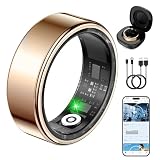
- ⚠️Important – Check Your Size Before Ordering👇👇👇
- 👉Your TERRALAB 2.0 smart ring must fit snugly for accurate heart rate,Sports, blood oxygen, and sleep tracking. Please refer to our size guide (images/video on this listing) before purchase. The ring is not resizable after delivery. Avoid sizing issues – take 2 minutes to measure correctly.👍 Doing this small step now saves you time and ensures you love your smart ring from day one.
- [All-Day Health & Wellness Tracking – No Subscription Fee]:Effortlessly monitor your heart rate, blood oxygen, stress levels, and sleep patterns right from your finger. TERRALAB 2.0 Smart Ring comes with zero monthly fees – enjoy full access to your health data without any hidden costs.
- [Built for an Active Lifestyle – IP68 Waterproof & Sports Ready]:Whether you're swimming, running in the rain, or washing your hands,while washing fruits and vegetables, the IP68 waterproof rating keeps your ring protected. It’s durable enough for daily workouts, outdoor adventures, and even showering.
- [Portable Charging Case – Extended Battery Life On the Go]:The included sleek charging case not only stores your ring safely but also recharges it multiple times. Perfect for travel, business trips, or long weekends – your smart ring stays powered for days without searching for an outlet.
How to use the data responsibly
The most useful workflow is closer to a structured personal log than a home diagnostic test:
- Wear and position the earring consistently.
- Pair it with the app and allow the device to sync.
- Review ordinary Flow Index trends rather than isolated values.
- Record posture, symptoms, meals, sleep, exercise, hydration, and other relevant circumstances.
- Use Live Mode for controlled comparisons when appropriate.
- Repeat observations before drawing conclusions.
Lumia’s support guidance suggests controlled comparisons such as sitting upright and then reclining with the legs elevated, comparing routine activities, or observing the effect of compression garments. Talking, chewing, and excessive movement can create artifacts, so a quiet and consistent protocol produces more useful comparisons.
Stand tests require particular caution. Anyone with a significant fainting risk should not perform one alone. Follow a clinician-approved protocol, stop immediately if severe symptoms appear, and never use a wearable experiment as a reason to stop prescribed medication, fluids, compression, or other treatment.
What evidence supports Lumia’s approach?
Lumia reports several research and validation efforts. The company says a Johns Hopkins tilt-table study found that its technology detected blood-flow abnormalities before some fainting episodes. It also reports a comparison with transcranial Doppler ultrasound producing a Pearson correlation of r = 0.91 for a Lumia-derived carotid-flow timing measure.
On its science page, Lumia further reports:
- An association of r = 0.46 between its research eCBF metric and symptoms.
- A reported 17% decline in the research eCBF metric among symptomatic orthostatic participants compared with a 6% decline in healthy controls.
Those figures are potentially interesting, but they need careful interpretation. They describe company-reported studies or preliminary research, not necessarily the consumer Lumia 2 app. Lumia says its research eCBF metric differs from consumer Flow Index, and the diagnostic-style algorithm is not currently available as a consumer output.
A correlation also does not establish that Lumia diagnoses a condition, explains an individual’s symptoms, or performs identically across users and situations. The company says it is pursuing future FDA diagnostic approval; that is not the same as having FDA clearance or approval today.
Recommended Free Tools
Read Lumia’s science and validation claims.
Independent reader supportYour contribution helps us test, update, and keep practical guides available for everyone.Medical status and safety limits
Lumia’s terms state that the hardware and service are not medical devices and have not been cleared or approved by the FDA. Lumia 2 should therefore be treated as a general-wellness wearable.
Flow Index is not a diagnosis of POTS, dysautonomia, cerebral hypoperfusion, syncope, Long COVID, ME/CFS, or any other condition. It is not equivalent to blood pressure, and a low score does not prove that a dangerous event is occurring. Conversely, a normal-looking score does not rule out a medical problem.
People who need clinically actionable information should discuss symptoms with a healthcare professional and use appropriate tools such as a validated upper-arm blood-pressure monitor, clinician-supervised orthostatic vital-sign testing, tilt-table testing, transcranial Doppler ultrasound, or specialist autonomic evaluation where indicated.
Rank #3

- 【Size Before You Buy】Before purchasing the Milavan Smart Ring, we recommend referring to the size chart and carefully measuring your finger circumference. This helps ensure a comfortable fit and avoid unnecessary returns or exchanges
- 【Upgraded Core Chip & Free App】Now powered by the advanced AB2026B3 chip with a high-precision sensor, offering higher accuracy, faster response, lower power use, and enhanced health tracking through the free app
- 【Wellness Tracking】Featuring an advanced 5.0 sensor, this slim 2.0 smart ring automatically tracks your heart rate, stress levels, and other daily wellness metrics every 30 minutes. Data is for reference only and is not intended for medical use
- 【Anti-Bump Design】The ring is upgraded to a 7mm width, offering a lightweight and comfortable fit. Its micro-matte finish enhances protection, effectively preventing fingerprint and scratch issues commonly seen in other rings on the market
- 【Intelligent Sleep Tracker】The upgraded version supports 24-hour automatic sleep monitoring. Compared with common fixed-time monitoring on the market, it provides more comprehensive tracking of deep sleep, light sleep, REM stages, and awake periods
Read Lumia’s regulatory and medical-use disclosures.
Quick wins for a faster PC:
Clear out junk files and repair common Windows errorsFree Scan →Scan for outdated or missing drivers - takes under a minuteDriver Scan →Price, membership, and availability
Lumia advertises Lumia 2 at $249, with membership beginning at $9.99 per month. If someone paid that starting monthly rate for 12 months, the first-year hardware-and-membership total would be approximately $368.88 before tax. That is a calculation from the advertised figures, not confirmation of a final annual plan or commitment structure.
Lumia says it plans to offer a limited free tier with some daily scores and basic functions, but the exact limits remain subject to change. The company’s homepage and reservation pages currently emphasize a waitlist or next drop rather than guaranteed immediate retail availability.
Before buying, verify the current:
- Shipping countries and expected delivery timing
- iOS and Android requirements
- Included earring styles, finishes, charger, and accessories
- Battery-life claim, advertised as 5–8 days
- Membership features and cancellation terms
- Return and warranty policy
Check the current Lumia 2 reservation page.
Lumia 2 compared with mainstream wearables
| Device | Best suited to | How it differs from Lumia 2 |
|---|---|---|
| Oura Ring | Sleep, readiness, recovery, temperature, and ring-based wear | Finger-worn and centered on sleep and recovery rather than an ear-based blood-flow-related metric |
| WHOOP | Training load, strain, recovery, and screen-free fitness tracking | Fitness and recovery-focused rather than jewelry-style or blood-flow-focused |
| Apple Watch | Notifications, safety features, activity tracking, apps, and broad smartwatch functions | A general-purpose wrist computer rather than a discreet ear-worn wellness sensor |
Lumia is the more targeted choice for someone specifically curious about blood-flow-related personal patterns. Oura or WHOOP may be more sensible for sleep and training, while Apple Watch is the stronger option for general wearable functionality.
Who should buy Lumia 2?
Consider it if you want a discreet alternative to a watch or ring, are specifically interested in blood-flow-related trends, can comfortably wear an earring or cuff, accept the membership cost, and understand that the output is wellness information.
Free tools Windows power users keep installed
One-click scans. No signup required.
Skip it if you need a diagnostic device, want a one-time purchase, cannot tolerate ear-worn hardware, frequently use headphones or helmets that interfere with the sensor, or expect conventional smartwatch features.
Verdict
Lumia 2 is a genuinely differentiated wearable: its jewelry format and ear-based sensing approach make it more than another sleep or activity tracker. For people who want to investigate how posture, exertion, sleep, meals, hydration, or compression relate to their own symptoms, it could provide a useful stream of personal observations.
But the distinction between promising research and a validated consumer diagnostic product is decisive. Lumia 2’s Flow Index is a personalized wellness signal, not a direct cerebral-blood-flow measurement or a medical answer. At $249 plus a recurring membership, it makes the most sense for users who specifically value that kind of trend tracking and are comfortable with the device’s limitations. For everyone else, an established recovery wearable or a clinically appropriate measurement tool may be the better purchase.
Quick Recap
Product prices and availability are accurate as of the date/time indicated and are subject to change. Any price and availability information displayed on Amazon at the time of purchase will apply.




