Recommended Free Tools
Meta is turning Ray-Ban Meta into a more continuous AI assistant, not merely a camera that answers questions about snapshots. The update covers real-time video questions, live and text translation, visual reminders, QR-code and phone-number scanning, and expanded audio integrations.
Those features were announced on September 25, 2024 and rolled out in stages. By August 2026, Ray-Ban Meta Gen 2 is the current hardware line, but feature access still depends on geography, language, phone, firmware, app version, account status, and rollout eligibility.
Meta’s Ray-Ban glasses are moving beyond the original snapshot-based assistant. The company’s newer software lets users have a more continuous conversation about what the camera is seeing, ask for translations, create visual reminders, and scan QR codes or phone numbers without immediately taking out a phone. But the important context is timing: Meta announced this package on September 25, 2024, then released parts of it gradually rather than making every feature available to every owner at once.
As of August 12, 2026, the current hardware context is the Ray-Ban Meta Gen 2 family. Gen 2 adds longer claimed battery life and 3K video, while many of the headline AI functions began with the earlier Ray-Ban Meta generation and still depend on software, country, language, phone, account, and rollout status.
Recommended Free Tools
#1 Best Overall
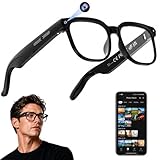
- 【AI Real-Time Translation & ChatGPT Assistant】AI glasses break language barriers instantly with AI real-time translation. The built-in ChatGPT voice assistant helps you communicate, learn, and handle travel or business conversations smoothly—ideal for conferences, overseas trips, and daily use.
- 【4K Ultra HD】 Smart glasses feature 4K resolution for clear, detailed visuals, making them suitable for travel, outdoor activities, everyday moments, and daily use.
- 【Bluetooth Music & Hands-Free Calls 】Smart glasses provide Bluetooth music and crystal-clear hands-free calls with an open-ear design. Stay aware of your surroundings while listening—comfortable for long wear and safer for commuting, cycling, and outdoor use.
- 【IP65 Waterproof & Long Battery Life】 AI glasses are designed for daily wear with IP65 waterproof protection against sweat, rain, and dust. The built-in 290mAh battery provides reliable performance for workdays and travel—no anxiety when you’re on the go.
- 【Smart App Control & Object Recognition】Smart glasses connect to the companion app for easy setup, file management, and feature control. They support AI object recognition to help identify items and improve your daily efficiency—perfect for travel exploration and a smart lifestyle.
What Meta announced for Ray-Ban smart glasses
At Meta Connect 2024, Meta described Ray-Ban Meta as a hands-free assistant that could understand more than a single photograph. The announcement covered several related capabilities:
| Feature | What it is intended to do | Important qualification |
|---|---|---|
| Real-time AI video | Answer questions during a more continuous interaction about what the wearer is seeing. | It was announced before general availability and initially rolled out through Early Access. |
| Live translation | Translate between English and French, Italian, or Spanish, with additional languages planned. | Language and country support are not universal. |
| Visual reminders | Remember an object or scene the wearer is looking at, or create a voice reminder for later. | Reminder and visual-AI availability varies by account and region. |
| QR-code scanning | Scan a QR code and open its destination on the connected phone. | The phone remains part of the workflow; scanning does not make a destination trustworthy. |
| Phone-number scanning | Recognize a phone number and help the wearer call or message it. | Messaging and calling integrations depend on the phone and supported services. |
| Audio integrations | Use services and experiences involving Amazon Music, Audible, iHeart, and Spotify. | Partnerships, commands, and availability can change by market. |
Real-time AI video is more than asking about a photograph
Earlier Ray-Ban Meta visual questions generally involved capturing an image and asking Meta AI to interpret it. Meta’s real-time video update is designed for a more ongoing exchange. A wearer could ask about a cooking step while working through a recipe or ask questions about a scene while walking through a city, rather than treating every question as an isolated still-image request.
That distinction matters, but it should not be overstated. Real-time AI video does not turn the glasses into a self-contained augmented-reality headset. The standard Ray-Ban Meta line has no conventional in-lens display, so answers are delivered through the glasses’ audio system or the connected phone rather than as text floating in front of the wearer. Nor does the feature necessarily mean that the assistant narrates every frame continuously. The practical model is a voice conversation that can use changing visual context when the feature is available.
Meta’s system-card documentation describes the underlying interaction in straightforward terms: an image captured by the Ray-Ban Meta camera and the wearer’s spoken prompt are passed to the AI model so it can answer a visual question. That makes the capability useful for identification, description, and context, but it also means the camera interaction deserves the same privacy consideration as uploading a photograph to an online AI service.
Quick wins for a faster PC:
Clear out junk files and repair common Windows errorsFree Scan →Fix the driver behind crashes, sound loss and screen glitchesFind Drivers →Translation: two related use cases
Meta announced live translation between English and French, Italian, or Spanish, with more languages planned. That is separate from the simpler visual-AI command to translate text seen by the camera, such as a sign, menu, or label.
In practice, users should distinguish between:
- Text translation: the camera looks at written words and Meta AI translates them.
- Live translation: the system is intended to help translate an ongoing spoken exchange between supported languages.
Neither description should be read as a promise of universal interpreter coverage. Ray-Ban’s support material warns that Meta AI and voice commands are available only in selected countries and languages. A feature can also be introduced in one market before another, or be limited to an Early Access group even when the hardware is technically capable of running it.
Reminders can connect an object, place, or voice instruction to later action
The visual-reminder announcement covered two useful but different behaviors. A wearer could ask the glasses to remember something being viewed—for example, a jacket—or ask for a timed voice reminder. Meta’s examples included remembering where the user parked and setting a reminder to send a message after landing.
This is potentially more useful than a conventional timer because the reminder can be tied to something in the wearer’s surroundings. It is also a reason to avoid assuming that the glasses are merely storing everything locally. Visual AI involves camera captures and cloud-connected processing, so users should consider what they are asking the system to remember and whether the image contains other people, private documents, access codes, or sensitive locations.
QR-code and phone-number scanning reduce phone handling
The QR feature is intended to handle a small but common friction point: seeing a code on a poster, menu, sign, or screen and having to unlock the phone to scan it. The wearer can ask the glasses to scan the code, after which the QR destination opens on the connected phone. Meta also described scanning a phone number and using it to call or message.
The glasses do not eliminate the phone from this process. The phone supplies the connected app and network path, and the QR destination is opened there. That is convenient, but it is not a security filter. A QR code can lead to a phishing page, a misleading payment form, or a malicious download just as easily when scanned hands-free. Check the destination on the phone before entering credentials, payment information, or personal data.
Phone-number actions are similarly dependent on the phone’s operating system, permissions, contacts, messaging apps, and supported integrations. The exact result may be a call or message workflow rather than a completely hands-free transaction.
How the rollout actually happened
The September 2024 announcement was a roadmap and feature announcement, not proof of immediate universal availability. The rollout developed in stages:
Rank #2

- 【8MP HD Camera & EIS Stabilization】Osawalla smart glasses let you capture first-person photos and 1080P HD video with the built-in 8MP camera. EIS anti-shake support helps keep footage smoother during travel, outdoor activities, and daily use. Selectable clip lengths include 15s, 30s, 1 min, 3 min, 9 min, and 12 min
- 【AI Object Recognition & Real-Time Translation】These AI glasses with camera have "Hey Cyan" AI voice assistant (built-in ChatGPT model) and object recognition (recognizes objects, menus, landmarks, plants in real time). They also support 139+ language translation and voice-assisted Q&A—perfect for international travelers, students to break language barriers during travel, study and work
- 【Bluetooth Music & Phone Calls】Osawalla smart glasses connect via Bluetooth 5.4 for music playback, phone calls, and voice assistant control. The open-ear design lets you enjoy everyday listening while staying more aware of your surroundings during walks, commuting, travel, and daily use. Touch controls make it easy to adjust volume, answer calls, and manage playback
- 【Ultra-Light 40.8g (0.09lb) for All-Day Comfort & Long Battery Life】Lightweight camera glasses with TR90 frame, ABS temples, and PMMA material for zero nose pressure. IP65 waterproof design resists daily splashes. 290mAh battery supports up to 7 hours of music playback and 7 days of standby, ideal for travel and daily use
- 【Photochromic Lenses】These smart sunglasses with camera have photochromic lenses that automatically darken in sunlight for effective UV protection. Note: Lenses may darken slower in inside or winter due to weaker UV rays. If you have any questions, feel free to contact us—we are always here to provide satisfactory service
- September 25, 2024: Meta announced continuous real-time AI video, translation, reminders, QR and phone-number scanning, and expanded audio-service integrations at Meta Connect.
- December 2024: Meta began rolling out firmware version 11 to Early Access participants in the United States and Canada. That rollout added Live AI, a more continuous conversation with Meta AI, real-time video interaction, and live-translation capabilities.
- 2025–2026: The product family moved into the Ray-Ban Meta Gen 2 hardware era, while support pages and product listings documented a broader set of AI, translation, livestreaming, and optical options.
This history explains why two owners with apparently similar glasses may see different options. Hardware generation, firmware, Meta AI app version, account eligibility, country, language, and staged rollout status can all matter. A feature shown in a 2024 demonstration should not be treated as a guaranteed feature on a used pair or an imported pair.
Ray-Ban Meta Gen 2 is the current hardware context
For a new buyer in 2026, the relevant product family is Ray-Ban Meta Gen 2. Meta says Gen 2 offers up to eight hours of typical use, up to 3K Ultra HD video capture, a 12-megapixel ultra-wide camera, and a charging case rated for up to 48 additional hours of power. Those are manufacturer claims and should not be confused with an independently tested battery result. Camera resolution and quoted battery capacity also do not guarantee eight hours under continuous video, calls, livestreaming, or heavy AI use.
The Gen 2 announcement listed a starting price of $379. That was the announced starting price, not a promise of the current price in every country or for every frame, lens, prescription, or promotion. Confirm the current listing, seller, warranty, and included accessories before purchasing.
Ray-Ban’s current United States product material lists 3K video, Meta AI voice responses, Live AI in the United States and Canada, text and live translation, livestreaming, and multiple frame and lens combinations. Availability still needs to be checked against the buyer’s market and account rather than inferred from a product page for another country.
Do these 3 things before closing this tab:
1Repair Windows errors before they cause bigger problems2Scan for outdated or missing drivers - takes under a minute3Clear out junk files and repair common Windows errorsPrescription models are now part of the buying decision
The current line also includes prescription-oriented optical models. Ray-Ban and Meta identify the Ray-Ban Meta Blayzer Optics and Scriber Optics models for prescription wearers. The newer optical designs include features such as over-extension hinges, adjustable temple tips, and interchangeable nose pads.
That makes the product more relevant to people who would otherwise need to wear ordinary prescription glasses beneath or instead of smart glasses. Lens availability, prescription limits, fitting, insurance, and optical-provider support remain market-specific. Buyers should confirm that their prescription can be made for the exact frame and that the seller is authorized to provide the required lenses.
For shoppers who have already checked regional support and want the current generation, Ray-Ban Meta Gen 2 smart glasses are the product category to compare. Do not choose solely on the promise of a headline AI feature: verify that Live AI, visual questions, translation, and the desired messaging or calling functions are available where you live.
Prescription wearers can also investigate Ray-Ban Meta prescription smart glasses, particularly the Blayzer Optics and Scriber Optics options. Availability and whether prescription lenses are included or sold through a separate optical process should be confirmed before checkout.
What you need to use the glasses
A Ray-Ban Meta owner needs more than the frames. Ray-Ban’s documented checklist includes:
- A compatible Android or iPhone.
- Bluetooth connectivity between the glasses and phone.
- Wireless internet access for connected services and AI features.
- A valid Meta account.
- The Meta AI app.
- Android 10 or later with location services enabled, or iOS 14.4 or later, according to the documented requirements.
These are baseline requirements, not a guarantee that every AI function will appear. Voice commands, visual AI, Live AI, translation, and messaging integrations can vary by country, language, device generation, app version, firmware, and account status. Some functions may also remain part of an Early Access or staged rollout program.
Before buying, check the product and support information for the country in which the glasses will be used. Before troubleshooting, update the Meta AI app and the glasses’ firmware, confirm Bluetooth and internet access, and check the selected language and account eligibility. App labels and feature menus can change, so an imported model or second-hand pair should not be assumed to have the same regional support as a locally sold one.
Standard Ray-Ban Meta glasses do not have a display
This is the most important expectation-setting detail. Standard Ray-Ban Meta glasses are camera-and-audio wearables: they capture photos and video, play open-ear audio, and connect to Meta AI through a phone and network service. They do not provide the conventional in-lens display associated with augmented-reality glasses.
What’s actually slowing this PC down?
Pick the symptom - the matching free tool is one click away.
Rank #3
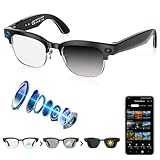
- 【4K Camera with EIS Stabilization】Smart glasses with camera feature a built-in 4K camera with EIS stabilization for clearer and steadier image performance during sports, cycling, travel, outdoor activities, and everyday use.
- 【Open-Ear Speakers & Clear Bluetooth Calling】Camera glasses feature built-in open-ear speakers for music and clear Bluetooth calls while helping you stay aware of your surroundings. Noise-reduction microphones provide clearer voice pickup and a comfortable listening experience for everyday use.
- 【AI Real-Time Translation & Voice Assistant】AI glasses support real-time translation in 139+ languages to make communication easier across different languages. The built-in AI voice assistant helps you access information and interact more efficiently—ideal for work, study, travel, and daily use.
- 【Photochromic Lenses & Lightweight Comfort】Smart sunglasses with camera feature photochromic lenses that respond to changing sunlight conditions for comfortable indoor and outdoor use while helping reduce UV exposure. The lightweight 35g frame provides a comfortable fit for extended everyday wear.
- 【IP66 Water Resistance & 290mAh Battery】AI sunglasses with camera feature IP66 water resistance for added protection against sweat, rain, and dust during active daily use. The built-in 290mAh battery provides convenient power for travel, outdoor activities, work, and everyday use.
Meta’s separate Meta Ray-Ban Display product is a different category with an in-lens display. Do not conflate it with the standard Ray-Ban Meta line when comparing specifications, demonstrations, or prices. If a buyer expects translated text, directions, or AI answers to appear directly in the lens, standard Ray-Ban Meta is the wrong expectation.
Independent reader supportYour contribution helps us test, update, and keep practical guides available for everyone.Privacy and reliability considerations
Visual AI is useful precisely because the camera can see the surrounding world, but that also creates privacy questions for the wearer and for people nearby. Meta’s system-card material says that the captured image and spoken prompt are sent to the AI model. Ray-Ban’s FAQ says that AI-processed photos may be stored and used to improve Meta products and train Meta AI with trained reviewers, subject to Meta’s privacy policy.
Before using visual AI, QR scanning, or reminders, consider whether the frame includes:
- Other people who have not agreed to be recorded or analyzed.
- Identity documents, medical information, work materials, or confidential screens.
- Passwords, access badges, payment details, or private messages.
- Children or sensitive locations.
Users should also separate a manufacturer demonstration from an independently verified performance claim. The available material supports what Meta and Ray-Ban say the features are designed to do; it does not establish a particular response speed, recognition accuracy, battery result, or QR-scanning success rate in every environment. Treat AI answers as assistance rather than authoritative information, especially for navigation, health, legal, financial, or safety-critical decisions.
Free tools Windows power users keep installed
One-click scans. No signup required.
Practical buying checklist
- Confirm the generation. Gen 2 is the current mainstream hardware line as of August 2026. Check the exact model rather than relying on a generic Ray-Ban Meta listing.
- Check the local feature set. Confirm support for Live AI, visual questions, translation, calling, messaging, and QR scanning in the country and language where the glasses will be used.
- Check the phone. Make sure the phone meets the documented Android or iOS baseline and can run the Meta AI app.
- Decide whether audio-only answers are acceptable. Standard Ray-Ban Meta has no in-lens display.
- Choose lenses carefully. Prescription buyers should verify the exact optical model, prescription compatibility, fitting process, and local availability.
- Budget for practical care. A compatible protective case, charging setup, and lens-care supplies may be useful, but verify each accessory against the exact model and connector before purchase.
- Do not buy for a promised future feature alone. Meta’s 2024 announcement and later rollout history show that availability can take time and can remain geographically limited.
For accessories, a Ray-Ban Meta protective case, a compatible USB-C charger for Ray-Ban Meta, and a Ray-Ban Meta lens cleaning kit can be sensible owner purchases, provided the listing clearly matches the glasses and does not imply official certification without evidence.
Bottom line
Meta’s update changes the character of Ray-Ban smart glasses from a camera that answers occasional questions into a more continuous, phone-connected AI assistant. Real-time video, translation, visual reminders, QR scanning, and phone-number recognition are meaningful hands-free conveniences. However, the package was announced in September 2024 and rolled out progressively, with Live AI and real-time video first reaching Early Access users in the United States and Canada through firmware v11 in December 2024.
Gen 2 is the current hardware to consider, with an advertised eight-hour typical-use battery, 3K video, a 12-megapixel camera, and prescription-oriented options. The sensible purchase decision depends less on the feature demo than on local availability, phone compatibility, comfort, prescription support, privacy expectations, and whether audio-only interaction is enough. Buyers should verify those details before treating any Ray-Ban Meta listing as a complete promise of every AI feature.
Source note: Feature history is based on Meta’s September 25, 2024 announcement and subsequent firmware-rollout reporting. Requirements and command examples are based on Ray-Ban support material; current hardware and optical details are based on Meta and Ray-Ban product and prescription materials. Availability and pricing can change by market.
The Tool Desk
Outbyte PC Repair FREEClear out junk files and repair common Windows errorsFree Scan →Outbyte Driver Updater FREEFix the driver behind crashes, sound loss and screen glitchesFind Drivers →Frequently Asked Questions
Do Ray-Ban Meta smart glasses show AI answers in the lens?
No. Standard Ray-Ban Meta glasses do not have a conventional in-lens display. They use a camera, open-ear audio, voice interaction, and a connected phone. Meta Ray-Ban Display is a separate product category with an in-lens display.
Does every Ray-Ban Meta owner have real-time AI video?
No. Live AI and real-time video began with an Early Access rollout through firmware v11 in the United States and Canada in December 2024. Availability can still vary by country, language, hardware generation, firmware, app version, account, and rollout cohort.
What phone and app are required for Ray-Ban Meta AI features?
Ray-Ban’s documented baseline requirements are Android 10 or later with location services enabled, or iOS 14.4 or later, plus Bluetooth, wireless internet access, a Meta account, and the Meta AI app. These requirements do not guarantee access to every feature.
What are the privacy implications of visual AI on Ray-Ban Meta glasses?
Meta’s system-card material says the captured image and spoken prompt are passed to the AI model. Ray-Ban says AI-processed photos may be stored and used to improve Meta products and train Meta AI with trained reviewers, subject to Meta’s privacy policy. Avoid capturing sensitive information or people who have not consented.
The Bottom Line
Ray-Ban Meta’s headline upgrade is a shift from one-off photo questions to more continuous, voice-led visual AI, with translation, reminders, QR scanning, and phone-number actions. The features were staged rather than universally available at launch. As of August 2026, Gen 2 is the current hardware line, but buyers still need to verify regional support, phone compatibility, privacy terms, prescription availability, and the fact that standard glasses have no in-lens display.
Quick Recap
Product prices and availability are accurate as of the date/time indicated and are subject to change. Any price and availability information displayed on Amazon at the time of purchase will apply.