Windows Errors? Fix Them Before They Spread
Repair common Windows errors and clear accumulated junk for a smoother, more stable PC - no reinstall needed.Free scan · no reinstallOutdated Drivers Are Slowing You Down
One free scan finds every outdated or missing driver and matches the right update for your exact hardware.Free scan · exact hardware matchSnap’s fifth-generation Spectacles are a serious AR developer kit, not ordinary smart glasses. They offer standalone see-through AR, hand and voice controls, spatial tracking, and shared experiences in a relatively compact wearable format—but that format is still conspicuously large, Snap says continuous runtime is up to 45 minutes, and the original $99-per-month offer required a one-year commitment.
That makes the minimum announced commitment $1,188 before tax. The value proposition is therefore not casual ownership; it is access to a platform for teams building spatial AR experiences that phones and conventional headsets cannot reproduce.

As an Amazon Associate I earn from qualifying purchases.
What Snap is actually offering
Announced on September 17, 2024, the fifth-generation Spectacles are standalone, see-through AR glasses running Snap OS. Unlike earlier Spectacles products that primarily captured photos and video, these are designed to display spatially anchored digital content in the wearer’s environment.
Quick wins for a faster PC:
Repair Windows errors before they cause bigger problemsFix Now →Fix the driver behind crashes, sound loss and screen glitchesFind Drivers →They were introduced through Snap’s Spectacles Developer Program, rather than as a normal retail product. The original launch was aimed at developers in the United States. Snap later announced access in Austria, France, Germany, Italy, the Netherlands, and Spain, but that did not establish worldwide availability.
Because the underlying announcements date from 2024, prospective teams in 2026 should confirm current eligibility, supported countries, pricing, shipping, taxes, renewal rules, hardware terms, and application requirements directly with Snap.
What the $99 monthly fee means
Snap announced a fee of $99 per month with a one-year commitment. The nominal minimum is therefore:
$99 × 12 months = $1,188 before tax.
This is better understood as a developer-program subscription or hardware-access arrangement than as a conventional consumer gadget purchased for $99. Snap said the program included access to Spectacles and developer support.
The available launch information does not reliably establish whether the hardware must be returned, whether the subscription renews automatically, what replacement charges apply, or what happens to access after cancellation. Those details should be checked in the current program terms rather than assumed.
Snap’s original announcement is available at Snap’s Spectacles announcement.
Why the AR is impressive
Snap lists a 46-degree diagonal field of view, 37 pixels per degree, and 13 milliseconds of motion-to-photon latency. It also describes the display as visually comparable to a 100-inch screen viewed from 10 feet away. That comparison is Snap’s framing, not an independent measurement.
Rank #2

- Lightweight & Comfortable Design: Ergonomic ultra-light frame for all-day fatigue-free wear. Splash and sweat resistant, perfect for driving, sports and daily use.
- Premium Multifunctional 2.0mm PC Lenses: 2.0mm ballistic-grade high-impact resistant lenses for reliable shatterproof protection. Built-in blue light blocking and auto photochromic for all-day eye comfort.
- Long-Lasting Battery Life: Provides up to 10 hours of continuous usage on a single charge, with reliable standby performance to avoid frequent charging for commuting and outdoor activities.
- Clear Bluetooth Audio & Hands-Free Calling: Built-in Bluetooth for smooth music streaming and stable hands-free calls, delivering crisp, balanced sound for calls and music.
- AI Voice & Real-Time Translation: Powered by advanced AI voice assistant with real-time translation in 165 languages, making travel and business communication smoother and more efficient.
In practical terms, the relatively broad field of view should make spatial overlays more usable than extremely narrow AR displays. Digital objects can remain visible while the wearer looks around, and low claimed latency should help virtual content feel more stable and responsive. But 46 degrees is not the same as filling natural human vision: objects can still leave the display area as the user moves their head or looks away.
What’s actually slowing this PC down?
Pick the symptom - the matching free tool is one click away.
The glasses use see-through waveguides, liquid-crystal-on-silicon micro-projectors, automatic tinting for changing ambient light, four cameras, and Snap’s Spatial Engine. Snap says the cameras support spatial understanding and hand tracking.
A TechCrunch hands-on report described the AR as impressive for an untethered glasses-form-factor device while emphasizing the limited field of view and the glasses’ very large physical design. Those two observations are not contradictory: the display technology can be compelling even when the product is impractical for everyday wear.
Why the glasses are so large
The bulk is an engineering trade-off. Snap says the device contains two Qualcomm Snapdragon processors—one in each temple—along with four cameras, batteries, wireless hardware, custom optics, and titanium vapor chambers for heat dissipation. Snap lists the weight at 226 grams.
That is far heavier and more conspicuous than ordinary glasses. The size is not merely a cosmetic choice; it reflects the challenge of putting meaningful computing, cooling, tracking, optics, and power into a self-contained see-through wearable.
Do these 3 things before closing this tab:
1Clear out junk files and repair common Windows errors2Fix the driver behind crashes, sound loss and screen glitches3Repair Windows errors before they cause bigger problemsDevelopers should evaluate temple pressure, facial comfort, sweat, prescription compatibility, outdoor temperatures, and use during movement. Snap’s cooling architecture confirms that thermal management matters, but the announcement does not provide a complete independent comfort or thermal evaluation.
Rank #3

- 【Hands-Free Touch Controls & Bluetooth 5.4】Effortlessly manage calls, music, and voice assistant through single-click, double-click, triple-click, long-press and other touch methods. These smart glasses with Bluetooth 5.4 ensures stable connectivity to your devices—perfect for commuting, workouts, or multitasking without reaching for your phone.
- 【Long-Lasting Battery & Stylish Aesthetics】A single 1.5-hour charge delivers 5–6 hours of continuous use of music and 7 days of standby time, keeping you powered through busy days. The smart bluetooth glasses with modern design and sleek contours appeals to both women and men, blending effortlessly with professional, casual, or active wear.
- 【Light-Adaptive Lenses & Voice Assistant】These smart glasses with color-changing lenses adjust to ambient light, UV protection outdoors and filtering blue light indoors—perfect for all-day wear. Activate voice assistant via touch for messages, schedules, or real-time information.
- 【IPX4 Waterproof & Durable Design】Built for active lifestyles, these smart glasses for men & women resist sweat, rain, and splashes (IPX4 rating), perfect for outdoor runs, cycling, or beach trips. The robust yet light-weight frame protects internal components while maintaining a sleek, modern look—no compromise on durability or style for daily wear.
- 【Open-Ear Audio Design】These bluetooth glasses with speakers with open-ear design deliver crystal-clear sound to keep you aware of surroundings,whether navigating a bustling street or collaborating in a co-working space. Perfect for runs, commutes, or coffee breaks.
Battery life is a major constraint
Snap says Spectacles provide up to 45 minutes of continuous standalone use. That is a stated maximum-style figure, not a guarantee of average runtime.
Brightness, outdoor sunlight, camera-intensive Lenses, hand tracking, wireless multiplayer, and machine-learning workloads may affect endurance. A serious prototype should test:
- Continuous high-brightness use outdoors.
- Camera-heavy and SnapML-heavy experiences.
- Multiplayer sessions with wireless networking.
- Repeated short sessions versus one uninterrupted session.
- Charging, battery swapping, and recovery between demonstrations.
Short sessions may be acceptable for guided demonstrations, games, research, and trade-show showcases. They are much harder to justify for all-day navigation, workplace wearables, or consumer products expected to remain active for hours.
Snap OS and the interaction model
Snap OS is the platform layer that makes these more than display glasses. Announced capabilities include:
- Hand and voice navigation.
- A hand-accessible main menu.
- Spatially anchored Lenses.
- Shared AR experiences for multiple Spectacles users.
- Phone integration and phone-as-controller functionality.
- Spectator Mode for people who are not wearing Spectacles.
- Phone-screen mirroring.
This gives Snap a clear strategic pitch: AR should be spatial, social, and shareable, rather than simply a private screen floating in front of one person. Phone integration and Spectator Mode can make a glasses-only experience less isolated, but they do not create a mass consumer installed base by themselves.
The developer stack
Snap positioned Lens Studio 5.0 as the principal authoring environment. The announced toolset included the Spectacles Interaction Kit, TypeScript and JavaScript support, improved version-control tools, SnapML for custom machine-learning models, and faster deployment from Lens Studio to Spectacles.
Rank #4
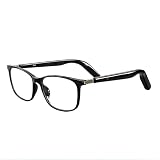
- Real-Time 164-Language Translator: Break down global communication barriers instantly. Powered by advanced AI algorithms, these Fecoul smart glasses function as a wearable voice translator. Supporting seamless, low-latency translation across 164 languages, they are your companion for international travel, cross-border business meetings, and effortless multilingual conversations
- Open-Ear Audio & Crystal-Clear Calls: Enjoy immersive sound while staying fully aware of your surroundings. The built-in Bluetooth dual speakers deliver high-fidelity music and hands-free phone calls without the discomfort of traditional earbuds. Designed to maintain situational awareness and safety during outdoor sports, commuting, and dynamic work environments
- Adjustable Hinges & Custom Comfort Fit: Engineered for zero-burden, all-day wear. Unlike rigid smart frames, our upgraded adjustable hinges effortlessly adapt to various face shapes and head sizes without pinching. Combined with an ultra-lightweight design, they ensure a secure, pressure-free unisex fit for both men and women
- Adaptive Photochromic Lenses: Minimalist design meets intelligent optical performance. Equipped with premium photochromic lenses, these glasses automatically adjust their tint-remaining crystal clear indoors and darkening outdoors based on UV light exposure. Transition seamlessly through any environment while enjoying constant eye protection and visual comfort
- Seamless Bluetooth Sync & Reliable Battery: Effortless integration into your daily digital workflow. Featuring stable Bluetooth connectivity for iOS and Android, easily manage audio or activate voice assistants. The optimized 170mAh battery delivers long-lasting power for continuous translation and music playback, keeping you connected throughout your busy workday or travel
Snap also announced an OpenAI partnership involving cloud-hosted multimodal models. At launch, the company described that capability as forthcoming, so it should not be treated as proof that every AI feature was immediately available. Cloud AI also introduces network latency, operating costs, privacy considerations, data-handling obligations, and possible service changes.
Recommended Free Tools
Snap later described additional features in Snap OS v5.58, announced in November 2024, including camera-oriented Lenses, SnapML demonstrations, and a Fetch API for hosted multimodal large language models under extended developer permissions. That version should not be assumed to be current in 2026; teams must verify the present OS, SDK, Lens Studio release, permissions model, and deployment workflow.
What developers can build
Snap highlighted projects and partnerships involving LEGO, ILM Immersive, Niantic, and Wabisabi Games. The examples point to several useful categories:
- Shared multiplayer AR: co-located experiences in which multiple participants see or interact with the same virtual content.
- Spatial games: hands-free play using the environment as part of the game space.
- Hands-free interfaces: voice and hand interaction where touching a phone would interrupt the activity.
- Object and environment awareness: camera and machine-learning features that connect digital content to physical surroundings.
- Entertainment and location-based experiences: branded worlds, characters, and 3D content anchored to places or objects.
- Scanning and creation: experiences associated with projects such as Niantic’s Scaniverse.
Partner announcements are useful evidence of platform interest, but they do not prove a broad content catalog, sustained support, or a mature consumer business. Some highlighted projects were announced as being in development or demonstrated to press, rather than established as widely available products.
Independent reader supportYour contribution helps us test, update, and keep practical guides available for everyone.Who should consider paying?
| Team | Potential fit | Main question |
|---|---|---|
| AR developers | Strong | Does the project require see-through, spatial, hands-free AR? |
| Creative agencies | Strong for showcases | Can clients justify a developer-only demonstration platform? |
| Game studios | Potentially strong | Can short sessions and limited hardware access fit the game design? |
| Enterprise prototyping teams | Potentially useful | Is the goal learning and validation rather than immediate deployment? |
| Research groups | Potentially useful | Does the project need wearable spatial interaction? |
| Mass-market app teams | Weak as a primary platform | How will a large audience obtain compatible hardware? |
The program makes the most sense when a team is deliberately exploring spatial AR, shared experiences, hand or voice interaction, or real-world context—and can absorb the roughly $1,188 announced minimum commitment.
It is a poor fit when the product requires all-day battery life, discreet ordinary-looking glasses, a broad installed base, predictable consumer distribution, or an established app-store economy.
Best Value
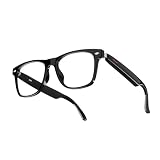
- Real-Time 164-Language Translator: Break down global communication barriers instantly. Powered by advanced AI algorithms, these Fecoul smart glasses function as a wearable voice translator. Supporting seamless, low-latency translation across 164 languages, they are your companion for international travel, cross-border business meetings, and effortless multilingual conversations
- Open-Ear Audio & Crystal-Clear Calls: Enjoy immersive sound while staying fully aware of your surroundings. The built-in Bluetooth dual speakers deliver high-fidelity music and hands-free phone calls without the discomfort of traditional earbuds. Designed to maintain situational awareness and safety during outdoor sports, commuting, and dynamic work environments
- Adaptive Photochromic Lenses: Minimalist design meets intelligent optical performance. Equipped with premium photochromic lenses, these glasses automatically adjust their tint-remaining crystal clear indoors and darkening outdoors based on UV light exposure. Transition seamlessly through any environment while enjoying constant eye protection and visual comfort
- Ultra-Lightweight & Reliable Battery: Engineered for zero-burden all-day wear. By optimizing power consumption, the built-in 170mAh battery delivers reliable, long-lasting power for continuous translation and music playback, all while keeping the frame exceptionally lightweight. The ergonomic, unisex design ensures a secure, comfortable fit for both men and women
- Seamless Bluetooth Sync & Smart Control: Effortless integration into your daily digital workflow. Featuring stable Bluetooth connectivity for iOS and Android, easily manage audio or activate smartphone voice assistants. Elevate your daily routine with intuitive, user-friendly touch controls
The distribution problem
A Lens that works on Spectacles does not automatically have a mass-market audience. Before committing, a team should answer:
- How will ordinary users obtain compatible hardware?
- Can non-developers participate?
- Is there a public distribution mechanism?
- Can friends join through phones or Spectator Mode?
- Is there a viable mobile fallback?
- What happens if Snap changes the hardware program or SDK?
The most defensible strategy may be to use Spectacles for prototyping, validation, research, or premium demonstrations while preserving a phone-based version where reach matters more than hands-free immersion.
How Spectacles compare with other categories
These products are not direct substitutes, but they clarify the decision:
Quick wins for a faster PC:
Fix the driver behind crashes, sound loss and screen glitchesFind Drivers →Clear out junk files and repair common Windows errorsFree Scan →- Apple Vision Pro is a premium spatial-computing headset with a different form factor, price structure, and development target.
- Meta Quest represents a more consumer-oriented mixed-reality headset category using camera passthrough rather than Spectacles’ see-through glasses approach.
- XREAL focuses more on portable display glasses and may depend on an external computing source, rather than matching Spectacles’ standalone spatial-AR model.
- Phone-based AR offers much better potential reach, but it cannot provide the same hands-free, see-through, wearable interaction.
Current prices, models, availability, and developer terms for these alternatives require separate verification and should not be inferred from this comparison.
The strategic question
Snap appears to be using a developer-focused device to explore what its future AR ecosystem could look like before smaller consumer hardware is feasible. That is a plausible interpretation, not a confirmed consumer-launch roadmap.
For developers, the important distinction is between platform potential and market readiness. Spectacles may demonstrate convincing spatial AR while still being too heavy, short-lived, expensive, and limited in distribution for a mainstream product.
The right investment question is therefore not “Are these good everyday glasses?” They are not designed or positioned that way. It is: Does this project gain enough from standalone see-through AR to justify a developer-only platform and its constraints?
The Tool Desk
Outbyte Driver Updater FREEScan for outdated or missing drivers - takes under a minuteDriver Scan →Outbyte PC Repair FREERepair Windows errors before they cause bigger problemsFix Now →Quick Recap
Product prices and availability are accurate as of the date/time indicated and are subject to change. Any price and availability information displayed on Amazon at the time of purchase will apply.




