The best all-round 1990s Seiko is the 1995 Alpinist with the 4S15 automatic movement, especially an original green-dial example. But Seiko’s 1990s output was too varied for one universal winner: the decade also brought a diving computer, Kinetic designs, high-accuracy 9F quartz, the return of mechanical Grand Seiko, a perpetual calendar, Thermic technology and the first Spring Drive watches. This guide ranks the important choices by buyer type and explains what to check before buying.
If you want one 1990s Seiko that best balances collectibility, history, design and real-world wearability, start with the 1995 Alpinist powered by the 4S15 automatic movement, especially an original green-dial example. It is not the right choice for everyone, though. The decade produced unusually different kinds of Seiko: mechanical field watches, quartz instruments, Kinetic designs, a diving computer, perpetual calendars, thermal-powered experiments and the first Spring Drive watches.
| # | Preview | Product | Price | |
|---|---|---|---|---|
| 1 |
|
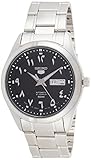
SEIKO 5 Automatic Black Eastern Arabic Dial Men's Watch SNKP21J1 | $199.01 | Buy on Amazon |
| 2 |

|
SEIKO SRPB41 Automatic Watch for Men - Presage Cocktail Time - Patterned Blue Dial with Date... | $399.00 | Buy on Amazon |
That is why there is no single “best” 1990s Seiko. The right purchase depends on whether you value mechanical character, accuracy, outdoor utility, technical history, design or rarity. This guide separates the strongest choices by buyer type and explains what to inspect before spending money on a watch that may now be more than 25 years old.
Quick verdict: the best 1990s Seiko watches by buyer
| Buyer priority | Best choice | Why it stands out | Main caution |
|---|---|---|---|
| Best overall collector’s choice | 1995 Alpinist 4S15 | Distinctive outdoor design, automatic movement and a short-lived, collectible generation | Originality and movement service matter; later Alpinists are not the same watch |
| Best technical tool watch | 1990 Scubamaster 200m | Seiko’s diving-computer milestone with depth and water sensors | Old electronics and seals make it a poor modern dive instrument |
| Best design-led quartz watch | 1997 Kinetic Arctura | Jorg Hysek’s curved case combined with Seiko Kinetic technology | The rechargeable energy-storage system may need replacement |
| Best precision-oriented watch | 1990s Grand Seiko 9F | High-accuracy quartz with serious finishing and sophisticated hand-setting mechanisms | Confirm the exact reference, service history and condition |
| Best mechanical milestone | 1998 Grand Seiko 9S | Marked Grand Seiko’s return to modern mechanical production | Usually a more expensive and condition-sensitive purchase |
| Best quartz complication | 1998 Perpetual Calendar | Calendar automation, long battery life and a historically unusual movement | Check calendar operation and battery-compartment condition |
| Best experimental collectible | 1998 Thermic or 1999 Spring Drive | Represents Seiko’s willingness to explore entirely different ways to power and regulate a watch | Scarcity and specialized servicing can outweigh everyday practicality |
Why the 1990s were such an important decade for Seiko
The 1990s were a transition period for Seiko. Mechanical watchmaking was returning after quartz had dominated the market, while Seiko continued developing advanced electronic and hybrid technologies. The company’s own museum and heritage material identifies the 1990 Scubamaster 200m, 1997 Kinetic Arctura, 1998 Perpetual Calendar, 1998 Thermic and 1999 Spring Drive as significant milestones from the decade.
#1 Best Overall
- Seiko 5 Automatic Black Arabic Dial Men's Watch SNKP21J1
Those products do not form one coherent style. A 4S15 Alpinist is a compact mechanical outdoor watch; a 9F Grand Seiko is an accuracy-focused quartz watch; a Scubamaster is an electronic diving instrument; and early Spring Drive is a new approach to regulating a mainspring. Treating all of them as interchangeable “vintage Seikos” hides the reason to buy them.
1. 1995 Seiko Alpinist 4S15: best overall collector’s choice
Best for: someone who wants the most rounded 1990s Seiko—a watch with a recognizable design, mechanical interest, outdoor intent and genuine collector appeal.
Seiko relaunched the Alpinist in 1995 for mountaineering enthusiasts. The early generation used the compact automatic 4S15 movement, stainless-steel construction and 20-bar stated water resistance. The green-dial version became the best-known expression of the design, but the important distinction is the generation, not simply the color.
The 4S15 Alpinist is especially compelling because it was not merely a modern watch styled to look outdoorsy. Its design was intended for demanding outdoor use, and its short production period helped create scarcity. Seiko’s design history also notes that the movement was difficult to mass-produce, another reason this generation should not be confused with the later, more widely available Alpinists using 6R15 movements.
What to look for
- A caseback, dial, crown and movement that agree with one another.
- A clean, original dial. Refinished or replacement dials can substantially change the watch’s collector appeal.
- A correctly functioning internal compass bezel and an outer case in reasonable condition.
- Evidence that the 4S15 has been serviced, rather than a seller’s unsupported claim that it “runs fine.”
- Minimal corrosion around the caseback, crown and movement.
Some specialist references identify SCVF001 as a 1995 4S15 model and list related SCVF references, but reference numbers should be checked against the physical watch. Marketplace descriptions are not enough evidence: incorrect dates, replacement movements, refinished dials and parts from related Alpinists are all possibilities.
The original 20-bar specification is useful historical information, not a current guarantee. On a watch this old, seals age and previous opening or corrosion may compromise the case. Have it pressure-tested before treating it as suitable for swimming, and do not buy it as a dive watch simply because the original rating was impressive.
2. Seiko Scubamaster 200m: best technical tool-watch choice
Best for: the collector who wants the most technologically unusual 1990s Seiko and values historical importance over easy daily ownership.
Introduced in 1990, the Scubamaster 200m is one of the decade’s defining Seikos. Seiko describes it as the world’s first watch equipped with a diving computer. It used water and depth sensors to provide information such as diving time and depth, making it much more than a conventional analog or digital diver with a rotating bezel.
Its appeal is therefore historical and technological. It illustrates a period when Seiko was willing to put computer-like functionality directly on the wrist, before modern dive computers became the expected solution for serious underwater use.
Why it is not a straightforward everyday diver
A 1990 Scubamaster has several age-related risk points at once: electronics, seals, sensors, display components and the availability of replacement modules. A watch can be cosmetically excellent while its depth sensor or electronic functions are unreliable. Even if every function appears to work, that does not establish current pressure resistance or underwater safety.
Buy one as a complete historical instrument and conversation piece. An active diver should use a modern, professionally tested dive computer or instrument instead. For a collector, originality and completeness may be more important than polished casework or a newly replaced external part.
3. 1997 Seiko Kinetic Arctura: best design-led quartz choice
Best for: someone who wants 1990s design and convenient quartz behavior without buying a traditional mechanical watch.
What’s actually slowing this PC down?
Pick the symptom - the matching free tool is one click away.
Released in 1997, the Kinetic Arctura paired a strongly curved, sculptural case designed by Jorg Hysek with Seiko’s Kinetic caliber technology. It is one of the easiest recommendations for a buyer who wants a watch that visibly belongs to the 1990s rather than a timeless-looking model whose age is difficult to see.
Kinetic watches generate electrical energy from the wearer’s motion and store it for later use. That makes the ownership experience different from both a standard battery quartz watch and an automatic mechanical watch. There is no routine battery-change schedule in the conventional sense, but “no battery” should not be mistaken for “maintenance-free.” The rechargeable energy-storage unit can age, lose capacity or require replacement.
Buying checklist for an Arctura
- Ask how long the watch runs after being fully charged and left still.
- Confirm that the charge indicator, hands and other functions behave normally.
- Find out whether the Kinetic energy-storage unit has ever been replaced or serviced.
- Inspect the integrated bracelet or unusual case edges for damage that may be difficult to repair.
- Budget for specialist electronic servicing rather than assuming any general battery shop can restore it.
The Arctura is a better choice for design-focused quartz ownership than for someone seeking a conventional, easily serviced vintage watch. Its unusual case and energy system are precisely what make it interesting—and what can make a neglected example expensive to put right.
4. Grand Seiko 9F generation: best for precision and finishing
Best for: the buyer who values accuracy, refined finishing and long-term quartz usability more than the romance of a mechanical movement.
Outdated Drivers Are Slowing You Down
One free scan finds every outdated or missing driver and matches the right update for your exact hardware.Free scan · exact hardware matchWindows Errors? Fix Them Before They Spread
Repair common Windows errors and clear accumulated junk for a smoother, more stable PC - no reinstall needed.Free scan · no reinstallSeiko completed the first 9F caliber, the 9F83, in 1993 after a five-year development effort. The goal was not simply to produce another quartz movement with more functions. Seiko focused on high precision, durability and the level of finishing expected from Grand Seiko.
The 9F generation is a useful corrective to the assumption that quartz automatically means inexpensive or disposable. Seiko developed mechanisms to improve the smoothness and stability of hand motion, control backlash and permit independent hand guidance. Its calendar-switching design was also engineered with the same emphasis on precise, reliable operation.
For many buyers, a 1990s 9F Grand Seiko is the most rational high-end choice in this guide. It offers the accuracy of quartz with a level of case, dial and movement attention that is far removed from a mass-market battery watch. It is also less dependent on the buyer enjoying the daily timing variation and service intervals of a mechanical watch.
Important buying qualification
“1990s Grand Seiko 9F” describes a generation and movement family, not one universal reference or specification. Identify the exact caseback reference and caliber before comparing a watch with another 9F model. Do not automatically apply the specifications, warranty coverage or service network of a current Grand Seiko to a watch made in the 1990s.
Recommended Free Tools
Look for an unaltered dial, properly finished case surfaces, a correctly signed caseback and evidence of battery and movement service. A 9F can be an excellent long-term ownership proposition, but its age still matters: seals, gaskets, battery contacts and calendar components require attention.
5. 1998 Grand Seiko 9S: best mechanical milestone
Best for: the collector who wants the most important mechanical Seiko development of the decade.
Mechanical Grand Seiko returned to the market in 1998 after quartz had dominated the company’s production for decades. The revived 9S5 caliber combined older watchmaking knowledge with new materials and production methods, and Seiko established a “New GS Standard” for accuracy.
This makes a 1998 9S Grand Seiko historically significant beyond its appearance. It marks the beginning of the modern mechanical Grand Seiko revival, rather than simply being another vintage Japanese automatic watch.
Free tools Windows power users keep installed
One-click scans. No signup required.
Who should buy one?
This is the right choice for a collector who wants a mechanical milestone and is prepared to pay for condition and professional care. It is less suitable for someone who wants a cheap introduction to vintage Seiko ownership. Compared with an ordinary Seiko 5 or an Alpinist, a 9S watch can involve more expensive servicing and greater consequences if the case, dial or movement has been altered.
Prioritize movement health, originality, corrosion-free internals, service documentation and credible provenance. A recently polished case is not automatically a sign of quality; excessive polishing can remove the crisp edges that help establish the watch’s original form. As with the 9F, verify the exact reference rather than treating every late-1990s Grand Seiko as identical to a current model.
6. 1998 Seiko Perpetual Calendar: best quartz complication
Best for: the buyer who wants an unusual complication, long battery life and a watch with a strong late-1990s technical identity.
Rank #2
- STUNNING BLUE DIAL: this automatic men's watch features a deep blue, pressed pattern and gloss finish surrounded by a stainless steel watch case
- AUTOMATIC: these self-winding, automatic men's watches are powered by your movement, with a power reserve of 41 hours
- STAINLESS STEEL: features a durable stainless steel watch case and bracelet with see through caseback
- WATER-RESISTANT: these men's wrist watches are water-resistant down to 50 meters
- 4R35 CALIBER: equipped with the reliable caliber 4R35 automatic movement, this accurate men's watch keeps precise time
Seiko’s 1998 Perpetual Calendar offered an annual accuracy rate of ±20 seconds, up to 10 years of battery life for the men’s version and a calendar that required no correction until the end of February 2100. That final qualification matters: the mechanism accounts for leap years through 2099, but 2100 is not a leap year under the Gregorian calendar.
It is a compelling purchase because the complication is genuinely useful and historically distinctive without requiring a mechanical perpetual-calendar budget. The watch can be a practical daily wearer if its electronics and calendar remain healthy.
What must be tested
- All calendar functions, including month, date and leap-year behavior.
- The quick-setting mechanism and the correct rollover at midnight.
- The battery compartment for leakage, corrosion or damaged contacts.
- The display and hands for signs of moisture ingress or inconsistent operation.
- The service history, especially if the watch has been stored for long periods with an expired battery.
Do not judge this model solely by whether it starts with a fresh battery. A seller can make a neglected example appear functional for a short time. Calendar operation and the condition of the module are more important evidence.
7. 1998 Seiko Thermic: best experimental technology collectible
Best for: the technically curious collector who values an unusual power system more than easy servicing or everyday practicality.
The 1998 Thermic used a quartz movement that generated electricity from the temperature difference between the wearer’s body and the surrounding air. It is an extraordinary example of Seiko exploring an alternative energy source for a wristwatch, and it belongs in any serious account of the company’s 1990s innovation.
The Thermic should be bought as a historical object first and a daily watch second. Its power-generation system is specialized, and a watch that does not generate or store energy properly may require expertise and parts that are difficult to locate. Completeness, originality and documented function matter more than finding the cheapest example.
Before buying, ask for a clear demonstration of the watch starting and continuing to run under ordinary wearing conditions. Inspect the case and movement for moisture or corrosion, and confirm whether the seller has tested the power system rather than merely observing that the hands move briefly.
8. 1999 Spring Drive: best end-of-decade innovation
Best for: the specialist collector interested in the origin story of one of Seiko’s most important modern technologies.
Spring Drive was introduced in 1999 as a third approach to watch regulation. It stores energy in a mainspring like a mechanical watch, but regulates the release using a crystal oscillator, semiconductor circuit and electromagnetic brake. The result is a hybrid system that does not fit neatly into the conventional mechanical-versus-quartz division.
Its place in a 1990s buying guide is primarily historical. The initial 1999 examples were limited and should not be treated as interchangeable with later Spring Drive watches. Later models may have different movements, cases, servicing arrangements and ownership costs.
Buy an early Spring Drive only after confirming the exact production period, caliber, originality and available service support. It is a fascinating end-of-decade milestone, but not necessarily the simplest way to experience Spring Drive. A later, better-supported model may be more sensible for someone who wants daily wear rather than an early-production collectible.
What does “from the 1990s” actually mean?
Vintage-watch listings often use “1990s” loosely. There are three different claims a seller might be making:
- Introduced in the 1990s: the model or movement was launched during the decade, although production may have continued after 1999.
- Manufactured in the 1990s: the individual watch was produced during that decade, usually inferred from its serial number and corroborating details.
- Visually associated with the 1990s: the design has a period look, but the specific watch may be from the 2000s or later.
A serial number can help establish a production year, but it does not by itself prove the exact launch date, originality or complete configuration. Check the serial number alongside the caseback reference, movement caliber, dial text, crown, bracelet, country-of-origin markings and known model details.
How to buy a 1990s Seiko without buying someone else’s problem
1. Start with the exact watch, not the listing title
Ask for sharply focused photographs of the dial, caseback, crown, clasp, bracelet end links and movement if available. Compare those details with more than one reliable reference source. A listing labeled “1995 Alpinist” may be a later Alpinist, a watch with a replacement movement or a mixed-parts build.
2. Establish originality
For collectible models, originality generally matters more than a freshly polished appearance. Check:
- Dial printing, indices, hands and lume consistency.
- Caseback markings and reference number.
- Movement caliber and rotor markings.
- Crown signing and correct crown type.
- Bracelet, clasp and end-link fit.
- Bezel or sensor components specific to the model.
A watch inspection loupe can help you examine dial printing, caseback engravings and movement details, but magnification is only an inspection aid. It cannot replace a qualified assessment of authenticity, movement condition or water resistance.
3. Put service history ahead of superficial appearance
For a mechanical Alpinist or Grand Seiko, ask when the movement was last serviced and what work was performed. “Serviced” should ideally be supported by a dated receipt or a watchmaker’s report. Check for corrosion, worn pivots, poor amplitude, erratic timekeeping and evidence of inappropriate replacement parts.
What’s actually slowing this PC down?
Pick the symptom - the matching free tool is one click away.
For quartz, Kinetic, Thermic and digital watches, investigate battery or energy-storage history, leakage, display operation, module availability, calendar function and sensor performance. A fresh battery is not a service history, and a functioning display does not prove that every original feature works correctly.
4. Treat water resistance as a test result, not a vintage specification
Original ratings such as the Alpinist’s 20 bar or the Scubamaster’s 200m describe the watch when its seals and construction were in proper condition. They do not guarantee the condition of a decades-old example. Before exposure to water, arrange a current Seiko pressure test appropriate to the watch and have the seals inspected. If the watch fails, it should not be worn in water until repaired and retested.
5. Use a specialist when the watch justifies it
A complicated or historically important watch can be cheap to buy and expensive to restore. Before purchasing a Scubamaster, Thermic, early Spring Drive or high-end Grand Seiko, obtain an estimate from a watchmaker familiar with vintage Seiko electronics or movements. A vintage Seiko service is due diligence, not an optional luxury, when the watch’s value depends on a specialized system functioning correctly.
Straps, bracelets and the 19 mm question
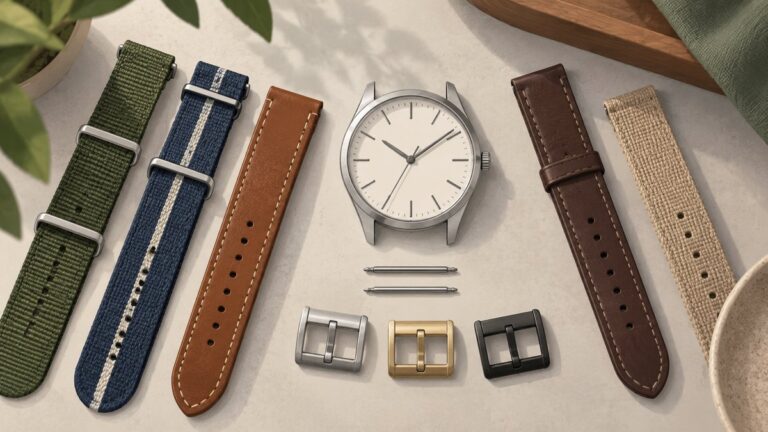
A replacement strap is often the most practical accessory for a vintage Seiko, but compatibility cannot be inferred from the model name alone. Measure the distance between the inside edges of the lugs, check the spring-bar diameter and consider whether the original end links or bracelet should be preserved.
Quick wins for a faster PC:
Scan for outdated or missing drivers - takes under a minuteDriver Scan →Clear out junk files and repair common Windows errorsFree Scan →Fix the driver behind crashes, sound loss and screen glitchesFind Drivers →The early 4S15 Alpinist family is associated with a relevant 19 mm lug-width term in specialist reference material, but that does not mean every 1990s Seiko—or even every Alpinist—takes a 19 mm strap. Measure the individual watch before ordering a Seiko watch strap. A strap that is too wide can damage the lugs or be forced into place; one that is too narrow can sit poorly and allow the watch to move or fall.
If you are changing the strap yourself, a watch spring-bar tool can reduce the risk of scratching the case or bending the spring bar. Work over a soft, stable surface, protect the lug edges and retain the original bracelet, end links and hardware in a labeled bag. For a particularly valuable or tightly fitted vintage watch, paying a watchmaker to do the change is the safer option.
Which 1990s Seiko should you choose?
- Choose the 4S15 Alpinist if…
- You want one watch that combines mechanical interest, recognizable design, outdoor character and collector relevance.
- Choose the Scubamaster if…
- You want a historically important technical object and accept that it is not a substitute for a modern dive computer.
- Choose the Kinetic Arctura if…
- You prefer bold 1990s design and quartz convenience, and you have verified the condition of its energy-storage system.
- Choose a 9F Grand Seiko if…
- Accuracy, finishing and dependable quartz behavior matter more to you than mechanical tradition.
- Choose a 9S Grand Seiko if…
- You want the mechanical milestone that launched Grand Seiko’s modern renaissance and are prepared to pay for condition.
- Choose the Perpetual Calendar if…
- You want an unusual, useful complication and have confirmed that the calendar module is healthy.
- Choose the Thermic or early Spring Drive if…
- You collect technological milestones and are comfortable with scarcity, specialist servicing and uncertain parts support.
Bottom line
The 1995 4S15 Alpinist is the best all-round recommendation, but the most interesting answer depends on your priorities. The Scubamaster is the decade’s standout technical tool, the Arctura is its strongest design-led quartz watch, the 9F is the precision choice, the 9S is the mechanical turning point, and the Perpetual Calendar, Thermic and Spring Drive show how inventive Seiko remained at the end of the decade.
Buy the individual watch, not just the decade on the dial. Confirm the reference, inspect the movement or module, verify originality, account for servicing and pressure-test any watch before exposing it to water. That approach matters more than finding the most dramatic listing or the lowest purchase price.
The Tool Desk
Outbyte PC Repair FREERepair Windows errors before they cause bigger problemsFix Now →Outbyte Driver Updater FREEFix the driver behind crashes, sound loss and screen glitchesFind Drivers →Frequently Asked Questions
What is the best Seiko watch from the 1990s?
The 1995 Alpinist powered by Seiko’s 4S15 automatic movement is the best overall collector’s choice. It combines a distinctive outdoor design, mechanical interest and a short production period. An original green-dial example is especially sought after, but buyers must distinguish it from later 6R15 Alpinists that share some of its visual design.
Are 1990s Seiko watches safe to wear in water?
Not necessarily. A 1990s Seiko may have aged seals, a worn mechanical movement, battery leakage, a failed Kinetic energy-storage unit or unreliable electronic sensors. A current pressure test is essential before using any vintage Seiko in water, regardless of its original rating.
How can I tell a 1995 4S15 Alpinist from a later Alpinist?
The 4S15 Alpinist is a 1995 generation with a compact automatic movement and a short production history. Later Alpinists commonly use the 6R15 movement and are different watches, even when they have a similar green dial, compass bezel or overall design language.
When did Seiko introduce the 9F and 9S movements?
The first 9F caliber, 9F83, was completed in 1993. Grand Seiko’s modern mechanical revival followed in 1998 with the 9S5 caliber family. The exact production year of an individual watch still needs to be checked using its reference, serial number and physical details.
Free tools Windows power users keep installed
One-click scans. No signup required.
The Bottom Line
Best overall: an original 1995 4S15 Alpinist, especially the green-dial version. Choose the Scubamaster, Arctura, 9F, 9S, Perpetual Calendar, Thermic or early Spring Drive when a specific technical or collecting priority matters more than versatility. With every 1990s Seiko, reference verification, originality and current service condition matter more than the seller’s date claim or the original water-resistance rating.
Quick Recap
Product prices and availability are accurate as of the date/time indicated and are subject to change. Any price and availability information displayed on Amazon at the time of purchase will apply.