Quick wins for a faster PC:
Repair Windows errors before they cause bigger problemsFix Now →Fix the driver behind crashes, sound loss and screen glitchesFind Drivers →Wearable technology can improve health, but usually indirectly. A smartwatch, fitness tracker, smart ring, sleep tracker, or body-worn sensor may make activity and other patterns more visible, prompt healthier behavior, and provide useful long-term information. The device itself is not a universal health treatment or diagnostic instrument.
The same continuous measurement can also cause skin irritation, anxiety about imperfect scores, false reassurance, unnecessary alarm, privacy loss, or—among people with certain implants—magnetic interference. The safest principle is simple: use wearable data as context and trends, verify clinically important readings, and never let an unauthorized consumer metric replace medical care.
What counts as wearable technology?
“Wearable tech” covers more than a watch on the wrist. In this article, it includes:
- Smartwatches and fitness trackers that estimate activity, heart rate, sleep, or other signals.
- Smart rings and sleep-focused wearables.
- Continuous glucose monitors and other adhesive body-worn patches.
- Earables, head-mounted devices, and wearable medical sensors.
In the United States, the FDA’s sensor-based digital health technology list includes wearable watches, rings, patches, and bands intended for continuous or spot monitoring outside traditional clinical settings.[C001] That does not mean every product in a category has been cleared or approved for every health claim. Authorization depends on the specific device, software, intended use, and regulatory pathway.
Free tools Windows power users keep installed
One-click scans. No signup required.
| Wearable category | Common outputs | Important limitation |
|---|---|---|
| Fitness tracker | Steps, movement, estimated calories, sometimes heart rate | Useful for behavior feedback, but activity and calorie estimates are not exact measurements or diagnoses. |
| Smartwatch | Activity, heart rate, notifications, and sometimes ECG or oxygen-related features | Medical functions and claims vary by model, country, and authorization. |
| Smart ring or sleep tracker | Sleep timing, heart rate, temperature trends, and recovery-style scores | Sleep stages and detailed sleep measures can differ substantially from clinical testing. |
| Continuous glucose monitor | Glucose readings from a sensor inserted under the skin | This is different from a watch or ring claiming to estimate glucose without piercing the skin. |
| Wearable medical sensor | Condition-specific monitoring or data collection | Its appropriate use is defined by the particular product’s instructions and authorization. |
This distinction matters because a device can be excellent at encouraging a walk while being unsuitable for diagnosing a sleep disorder, making an insulin decision, or ruling out a heart problem.
#1 Best Overall

- 【Superb Visual Experience & Effortless Operation】Diving into the latest 1.58'' ultra high resolution display technology, every interaction on the fitness watch is a visual delight with vibrant colors and crisp clarity. Its always on display clock makes the time conveniently visible. Experience convenience like never before with the intuitive full touch controls and the side button, switch between apps, and customize settings with seamless precision.
- 【Comprehensive 24/7 Health Monitoring】The fitness watches for women and men packs 24/7 heart rate, 24/7 blood pressure and blood oxygen monitors. You could check those real-time health metrics anytime, anywhere on your wrist and view the data record in the App. The heart rate monitor watch also tracks different sleep stages for light and deep sleep,and the time when you wake up, helps you to get a better understanding of your sleep quality.
- 【120+ exercise modes & All-Day Activity Tracking】There are more than 120 exercise modes available in the activity trackers and smartwatches, covering almost all daily sports activities you can imagine, gives you new ways to train and advanced metrics for more information about your workout performance. The all-day activity tracking feature monitors your steps, distance, and calories burned all the day, so you can see how much progress you've made towards your fitness goals.
- 【Messages & Incoming Calls Notification】With this smart watch fitness trackers for iPhone and android phones, you can receive notifications for incoming calls and read messages directly from your wrist without taking out your phone. Never miss a beat, stay in touch with loved ones, and stay informed of important updates wherever you are.
- 【Essential Assistant for Daily Life】The fitness watches for women and men provide you with more features including drinking water and sedentary reminder, women's menstrual period reminder, breath training, real-time weather display, remote camera shooting, music control,timer, stopwatch, finding phone, alarm clock, making it a considerate life assistant. With the GPS connectivity, you could get a map of your workout route in the app for outdoor activity by connecting to your phone GPS.
The most defensible benefit: behavior change
The clearest potential health benefit from a consumer wearable is not a mysterious effect from having electronics against the skin. It is the possibility that feedback changes what a person does.
A tracker can provide a step goal, a reminder to move, a record of exercise, feedback after a walk, or a sense of accountability. A large systematic review of wearable activity-tracker research identified behavior change, self-monitoring, medical care, adoption, and privacy as major research themes.[C002] These features may help some people become more active or maintain a routine.
The established health benefits belong primarily to the resulting activity. The CDC says regular physical activity can improve sleep quality, reduce anxiety, lower blood pressure, support brain and heart health, reduce the risk of type 2 diabetes, help prevent falls, and help prevent some cancers.[C003] It would be inaccurate to say that wearing a tracker automatically produces those outcomes.
Crashes, No Sound, or Screen Glitches?
Random freezes, missing sound and display glitches usually trace back to one bad driver. Find and replace yours safely.Free scan · under a minutePC Slower Than It Used to Be?
A free scan shows the junk files, broken settings and background clutter dragging Windows down - then fixes them in one click.Free scan · Windows 10 & 11Results depend on the person, the amount and type of activity, how long the device is used, the design of the intervention, and whether the feedback feels motivating or stressful. For one person, a daily movement reminder may be useful. For another, an unfinished goal may become a source of guilt without producing more activity.
If the goal is simply activity feedback, a fitness tracker can be a reasonable behavior-support tool. Choose it for a clear purpose—such as reminders or a simple activity record—not because a longer list of metrics necessarily makes it medically better.
Weight and metabolic outcomes: promising, but modest
Wearable-based programs may contribute to modest metabolic improvements, especially when they are part of a broader intervention involving coaching, nutrition, exercise, or clinical follow-up.
A 2026 systematic review and meta-analysis of 18 randomized trials found an overall decrease in body-mass index. Waist circumference and HbA1c also improved in adults, while effects were more consistent in children and adolescents. In adults, changes in overall weight, blood pressure, and blood lipids were not consistently statistically significant.[C004]
That evidence supports a limited conclusion: wearables may be useful components of some weight-management or lifestyle programs. It does not support describing a smartwatch or ring as a stand-alone weight-loss treatment. Nor does it show that a device’s calorie estimate is sufficiently precise to prescribe a diet or exercise plan on its own.
Repeated measurements may reveal useful patterns
A clinic usually sees a person at particular points in time. A wearable can collect repeated information during ordinary life, including activity, heart rate, sleep timing, temperature, and other signals. That continuity may help a user or clinician notice changes that a single appointment could miss.
Reviews describe possible uses in chronic-disease management, mental-health monitoring, heart-failure self-care, dementia care, and clinical research.[C005][C006] For example, a sustained change in activity or resting measurements might be worth discussing with a healthcare professional, particularly when it occurs alongside symptoms.
But a repeated signal is not automatically a clinically meaningful signal. Algorithms, sensor placement, skin contact, movement, battery level, wear time, and the user’s own characteristics can affect readings. A correlation between a wearable pattern and a health condition does not prove that the device can diagnose that condition or that acting on the pattern improves outcomes.
A smartwatch with health tracking may offer a broader collection of activity and heart-related features than a basic tracker, but its usefulness still depends on the specific model and its intended use. Do not select one solely because its marketing lists more medical-sounding metrics.
Sleep tracking can help—and can also mislead
Sleep is one of the most popular reasons people buy wearables, but it is also an area where consumer measurements need careful interpretation.
In a randomized trial involving people with insomnia, sensor-based sleep feedback and guidance reduced insomnia severity and sleep disturbance compared with control conditions. The intervention did not clearly change the discrepancy between participants’ perceived and objectively measured sleep-wake patterns, and the researchers called for further study.[C007] This suggests that feedback can be helpful when it is part of a structured approach, without proving that the device accurately measures every aspect of sleep.
Consumer wrist-worn trackers are not equivalent to polysomnography, the clinical sleep study that measures brain activity and other physiological signals. A 2024 meta-analysis found significant differences between consumer trackers and polysomnography for total sleep time, sleep efficiency, sleep latency, and wake after sleep onset.[C010] A 2026 meta-analysis concluded that wearables may provide reasonable broad estimates of sleep, but results vary substantially between devices. It did not support using them as stand-alone diagnostic tools or reliable detailed tests of sleep stages.[C011]
In practical terms, a watch may help answer, “Does my sleep schedule seem different this week?” It is much less reliable for answering, “How much deep sleep did I get?” or “Do I have sleep apnea?” A concerning pattern should prompt a conversation with a clinician, not a self-diagnosis based on a score.
The hidden costs and risks of wearable tech
1. Skin irritation and allergic contact dermatitis
A wearable can affect the skin through prolonged contact, sweat, friction, pressure, trapped moisture, adhesives, or an allergy to a material. A review of allergic contact dermatitis associated with wearable health devices reports that eczematous rash is the most common dermatologic adverse reaction reported with continuous glucose monitors. Rashes are also commonly reported with activity trackers. Acrylates, methacrylates, and colophony are among the reported allergens, especially in adhesives and device components.[C008]
Rank #2

- Google Fitbit Air is the unbelievably comfortable, exceptionally smart way to transform your health[1]; and Google Health brings together effortless tracking and adaptive coaching to help make the most of your everyday[2]
- Unlock more with Google Health Premium: With a premium membership, get personalized coaching that’s built with Gemini and adapts to your life[2]; get a 3-month trial at no cost to you[5] (Google Health Premium subscription sold separately)
- Comfortable fit - One Size Tracker (130-210 mm): The lightweight, micro-adjustable fit sits comfortably and quietly, so you can wear Google Fitbit Air through work, play, and sleep; advanced sensors and new algorithms power more accurate, precise health tracking, 24/7[1]
- Designed for every occasion: With no screen to distract you or disrupt your style, your tracker moves seamlessly from bracelet to workout band to sleep band, and you can change looks in seconds – just press the pebble in, click, and go
- Long battery life: Google Fitbit Air’s battery lasts up to a week, and fast charging gets you one day of battery life in just five minutes[6,7]
Not every rash is an allergy. Irritant dermatitis from sweat or friction can look similar, and a tight band can worsen either problem.
To reduce the chance of trouble:
- Keep the device and the skin clean and dry.
- Do not wear a watch or band excessively tight.
- Follow the manufacturer’s cleaning and wear instructions.
- Rotate placement when the product permits it, particularly if one area becomes damp or sore.
- Stop using the device over painful, blistered, swollen, or persistently rash-prone skin.
If the rash persists, spreads, or returns whenever the device is worn, seek advice from a clinician or dermatologist. Do not apply an improvised barrier beneath a medical sensor without checking that it is compatible with the sensor’s adhesive, readings, and instructions.
Do these 3 things before closing this tab:
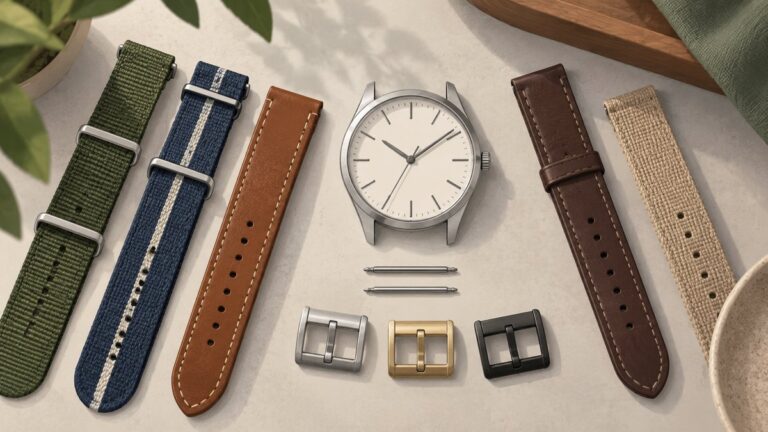
1Fix the driver behind crashes, sound loss and screen glitches2Clear out junk files and repair common Windows errors3Scan for outdated or missing drivers - takes under a minuteA compatible replacement smartwatch band may make cleaning and rotation easier, but “hypoallergenic” is not a guarantee for every person. Check the actual material, model compatibility, return policy, and manufacturer care instructions rather than assuming that a replacement band will prevent dermatitis.
A smartwatch cleaning kit is optional maintenance equipment, not a treatment or proven way to prevent a rash. A clean, dry, soft cloth and the manufacturer’s approved cleaning method may be all that is needed. Avoid liquids or chemicals that could damage the device or sensor.
2. False reassurance and false alarms
Most consumer wearables estimate physiological states indirectly. Optical sensors, motion sensors, temperature sensors, and software algorithms infer information from signals that can be affected by movement, fit, skin contact, device design, and individual differences.
A 2024 systematic review and meta-analysis found that the ability of wearable activity trackers to detect medical conditions and events remained uncertain in real-world settings.[C009] This creates two opposite risks:
- False reassurance: a normal-looking reading may persuade someone to delay care despite symptoms or an underlying problem.
- False alarm: an inaccurate or unusual reading may trigger panic, repeated checking, or unnecessary testing.
A wearable’s trend can be worth discussing, especially when it aligns with symptoms or a sustained change from the person’s usual pattern. It should not be treated as proof that a person is well—or proof that a disease is present—unless the particular device has been authorized for that specific medical purpose.
3. The glucose-measurement trap
Blood-glucose claims deserve special caution because an inaccurate number can affect medication decisions.
In February 2024, the FDA warned that no smartwatch or smart ring had been authorized, cleared, or approved to measure or estimate blood glucose independently without piercing the skin.[C012] An inaccurate reading could lead a person with diabetes to take an unsafe amount of insulin or alter other medication unnecessarily.
There is an important distinction between:
- A watch or ring claiming to measure glucose on its own without piercing the skin; and
- A watch or app displaying readings transmitted from an authorized continuous glucose monitor that uses an appropriate body sensor.
Never change insulin, prescription medication, or urgent medical care based solely on an unauthorized consumer glucose claim. If glucose monitoring is medically necessary, ask a diabetes-care professional which authorized system and measurement method are appropriate.
The Tool Desk
Outbyte PC Repair FREERepair Windows errors before they cause bigger problemsFix Now →Outbyte Driver Updater FREEScan for outdated or missing drivers - takes under a minuteDriver Scan →4. Sleep anxiety and metric preoccupation
Continuous feedback can turn self-monitoring into pressure. “Orthosomnia” is a term used to describe excessive preoccupation with achieving supposedly perfect sleep metrics. The concern is plausible, particularly when a score conflicts with how rested a person feels, but evidence is not uniform.
A 2023 study of patients with insomnia did not find that Fitbit use necessarily worsened sleep worries. Other literature recognizes the possibility of metric-driven anxiety and calls for more research.[C013][C014] The appropriate conclusion is not that sleep trackers harm everyone, but that some users may become anxious or compulsive about their results.
Consider disabling nonessential alerts, checking data less often, or taking a planned break if the device increases worry. If you are spending substantial time trying to achieve a perfect score, losing sleep over the score, or changing your behavior in ways that make you more distressed, discuss the problem with a clinician rather than chasing a better number. A sleep evaluation may be more useful than another consumer metric when persistent symptoms or anxiety remain.
5. Privacy, profiling, and breach exposure
Wearables and connected health apps can collect highly intimate information, including sleep patterns, heart rate, activity, location, fertility-related information, and glucose-related data. The possible harm is not limited to a technical breach. Unwanted sharing, profiling, discrimination concerns, or uncertainty about who can see the data can create genuine stress and loss of control.
In the United States, HIPAA does not automatically protect all information collected by a wearable or consumer health app. The FTC notes that many companies collecting consumer health information are not covered by HIPAA. Certain apps and connected devices may fall under the FTC’s Health Breach Notification Rule when they draw data from multiple sources, but coverage depends on the entity, product, and data flow.[C015][C016]
Before pairing a wearable, review:
- Which permissions are essential and which are optional.
- Whether the app requests continuous location access.
- Whether health data are shared with advertisers, employers, insurers, researchers, or other third parties.
- How long the company retains data and whether deleting the app deletes the account data.
- Whether the account supports a unique password, multifactor authentication, and device-access controls.
Give the app no more access than it needs for the feature you actually use. Treat a free health app as a data product as well as a software product, and read its privacy settings before filling it with years of sensitive information.
6. Magnetic interference with implanted medical devices
This is a targeted precaution, not a general reason for healthy users to avoid smartwatches.
The FDA advises people with pacemakers, implantable defibrillators, and other implanted medical devices to keep potentially interfering smartphones and smartwatches at least six inches, or 15 centimeters, away; avoid carrying them directly over the implant; and consult their clinician or device manufacturer. Strong magnets can switch some implants into a magnet mode or change how they operate. The FDA characterizes the overall risk as low but potentially serious for affected individuals.[C017]
Rank #3

- What You Get - A 12-month membership, WHOOP 5.0 device, a SuperKnit band, and a waterproof* Wireless PowerPack. Choose from a range of band and accessory combinations, and add a waterproof Wireless PowerPack for on-the-go charging.
- HSA/FSA Eligible - All 12-month WHOOP memberships and battery packs qualify for HSA/FSA reimbursement.
- Screenless, Distraction-Free - No screen, no buzzing notifications. WHOOP focuses entirely on your health and performance, with up to 14+ day battery life so you can wear it around the clock.
- Healthspan with Pace of Aging - Understand how your daily habits shape long-term health. Healthspan measures your WHOOP Age and Pace of Aging so you can take science-backed action to slow biological aging and extend your prime years.
- 24/7 Health Insights - WHOOP monitors your heart rate every second of every day, delivering personalized Sleep, Strain, Recovery, VO2 max, Menstrual Cycle, and Heart Rate insights along with a Real-time Stress Monitor that pinpoints your stressors and shows how your body responds in the moment, so you can make better decisions about training, rest, and daily performance.
Apple gives similar general guidance for its consumer electronics and also recommends following the specific instructions from the implant manufacturer.[C018] If you have an implanted device, do not assume that a product’s general “safe for most users” language applies to you. Ask the implant clinic or manufacturer where to wear or carry the device, how far away to keep it, and whether particular accessories are unsuitable.
7. Radio-frequency exposure: a reasonable question, limited evidence
Most connected wearables use low-powered radio-frequency transmitters. The CDC says that wearables sold in the United States must meet applicable FCC exposure limits and that exposure from wearable devices is lower than those limits.[C019]
Radio-frequency energy from these devices is non-ionizing radiation, which is different from ionizing radiation such as X-rays. The available evidence in this dossier does not establish that ordinary smartwatch use causes cancer or another disease. It is also too broad to describe wearables as proven harmless in every respect. The better-supported concerns are skin reactions, inaccurate interpretation, privacy, and implant interference in susceptible users.
Independent reader supportYour contribution helps us test, update, and keep practical guides available for everyone.Use a wearable as a tool, not an authority
| Your goal | Reasonable role for a wearable | Guardrail |
|---|---|---|
| Move more | Prompts, activity records, and personal goals | Judge success by sustainable behavior and how you feel, not by an absolute step or calorie number. |
| Understand broad sleep patterns | Compare bedtime, wake time, and general trends over time | Do not use consumer sleep stages or scores to diagnose a sleep disorder. |
| Monitor a diagnosed condition | Use an authorized device as directed by the care team | Confirm the exact indication, device model, and measurement method. |
| Investigate a new symptom | Save a trend or reading to discuss with a professional | Do not delay urgent care while collecting more wearable data. |
| Protect personal information | Keep only the features and permissions you need | Review sharing, retention, account security, and deletion controls. |
| Wear a device with an implant | Follow implant-specific guidance | Keep potentially interfering devices six inches away unless your clinician or manufacturer gives different instructions. |
A practical safe-use checklist
- Define the job first. Decide whether you want movement reminders, a long-term trend, an authorized medical measurement, or simply convenience. A device cannot be judged sensibly until its intended use is clear.
- Check the claim, not just the category. In the United States, look for the specific model and intended use when a product makes a medical claim. FDA authorization of one function or device does not validate every feature advertised by every product in that category.
- Start with a comfortable fit. The band should not be painfully tight, and the skin should be able to dry. Follow the manufacturer’s instructions for wear time, charging, cleaning, and sensor placement.
- Establish your own baseline. Early readings can be noisy. Look for sustained changes under similar conditions rather than reacting to one unusual number.
- Use trends to start conversations. Save relevant readings and note symptoms, medication changes, exercise, illness, or poor sleep. This context is more useful to a clinician than an isolated score.
- Verify important readings. Compare a concerning result with a clinically validated measurement when appropriate, or contact a health professional. Do not repeatedly check the same questionable reading until anxiety escalates.
- Protect the skin. Remove the device if there is pain, blistering, swelling, or a persistent rash. Seek advice if symptoms continue or recur.
- Control alerts. Turn off notifications that do not help you. If checking becomes compulsive or the data worsen sleep anxiety, take a break.
- Protect the data. Restrict permissions, use strong account security, and review sharing and retention settings.
- Follow implant precautions. If you have a pacemaker, defibrillator, or another potentially magnet-sensitive implant, keep the device away from the implant and confirm the manufacturer’s instructions.
- Do not make high-stakes decisions from unauthorized readings. This is especially important for glucose, insulin, prescription medication, and urgent symptoms.
When a wearable reading should not reassure you
If you have significant or rapidly worsening symptoms, seek appropriate medical care regardless of what the wearable says. A normal-looking heart-rate, oxygen, sleep, or activity display cannot rule out every serious problem, just as an abnormal display does not prove a particular diagnosis.
Do these 3 things before closing this tab:
1Clear out junk files and repair common Windows errors2Fix the driver behind crashes, sound loss and screen glitches3Repair Windows errors before they cause bigger problemsContact a healthcare professional about a persistent change, repeated concerning readings, or a pattern that matches symptoms. Bring the device name, app screenshots or reports, dates, and relevant context. For sleep concerns, persistent insomnia, suspected breathing problems during sleep, or anxiety focused on sleep metrics, professional assessment is more useful than escalating from one tracker to another.
What the evidence can—and cannot—say
Wearable research is difficult to generalize. Findings vary according to the device model, sensor generation, algorithm, population, wear time, comparison method, outcome, and country. Many studies are feasibility studies or observational analyses rather than long-term randomized trials.
Even when a wearable correlates with a health state, that does not establish causation or clinical usefulness. A device may detect a pattern in a research setting but still produce too many false positives, miss too many real events, or fail to improve outcomes in everyday use.
The most accurate summary is therefore narrower than “wearables improve health”: some wearables can support healthier behavior and longitudinal monitoring, while their measurements, alerts, medical claims, and data practices require skepticism and context.
The Tool Desk
Outbyte Driver Updater FREEScan for outdated or missing drivers - takes under a minuteDriver Scan →Outbyte PC Repair FREEClear out junk files and repair common Windows errorsFree Scan →Evidence notes
- [C001] FDA sensor-based digital health technology information concerning wearable watches, rings, patches, and bands, and the device-specific nature of authorization.
- [C002] Systematic review of wearable activity-tracker research, including behavior change, self-monitoring, medical care, adoption, and privacy.
- [C003] CDC information on the health benefits of regular physical activity.
- [C004] 2026 systematic review and meta-analysis of 18 randomized trials of wearable-based interventions and metabolic outcomes.
- [C005][C006] Reviews of wearable applications in chronic disease, mental-health monitoring, heart-failure self-care, dementia care, and clinical research.
- [C007] Randomized trial of sensor-based sleep feedback and guidance in people with insomnia.
- [C008] Review of allergic contact dermatitis and other skin reactions associated with wearable health devices.
- [C009] 2024 systematic review and meta-analysis on wearable activity trackers’ ability to detect medical conditions and events in real-world settings.
- [C010][C011] 2024 and 2026 meta-analyses comparing consumer sleep wearables with polysomnography and assessing their use for sleep estimation.
- [C012] FDA warning issued in February 2024 about unauthorized smartwatch and smart-ring glucose claims.
- [C013][C014] Research and discussion concerning orthosomnia, Fitbit use, sleep worry, and metric-driven anxiety.
- [C015][C016] FTC information concerning consumer health data, HIPAA coverage, and the Health Breach Notification Rule.
- [C017][C018] FDA and Apple guidance concerning magnets, smartwatches, smartphones, and implanted medical devices.
- [C019] CDC information on radio-frequency exposure from low-powered wearable transmitters and applicable FCC limits.
This article is educational information, not a diagnosis or substitute for individualized medical advice. Device features, authorization, availability, and guidance can differ by model and country.
Frequently Asked Questions
Can a smartwatch diagnose a heart condition or sleep disorder?
Usually not. Consumer wearables can provide estimates, trends, or alerts, but authorization and intended use are specific to the device and feature. A wearable reading should not replace clinical assessment or testing.
Can a smartwatch or smart ring measure blood glucose without piercing the skin?
The FDA warned in February 2024 that no smartwatch or smart ring had been authorized, cleared, or approved to measure or estimate blood glucose independently without piercing the skin. Do not use an unauthorized reading to change insulin or other medication. A watch or app displaying readings from an authorized continuous glucose monitor is a different situation.
What should I do if my wearable causes a rash?
Remove the device from the affected skin, keep the area clean and dry, and follow the manufacturer’s instructions. Seek medical or dermatological advice if the rash persists, spreads, blisters, swells, or returns whenever the device is worn.
How far should a smartwatch be kept from a pacemaker or defibrillator?
The FDA advises people with potentially affected implanted devices to keep smartphones and smartwatches at least six inches, or 15 centimeters, away and not carry them directly over the implant. Follow the specific instructions from your clinician and implant manufacturer.
Should I stop using a wearable if it makes me anxious?
Consider disabling unnecessary alerts, reducing how often you check it, or taking a planned break. If sleep scores or health alerts are causing persistent worry, compulsive checking, or worsening sleep, discuss that concern with a healthcare professional.
The Bottom Line
Bottom line: Wearables are most useful when they help you notice patterns, move more, follow a structured plan, or share relevant information with a clinician. They become risky when an estimate is treated as a diagnosis, an alert overrides symptoms, private data are shared without understanding the consequences, or a device is worn despite a skin reaction or implant-related warning. Use the technology—but verify what matters.