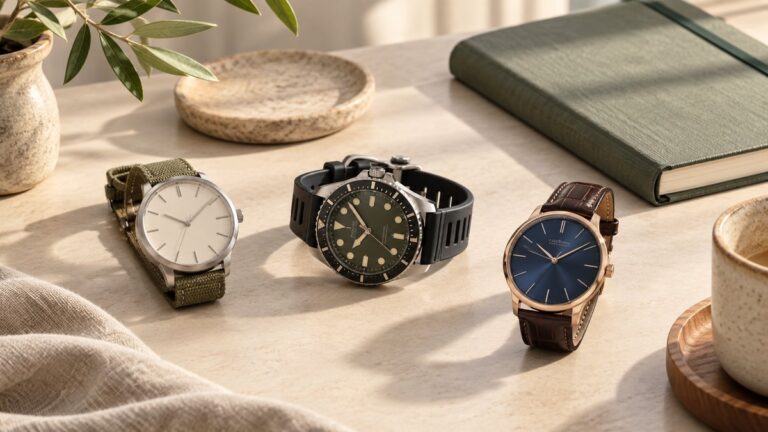
Wearable technology can make education more active, accessible, contextual, and measurable—but it does not improve learning automatically. Smartwatches, fitness trackers, smart glasses, virtual-reality headsets, haptic devices, biosensors, location tags, and assistive wearables are most valuable when they solve a specific instructional or accessibility problem.
The strongest uses today include physical-education data collection, accessibility support, immersive simulation, fieldwork, and hands-on technical training. More controversial uses—such as continuous biometric monitoring, location tracking, emotion recognition, and “attention” analytics—require much stronger evidence, tighter privacy controls, and meaningful alternatives for students who cannot or do not want to wear a device.
What is wearable technology in education?
Wearable technology is electronic hardware worn on or attached to the body that senses, records, displays, transmits, or responds to information.
In education, this includes:
- Smartwatches, smart rings, and fitness bands
- Heart-rate monitors, biosensors, and sensor-equipped clothing
- Smart glasses and augmented-reality glasses
- Virtual-reality and mixed-reality headsets
- Body-mounted cameras and microphones
- Location and safety tags
- Haptic devices and assistive wearables
- Sensor-enabled footwear and other body-worn equipment
Smartphones, tablets, laptops, and ordinary cameras can work with wearables, but they are not themselves wearable technology. The category is broad: a fitness tracker, an AR headset, a nursing-training sensor, and a haptic communication device have very different educational purposes, risks, and support requirements.
Recommended Free Tools
#1 Best Overall

- 4 Pack for More Fun: Apply the newest flexible liquid crystal technology, brighter and clearer than most LCD writing tablet. Take pressure-sensitive technology, you can draw lines of different thicknesses through different pressure levels. Package includes 4 pack lcd writing tablet (Blue, Light blue, Green and Pink), free children's imagination and creativity.
- 8.5 Inch Colorful Lcd writing Tablet: TQU kids LCD doodle board is a creative education and learning toy, perfect support for drawing, writing, spelling, math, remark, and notes which can let your kids freely release their natural instincts. With erase button on the front and lock switch. You can draw and erase easily by pressing the button on the front of the board. The pen fits snug on top of tablet and it will not come loose.
- Easy to use and Durable: The LCD writing tablet for kids is easy to use, just use the stylus to write, draw, scribble, doodle anything you want. Press the erase button to clear the screen in one second. Or press the lock key to save the screen contents. Our magic reusable drawing tablet is built in a button battery.
- Safe & Portable Toddler Travel Toys: Great for quiet, take-along entertainment. It’s an easy way to color on the go without lugging a bunch of stuff in the car or to a restaurant or church.
- Perfect Gift Idea: The multi-functional LCD writing tablet is a great gift choice for kids. It can be an educational toy for preschoolers. A perfect parent-pick gift for 3 4 5 6 7 8 year old girls and boys on back to school, homeschool, birthday, Easter, Children's Day, Thanksgiving Day, Christmas and any occasion.
Research reviews identify a wide range of educational possibilities, but the evidence remains uneven. Privacy, security, safety, teacher workload, usability, cost, and implementation difficulty recur throughout the research literature. A systematic review in Frontiers in Education therefore supports treating wearables as instructional tools whose value depends on learning design—not as a pedagogy by themselves.
12 applications of wearable technology in education
1. Physical education and activity tracking
Fitness trackers, smartwatches, pedometers, and heart-rate monitors can help students investigate steps, movement, exercise intensity, recovery time, activity differences, and personal fitness goals.
A lesson might ask students to compare heart-rate responses during walking, cycling, and interval exercise, then graph the results and discuss measurement error. This turns abstract health concepts into observations students can analyze themselves.
Benefits: immediate feedback, data-literacy practice, reflective learning, and individualized activity targets.
The Tool Desk
Outbyte Driver Updater FREEScan for outdated or missing drivers - takes under a minuteDriver Scan →Outbyte PC Repair FREEClear out junk files and repair common Windows errorsFree Scan →Best fit: physical education, health science, statistics, and exercise physiology.
Important limitation: activity data should not automatically become a grade. Students differ in disability status, health, fitness, access to devices, and willingness to disclose personal information. A 2026 study of smart wearables in school-based physical-activity research found that adoption depends on task–technology fit, institutional support, teacher needs, and privacy governance—not merely device capability. Read the study.
2. Health, wellness, and physiology lessons
Wearables can provide data for lessons about heart rate, respiration, sleep, exercise physiology, stress, recovery, human biology, and public health. Students can formulate hypotheses, collect observations, compare conditions, and interpret trends.
These readings are educational estimates, not medical diagnoses. Teachers should explain sensor limitations and measurement error, obtain appropriate consent for health-related data, and avoid requiring disclosure of medical conditions. Heart rate, sleep, temperature, or movement data should not be presented as proof of emotional state or mental-health status.
Free tools Windows power users keep installed
One-click scans. No signup required.
Consumer features are not automatically clinical measurements. For example, Apple’s current watch specifications describe heart-rate, sleep, temperature, workout, and safety-related features, but a consumer smartwatch should not be described as equivalent to a clinical instrument. See Apple’s specifications.
3. Accessibility and assistive technology
Wearables can provide haptic alerts, audio prompts, voice control, text-to-speech, speech-to-text, visual or tactile notifications, navigation assistance, environmental alerts, hands-free communication, and alternative input methods.
These capabilities may reduce barriers for students with sensory, physical, communication, vision, or hearing-related needs. They can provide multimodal access and support greater independence without requiring a student to rely exclusively on a screen.
U.S. Department of Education guidance explains how assistive technology can support meaningful access and engagement. However, accessibility must be tested across the complete system: device, companion app, account, charging process, dashboard, and instructional materials.
Schools should not require an inaccessible wearable when a reasonable accommodation or accessible alternative is unavailable. Technology-accessibility guidance from the Department of Education is relevant when evaluating emerging classroom tools.
4. Augmented-reality learning
AR devices can place information in the learner’s physical environment. Possible uses include labeling laboratory equipment, displaying anatomy, providing pronunciation or translation prompts, reconstructing historical sites, guiding repairs, showing navigation cues, and presenting safety warnings.
Rank #2

- Full-featured Android 16 Kids Tablet - YosaToo toddler tablets runs on the latest Android 16, with 4GB RAM, 32GB built-in storage and 64GB expandable storage, delivering a safer experience for kids aged 3–12. This tablet for kids comes preloaded with fun camera, drawing apps and child-friendly software. It stores kids' favorite photos, drawings, books, shows and games all in one device
- Learn Offline Anywhere – Tablet for kids 3-7 comes with kids software "YUBABE", kids have offline access to Montessori, Mini Games, STEM, Art. Perfect for long road trips, airplane rides, or homes without stable wifi. These contents can stimulate kids' imagination, creativity and self-confidence. Making it the ideal travel companion for busy families
- Full Android Experience with Play Store –This Android 16 kids tablet gives you full access to the play store. Download thousands of kid-friendly apps from this wifi kids tablet.Besides, tablet for kids 6-12 pre-installed Google Kids Space, kids can learn, create and grow in a safe environment
- Advanced Parent Controls – Peace of mind with our parental control. This children tablet lets you easily filter age-appropriate content, set daily screen time limits, monitor app usage, and block unwanted apps. These security settings can be adjusted at anytime in this baby tablet
- Shockproof Kid-Proof Case – Built to survive drops, tumbles, and everyday toddler chaos. This kids tablet comes with a silicone case that absorbs impact and protects the screen from cracks. The built-in adjustable stand makes it easy for kids to carry and watch hands-free
AR is most useful when it provides just-in-time scaffolding for a real task. A learner repairing an engine, for example, may benefit from seeing the next procedure without repeatedly looking down at a manual.
Visual overlays can also distract students from teachers, classmates, or hazards. Cameras create consent and surveillance concerns, and devices may be uncomfortable or inaccessible. Do not assume that every pair of smart glasses provides a heads-up display: some current products emphasize cameras, microphones, speakers, and AI assistance without a conventional visual overlay. Meta’s product announcement distinguishes displayless AI glasses from products with an integrated display.
5. Virtual-reality and mixed-reality simulations
VR and MR headsets can simulate science experiments, medical procedures, engineering environments, architecture, historical settings, emergency response, hazardous operations, and workplace tasks.
The main educational advantage is controlled practice in environments that are dangerous, expensive, remote, scarce, or impossible to recreate. Students can repeat procedures without consuming materials, and spatial concepts may become easier to visualize.
Immersive simulation is different from watching an ordinary video. Its value comes from interaction, decision-making, feedback, and instructional design—not simply from wearing a headset.
Common limitations include motion sickness, sensory overload, hygiene, students who cannot comfortably wear a headset, limited teacher visibility, device-management demands, and uncertainty about whether virtual performance transfers to real-world competence. VR should supplement—not replace—hands-on assessment where physical skill matters.
PC Slower Than It Used to Be?
A free scan shows the junk files, broken settings and background clutter dragging Windows down - then fixes them in one click.Free scan · Windows 10 & 11Outdated Drivers Are Slowing You Down
One free scan finds every outdated or missing driver and matches the right update for your exact hardware.Free scan · exact hardware match6. Fieldwork, geography, and environmental science
GPS-enabled wearables, environmental sensors, wearable cameras, and location-based AR can support geological fieldwork, habitat observation, wildlife studies, historical walking tours, navigation exercises, and comparisons of environmental conditions across sites.
Wearables connect observations to place. Students can collect evidence outdoors, document what they see, and analyze how conditions vary across locations.
Field use requires contingency planning for battery life, connectivity, weather, device loss, GPS accuracy, and student safety. Location data can reveal sensitive information, and students should not be directed into unsafe areas while focused on a device.
7. Hands-on technical, vocational, and professional training
Wearables can guide students through automotive repair, manufacturing, construction, aviation maintenance, laboratory work, nursing, electrical installation, equipment operation, and workplace-safety procedures.
Do these 3 things before closing this tab:
1Fix the driver behind crashes, sound loss and screen glitches2Clear out junk files and repair common Windows errors3Scan for outdated or missing drivers - takes under a minuteHands-free prompts can show the next step while the learner’s hands remain available. Systems may also record performance for later review, provide remote expert assistance, or alert a learner when a safety sequence is missed.
A digital prompt is not a substitute for qualified supervision, safety instruction, or practical assessment. A student may follow instructions correctly in a simulation without demonstrating durable competence in a real workplace.
8. Language learning and communication
Wearables can support pronunciation practice, real-time captions, translation prompts, audio vocabulary exercises, conversation simulations, and communication for students with speech- or hearing-related needs.
Portable feedback may make spoken-language practice more frequent and discreet. However, speech recognition and translation vary by language, accent, dialect, speech difference, background noise, and connectivity. Students should learn to evaluate machine-generated language rather than accept it uncritically.
Rank #3

- Comprehensive Early Learning: This upgraded toddler music learning tablet includes 90+ fun modules covering animals, shapes, musical instruments, vehicles, letters, numbers, and colors. Available in English, French, Spanish, German, and Italian, it supports early language skills and builds essential preschool concepts for children ages 1-3
- 4 Playful Learning Modes: This toddler activity tablet offers Learning Mode to teach basic concepts, Quiz Mode to build problem-solving skills, Music Mode to spark creativity, and Pretend Play Mode with fun icons like a phone and camera. Supports fine motor development, memory, and communication through interactive, sensory-rich play
- Screen-Free Multilingual Learning: This no-screen toddler tablet supports English, Spanish, and French with just one press. With 39 interactive icons, it reads out words and plays sounds to boost vocabulary, pronunciation, and listening skills for toddlers ages 1-3
- Physical & Motor Skill Development: The tablet's responsive touch controls help toddlers develop fine and gross motor skills while improving hand-eye coordination. Encourages active, hands-on exploration for toddlers ages 1-3
- Durable, Portable and Safe: Crafted from non-toxic, BPA-free ABS plastic, this toddler tablet is designed to withstand bumps, drops, and everyday play. Its compact, lightweight design makes it easy to carry whether at home or on the go
Always-on microphones also create privacy and classroom-management concerns. Recording should be disabled unless it is necessary, authorized, and clearly understood by everyone affected.
9. Collaboration and remote participation
Wearable cameras, microphones, and headsets can let remote learners join demonstrations, view a first-person practical task, receive coaching from an instructor, collaborate during fieldwork, or participate when illness, disability, distance, or placement prevents physical attendance.
This can extend access to experts, workplaces, laboratories, museums, and field sites. But a remote student can easily become a passive viewer. Lessons should provide active roles, questions, decisions, or evidence-gathering tasks.
Video and audio quality may be inadequate, connectivity failures can interrupt instruction, and recording classmates or bystanders may require additional consent and policy controls.
Free tools Windows power users keep installed
One-click scans. No signup required.
10. Safety, navigation, and student support
Wearables may provide emergency alerts, fall detection, location assistance, geofenced warnings, communication support, or environmental alerts. These uses are most defensible when they address a specific documented need—for example, supporting a student’s mobility or communication plan.
Constant location tracking should not be presented as a general educational benefit. Tracking can become surveillance, stigmatize students, and create security risks if access controls are weak.
Consumer safety features may depend on region, connectivity, subscriptions, device configuration, and user eligibility. Apple’s product information illustrates why advertised emergency and fall-detection functions must be evaluated in their actual operating context.
11. Learning analytics and formative feedback
Wearables can collect information about movement during practical tasks, time spent on activities, task completion, repeated errors, and physiological signals. In principle, this may help an instructor identify where students need support or where a task is poorly designed.
Recommended Free Tools
Wearable data is not a transparent measurement of learning. Heart rate, movement, gaze, and skin conductance can be affected by anxiety, disability, medication, temperature, exercise, sensor placement, device error, and individual differences.
Schools should reject broad claims that wearables can reliably “read attention,” measure motivation, detect dishonesty, or identify emotional states unless a specific system has been validated for the exact educational context. A sensor records a signal; interpretation requires evidence.
12. Teacher support and professional learning
Wearables may give teachers hands-free timers, reminders, accessibility notifications, captions, translation, laboratory alerts, remote-demonstration tools, or environmental readings. They may also support reflective teaching practice or professional learning.
Teacher-facing use can reduce the need to interrupt a demonstration to check a phone or computer. But teacher convenience does not justify collecting student biometric, audio, video, or location data. A teacher-support use case should be evaluated separately from a student-surveillance use case.
The Tool Desk
Outbyte PC Repair FREERepair Windows errors before they cause bigger problemsFix Now →Outbyte Driver Updater FREEScan for outdated or missing drivers - takes under a minuteDriver Scan →Benefits of wearable technology in education
- More active learning: Students can measure, move, observe, and interact instead of only consuming content.
- Immediate feedback: Devices can provide information about pace, heart rate, pronunciation, position, or task progress while the activity is happening.
- Accessibility and inclusion: Haptic, audio, visual, and alternative-input channels can reduce barriers to participation.
- Personalized support: Prompts or feedback can respond to a learner’s activity or documented needs, although this is not the same as automated diagnosis.
- Authentic data literacy: Students can examine data from their bodies or environments while learning about uncertainty, correlation, sampling, and privacy.
- Safer practice: Simulations allow repetition before students use expensive, dangerous, or scarce equipment.
- Contextual learning: AR, GPS, cameras, and sensors connect information to real objects, places, and tasks.
- Greater independence: Assistive wearables may help students navigate, communicate, receive reminders, or participate with less direct intervention.
- Collaboration across distance: Wearables can share first-person views, field data, and demonstrations with remote learners or experts.
These are design benefits, not guaranteed academic outcomes. A device can be novel and engaging without improving retention, transfer, or mastery.
Risks and limitations
Privacy, surveillance, and FERPA
Wearables may collect health and biometric information, location, audio, video, voice recordings, movement patterns, device identifiers, usage data, and inferred emotional or attentional states.
Rank #4

- 12 Pack for More Fun: Apply the newest flexible liquid crystal technology, brighter and clearer than most LCD writing tablet. Take pressure-sensitive technology, you can draw lines of different thicknesses through different pressure levels. Package includes 12 pack lcd writing tablet (2 x Blue, 2 x Light Blue, 2 x Red, 2 x Pink, 2 x Yellow and 2 x Green), free children's imagination and creativity.
- 8.5 Inch Colorful Lcd writing Tablet: TQU kids LCD doodle board is a creative education and learning toy, perfect support for drawing, writing, spelling, math, remark, and notes which can let your kids freely release their natural instincts. With erase button on the front and lock switch. You can draw and erase easily by pressing the button on the front of the board. The pen fits snug on top of tablet and it will not come loose.
- Easy to use and Durable: The LCD writing tablet for kids is easy to use, just use the stylus to write, draw, scribble, doodle anything you want. Press the erase button to clear the screen in one second. Or press the lock key to save the screen contents. Our magic reusable drawing tablet is built in a button battery.
- Safe & Portable Toddler Travel Toys: Great for quiet, take-along entertainment. It’s an easy way to color on the go without lugging a bunch of stuff in the car or to a restaurant or church.
- Perfect Gift Idea: The multi-functional LCD writing tablet is a great gift choice for kids. It can be an educational toy for preschoolers. A perfect parent-pick gift for 3 4 5 6 7 8 year old girls and boys on back to school, party favors, homeschool, birthday, Easter, Children's Day, Thanksgiving Day, Christmas and any occasion.
For U.S. schools, FERPA is not a blanket rule that makes wearables illegal. The relevant questions include whether data is part of an education record, whether a vendor qualifies for the school-official exception, whether the school retains direct control, whether data is used only for an authorized educational purpose, and whether the vendor re-discloses or reuses it.
The U.S. Department of Education’s FERPA FAQ advises educators to check whether an application is approved by the school or district. Its privacy and data-sharing guidance highlights direct school control, authorized educational purpose, and restrictions on redisclosure. State student-privacy laws may impose additional requirements.
Accessibility failures
Potential barriers include small displays, touch-only controls, inaccessible companion apps, inaccurate speech recognition, audio-only feedback, limited fit options, motion sickness, and poor compatibility with assistive technology.
Schools should provide alternatives for students with medical restrictions, sensory sensitivities, religious or cultural concerns, disability-related needs, privacy objections, or no compatible personal device. A no-device or loaner-device pathway should be designed before the lesson begins.
Equity and total cost
Wearables can deepen inequality when students must supply their own device, use a compatible phone, pay cellular or subscription fees, replace damaged hardware, or maintain proprietary accounts. The real cost includes chargers, storage, hygiene supplies, repair, device management, staff time, accessibility accommodations, and data administration.
Consumer availability is not the same as school suitability. A product may be easy for one person to buy but difficult for a district to manage securely and equitably.
Accuracy and false precision
Consumer wearables estimate many measurements. Results may vary because of sensor error, missing data, battery loss, different algorithms, inconsistent wearing habits, fit, skin contact, and connectivity interruptions.
Students should learn to treat wearable outputs as data requiring interpretation—not unquestionable facts. A measurement is not the same as an inference, and an inference is not automatically a diagnosis.
Teacher workload
Teachers may need to pair and charge devices, manage accounts, resolve compatibility problems, clean shared equipment, explain consent, export or delete data, support students who cannot wear the device, and redesign activities around technical failures.
A 2018 K–12 study identified cross-subject pedagogical possibilities but also noted the time demands placed on teachers and researchers. See the ERIC record.
Health, psychological, and classroom-management concerns
Schools should be cautious about requiring students to monitor weight, calories, sleep quality, stress, heart rate, or body composition. Such data may be inaccurate, sensitive, or harmful for some students. Participation should be voluntary where appropriate, with non-wearable alternatives.
Notifications, games, cameras, microphones, and social features can compete with instruction. A wearable may be less visible than a phone but harder for teachers to observe and regulate.
Cybersecurity and sustainability
Connected wearables expand the attack surface. Schools should consider account security, firmware updates, Bluetooth pairing, lost-device procedures, encryption, role-based dashboard access, vendor breach history, data deletion at contract termination, network segmentation, and whether cameras or microphones can be disabled.
U.S. Department of Education K–12 cybersecurity guidance recommends attention to privacy trade-offs, strong passwords, multifactor authentication, security settings, and updates.
Quick wins for a faster PC:
Repair Windows errors before they cause bigger problemsFix Now →Scan for outdated or missing drivers - takes under a minuteDriver Scan →Clear out junk files and repair common Windows errorsFree Scan →Best Value

- 【Stable Android 16 System & Octa-core CPU 】This 2026 Stable Android 16 tablet is equipped with a high-performance Unisoc octa-core CPU, a stable Android 16 system with AI, and all functions have been strengthened to a new level. You will enjoy the smooth running of 32GB (4GB+28GB) RAM and 128GB ROM. Perfect for watching videos, learning, video chatting, and reading e-books easily .
- 【11 Anti-blue Eyes Protection Screen 】11-inch tablet not only bigger screen, also features specific eyes protection HD 1280*800 fully-in-cell screen resolution, but the wide viewing angle also provides a more realistic viewing experience. With automatic brightness adjustment combined anti-blue light design for protecting your eyesight, you will be safer and more comfortable while using the tablet.
- 【Dual Stereo Speakers】Dual box stereo speakers sound quality reducing distortion to give you a great audiovisual experience. You will love this Android tablet , enjoy your music , video while traveling with surrounding clear and loud audio.
- 【8000mAh LARGE BATTERY+18W Fast Charging 】This rugged kids tablet built-in a 8000mAh large battery, you will freely enjoy reading or watching videos for 8-10hours on a full charge. No need to worry about the battery while you are traveling on the way .
- 【128GB ROM LARGE STORAGE 】32GB RAM 128GB ROM storage, running stably. It easily expands to 1TB with a MicroSD card (sold separately) for storing photos, music, and videos without worrying about running out of space.
Procurement should also consider battery replacement, proprietary chargers, repairability, e-waste, software-support lifespan, vendor lock-in, and secure disposal of devices containing personal data.
Independent reader supportYour contribution helps us test, update, and keep practical guides available for everyone.How schools should evaluate a wearable
- Define the learning objective. What must students understand or do? Could a simpler, less invasive tool achieve the same result?
- Check the evidence. Does independent or peer-reviewed research concern the exact device and use case, or only a general possibility? Does it measure mastery and transfer rather than novelty?
- Map the data. Identify every signal collected, whether raw data is stored, who can access it, retention periods, secondary use, model training, offline operation, and deletion controls.
- Test accessibility. Evaluate the hardware, software, account, dashboard, charging process, and content with actual users with disabilities.
- Plan equity. Provide loaners and alternatives. Do not require a personal phone, subscription, health disclosure, or personal account unless there is a compelling and lawful reason.
- Check operations. Confirm battery life, storage, charging, Wi-Fi or Bluetooth requirements, account provisioning, device management, repairs, replacement, and learning-platform integration.
- Assess safety. Consider comfort, skin reactions, hygiene, motion sickness, distraction, cameras, microphones, and emergency procedures.
- Review the contract. Require a data-processing agreement, minimization, deletion terms, breach notification, subprocessor disclosure, accessibility documentation, export and interoperability provisions, and a clear end-of-contract process.
- Pilot narrowly. Start with one defined activity, use the minimum necessary data, and establish a non-wearable fallback.
- Evaluate the outcome. Measure learning, participation, accessibility, teacher workload, technical failures, and student experience—not just device usage or enthusiasm.
U.K. Department for Education procurement guidance similarly emphasizes data protection by design and impact assessment because most educational technology processes personal data.
Which wearables are suitable for school pilots?
Product choice should follow the learning objective, not the presence of health sensors.
Apple Watch SE 3
Apple lists the Apple Watch SE 3 from $249 on its U.S. consumer page; an education price of $229 was displayed during the research period, but discounts and configurations should be verified at purchase. Potential uses include physical education, exercise-physiology demonstrations, accessibility notifications, safety features, and teacher timers.
What’s actually slowing this PC down?
Pick the symptom - the matching free tool is one click away.
Its major drawbacks for schools are iPhone dependence, possible cellular costs, personal-ecosystem requirements, account management, and the amount of health or location data involved. Apple states that current models require an iPhone 11 or later running iOS 26 or later, subject to model and feature limitations. Check current requirements.
Apple Watch Series 11 and Ultra 3
These higher-priced models may suit higher-education research, sports-science activities, or demanding fieldwork, but they are generally difficult to justify for ordinary classroom demonstrations or large K–12 deployments when a lower-cost tracker would meet the objective.
Fitbit Air
Google positions Fitbit Air as a screenless activity and health tracker with a claimed week-long battery life and pairing with the Google Health app. A screenless design may reduce distraction, but schools should verify final availability, pricing, data controls, compatibility, and institutional-management options before adoption. It is a poor fit when students need on-device prompts or when continuous health monitoring is unnecessary.
Meta Glasses
Meta announced a 2026 line starting at $299. Potential uses include first-person demonstrations, fieldwork documentation, hands-free audio, and remote expert collaboration.
Free tools Windows power users keep installed
One-click scans. No signup required.
These glasses should be treated as camera, microphone, speaker, and AI devices unless the specific model includes a display. They are a poor fit where recording policies are strict, bystanders cannot readily consent, or the school needs centrally managed educational hardware. See Meta’s announcement.
VR and MR headsets
For immersive simulation, prioritize centralized device management, replaceable facial interfaces, accessibility settings, motion-sickness mitigation, offline operation, content licensing, teacher supervision, and charging logistics. Do not buy hardware before identifying suitable curriculum content and a realistic management plan.
Should schools adopt wearable technology?
Adopt a wearable when it solves a defined instructional or accessibility problem more effectively than a simpler tool. Pilot with a narrow use case, minimize data collection, provide non-wearable alternatives, test accessibility, and evaluate learning outcomes rather than novelty.
A fitness tracker used for a carefully designed physical-education investigation is a stronger proposition than collecting every student’s heart-rate data without a clear pedagogical purpose. A headset that lets nursing students repeatedly rehearse a hazardous procedure may be valuable; a headset purchased merely because immersive technology is fashionable may not be.
What’s actually slowing this PC down?
Pick the symptom - the matching free tool is one click away.
Wearable technology is best understood as an interface and data-collection method. Its educational value comes from the lesson, assessment, support, and governance built around it.
Quick Recap
Product prices and availability are accurate as of the date/time indicated and are subject to change. Any price and availability information displayed on Amazon at the time of purchase will apply.