Do these 3 things before closing this tab:
1Scan for outdated or missing drivers - takes under a minute2Repair Windows errors before they cause bigger problems3Fix the driver behind crashes, sound loss and screen glitchesYes, Apple is reportedly developing several new wearables tied to spatial computing and Apple Intelligence—but “a bunch of new XR devices” makes the roadmap sound more settled than it is. The clearest near-term direction is a pair of lightweight, display-free AI glasses that would compete more directly with Ray-Ban Meta than with Apple Vision Pro. Reports also point to camera-equipped AirPods and a camera pendant, while true display-equipped AR glasses may be years away.
Apple has not announced any of these products or their release dates. It continues to sell and support Vision Pro, so the evidence suggests a shift in priorities—not a confirmed cancellation of the Vision platform.
As an Amazon Associate I earn from qualifying purchases.
The rumored Apple wearable lineup at a glance
| Reported product | Display? | Likely role | Reported timing | Confidence |
|---|---|---|---|---|
| AI smart glasses | No, according to current reporting | Camera, microphones, speakers and Siri or Apple Intelligence | Possibly 2027; earlier reports discussed a late-2026 unveiling | Medium |
| Camera-equipped AirPods | No | Audio-first AI assistance with visual context | Possibly 2027 or later | Low to medium |
| AI pendant or camera wearable | No | A wearable camera and microphone that could work with Siri | Possibly 2027 or later | Low |
| Display-equipped AR glasses | Yes | Lightweight augmented-reality overlays | Around 2029 in Ming-Chi Kuo’s reported roadmap | Low to medium |
| Future Vision headset | Yes | Immersive spatial computing | Possibly 2028–2029 or later; status disputed | Low |
These are reported projects at different stages, not five confirmed products ready for launch. Some may share cameras, microphones, software, artificial-intelligence services and iPhone connectivity.
What’s actually slowing this PC down?
Pick the symptom - the matching free tool is one click away.
1. Display-free AI glasses are reportedly Apple’s priority
According to Bloomberg, Apple is accelerating work on smart glasses, a pendant and AI-enhanced AirPods. TechCrunch later reported that Apple was testing multiple glasses designs.
#1 Best Overall

- #1 SELLING AI GLASSES - Tap into iconic style for men and women, and advanced technology with the newest generation of Ray-Ban Meta smart AI glasses. Capture photos and video recordings, listen to music, make hands-free calls or ask Meta AI questions on-the-go.
- UP TO 8 HOURS OF BATTERY LIFE - On a full charge, these smart AI glasses can last 2x longer than previous generations, up to 8 hours with moderate use. Plus, each pair comes with a charging case that provides up to 48 hours of charging on-the-go.
- 3K ULTRA HD: RECORD SHARP VIDEOS WITH RICH DETAIL — Hands-free video recording with an ultra-wide 12 MP camera in up to 3K resolution. Record clips up to 3 minutes per session. Capture sharp, vibrant memories while staying in the moment.
- LISTEN WITH OPEN-EAR AUDIO — Listen to music and more with discreet open-ear speakers that deliver rich, quality audio without blocking out conversations or the ambient noises around you.
- ASK YOUR GLASSES ANYTHING WITH META AI — Get real-time suggestions, answers, object identification, and reminders hands-free. Requires Bluetooth connection to your smartphone and the Meta AI app. Ensure your phone has internet connectivity.
The first glasses would reportedly resemble camera-and-audio smart glasses rather than Vision Pro. Likely capabilities include:
- Cameras that capture photos and interpret the wearer’s surroundings.
- Open-ear speakers and microphones for calls, music and voice commands.
- Contextual interaction with Siri or a more capable Apple Intelligence assistant.
- Phone calls, messages, directions and other iPhone-connected functions.
- Possible translation, object recognition, sign reading and image description.
The key limitation is equally important: current reporting does not establish that these first glasses will have a display. Without one, they would not provide conventional heads-up navigation or floating app windows. They would be AI glasses, not full augmented-reality glasses.
AI glasses are not the same as AR glasses
These terms are often used interchangeably, but they describe different products:
The Tool Desk
Outbyte Driver Updater FREEFix the driver behind crashes, sound loss and screen glitchesFind Drivers →Outbyte PC Repair FREEClear out junk files and repair common Windows errorsFree Scan →- VR: Virtual reality that replaces or largely blocks the physical world.
- AR: Digital information overlaid on the real world.
- MR: Mixed reality, combining physical surroundings with virtual objects.
- XR: An umbrella term covering AR, VR and MR.
- AI glasses: Glasses with cameras, microphones, speakers and an assistant; they may have no display at all.
The reported first-generation Apple glasses fit the final category. Display-equipped glasses are a separate, longer-term project.
2. True AR glasses may not arrive until around 2029
Ming-Chi Kuo’s reported June 2026 roadmap, summarized by 9to5Mac, identifies display-free AI glasses around 2027 and display-equipped AR glasses around 2029.
A display-equipped product would presumably use advanced optical technology such as waveguides to place information in the wearer’s field of view. It could eventually combine Apple services such as Maps, Messages, Health and Siri with a much lighter form factor than Vision Pro.
Rank #2
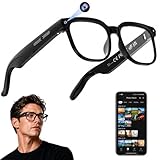
- 【AI Real-Time Translation & ChatGPT Assistant】AI glasses break language barriers instantly with AI real-time translation. The built-in ChatGPT voice assistant helps you communicate, learn, and handle travel or business conversations smoothly—ideal for conferences, overseas trips, and daily use.
- 【4K Ultra HD】 Smart glasses feature 4K resolution for clear, detailed visuals, making them suitable for travel, outdoor activities, everyday moments, and daily use.
- 【Bluetooth Music & Hands-Free Calls 】Smart glasses provide Bluetooth music and crystal-clear hands-free calls with an open-ear design. Stay aware of your surroundings while listening—comfortable for long wear and safer for commuting, cycling, and outdoor use.
- 【IP65 Waterproof & Long Battery Life】 AI glasses are designed for daily wear with IP65 waterproof protection against sweat, rain, and dust. The built-in 290mAh battery provides reliable performance for workdays and travel—no anxiety when you’re on the go.
- 【Smart App Control & Object Recognition】Smart glasses connect to the companion app for easy setup, file management, and feature control. They support AI object recognition to help identify items and improve your daily efficiency—perfect for travel exploration and a smart lifestyle.
That 2029 timing is an analyst forecast, not an Apple commitment. Apple has not confirmed a product name, display technology, chip, price, prescription-lens support or launch date.
3. Camera-equipped AirPods could make visual AI audio-first
Bloomberg also reported that Apple is working on AirPods with cameras and expanded AI capabilities. The cameras could provide Siri with visual context without requiring the user to wear glasses.
The final design is unknown. The cameras might be integrated into the stems, or the product could require a substantially different form factor. Potential uses could include describing surroundings, reading text, translation, navigation and accessibility assistance.
There are practical questions Apple would need to solve:
- How much battery would cameras and continuous AI processing consume?
- Would the AirPods rely on an iPhone for connectivity and computation?
- How would users know when the cameras are active?
- What protections would apply when other people are recorded?
- Would the product remain recognizably similar to ordinary AirPods?
No reliable public evidence confirms the final hardware, name, price or release schedule.
4. The rumored AI pendant is even less certain
Bloomberg described a pendant that could be pinned to clothing or worn around the neck, using cameras and microphones to provide visual context to Siri. MacRumors reported that Apple was still working on an AirTag-sized camera pendant, potentially for 2027, while describing it as behind the AirPods project in development.
Rank #3

- 【Biggest. Boldest. Smartest. — A Viewing Experience Like Never Before】This isn't just another pair of XR glasses — it's The Beast. The BIGGEST screen in XR (174″, 58° FOV). The BOLDEST display ever (1250 nits, Powerd by Latest Sony Micro-OLED). And the SMARTEST glasses on the planet — Your Screen, You Rules. Built-in 3DoF, screen customizations, Auto Transparency, and Smart Re-Centering that just work. No software needed. One glance and you'll never go back.
- 【SMARTEST: YOUR SCREEN, YOU RULES — No Software Needed】 Your Screen. You Rules! Built-in VisionPair 3DoF lets you pin, resize, and lock a 174″ screen in mid-air — no software, no dongles, no drift. Full screen customizations built right into the glasses: Anchor, Smooth Follow, 32:9 UltraWide, Side Mode. Auto Transparency switches between immersion and the real world with one tap. Smart Re-Centering snaps your view back instantly.
- 【BIGGEST: THE ULTIMATE IMMERSIVE GIANT — 174″ Screen, 58° FOV, 1200p】The largest virtual display in consumer XR. Period. A 174″ screen powered by Sony's latest-generation Micro-OLED panel pushes 1200p per eye at a class-leading 58° field of view with a 120 Hz refresh rate. Every frame is edge-to-edge sharp, silky-smooth, and jaw-droppingly vivid. It's like strapping an IMAX to your face.
- 【SMARTEST: 9-LEVEL DIMMING + AUTO TRANSPARENCY — No Software Needed】 Another reason The Beast is the smartest XR glasses ever made. One tap shifts between crystal-clear AR and full cinematic blackout across 9+ electrochromic levels — no app, no software, just hardware intelligence. Auto Transparency adapts between immersion and awareness on its own. Bright office, dim plane, pitch-dark bedroom — The Beast reads the moment for you. No glare. No reflections. Just pure immersion.
- 【BOLDEST: NEXT-LEVEL CLARITY & AUDIO — 1250 Nits + HARMAN AudioEFX】1250 nits of peak brightness — over 2× brighter than the competition — means you can actually see your screen outdoors, in sunlight, no squinting required. Pair that with HARMAN AudioEFX: deeper bass, wider soundstage, and crystal-clear highs tuned by the world's leading audio engineers. Other XR glasses make you choose between picture and sound. The Beast gives you both — cranked to eleven.
A pendant could appeal to people who do not want camera glasses or camera-equipped earbuds. It might be a standalone wearable, an iPhone companion or another way to access the same AI platform. However, it overlaps heavily with both rumored products, and screenless AI wearables have not yet established a universally compelling use case.
Why Apple may be shifting from headsets to glasses
Apple has not publicly explained a pivot. The likely reasons are inferences from the product categories and reporting, not confirmed Apple statements.
- Price: Vision Pro is a premium computer rather than an inexpensive accessory.
- Weight and comfort: An enclosed headset is harder to wear all day than ordinary-looking glasses.
- Social use: Glasses are less isolating and more natural in public.
- Everyday utility: Calls, directions, translation and quick visual assistance may be easier to use frequently than an immersive headset.
- Competition: Meta already sells camera-and-audio glasses in the Ray-Ban Meta line.
- iPhone leverage: Apple could use the iPhone for connectivity, identity, apps and some processing rather than making the wearable fully independent.
Ray-Ban Meta’s official product information illustrates the category Apple is reportedly targeting: cameras, microphones, speakers, AI and phone connectivity without a conventional AR display. The current U.S. product pages require a compatible iOS or Android phone, the Meta AI app, a Meta account and wireless internet; feature availability varies by country and language.
Recommended Free Tools
Is Apple abandoning Vision Pro?
Not permanently, based on the available evidence—but Apple may be deprioritizing a near-term successor.
Apple still sells Vision Pro, provides store demonstrations and personal setup, and supports the visionOS ecosystem through its official buying page. Apple’s current headset line also received an M5 refresh in October 2025, according to MacRumors.
At the same time, reports conflict about what comes next. MacRumors, citing Mark Gurman, reported that a cheaper, lighter headset was not in active development and that a successor might not arrive for at least two years. Other reporting summarized by 9to5Mac leaves room for a slimmer headset in the 2028–2029 period, while Kuo’s reported roadmap omitted an active Vision Pro successor.
Rank #4

- 【8MP HD Camera & EIS Stabilization】Osawalla smart glasses let you capture first-person photos and 1080P HD video with the built-in 8MP camera. EIS anti-shake support helps keep footage smoother during travel, outdoor activities, and daily use. Selectable clip lengths include 15s, 30s, 1 min, 3 min, 9 min, and 12 min
- 【AI Object Recognition & Real-Time Translation】These AI glasses with camera have "Hey Cyan" AI voice assistant (built-in ChatGPT model) and object recognition (recognizes objects, menus, landmarks, plants in real time). They also support 139+ language translation and voice-assisted Q&A—perfect for international travelers, students to break language barriers during travel, study and work
- 【Bluetooth Music & Phone Calls】Osawalla smart glasses connect via Bluetooth 5.4 for music playback, phone calls, and voice assistant control. The open-ear design lets you enjoy everyday listening while staying more aware of your surroundings during walks, commuting, travel, and daily use. Touch controls make it easy to adjust volume, answer calls, and manage playback
- 【Ultra-Light 40.8g (0.09lb) for All-Day Comfort & Long Battery Life】Lightweight camera glasses with TR90 frame, ABS temples, and PMMA material for zero nose pressure. IP65 waterproof design resists daily splashes. 290mAh battery supports up to 7 hours of music playback and 7 days of standby, ideal for travel and daily use
- 【Photochromic Lenses】These smart sunglasses with camera have photochromic lenses that automatically darken in sunlight for effective UV protection. Note: Lenses may darken slower in inside or winter due to weaker UV rays. If you have any questions, feel free to contact us—we are always here to provide satisfactory service
The safest conclusion is that Apple appears to be putting glasses first. That does not prove Vision Pro has been killed. A future headset could return if Apple can reduce weight, price and battery compromises while finding a stronger everyday use case.
What Vision Pro is—and is not—a good buy for today
Vision Pro remains the relevant Apple spatial-computing product available now. It may make sense for:
- Developers building visionOS applications.
- People who want immersive media and large virtual displays.
- Users interested in spatial video and premium Apple hardware.
- Buyers who accept the headset’s cost, weight and external battery arrangement.
It is a poorer fit for people specifically seeking lightweight, socially unobtrusive, all-day Apple glasses. Apple says users who need vision correction may require ZEISS Optical Inserts, and regional availability, prescriptions, App Store access and support vary by market.
Do not buy Vision Pro solely as a stepping stone to rumored Apple glasses. A headset and a display-free wearable would serve different purposes, and Apple has not confirmed that the glasses will ship.
Independent reader supportYour contribution helps us test, update, and keep practical guides available for everyone.What to buy—or skip—while waiting
| Your priority | Most rational choice | Why |
|---|---|---|
| Immersive spatial computing now | Vision Pro | It is Apple’s available headset and is designed for virtual displays, spatial media and visionOS. |
| Lightweight camera-and-audio AI now | Ray-Ban Meta | It already offers the category Apple is reportedly developing, without a display. |
| Apple-branded everyday glasses | Wait | The product, price, capabilities and timing remain unconfirmed. |
| True AR overlays | Wait | Reported display-equipped Apple glasses may be years away. |
Ray-Ban Meta is not a substitute for Vision Pro: it depends on Meta’s software ecosystem and does not provide full AR overlays. Conversely, Vision Pro is not a substitute for ordinary smart glasses because it is heavier, more expensive and less natural for casual outdoor use.
Quick wins for a faster PC:
Fix the driver behind crashes, sound loss and screen glitchesFind Drivers →Clear out junk files and repair common Windows errorsFree Scan →Scan for outdated or missing drivers - takes under a minuteDriver Scan →Privacy, battery and platform questions remain unresolved
Camera wearables would create privacy questions in workplaces, schools and public spaces. Apple would need clear recording indicators, consent expectations, controls for captured images, retention policies and an explanation of what is processed on-device versus in the cloud. Apple’s privacy reputation may influence adoption, but no privacy architecture for the rumored products has been confirmed.
Best Value
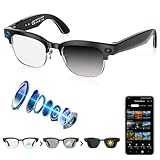
- 【4K Camera with EIS Stabilization】Smart glasses with camera feature a built-in 4K camera with EIS stabilization for clearer and steadier image performance during sports, cycling, travel, outdoor activities, and everyday use.
- 【Open-Ear Speakers & Clear Bluetooth Calling】Camera glasses feature built-in open-ear speakers for music and clear Bluetooth calls while helping you stay aware of your surroundings. Noise-reduction microphones provide clearer voice pickup and a comfortable listening experience for everyday use.
- 【AI Real-Time Translation & Voice Assistant】AI glasses support real-time translation in 139+ languages to make communication easier across different languages. The built-in AI voice assistant helps you access information and interact more efficiently—ideal for work, study, travel, and daily use.
- 【Photochromic Lenses & Lightweight Comfort】Smart sunglasses with camera feature photochromic lenses that respond to changing sunlight conditions for comfortable indoor and outdoor use while helping reduce UV exposure. The lightweight 35g frame provides a comfortable fit for extended everyday wear.
- 【IP66 Water Resistance & 290mAh Battery】AI sunglasses with camera feature IP66 water resistance for added protection against sweat, rain, and dust during active daily use. The built-in 290mAh battery provides convenient power for travel, outdoor activities, work, and everyday use.
Battery life is another constraint. Cameras, microphones and continuous AI processing consume power. An iPhone-connected design could reduce the hardware burden, but it would also make the glasses less independent. Audio-only assistance may be useful for calls and directions yet less effective in noisy environments. A user could also end up charging glasses, AirPods and a pendant that perform overlapping jobs.
How credible are the reported timelines?
The schedule has already moved in public reporting. Earlier coverage discussed a late-2026 unveiling and early-2027 shipment for smart glasses, while later reports described delays or a narrower roadmap. The sensible way to read the dates is as ranges:
- Display-free AI glasses: 2027 is the strongest reported target, but not a promise.
- Camera-equipped AirPods: Possibly 2027 or later; confidence is lower.
- AI pendant: Possibly 2027 or later; the project appears less mature.
- Display-equipped AR glasses: Around 2029 in Kuo’s reported roadmap.
- New Vision headset: Potentially 2028–2029 or later, but current reporting is contradictory.
The source hierarchy matters. Apple’s product and newsroom pages establish confirmed facts. Bloomberg, Mark Gurman and Ming-Chi Kuo provide influential but unconfirmed roadmap reporting. MacRumors, TechCrunch and 9to5Mac add reporting and synthesis. Social-media posts and forum claims should be treated as leads rather than evidence.
The likely strategy
Apple’s reported path looks staged rather than like a single “XR launch”:
- Build an AI platform around cameras, microphones, audio and Siri.
- Put that platform into more than one form factor, including glasses, AirPods and possibly a pendant.
- Use the iPhone as a companion for connectivity and processing where practical.
- Move toward display-equipped AR glasses only when optics, battery life, weight and software are ready.
- Keep immersive headsets relevant for professional and high-end spatial-computing use if Apple can improve their economics.
That would explain why reports mention several products without implying that Apple has five separate mass-market launches scheduled. The common thread is not necessarily “more Vision Pro.” It is Apple Intelligence delivered through sensors and audio, with true AR potentially following later.
Quick Recap
Product prices and availability are accurate as of the date/time indicated and are subject to change. Any price and availability information displayed on Amazon at the time of purchase will apply.