For the best 1960s Grand Seiko, start with the 44GS for design, the 62GS for automatic ownership, or the original 3180 for historical importance. For King Seiko, the 44KS/KSK is the design standout, the 45KS is the affordable hi-beat choice, and the 56KS is the practical automatic. These recommendations apply only to watches produced in the 1960s, not modern re-creations. In every case, originality, case geometry, movement health, and documented service matter more than a seller’s rarity claim.
The best 1960s Grand Seiko is the 44GS for design, the 62GS for an automatic experience, and the original 3180 for historical importance. The best 1960s King Seiko is the 44KS/KSK, while the 45KS is the most compelling affordable hi-beat option and the 56KS is the practical automatic choice.
| # | Preview | Product | Price | |
|---|---|---|---|---|
| 1 |
|
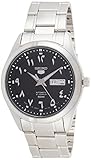
SEIKO 5 Automatic Black Eastern Arabic Dial Men's Watch SNKP21J1 | $199.01 | Buy on Amazon |
| 2 |

|
SEIKO SRPB41 Automatic Watch for Men - Presage Cocktail Time - Patterned Blue Dial with Date... | $399.00 | Buy on Amazon |
Those recommendations apply to watches actually produced in the 1960s—not modern Seiko or Grand Seiko re-creations inspired by them. With vintage Japanese watches, condition matters more than the name on the dial or the rarity claimed in an advertisement. An original, honestly described watch with a healthy movement and sensible case polishing is usually a better purchase than a rarer reference with a refinished dial, damaged geometry, missing parts, or an uncertain service history.
The best 1960s King Seiko and Grand Seiko watches at a glance
| Watch | Best for | Why it stands out | Main risk |
|---|---|---|---|
| Grand Seiko 3180 | Historical importance | The founding Grand Seiko, released in 1960, with a sophisticated manually wound movement. | Small proportions, age-related wear, and difficult-to-verify originality. |
| Grand Seiko 6245/6246 | An early Grand Seiko for regular wear | A more mature 1960s Grand Seiko design, available in time-only and calendar-equipped directions. | Reference, dial, movement, and production details are easy to misidentify. |
| Grand Seiko 44GS | Design history | The 1967 manual-winding model that established the sharp, reflective Grand Seiko Style. | Over-polishing can permanently destroy the case’s defining geometry. |
| Grand Seiko 62GS | A first automatic Grand Seiko | Grand Seiko’s first automatic, with a bezel-free case and crown at approximately 4 o’clock. | Automatic winding, calendar parts, and case condition require close inspection. |
| Grand Seiko 45GS/61GS | Late-1960s technical interest | Hand-wound and automatic high-beat alternatives for buyers who value movement technology. | High-beat movements are not automatically accurate or reliable after decades without proper service. |
| King Seiko 44KS/KSK | Overall King Seiko design | The defining angular King Seiko design, launched in 1965 and closely associated with Seiko’s sharp “Grammar of Design” aesthetic. | Rounded lugs and softened case edges are signs of excessive polishing. |
| King Seiko 45KS | Affordable manual hi-beat ownership | A hand-wound 4500-series watch operating at 36,000 vibrations per hour. | Fast-beat service demands and parts availability can be more important than the headline specification. |
| King Seiko 45KCM/4502 | A rounded late-1960s case | The 1969 45KCM offers a more flowing silhouette than the angular KSK. | Mixed-part examples are possible; dial, case, crystal, and movement must belong together. |
| King Seiko 56KS | Automatic practicality and value | The late-1960s automatic family includes time-only 5621, date 5625, and day-date 5626 variants. | Convenience does not remove the need for a full vintage-watch service. |
Grand Seiko and King Seiko in the 1960s
Grand Seiko began on December 18, 1960, with the manually wound Caliber 3180. The movement incorporated Diashock shock resistance, hacking seconds, and fine regulation, and Seiko positioned the watch against the demanding chronometer standards of its period. The first Grand Seiko therefore has unusual historical importance even when a later model may be easier to wear or technically more advanced.
What’s actually slowing this PC down?
Pick the symptom - the matching free tool is one click away.
#1 Best Overall
- Seiko 5 Automatic Black Arabic Dial Men's Watch SNKP21J1
King Seiko emerged in 1961 as a parallel high-grade Seiko line associated with the Daini facility. The two lines should not be reduced to “the same watch at different prices.” They shared Seiko’s engineering culture and competed within the same company, but individual references differ in movement adjustment, finishing, case design, production facility, and certification history. A King Seiko is not automatically an inferior Grand Seiko, and a Grand Seiko is not automatically the right choice for every buyer.
For this guide, “best” means best suited to a particular collector or use case. It does not mean a universal ranking, and it does not imply that any model will appreciate in value.
The best 1960s Grand Seiko watches
1. Grand Seiko 3180: best for historical importance
The original Grand Seiko 3180 is the choice for a buyer who wants the beginning of the Grand Seiko story. Its manually wound Caliber 3180 combined period-advanced features—Diashock, hacking seconds, and fine regulation—with high-precision ambitions. It is the most historically important model in this guide, although not necessarily the easiest vintage watch to own.
Expect a compact 1960s dress-watch presence rather than the visual impact of a modern sports watch. The attraction is provenance, restraint, and the significance of the first Grand Seiko name, not contemporary wrist presence or automatic convenience.
The Tool Desk
Outbyte Driver Updater FREEScan for outdated or missing drivers - takes under a minuteDriver Scan →Outbyte PC Repair FREEClear out junk files and repair common Windows errorsFree Scan →What to buy: prioritize an untouched or conservatively restored dial, correct hands and crown, and a case that still has its original or carefully preserved contours. A surviving certificate is desirable but should not be treated as a requirement; many 1960s examples no longer retain every original document or case component.
What to avoid: a watch described only as “running” with no movement photographs or service information. A timegrapher reading can show how the watch is behaving at one moment, but it cannot prove that the movement is clean, correctly lubricated, or free from worn pivots and other hidden problems.
2. Grand Seiko 6245/6246: best early-GS everyday proposition
The 6245/6246 family is a strong alternative to the first 3180 for buyers who want an early Grand Seiko with a more mature 1960s design language. The 6245 is generally associated with the no-date direction, while the 6246 is the calendar-equipped direction. Exact configurations vary, so the case-back and movement markings matter more than a seller’s headline description.
This family can make a particularly good vintage daily wearer when the example is sound. The date version adds useful functionality, but it also introduces more components that may require attention during service. For a first vintage Seiko, a clean time-only example may be the simpler and safer purchase even if a date window seems more attractive in photographs.
Do these 3 things before closing this tab:
1Clear out junk files and repair common Windows errors2Scan for outdated or missing drivers - takes under a minute3Repair Windows errors before they cause bigger problemsBuying priority: choose the cleanest original dial and sharpest case you can find, then confirm that the dial, movement, inside case-back markings, hands, crown, and calendar configuration are consistent. Ask for high-resolution photographs rather than relying on a reference number copied into a listing title.
3. Grand Seiko 44GS: best design milestone
The 44GS, introduced in 1967, is the design icon of the vintage Grand Seiko range. Its flat, distortion-free surfaces, crisp ridgelines, faceted hands and indexes, and highly reflective finishing established the principles now known as the Grand Seiko Style.
It is manually wound and was produced by Daini Seikosha. The watch is historically significant not only as a Grand Seiko but also as a statement of what Seiko believed a high-end Japanese watch should look like: precise, angular, polished, and immediately legible.
Case condition is decisive. The 44GS’s appeal depends on its geometry. Polishing that rounds the lugs, softens the shoulders, or erases the boundary between flat and angled surfaces can materially reduce the watch’s desirability. A shiny case is not necessarily a well-preserved case.
Quick wins for a faster PC:
Fix the driver behind crashes, sound loss and screen glitchesFind Drivers →Repair Windows errors before they cause bigger problemsFix Now →Dial originality is equally important. Replacement and refinished parts can be difficult to identify in low-resolution online photographs, particularly when a dial has been made to look artificially aged. Look for coherent printing, logo placement, handset design, indexes, and patina rather than judging only by color.
4. Grand Seiko 62GS: best first automatic Grand Seiko
The 62GS, introduced in 1967, was Grand Seiko’s first automatic model. Its bezel-free construction, crystal mounted directly to the case, and crown positioned at approximately 4 o’clock give it a distinctive profile and separate it clearly from the manually wound 44GS.
It is the best vintage Grand Seiko for someone who wants automatic winding and a major design milestone. The absence of a conventional bezel makes the dial appear broad and exposed, while the unusual crown position creates much of the model’s identity.
Inspect the automatic system carefully:
- Ask whether the watch winds efficiently through normal wrist movement.
- Check that the crown winds smoothly without grinding, slipping, or feeling rough.
- Operate the calendar, where fitted, and verify that it changes correctly.
- Ask for movement and rotor photographs, not just a dial shot.
- Look for a case that retains its original bezel-free geometry.
A 1960s water-resistance rating is not a present-day guarantee. Gaskets age, crystals and case backs may have been replaced, and previous case work may have compromised sealing. Treat a vintage 62GS as non-water-resistant unless it has been appropriately inspected and tested for current use.
5. Grand Seiko 45GS and 61GS: best late-decade technical choices
The late 1960s were an important period in Seiko’s move toward high-beat mechanical watches. The 45GS is the hand-wound high-beat choice; the 61GS is the automatic high-beat choice. Both suit a buyer who values late-decade engineering and movement frequency more than the simpler character of the 3180 or 44GS.
Do not assume that “high-beat” means a particular watch will be more accurate today. A vintage movement’s current performance depends on wear, lubrication, magnetization, regulation, mainspring condition, and the quality of its last service. High-beat movements can also make service history especially important because they run through more operating cycles than slower movements.
Choose the 45GS if you enjoy the daily ritual of winding and want a thinner, hand-wound experience. Choose the 61GS if automatic convenience matters more. In either case, a documented inspection by a competent vintage Seiko specialist is more valuable than a seller’s unsupported claim that the watch is “running strong.”
The best 1960s King Seiko watches
1. King Seiko 44KS/KSK: best overall King Seiko design
The second-generation King Seiko KSK launched in 1965 and became the defining King Seiko visual reference. Collectors often use “44KS” and “KSK” when discussing this angular family, so the exact case-back and movement markings should always be confirmed before purchase.
The design is sharp and architectural, with flat planes, faceted surfaces, and crisp transitions that connect it to the broader Seiko “Grammar of Design” period. It is the strongest King Seiko recommendation for a buyer who wants the late-1960s Seiko look without requiring the Grand Seiko name.
The central buying rule is the same as with the 44GS: inspect the case profile, not just its shine. Over-polishing can erase the flat planes and lug transitions that make the KSK desirable. A correct original dial and handset also matter, since replacement parts and refinished dials can change the character of the watch even when the movement is genuine.
Before committing, compare the listing with an authenticated vintage King Seiko source and ask for matching photographs of the dial, case back, movement, and inside case back. That does not eliminate the need for your own checks, but it is a safer starting point than buying solely from a rarity claim or a stock photograph.
2. King Seiko 45KS: best affordable hi-beat experience
The 45KS is the hand-wound King Seiko high-beat option. Its 4500-series movement operates at 36,000 vibrations per hour, giving it real technical interest and making it one of the most appealing choices for a buyer who wants a fast-beat vintage mechanical watch without paying the usual premium associated with an equivalent Grand Seiko.
The appeal is not only numerical. Winding a 45KS by hand and observing a high-beat movement’s smooth seconds display offers a different ownership experience from an ordinary automatic vintage watch. But the specification should not be mistaken for a condition report.
Buy the individual example, not the movement frequency. Confirm that the watch starts promptly, winds without roughness, sets and hacks correctly where applicable, and has recent service documentation. A 45KS that has not been serviced may need cleaning, lubrication, mainspring work, or parts fabrication. A timegrapher photograph is useful evidence, but it is not a substitute for an invoice describing what was actually done.
3. King Seiko 45KCM/4502: best rounded late-1960s case variation
Seiko identifies the King Seiko 45KCM as a 1969 model. Its flowing, curved case silhouette provides a useful alternative to the severe, angular KSK/44KS design. It is the King Seiko to consider when you want late-1960s mechanical character but prefer a softer case shape.
The 45KCM is a design-led alternative rather than a universal upgrade. Its value depends on finding a correct combination of dial, case, crystal, hands, crown, and movement. Vintage Seiko listings can contain replacement or mixed parts, and a visually attractive watch may not be a factory-correct example.
The Tool Desk
Outbyte Driver Updater FREEScan for outdated or missing drivers - takes under a minuteDriver Scan →Outbyte PC Repair FREERepair Windows errors before they cause bigger problemsFix Now →Ask the seller to identify the exact reference and movement together. If the answer is vague, or if the photographs show inconsistent fonts, case shapes, or medallions, treat the watch as a project or pass on it.
4. King Seiko 56KS: best automatic practicality
The late-1960s 56KS family brought automatic winding to King Seiko and is the sensible choice for someone who wants a vintage King Seiko to wear more casually without hand-winding it every day.
The 5600-series family includes time-only Caliber 5621, date-equipped 5625, and day-date 5626 variants. The cited reference material places these movements at 28,800 vibrations per hour with a stated power reserve of around 47 hours, although the exact condition and performance of an individual vintage watch will vary substantially.
Convenience is the 56KS’s principal advantage; it should not automatically be called the best-built King Seiko. Automatic winding adds mechanical complexity, and calendar parts can be expensive or difficult to replace when damaged. Check the rotor, winding efficiency, calendar operation, crown, and movement condition before treating the watch as a practical daily wearer.
Crashes, No Sound, or Screen Glitches?
Random freezes, missing sound and display glitches usually trace back to one bad driver. Find and replace yours safely.Free scan · under a minutePC Slower Than It Used to Be?
A free scan shows the junk files, broken settings and background clutter dragging Windows down - then fixes them in one click.Free scan · Windows 10 & 11Rank #2
- STUNNING BLUE DIAL: this automatic men's watch features a deep blue, pressed pattern and gloss finish surrounded by a stainless steel watch case
- AUTOMATIC: these self-winding, automatic men's watches are powered by your movement, with a power reserve of 41 hours
- STAINLESS STEEL: features a durable stainless steel watch case and bracelet with see through caseback
- WATER-RESISTANT: these men's wrist watches are water-resistant down to 50 meters
- 4R35 CALIBER: equipped with the reliable caliber 4R35 automatic movement, this accurate men's watch keeps precise time
For a buyer who values value and ease of use over the prestige of Grand Seiko, the 56KS is often the most sensible King Seiko starting point—provided the example is original and has been serviced.
Grand Seiko versus King Seiko: which line should you choose?
| If you care most about… | Start with… | Why |
|---|---|---|
| Provenance and the origin of the name | Grand Seiko 3180 | It is the first Grand Seiko model, released in 1960. |
| Iconic angular design | Grand Seiko 44GS or King Seiko 44KS/KSK | Both are strongly associated with Seiko’s sharp, faceted late-1960s design language. |
| Automatic Grand Seiko ownership | Grand Seiko 62GS | It was Grand Seiko’s first automatic and has a uniquely bezel-free case. |
| Automatic King Seiko ownership | King Seiko 56KS | It delivers automatic convenience in a late-1960s King Seiko format. |
| High-beat hand-winding | King Seiko 45KS or Grand Seiko 45GS | The 45KS is the value-oriented route; the 45GS is the Grand Seiko route. |
| High-beat automatic ownership | Grand Seiko 61GS | It combines late-decade Grand Seiko design with automatic high-beat engineering. |
| A softer, rounded King Seiko case | King Seiko 45KCM/4502 | Its 1969 case silhouette is more flowing than the KSK/44KS design. |
Grand Seiko is the better fit when historical prestige, documented precision ambitions, and the brand’s design milestones are central to the purchase. King Seiko is the better fit when you want Seiko’s high-grade 1960s engineering and design at a broader range of entry points. The distinction is not simply one of price: movement adjustment, finishing, case design, production facility, and certification history differ by reference.
Independent reader supportYour contribution helps us test, update, and keep practical guides available for everyone.How to buy a 1960s Seiko safely
1. Verify the reference and movement together
Never authenticate a vintage King Seiko or Grand Seiko from the dial alone. Request clear photographs of:
- the full dial, including the logo, printing, indexes, and hands;
- the outside of the case back;
- the movement and its caliber marking;
- the inside case back and its reference or serial markings;
- the crown, crystal, and any medallion;
- the side profile and lugs, ideally in several lighting conditions.
A reference number by itself is insufficient. Parts can be exchanged between watches, and online sellers sometimes repeat an incorrect identification from an earlier listing. The movement, inside case back, case shape, dial, and hands need to make sense as a set.
What’s actually slowing this PC down?
Pick the symptom - the matching free tool is one click away.
2. Treat the dial as a primary value component
For these watches, the dial is not a cosmetic detail. It is one of the main indicators of originality and condition. Look for consistent printing, correct logo placement, coherent patina, matching hands and indexes, and no unexplained texture or color mismatch.
“Restored” should generally be understood to mean refinished unless the seller provides credible documentation explaining who restored it, when, and what was changed. A refinished dial may still be attractive and wearable, but it should not be valued or represented as an untouched original.
3. Inspect case geometry
Sharp ridges and flat planes are central to the appeal of the 44GS and 44KS/KSK. Compare the lugs and case edges with known reference photographs, paying attention to whether transitions remain crisp. A mirror-polished, rounded case may look pleasing in isolation but is not equivalent to an original-profile example.
The same principle applies to the 62GS’s bezel-free construction. Excessive polishing or incorrect replacement parts can alter the proportions and eliminate the visual feature that makes the model distinctive.
4. Ask for timing data—and then ask what service produced it
A timegrapher photograph can reveal rate, amplitude, beat error, and positional variation, making it useful screening information. It does not establish long-term reliability, prove originality, or replace a service invoice.
Ask:
- When was the movement last serviced?
- Was it fully disassembled and cleaned, or merely regulated?
- Was the mainspring replaced?
- Were worn jewels, pivots, calendar parts, or automatic components repaired?
- Is the timing data supplied from more than one position?
- Does the seller offer a return period if the movement fails shortly after delivery?
For a watch you intend to wear, arrange a pre-purchase inspection or obtain a service estimate from a vintage Seiko service specialist. This is particularly important for high-beat 45KS and 45GS watches, older automatic 62GS examples, and any watch being sold without a clear service history.
5. Budget for ownership, not just the purchase
A 50-to-60-year-old mechanical watch may need cleaning, lubrication, mainspring work, crystal replacement, gasket replacement, or parts fabrication even if it currently keeps time. Vintage Seiko parts availability varies by caliber and by the condition of the movement.
Do not spend the entire budget on the watch head and leave nothing for inspection or service. A less rare reference with a healthy movement and original dial can be a better financial and practical decision than a rare-sounding example that immediately needs extensive work.
6. Treat water resistance as historical information
Do not rely on a 1960s pressure rating for present-day swimming, showering, or rain exposure. Decades of aging, case work, crystal replacement, and gasket deterioration can make the original rating irrelevant.
Unless a qualified watchmaker has inspected and pressure-tested the specific watch for current use, keep it away from water. Even after testing, vintage water resistance should be treated conservatively.
7. Prefer seller transparency over nominal rarity
A trustworthy listing should show the actual watch from multiple angles, identify known replaced or refinished parts, provide movement photographs, explain service history, and state whether the case has been polished. Be cautious when a seller emphasizes “rare,” “museum,” “near mint,” or “investment” without providing technical evidence.
There is no reliable shortcut around inspection. A common reference with an original dial, correct parts, sharp geometry, and documented service is usually a better purchase than a supposedly rare reference with uncertain provenance.
What should you buy based on your priorities?
Choose the Grand Seiko 3180 if history comes first
Buy the 3180 when owning the first Grand Seiko matters more than automatic winding, larger proportions, or the most advanced movement in the group. Accept that originality and condition may require patience.
Choose the 44GS if design comes first
The 44GS is the strongest design recommendation. Its 1967 case established a visual vocabulary that remains central to Grand Seiko, but its sharp geometry makes condition especially important.
Choose the 62GS if you want an automatic Grand Seiko
The 62GS is the natural answer for automatic convenience and historical significance. Verify winding performance and calendar operation, and do not assume that the bezel-free case is still original merely because the watch looks correct from the front.
Choose the King Seiko 44KS/KSK if you want the best design value
The KSK is the defining King Seiko design and the best overall choice for buyers drawn to sharp, angular 1960s Seiko watches. It offers a strong historical identity without requiring the buyer to pursue a Grand Seiko-branded example.
Do these 3 things before closing this tab:
1Clear out junk files and repair common Windows errors2Scan for outdated or missing drivers - takes under a minute3Repair Windows errors before they cause bigger problemsChoose the King Seiko 45KS if you want a high-beat hand-wound watch
The 45KS is the technical-value choice. Its 36,000-vibrations-per-hour movement is compelling, but only when the specific watch has a healthy, properly serviced movement.
Choose the King Seiko 56KS if convenience comes first
The 56KS is the practical King Seiko recommendation for casual wear. Its automatic winding and range of time-only, date, and day-date configurations make it approachable, but the example’s serviceability still matters more than the model number.
Modern alternatives: similar designs, different products
Modern watches can be excellent substitutes, but they must be labeled as modern re-creations or reinterpretations—not as 1960s watches.
Seiko’s current King Seiko lineup includes KSK and KS1969 families. The SJE089/SJE091 line was inspired by the 1965 KSK and uses the modern automatic Caliber 6L35, sapphire crystal, and contemporary case construction. These features address everyday durability and service expectations that a 60-year-old vintage watch cannot match, but they do not give the modern watch the same historical object value as an original 1960s KSK.
Quick wins for a faster PC:
Scan for outdated or missing drivers - takes under a minuteDriver Scan →Clear out junk files and repair common Windows errorsFree Scan →Fix the driver behind crashes, sound loss and screen glitchesFind Drivers →Modern Grand Seiko 44GS and 62GS families similarly preserve the historical design ideas while using current movements, materials, manufacturing methods, and service support. A modern 44GS is the sensible choice if you want the design language with contemporary reliability. A modern 62GS is the better choice if you want the automatic design in a current case with improved durability and comfort.
Choose a modern model when your priorities are dependable daily wear, stronger water resistance, readily available service, sapphire crystal, and modern sizing. Choose the vintage model when you specifically want an authentic object produced during the 1960s, accept maintenance risk, and are prepared to verify originality.
Final ranking by use case
- Most historically important: Grand Seiko 3180.
- Best design icon: Grand Seiko 44GS, with King Seiko 44KS/KSK as the sharper value alternative.
- Best automatic vintage Grand Seiko: Grand Seiko 62GS.
- Best automatic vintage King Seiko: King Seiko 56KS.
- Best technical late-1960s Grand Seiko: Grand Seiko 45GS or 61GS.
- Best affordable technical King Seiko: King Seiko 45KS.
- Best rounded-case King Seiko: King Seiko 45KCM/4502.
- Best modern substitute: a current King Seiko KSK/KS1969 or modern Grand Seiko 44GS/62GS, chosen only when contemporary reliability matters more than 1960s authenticity.
Frequently Asked Questions
Which 1960s Grand Seiko should I buy first?
For historical importance, choose the original Grand Seiko 3180. It was released in 1960 and introduced the Grand Seiko name with the manually wound Caliber 3180. For design, the 1967 44GS is the stronger choice; for automatic ownership, choose the 62GS.
Which 1960s King Seiko is the best value?
The King Seiko 44KS/KSK is the best overall design choice. It is associated with the angular, faceted style launched with the second-generation KSK in 1965. If you prefer automatic winding, look at the 56KS; if you want a hand-wound high-beat movement, consider the 45KS.
Free tools Windows power users keep installed
One-click scans. No signup required.
Are vintage high-beat Seiko watches automatically more accurate?
No. A high-beat movement is a technical feature, not a guarantee of present-day accuracy. Wear, lubrication, magnetization, regulation, mainspring condition, and service quality determine how a vintage example performs now.
Can I swim with a vintage King Seiko or Grand Seiko?
No. A pressure rating from the 1960s does not prove that a 50-to-60-year-old watch remains water-resistant. Aging gaskets, replacement crystals, case work, and corrosion can compromise sealing. Have the specific watch inspected and pressure-tested before exposing it to water, and be conservative even after testing.
Are modern King Seiko and Grand Seiko re-creations the same as the 1960s originals?
No. Modern King Seiko KSK/KS1969 and Grand Seiko 44GS/62GS models are re-creations or reinterpretations with current movements, materials, construction, and service support. They may be better daily watches, but they are not authentic 1960s-produced watches.
The Bottom Line
Buy the condition, originality, and service history before buying the badge. For a historically important purchase, choose the Grand Seiko 3180; for design, choose the 44GS or King Seiko 44KS/KSK; for automatic practicality, choose the 62GS or 56KS; and for late-1960s hi-beat appeal, consider the 45GS, 61GS, or King Seiko 45KS. A carefully verified, serviced example is the real best buy.
Recommended Free Tools